Mightier Acorns

Journeys through Genealogy and Family History

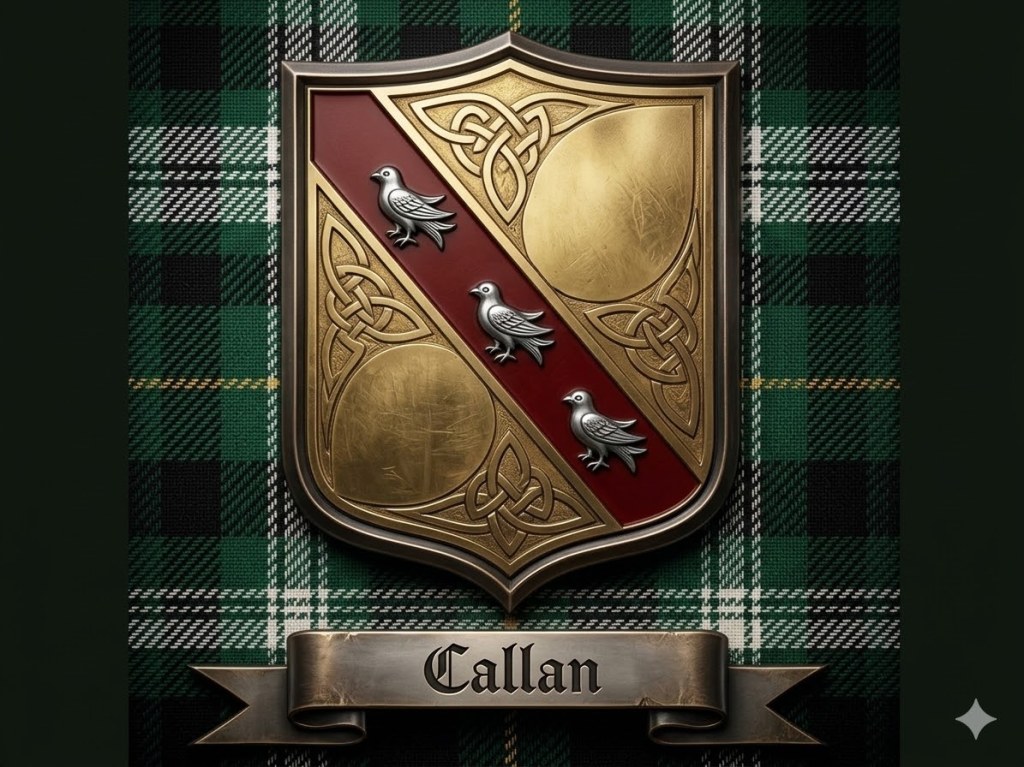
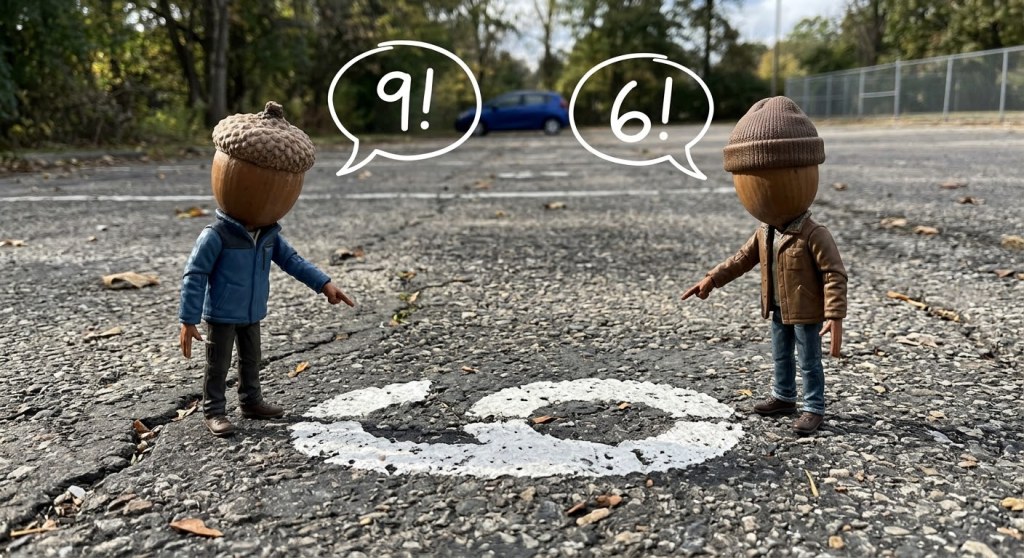
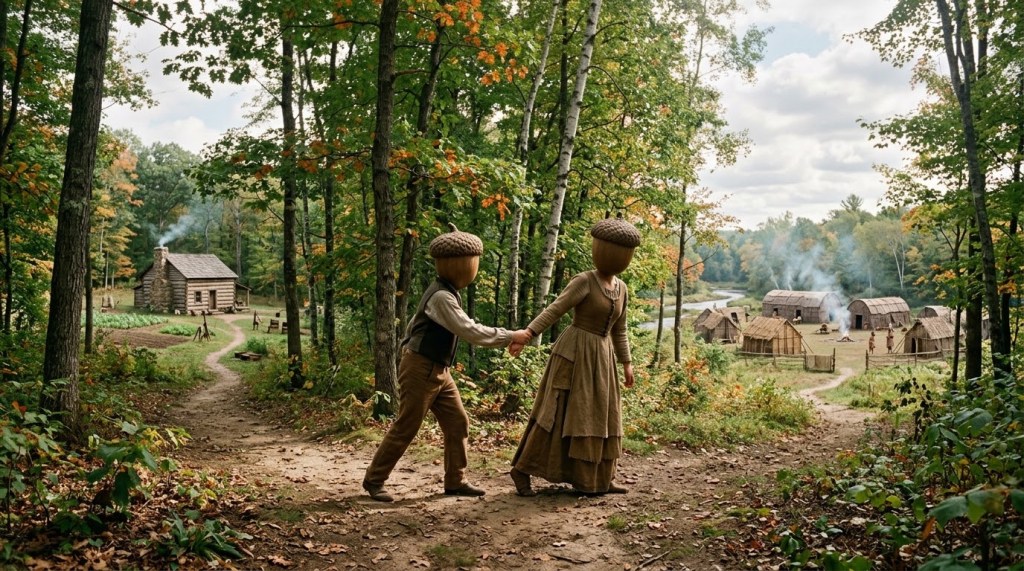
A parody of a family coat of arms designed with acorns as elements, with the motto "ex gladnis potentioribus" Latin for "from Mighty Acorns"
From Mighty Acorns
  • The First Impeachment

    It fills the “cup of woe” to brim,
    The captives chains it rivets more,
    And coldly tears the heart of him,
    Who oft have drained the “cup” before.

    from “Ingratitude” – in War Poems, by John H. Callin

    John H. Callin, my great-great-grandfather, was a Union artillery soldier during the Civil War. He wrote a book of poems about his experiences during and after that war, which we published a couple of years ago. (Learn more about that book at this link.)

    We don’t know his whole story, but John suffered a lot during that war. Two of his brothers enlisted, and one of them, James, was wounded in action in two different battles. John wrote a poem about one of those battles in “The Assault on Ft. Wagner,” and even though we know that James survived, I suspect John did not know that when he composed the verse:

    Then fallest from up a parapet,
    But canst not fall from a brother’s love;
    Though wounded by a rebel Sett1,
    Yet still thou art thy mother’s dove.

    John and James did lose cousins in that war, and probably neighbors, and certainly comrades in arms. John’s poetry captures his fears and the horrors he either witnessed or heard about on the battlefield. Reading John’s poems, you can get a sense of what was important to one Union soldier. His commitment to the Union cause, his distaste for the institution of slavery, his admiration for the officers who demonstrated courage, and his disappointment in the character of the rebels permeate these poems.

    But something is missing from John’s body of work that I find surprising: not once does he mention the name Lincoln.

    The Hero of the Story

    By the time I came along, Abraham Lincoln’s assassination was more than a century in the past, and Lincoln was one of the few characters whose name survived the compression of American history into our middle school textbooks. Too many Americans only know that “Abraham Lincoln freed the slaves,” and almost no one knows how reluctant he was to do that much. He was pushed into many of the choices he made after the war began by people he considered to be “too radical” for demanding the banning of slavery–and even some of them were not radical enough to talk about giving freed men the vote!

    I suspect that John might have been somewhat more radical than Lincoln, which could explain why he never included the President’s name in his poems. What I can’t tell is what it was that John was more radical about – because the philosophy he seems to adhere to sounds like that of the modern centrist, positioning himself as an Everyman, part of a “silent majority” that just wants stability.

    John seems to blame “faction” (a word I see used by early Americans to describe party politics) for the war, acknowledging the evil of slavery, but hinting that partisans agitating for change were the cause of the conflict. He wrote poems praising or condemning both commanding generals, “Grant” and “Rebel General Lee,” as well as several heroes and villains of the battlefield. But as far as John was concerned, the “leaders” were to blame for the conflict, and he and the other simple patriots were doing the work of serving God and saving the promise of the country.

    But still wage deep tainted harangues,
    The politician!
    Our country driven to madness, waste
    Her loved fruition,
    Sunk in the earth to be unretrieved
    Till patriots combine.

    from “Our Government”

    When Lincoln gave his Second Inaugural address one month before the end of the war, he ended on a conciliatory note that probably didn’t sit right with John Callin:

    With malice toward none; with charity for all; with firmness in the right, as God gives us to see the right, let us strive on to finish the work we are in; to bind up the nation’s wounds; to care for him who shall have borne the battle, and for his widow, and his orphan–to do all which may achieve and cherish a just and lasting peace among ourselves, and with all nations.

    That passage has been used many times over the past century to suggest that the North should let bygones be bygones with the South, while ingnoring the fact that the South refused to change its behavior towards the poor and towards the former slaves. But at least Lincoln said that following a paragraph in which he suggested the war was God’s punishment for slavery, saying, “Yet, if God wills that it continue until all the wealth piled by the bondsman’s two hundred and fifty years of unrequited toil shall be sunk, and until every drop of blood drawn by the lash shall be paid by another drawn with the sword…”

    There is no guarantee that Lincoln would have been able to wrest the reparations he suggests were due to the formerly enslaved people of America out of the defeated oligarchy of the South, but at least we can see that it was on his mind, and he wasn’t afraid to say it out loud.

    Enter, a Villain

    The Confederate Army surrendered on 9 April 1865, and five days later, Abraham Lincoln was shot. His Vice President was Andrew Johnson, a Tennessee Democrat who had opposed the secession of Tennesse, and who had become Lincoln’s running mate in a bid to lure skittish voters worried that Lincoln’s Republican party was too radical.

    After Lincoln’s death, Johnson was sworn in and immediately sought to “bind up the nation’s wounds” by pardoning Confederate officers and office holders, insisting that the States had never really left the Union, and demanding that Southern Congressmen – many of whom would not swear an oath to the Constitution or repudiate their actions during the war – be seated by Congress.

    If you don’t know much about this episode in American history, I recommend that you find a copy of Brenda Wineapple’s The Impeachers, and give it a read. Much of it may feel familiar, considering that a large number of people were pardoned after attempting to overthrow the Constitutional government, those people were supporting an oligarchy that intended to disenfranchise as many people as it could to maintain a grip on power, and the President (who was rumored to be operating under diminished capacity) kept provoking Congress and usurping their Constitutional powers.

    As I read about Johnson’s actions and the affect they had on the country, I can’t help seeing the events play out from the point of view of an angry veteran living in Ohio. I don’t know when he wrote “Our Government,” but as Johnson’s hobbling of the Freedmen’s Bureau and his betrayal of the Union he helped save progresses, I wonder which news compelled John to write:

    And hovering round our fated land,
    Clouds political,
    Which point the dreaded agonies near,
    The hour critical,
    When demon worse than traitors dare
    Imbrue our land.

    Binding the Wounds

    John married his first wife, Lucy Patterson, on 27 October 1865. I suspect (but don’t know) that she was related to his commander during the war, a Captain James Patterson. John’s pension record revealed that the couple divorced, having had no children. It also revealed John had been a Sergeant in his unit, but he was discharged as a private. It is possible that he received a temporary field promotion or that he got into trouble that resulted in a reduction in rank.

    There are all kinds of reasons why a couple might divorce. We will never know what John and Lucy’s reasons were, but a lot of things could have happened in the nine years between the end of the war and John’s marriage to my great-great-grandmother, Amanda, in 1874.

    All I can be certain of is that there was a girl named Lucy Patterson listed in the household of Martin and Abigail Patterson in Plain Township, Wood County, Ohio, and a marriage record for her and John H. Callin in 1865. I also know that John H. Callin is missing from the 1870 Census.

    And I suspect that whether we’re talking about national events, like the betrayal of the former slaves and the failure of Reconstruction to form a more perfect Union, or more local, personal events, John H. Callin learned a hard truth about reconciliation. One can only wonder what influence his wartime experiences and his post-war frustrations had on him, and whether his marriage to Lucy was part of that story.

    America’s story is littered with examples of our collective failure to learn from our mistakes. Every time we reach a crisis so dire that someone has to suffer the consequences, we either let the villains off the hook or give them a token reprimand and pretend to be “healed.”

    The historical record tells me that Andrew Johnson should have been removed from Office, and the “radical” Republicans should have done more to protect the civil rights of the Black Americans they abandoned during the 1870s. Perhaps, had there been accountability for Johnson’s actions, Nixon might not have been pardoned. Bill Clinton might have been held accountable (though they hadn’t thought to make what he did a crime, yet, in 1997). Failing to follow through with accountability because that would be “too divisive,” and jumping from conviction to pardon without punishing the crime has become our national method for “binding our wounds” – but only for the powerful.

    We are still doing that, as a nation. Lyndon Johnson, Ronald Reagan, and at least one Bush should have been impeached for war crimes. I could go on; I could include people lower on the order of succession than the president (Kissinger? Cheney?) and the obvious current examples, but the point is that we keep trying to bind the wounds without treating the injuries.

    You can’t ask someone to forgive and forget if you aren’t willing to own up to the harm you did in the first place and make it right. And so, the wounds fester, and the infection breaks out again and again.

    I will never know John’s whole story, but I have my suspicions about the outline of his dark decade. And I can’t help but think he could have been writing about any chapter in our history when he penciled his poems into his notebook.

    Have we a broken, false, vile unjust,
    Administration,
    That statesmen derisively tender,
    Their resignations?
    Must great America blush in shame,
    Her government fall?

    Ah, ‘Tis men who strive to supersede,
    By self promotion,
    The nobler, greater; and stoop to feed
    This dark commotion!
    ‘Tis traitors false to their country, God,
    Thus betray their trust.

    1. In this context, “Sett” most likely refers to a formation or emplacement “crowning” the fort – the word is also used in another of John’s poems, “Only a Private” (stanza 4): “His brow undecked by diamond setts”. ↩︎
  • Vicie Reynolds was the sister, daughter, and granddaughter of Baptist preachers from the rural parts of Kentucky. Her son was my Grandpa Russ, another preacher ordained by the Southern Baptist Convention. Russ was her youngest child, born in 1920; her oldest was Opal, born in 1899.

    But I suspect that her role as a mother to her family started much earlier than 1899.

    The Only Girl in Her Family

    Vicie was born on 27 July 1879 in Lewis County, Kentucky, and the combined wisdom of vital records and word-of-mouth memories suggests that she was named either “Mary Ann” or “Marianne” with a middle name that might have been “Viceroy.”

    When I say “combined…vital records” I mean that her marriage bond for her 1898 wedding to David U. Clark recorded her name as “Mary A. V. Reynolds,” her name was recorded as “Mary A Reynolds” in the social security files of my grandfather and his brother, Frank, and every other official record — Ohio marriage records for her children, her own Arkansas death record, a Kentucky record for her little son, Floyd, and three of the four U.S. Census records she appears in — lists her as “Vicie,” or near enough to that to allow for clerks’ handwriting.

    When Vicie was born, she had two older brothers, Reuben (age 3) and Jerry (age 2). She was 2 years old when her little brother, William, was born, and she was still 2 years old when their mother, Mary Francis May, died six months after that.

    Their father was James Thomas Reynolds, who, I learned relatively recently, was a Baptist minister. The “History of Greenup Association 1841 – 1941,” by L. H. Tipton, says that James “began his pastoral work in the Association in 1890 as pastor of Union Baptist Church, Lewis County.” The Union church was built in 1830, but by 1910, it had been deeded to the town and was being used by the Christian Church. It’s not clear which town it was in, or whether Pastor Reynolds and his family lived in the same town.

    I haven’t been able to find sources with more details, but what I do find suggests that Pastor Reynolds was able to support his children, and they were educated. I am fairly certain, however, that Vicie found herself in the position of taking care of the housework for her father and brothers. It is possible they were well off enough to hire help, but I think the life of an itinerant preacher probably leans more towards being self-sufficient.

    Either way, odds are pretty good that she was the mother of her family of boys, and when she was 19, she married David Clark and began three decades of constant motherhood.

    Vicie’s Role

    “Aunt Vicie & children” from left: Opal, seated, holding Jenny Mae; Alma (standing in back), Sally (holding the kitten), Vicie holding Thomas Ray, and David Jr.

    This photo is a recent find for me, and I love it for a lot of reasons. Judging by the age of the twins, Jenny Mae and Thomas Ray, I guess it was taken in 1911. Vicie looks strong, confident, and in charge; the children look like they have been commanded to behave, and the babies seem delighted to be there. I see my cousin Tim’s features in the twins, and his mom, my aunt Judy, in Sally’s face.

    Some 35 years later, Vicie and three of those children stood for this portrait, after David Sr. died:

    David Jr., Jerry, Vice, Frank, Jennie Mae (who went my May), Russ, Alma, and Traxel.

    I talked last week about a lot of unknowns, and I don’t like to make baseless assumptions, but I don’t think I’m stretching the truth to suggest that the years were hard on Vicie. There were a lot of children to raise, and she lost three along the way. We mentioned last week that little Floyd died in 1916 when he was only about a year old.

    Opal survived to adulthood but died at age 33 in 1932, taken by typhoid fever. She left five small children with their father, Albert W. Arthur.

    The next year, Thomas Ray, who was working in Benton, Arkansas, as a cabinet maker, succumbed to Hodgkin’s disease, which was considered incurable in 1933. A cure was developed in the 1960s. Thomas was only 23 and unmarried when he died.

    Traxel was the second child of David and Vicie, and their oldest son. He moved around quite a bit, and from what little I was told, he was “wild.” He was married several times and had several children with his wife in Louisiana. David Jr. and Alma each had one child, and Sally married Lindsey Sullivan and had five. I don’t think Jenny May had children of her own, but Jerry had a son, whom he named David. Frank had three daughters, and of course, Russ, my grandfather, had a son and two daughters.

    And In the End

    Vicie survived her husband by a decade, but died a decade and a half before I had a chance to meet her. Her death certificate suggests a sad story of declining health. The examining doctor attributed her death to liver cancer, but listed malnutrition as a contributing factor. This raises more questions that I don’t expect to answer.

    Vicie Clark, possibly in Arkansas, about 1956

    I don’t know whether Vicie lived with her daughter, Alma, during the 1950s, or if she lived on her own. I don’t know when, exactly, she moved to Hot Springs, Arkansas, but it was probably about 1955. I don’t know whether she resided with one of her children there.

    But I do know that she died in January of the year that Sputnik launched, and President Eisenhower sent federal troops to desegregate Little Rock Central High School. I know that she made it through a lot of hard times, and when she left us, she, more than many, went to rest.

    Maybe one day, I’ll know more.

  • Cycles of Disappointment

    Whenever we share our stories here on the web, we have a bias towards sharing successes – or at least spinning our adventures as some kind of progress.

    When we don’t do that, we err the other way, emphasizing the dramatic crises we faced, which we usually resolve in some satisfying way. This is the job of a narrative: to give us (writer and reader) some kind of resolution.

    The past few weeks have presented some challenges. If I’m honest, some of the hurdles made me grumpy. I solved a few, gave up on others, and made my peace with a handful of others. And when I thought to tell you about them, I decided not to give you a satisfying narrative resolution.

    Tech vs. Plans

    You might have seen me mention my Callan Name Study a couple of times. I struggled to get started, and eventually learned about WikiTree’s One Name tree app, which allowed me to export a spreadsheet with a line for every WikiTree profile under a particular surname.

    A spreadsheet is useful, but after poking at it for a few weeks and trying a few tricks to export something similar from either Ancestry or FamilySearch, I remembered that when I had RootsMagic a few years ago, it had the ability to sync with at least one of those services. And thus I embarked on a quest to see if I could make RootsMagic run on my Linux system.

    Saturday and Sunday, the inside of my head looked like my featured picture. Find a problem, search for a solution, try the solution, success/fail; repeat. Sometimes my mental bicycles crashed into each other, and I had to start over. (Also, we received a couple of tons of soil for our garden, so this was after several hours of physical labor, which actually helped.) But as of this week, I managed to get a virtual machine up and running Windows, upgraded from RM7 to RM11, and I’m happily importing the “Oldest Common Ancestors” from my spreadsheet into a new “Callan Name Study” tree.

    The real test will come when I get a “critical mass” of people imported and start trying to link their trees together… and then try to Harmonize the FamilySearch and WikiTree trees so they all have (more or less) the same information.

    Status: sort of resolved. Still Working.

    People Power

    Now that I have some of the tech hurdles solved (leaving others in limbo, but… ) I am realizing that I’ve committed to running a Project on WikiTree. I expect this will cause some headaches, especially if the people who are attracted to my project are anything like me.

    Remember, a while back when I said I was signing up for the Tartan Trail? And then never really mentioned it again? Well, that’s because I sort of flunked out of the Scotland Project.

    I knew when I signed up that a project like this would probably be hard to manage, would depend on volunteer labor, and would require patience. After I signed up, I was added to the wait list for a “guide” to become available. That took nearly six weeks. When I finally got a guide for my first lesson, I reminded myself that this person was a volunteer and that I needed to try to learn what she had to teach at the pace and level she was willing to teach it.

    Right away, I had problems with the material. It wasn’t terribly advanced stuff, but it was aimed at very green, uninitiated researchers with little or no experience editing Wikis. There were several things that could be taken in more than one way, and a couple of standards for sourcing material that I felt were incorrect.

    For example, the course was aimed at getting users familiar with searching for Scottish records using (among others) the Scotland’s People website (https://www.scotlandspeople.gov.uk/). I was excited to learn more about effective search strategies and getting into the records. But I quickly learned that while the index is very complete, you can only see the original records if you pay for them – and a certificate costs £12. Of course, the course didn’t require anyone to purchase anything, but they insisted on building source citations out of the index records. And when I found the record on another site, they would “correct” me and remind me to cite the same information (which I only knew now that I had seen the full record) as if it came from Scotland’s People.

    I did my best to ignore the things I thought were being taught wrong in order to pass and learn what mysteries awaited at level 2, but my guide decided that I had been using the WikiTree Sourcer app to create my citations, and I finally told her to stop nitpicking over the wording I was using in my citations if the information wasn’t wrong.

    She decided not to pass me out of Level One, and I decided I didn’t need to spend another 12 weeks not learning anything new.

    I did at least get familiar with Scotland’s People, and that has been handy. But now I am dreading the day that karma sends someone just like me to volunteer for my Name Study.

    Glimmers of Delight

    In spite of the grumpy moments, and the lack of a satisfying narrative resolution, I am happy to be making some headway, so maybe this Name Study will start generating some interesting stories to tell.

    All I can do is try to keep my feet on the pedals!

  • David Clark, Sr., was a mystery to me for a long time. He still is, but at least the puzzle has some pieces now.

    I have said before that I attribute my lack of knowledge about Great-Grandpa David Clark’s life to the fact that my Grandpa Russ refused to talk about him. It also didn’t help that David died before my mom and her two siblings could know him. Of all of my great-grandparents, he died the earliest, by 8 years.

    I have also done a poor job of finding cousins from this side of the family and cultivating any relationships with them. Not only am I bad at maintaining contact, but I also think I must seem rather terrifying, with my questions and eagerness. It probably doesn’t help that I’m open about not being a Believer, and based on the few interactions I’ve had and posts I have seen, I have the impression that they are all committed to their faith traditions.

    So what little I know has been gleaned from what pops up in my Ancestry hints – assuming I get enough clues to confirm what I find.

    Figuring Out the Photographs

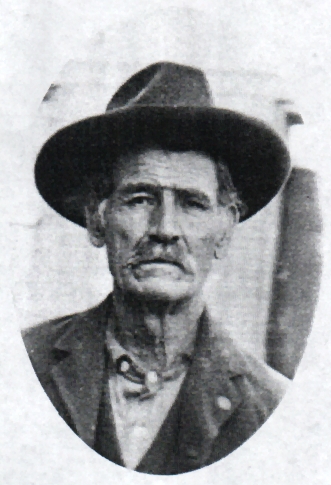
    There are several photos that I have seen on different family tree platforms. I trust that these two show David Clark, Sr., because they have his name written on them. Unfortunately, I don’t know whose they are, or their provenance. And below, a picture of the family attending David’s memorial in 1948. (At least, that’s what my family told me!)

    David Jr., Jerry, Vicie (nee Reynolds), Frank, Jennie May (Gipson; later, Cooper), Russ, Alma (Martin), and Traxel Clark. 1948.

    Being able to see these faces and compare them to each other is part of the puzzle. There is a danger of seeing similarities that aren’t there, especially if we aren’t sure about the provenance of the photos, but once the documentation starts to come together, the shared features start to make sense.

    Life and Times of David Ulysses Clark

    I have a lot of questions. Most of them are the sort of thing that wouldn’t be documented, like “who is the namesake of ‘Ulysses’? Homer, James Joyce?” But also, more mundane questions like, “Did he go to school? Was he a religious man, as the rest of his family seems to have been?”

    The 1900 Census, taken just two years after David and Vicie were married, lists his occupation as “Day Laborer,” and 1910 and 1920 call him a woodworker and a laborer in a furniture factory. The 1910 also tells us he attended school and could read and write, but that only implies a high school level, not college or seminary. In 1930, he was in Arkansas, working as a sawyer in a stock yard. I think it’s safe to guess he was a tradesman rather than a scholar.

    David’s early life was spent in Oakview, Boyd County, Kentucky, where his father, Joel, was a teamster and grocer in or around Ashland. David was a middle child among 10 siblings. I am pretty sure that he was born in June of 1872, but some of the records are murky on that point, and his grave marker says “1874.” There will be a lot of facts in his story that don’t add up or leave us wondering.

    David and Vicie were married on 4 September 1898, “at the home of John Clark in Oakview,” witnessed by John (his brother, John Thomas Clark) and Joel Clark. Their daughter, Opal, was born the following May.

    Growing up, I was always told that Grandpa Russ was the youngest of twelve, but I only have a total of 11 documented. Over the next decade, they had Traxel (1900), Alma (1902), David, Jr. (1904), Sallie (1907), and twins, Jennie May and Thomas Ray (1910). After 1910, the family added Jerry (1913), Floyd (1915), Frank (1917), and Russ (1920). They lost little Floyd in 1916; all I had been told about Floyd was that he “choked on a pear.” However, his death record says the cause of death was “cholera infantum,” an historical term for acute, often fatal, infantile gastroenteritis.

    I don’t know whether the family moved to Arkansas before the Great Depression hit, or if that was what drove them to move. Either way, David and Vicie, and the four youngest boys, were in Bowie, Desha County, in 1930. All of the older children (including Jennie May) were married and on their own. Traxel lived in Bogalusa, Louisiana, and Sallie lived in Alabama, but everyone else stayed in the general area, either staying in Ashland or Ironton, or moving to Middletown, Ohio, a 3-hour drive north of the river.

    Traumas, Large and Small

    I want to be clear that I’m speculating about the impact the Great Depression and World War II had on this family.

    Grandpa Russ was tight-lipped about what he thought of his parents and siblings, and I can only read between the lines of what he told me, and compare what he did tell me to the records. I’ve written before about the kinds of stories Grandpa liked to tell, and how unverifiable they were. I just mentioned the story about little Floyd, and how the record differed from what I had always been told.

    I suspect that David and Vicie were separated for a time, probably around 1940, when their family is missing from the U.S. Census. It’s not hard to imagine that the hard times of the 1930s, and the start of a war that Russ fought in, put stress on the family’s financial situation. We know all kinds of stories about the struggles from illness or injuries in those pre-penicillin years.

    Grandpa’s attitude towards alcohol, gambling, and other vices always left me with the impression that his father (and possibly his brothers) struggled with addictive behaviors. Because he wouldn’t talk about it, I could be misreading the situation. It could be that Vicie was the one who struggled with alcohol, and if either parent was involved in infidelity, that could explain the unspoken anger.

    But even though I don’t know what happened, I know that Grandpa was affected by something.

    And the result is that I don’t know what to say about his father.

    And In the End

    When David U. Clark died in January 1947 at the age of 74, he was living with his daughter, Jennie May, and her husband, Gene Cooper, in Benton, Arkansas. His obituary said he had lived there six weeks, and that he was a member of the Baptist church in Ashland, suggesting that is where he had been living. The obituary said that Vicie’s address was in Middletown, Ohio, where Alma and Russ were also residing with their families. As I said, that’s a few hours north of Ashland. And David was survived by four of his brothers and four of his sisters, most of whom still lived in Ashland. Was that where he had been living? Had Vicie been there, too? How recently had she moved to Middletown?

    Again, I don’t wish to read too much into all of that, but the questions remain. Why did David move, but not Vicie? Was their health the issue? Was there some other factor involved?

    When all is said and done, most of those questions don’t matter much. Those affected can’t be affected anymore; those who come after us may not know enough to ask the questions.

    I will just have to accept that I know what I know.

  • Whether this is your first time here, or you just need a refresher:

    I’ve spent some time over the past year or so laying out the stories of the Callin family that allegedly moved from Westmoreland County, Pennsylvania, in 1810 and 1816, and settled on a farm in Milton Township, which was, at the time, in Richland County, Ohio. I say “allegedly” because the records supporting my version of events are few, and they don’t contain a ton of information, so I’ve had to extrapolate a lot.

    But you can catch up on this page for Milton Township, Ohio.

    The Older Hugh Who Left

    The two brothers, James and John Callin, who settled in Milton Township, had 15 children between them, as far as I can tell. George W. Callin’s Callin Family History (which refers to James as “James 2nd”) names three of James’s six children: Thomas, Alec, and James. Richland County marriage records revealed two more: daughters Elizabeth and Sarah, who married Montgomery brothers.

    In 2021, I found some evidence that suggested that James 2nd also had a son named Hugh, who married Lucinda Montgomery and then moved to Louisa County, Iowa. (See “The Iowa Branch of the Callin Family” at the old Blogger site.) I wrote about Hugh, Alec, and James in “Alexander Callin Buys Some Land,” as well.

    As far as documentary support for Hugh’s story, I’ve been unable to find more than a reference to Hugh and his family in the Faxon Family History, and the two Hugh Callin listings in the 1830 and 1840 U.S. Census records – the first in Milton Township, the second in Louisa County. For now, I’m holding onto the theory that the Hugh Callins named in these records are a) all the same man, and b) the son of James “2nd” Callin. This Hugh would have been born about 1803 in Pennsylvania, and while his death is not recorded anywhere that I have found, his widow, Lucinda Callan, was listed in the Iowa State Census in 1847, suggesting he died about the same time as his younger brother and his mother.

    The Younger Hugh Who Stayed

    George Callin’s Callin Family History names all nine children of John Callin. Three of them (Hugh, Sarah, and Elizabeth/Eliza) seem to have grown up in the same house as a first cousin who shared their given name. This raises many questions that I will probably never satisfactorily answer. (Like, “What did the family call them to tell them apart?”)

    John’s son, Hugh, was reportedly born in Pennsylvania in 1817. I suspect he was either born a year or two earlier than that, or that he was born in Ohio, after John moved the family in 1816. Either way, Hugh was reared on the farm in Milton Township and married in 1843. His wife’s official name was probably either “Barbara Mathews” or “Matthus,” but George Callin and several official records give her name as “Barbary.”

    In 1850, Hugh and Barbary lived in Milton Township, Ashland County, next door to a John Mathews, who I suspect strongly to be Barbary’s father. Hugh’s occupation was recorded as “chair maker,” and his real estate was valued at $1,000, or about $42,000 in today’s money. When Hugh died in 1856, Barbary inherited enough to put their son, Fred, through medical school – and you can read about what happened to Fred and his siblings in The Angry Doctor.

    The Younger James Who Stayed

    Unlike his older cousin of the same name, this James Callin married Susannah Stout in 1839 and stayed in Richland County, Ohio. Susannah was about ten years older than James, and was in her early thirties when their elder daughter, Mary Ann, was born. Their younger daughter was Sabra Ann, one of two Sabras I recently wrote about in Two Girls Called Sabra Ann.

    Susannah (Stout) Callin (1807-1899)

    James and Susannah lived in New London, Huron County, Ohio, for at least ten years, appearing there in the 1850 and 1860 Census records. In 1860, Mary Ann married Elliot Glyde Day, in Huron County. The Day and Callin families must have been close friends, because not only did their daughter marry a Day, but when James died in 1873, he was buried in the Day Cemetery in Huron County.

    There is another interesting, if elusive, connection between Day and Callin families, and it involves the fate of that older cousin. James.

    This Is Complicated, But…

    See if you can follow along:

    James 2nd’s son, named James, married Margaret, the youngest daughter of James 2nd’s brother, John. If it helps, here’s a side-by-side list of who’s who:

    Margaret’s siblings, James (who married Susannah Stout) and Hugh (who married Barbary Mathews) are listed at the bottom of her sibling list.

    James and Margaret were married in Richland County, Ohio, in 1841, and I think his brother, Hugh (husband of Lucinda Montgomery) was already in Iowa by then. My hunch is that marrying first cousins in a small town environment like Milton Township may have been an uncomfortable taboo, which prompted James and Margaret to move to Iowa to be near his brother’s family. They may have gone with Alec and “Aunt Mary” (shown as “Mary 2nd” in the chart on the right).

    If you take into account the uncertainty of the dates, it looks like many of the Callin folks who moved to Iowa died within a year of 1845. Aunt Mary (1846), Hugh (abt. 1846), and Margaret’s husband, James (abt. 1844). And if you read “Alexander Callin Buys Some Land,” you know that the Callin Family History claims that after James died, Margaret asked her brother, William, to come to Iowa and return her and her two sons, William and Warren, to Ohio.

    The Callin Family History does NOT tell us who raised Warren, but it says this about William: “William Callin was left an orphan in childhood about the age of 3. Was adopted by and raised by a family named Day near New London, O.”

    So Margaret’s son, William, would have been James and Susannah’s nephew; and if this is the same Day family, William would have been living with them by 1850, and yet I can’t find a Day family in Huron County with a boy named William (either under “Callin” or “Day”) in the records. I can’t find Warren at all, under any name, in any of the families.

    Just to wrap up the story of James and Margaret’s lineage: Warren died fighting in the Civil War, and William was captured and imprisoned in Andersonville. William married Theodoan Johnson, and they had a daughter, Edith May (Callin) Hanley. Edith’s only child was her son, Lyle Elliott Hanley (1902-1935), who did not have any children.

    And so, no one surviving today needs to worry about learning that their great-grandparents were first cousins. At least, no descendants of this family.

    One Day More

    Mary Ann and Elliot Day had three children. Estella Lillian (Day) King (1862-1912) did not have any children, and Clarence C Day (1876-1877) died young. Their youngest son, Thor, also died young, at 24 years of age, leaving behind a young widow and a 2-year-old daughter, Marian Estelle (Day) Fletcher (1902-1953).

    Thor Glyde Day (1880-1904)

    Thus, the Callin descendants of James are hiding under other surnames. And as far as Hugh’s descendants, the only male grandson was the surviving son of Dr. Fred, Moreland Guy Callin (1887-1964), who was born in Ohio, but moved his family to Florida.

  • Ahnentafel #19: Hannah Merle Huff (1889-1984)

    Merle Huff was the baby of the Huff family of Savonburg, Kansas. She also lived longer than her siblings, reaching her 95th year, if not her 95th birthday.

    Here she is, surrounded by her family in 1983:

    She died one month short of that milestone. I was 12 years old when she died, and because she lived with my Grandma Nancy, she was close enough for us to visit frequently. Thus, Great-Grandma Witter was one of the two great-grandparents I actually met, and the one I knew best, if a 12-year-old just beginning to realize there was a world outside his own head can be said to “know” anyone. So, when I say “I recall” things about her, keep in mind that my memory is not a trustworthy record. But I’ll do my best to convey what I do remember.

    Grandma and Grandpa had a swimming pool, which meant that whenever my parents were willing to make the 30-minute drive from our house, we had a swimming pool. Their pool sat outside a large, screened-in patio area, and had a small pool house, which was detached from the patio and sat alongside the pool area. That pool house had a small bathroom and what I suppose was meant to be a changing room. It was just big enough for a bed, a TV stand, and a chair with a folding table. That is where Grandma Witter lived when some of the age-related illnesses that didn’t yet have names in the 1980s began to make it impossible for her to live on her own.

    I don’t think I questioned her living situation back then. When you’re 12, and there is a Star Wars sequel due in theaters, you aren’t thinking about the living conditions of elderly relatives. Now, it might strike me as problematic to put an old woman in a pool shack in one’s backyard. But I have the impression that Grandma Witter preferred to keep that little piece of independence rather than live inside Nancy’s house – and I also seem to recall that Nancy kept her house at 65°F year-round, which was far too cold for a woman who had lived in the desert Southwest in unconditioned farm shacks since the 1920s.

    Values and Mysteries

    Grandma Witter wore voluminous floral print dresses, like the one in the portrait above; the kind I think of when I read about pioneer women in books. I remember that she smelled of baby powder, and that her hands were strangely soft despite looking like hands that had been doing hard work for half a century.

    When we visited, we would go back to the pool house and sit with her for a while. She had a few hobbies that I didn’t understand, like her stamp album full of stamps she had saved from decades of correspondence with her family. She had not kept the letters or postcards, with a few exceptions, but she would tell us about some of the places her brothers and sisters had gone. She probably talked about how Grandpa Dick went off to join the Army and lived in California, or when her brother Chet, a teacher who lived in Texas and Colorado, would write during the school year.

    We had no idea who these people were, of course. She would refer to “daddy,” and I didn’t know until years later that she didn’t mean my dad, or that when she talked about “grandpa,” she didn’t mean Bob. The people she remembered were completely unknown to me, although now, of course, I might have a better idea of who’s who.

    I remember asking her whether any of the stamps were valuable. She would laugh and say they weren’t worth any money, but they were valuable to her, because when she looked through them, she remembered the people who sent them to her. I think that idea must have stuck with me and formed the seed that grew into Mightier Acorns, because few of the people I have learned about would be considered “prominent” from a collector’s point of view.

    Their value has little to do with financial worth or historical prominence. But they were here, and they meant something to each other, and now, to me.

    A Vanishing Breed

    Despite belonging to a large and loving family, Merle’s siblings were scattered across the Western U.S. Only her older brother, Chester (Chet) Huff, had sons to carry the Huff name forward, and between them they had five daughters. Her oldest brother, Albert B. Huff, had four daughters: Maurine, Maxine, Bruce, and Ezell. And their older half-brother, Perry Huff, had a daughter, Doris. In no particular order, Merle’s nieces’ families can be found with the following surnames, if you care to go hunting:

    • Pullins
    • Sampson
    • Davis
    • Pendergast
    • Cochrane
    • Tullis
    • Stokes
    • Reeder
    • Keyes

    Merle’s two older sisters were Bertha (“Aunt Bercie”) and Iva, and their descendants include the names Sample, Akin, and More. All of these surviving cousins lived in Texas, Colorado, California, Washington, and Oregon. That’s a lot of stamps.

    Albert B. Huff was the last sibling to leave Merle behind when he died in 1973. She survived him by more than ten years.

    Stories That Stick

    I said last week that Dick Witter was considered a “pioneer settler” of Arizona, but that it made more sense to me to frame his arrival as a halfway point between Arizona’s history and his own. Merle’s story, like Dick’s, seems to be less about forging something new and more about preserving something. What that something is was not something they put into words, and the more I learn about them, the more I think we don’t understand them.

    But the wrong story is often the one that sticks.

    If you read the first part of Great-Grandma Merle’s Travelogue, you can see that the Huff family left behind an established farm in Kansas in a covered wagon and journeyed West to Colorado before catching the train down to Phoenix. Everything about their journey speaks of a settled land, less dangerous than it had been a decade or two before. The roads they followed, the conveniences they took with them, and the railroad that took them through the more difficult terrain were all signs of civilization to them.

    The farms they worked, the crops and cattle they grew, the town of Glendale they helped build: all of that represented progress to them. To Dick and Merle, the Pioneers were people who left the places where there was support for their journey, often facing unknown dangers… and some “should have known better” dangers, especially from the people the land belonged to. The railroads, the canals, the shops, the churches, the towns – those were the civilization they were moving toward when they left Kansas.

    But in the popular imagination, Dick and Merle were the old-timey pioneer folk. Even my Aunt Vicki kept that version of their history in her head, remembering the Huff family’s journey as “coming to Arizona by covered wagon,” which was only partly true, at best. And I know from her recording that Merle did her best to pass her memory down straight.

    In the end, none of us owns the history that our descendants will remember us for. The best we can hope for is that we’ll be able to pass on something of what we experienced to our children, and that they’ll be able to understand it.

    I’ll be happy if they just learn what is valuable about us.

  • Last week, you may have noticed I didn’t post on Wednesday. That’s because I was out of town, and I was too lazy/busy to write a post in advance.

    Last week was our 31st wedding anniversary. To commemorate taking that leap, we spent an afternoon taking relatively safe leaps, courtesy of Zip Lost Pines:

    We also got dolled up in our finery and spent two days at the Faire:

    Our home for the week was the Elves’ Aerie, a treetop yurt not far from the Sherwood Forest Faire in McDade, Texas. Despite a couple of surprisingly cold days and some gusty winds, we were very comfortable, swaying in the trees.

    If you are interested in glamping half an hour East of Austin, TX, we can point you to the right place!

    The important news is that we’re back, and I should be able to stick to my schedule again.

    Until Friday…

  • Ahnentafel #18: Howard Ray Witter (1890-1963)

    By the time he died in 1963, Dick Witter was considered by his neighbors to be a pioneer, having settled in Arizona just as it attained statehood. But the Arizona Territory had existed for nearly 50 years before he arrived, and people had been living there for thousands of years before that.

    A more honest framing would be to say that young Dick Witter arrived only a couple of years before Arizona became a state, and he was one of those rare individuals who didn’t mind the heat and toil required to build a life in the Valley of the Sun. The arrival in Arizona of both Statehood and Howard Ray Witter happened at the midpoint of a century that started with the creation of the Arizona Territory (1863) and ended with his death in 1963.

    And it’s no exaggeration to point out that the world of 50 years before that midpoint and the world 50 years after were profoundly different from each other.

    Mystery: Where Did “Dick” Come From?

    The name “Dick” is generally understood to be a diminutive nickname for “Richard,” but no one in the family seems to know how “Howard Ray” became “Dick.” And, of course, the word has taken on an unfortunate meaning since his day. The simplest explanation for this is that his parents only knew the nickname. Born in 1890, it’s possible that the impolite usage hadn’t made its way to their quiet, polite Kansas town, yet, as Wikipedia cites A Dictionary of Slang and Unconventional English (1984), p. 305, to claim “The term came to be associated with the penis through usage by men in the military around the 1880s.”1

    The rest of his family had logical diminutive names: his father, Abraham Howard, was “Abe”; his mother, Nancy Ellen, was “Ella”; and his older brother, Edgar Leroy, was “Roy”. I suspect that Ella just thought it was a cute way to refer to her little “Dickie-boy,” and it stuck. Considering the widespread usage of the phrase “Tom, Dick and Harry” as a generic way to refer to anyone, it would have seemed like a harmless enough name.

    I guess that changed; just one of the less profound differences between 1863 and 1963.

    Where Dick Came From

    The more literal answer to the question “Where did Dick come from?” is that he and his siblings were born in Wamego, Kansas. His parents’ families were from Ohio and Pennsylvania, and they moved west near the end of the Civil War. Abe Witter was about the same age as the state of Kansas, less than 5 years old, when his family moved to Pottawatomie County around 1864. Ella Shriver‘s family moved from Ohio to Missouri when Ella was about two years old, and moved to Kansas, not far from the Witter family, between 1880 and 1885. Abe and Ella were married on 11 February 1885.

    Here is the Witter family in 1908:

    on the back of the original:
    “A. Witter family – St. Mary’s Kansas
    taken – 1908 at Wamego, Ks.
    left to right standing – Clarence – Nell – Roy – Dick – Mary
    seated – Father – Coral – Mother”
    (Nell Witter signed the upper right corner)

    Not Afraid of a Little Hard Work

    According to Grandma Merle’s Travelogue, Dick went to Arizona a couple of years after this family portrait was taken, in 1910 or 1911. He worked the beet farms and stayed with his Uncle Charlie Gilbert and Aunt Eunice. Eunice was Ella’s sister. Merle described how he stayed in a tent camp in the fields and eventually bought himself a few acres to farm.

    Here is a picture postcard he sent to his sister Nell, dated 4 May 1916 or 1917, showing off his home and telling her his latest news:

    And, of course, he met and married Merle not long after this was taken, on 14 May 1917. A few months later, Dick enlisted in the U.S. Army on 19 Sep 1917 and served as a private first class in the 330th Auxiliary Remount Depot of the Quartermaster Corps at Camp Kearney, California, until 26 Dec 1918.

    An Arizona Family

    I grew up in Arizona, about 20 miles north of where Dick and Merle maintained their farm near what is now 59th Avenue and Bethany Home Road. When I look at these photos of Dick – squinting, his skin tanned a dark brown, his clothes full of dust and sweat – I can feel the dry heat in the air around him and the gritty give of the dirt under his boots.

    In my childhood, twenty years after Dick’s passing, air conditioning was finally becoming common, but it wasn’t yet everywhere. My dad kept an evaporative (aka “swamp”) cooler running in our house until the late 1980s. I doubt Dick spent much time in air conditioning. But I’ll bet he considered himself lucky that by the time he came to build his farms, the Arizona Canal had been bringing water to the Valley for a couple of decades. The railroads that brought most of the necessities he needed had been operating since 1895.

    The family he and Merle raised, my grandma Nancy and her brother, known as Dick, Jr., knew the meaning of hard work in the heat, but they also experienced a growth of suburban comforts in a town that they would call home all their lives. After surviving the Great Depression and World War II, Dick Jr. became a police officer and, later, a judge. Nancy became an art teacher.

    You can see the tug of war of history in these photos, between the days when dirt and irrigation meant life and when electricity and modern conveniences began to arrive. Dick Witter saw those things arrive in Arizona, one by one. Of course, I doubt he would have romanticized any of his experiences.

    Water is necessary; everything else is a convenience. Everything else becomes a tool to pull your money out of your wallet. But if you want to stay ahead of the thrist and the dust, you keep showing up to grow the beets, or, later, milk the cows. Keep the kids fed, keep Merle happy.

    Postscripts You May Have Read First

    One of the first family history posts I wrote was “Twice Honored,” which described two certificates I inherited commemorating Dick’s service in World War I. If you also read “Grandma Merle’s Travelogue” entry I linked above, you know the story about his service, as Merle recalled it.

    When I found those two envelopes, they didn’t look like they had been opened in years. There was no evidence they had been displayed. But they had been kept.

    I think that mute statement about humility and perspective says a lot about the life Dick Witter led.

    1. Wikipedia article: Dick_(slang) ↩︎

  • Ahnentafel #17: Bertha May Greenlee (1885-1971)

    Bertha May Greenlee was the only child of an only child, the only surviving descendant of three generations of unrecorded tragedy.

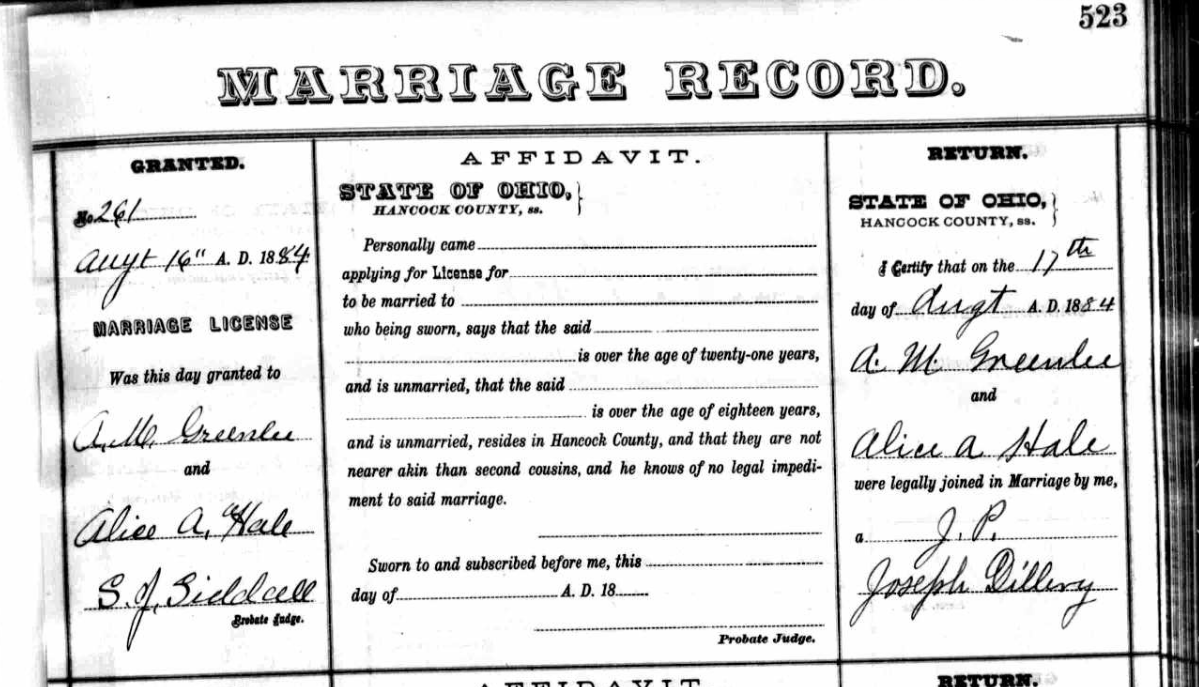
    Bertha was born on 5 December 1885 in Arcadia, Hancock County, Ohio. She was nearly 2 years old when her father, Allen Greenlee, died suddenly. Her mother, the former Alice Hale, remarried in 1889, when Bertha was four, and Bertha was adopted by her stepfather, George McClelland Cramer.

    In 1891, when Bertha was six years old, her father’s grandmother, Eleanor, died at the age of 81. The only remaining relative on her father’s side of the family was a great-aunt, Elizabeth McComb, who also lived in Hancock County. But her mother’s family, the Hales, and her adopted family, the Cramers, made up young Bertha’s world.

    Bertha’s half-sister, Mamie, was born in 1894, and they remained close after they grew up. I have the impression that Bertha was old enough not to feel threatened by the attention given to a new baby, and that she was well-loved and well cared for.

    Love in the Twentieth Century

    On 9 June 1906, 20-year-old Bertha Cramer married John Q. Callin in Fostoria. The Callin family had business interests across central and northern Ohio, and one might think that the sons of Union soldier John H. Callin would have had fine prospects and solid reputations.

    But by 1905, I suspect that some of that reputation had begun to change. John Q’s older brother, Byron Herbert, who had married the daughter of John Muir in 1896, left his first wife behind in Ohio and was teaching in South Dakota. In November 1905, he was involved in a hunting accident that left one side of his face disfigured. The younger girl who gave him first aid and drove him to the doctor later became his second wife1. This wasn’t treated as a scandal by the newspapers, but that wouldn’t stop the gossip among the family or the neighbors.

    John Q., as we mentioned last week, had married a fellow teacher in Dayton in 1901, and we don’t know how or why that marriage ended. Whatever his story was, Bertha must have known something about it, and she decided to marry John anyway.

    I speculate that John H., known as “Colonel Callin” for his respected position in the Grand Army of the Republic in Wood County, had ambitions for his children, and I suspect he maneuvered Herbert into that first marriage to Fannie Muir. If so, John Q. certainly saw how his older brother’s first marriage played out, and marrying an older, divorced woman in 1901 might have been his way of rebelling. We do know that John Q’s sister, Emma, married one of John H.’s business partners, George D. Matcham, in 1907, which seems to support my speculation about John H.’s matchmaking activities.

    Of course, nobody wrote anything down that might confirm or refute these wild guesses on my part. You will have to decide how to explain the facts we see in the records. That these things happened is evident; why they happened is an open question. Speculation aside, however it came about, John and Bertha made a successful 50-year journey together. And that tells me that whatever their circumstances before 1906, they chose each other and were happy with that choice.

    Keeping the Children Close

    From Bertha’s point of view, as an only child, she and John had a large family, but compared to the previous several generations of Callin families, having only three children was a departure. The birthdates of their children were spread out, too: Yvonne in 1907, Norman in 1912, and Bobby in 1920.

    There is no doubt that John and Bertha’s affection for their children ran deep, but circumstances frequently kept them apart. During the 1920s, when Bob was a toddler, John took a job teaching in upstate New York, and while John, Bertha, Norman, and little Bobby lived in Schenevus, NY, Yvonne stayed in Ohio, living with the Cramers.

    Hired about 1921, John left the Schenevus High school district in 1923 for another teaching position a Philmont high school in Columbia County. Bertha was honored by the Baptist church with a “gift of gold” for two years as a contralto soloist in the church choir, and Norman was awarded a scholarship. When they moved, they sold some household goods:

    One oak buffet, 6 oak dining chairs, dining cook stove, with oven; oil heater, Simmons ivory bed (new), Foster Ideal springs (new), dresser, carpets, rugs, 150 Mason’s fruit jars, kitchen chairs, washtubs, boilers, clothes rack, and numerous other household articles, tools, etc. It is especially requested that all goods be removed on day of sale. Terms cash.

    I think having Yvonne live in Ohio was difficult. She was 14 when John and Bertha moved to New York, so she began high school that year, and she seems to have spent a lot of time with Mamie, who was old enough to be an appropriate chaperone but young enough to feel like an older sister. By 1926, though, it was Norman’s turn to start school, and he attended Fostoria High, like his sister. Either the whole family had moved back by that year, or he prevailed on them to let him live with his grandparents, too. Either way, by the time he graduated, the whole Callin family was back in Fostoria.

    Norman was a well-regarded boy and did well in high school. He was the humor editor of the school paper and was apparently a very funny person. Not long after he graduated in 1930, the family moved to Orange County, Florida, and Norman was married there in 1933.

    Funny Papers

    John Q. died in 1956, and Bertha survived him until 1971. I know what I know about them mainly through the scrapbook and letters I inherited from my Grandpa Bob, their youngest son, and from newspaper articles I’ve been able to find on Newspapers.com.

    Norman’s success as a humor editor was apparently not an aberration. This could be a projection on my part, but based on what I read in their correspondence, all of these Callin people were very funny. I know this about myself, my children, my dad, and Grandpa Bob from firsthand experience, so it’s easy to see that same dry wit and jovial attitude coming through the notes John and Bertha sent to Bob.

    Here’s a sample of Bertha’s wit from a letter sent in 1948 – rueful financial news, complaints of ailments, but each with a “stinger”:

    Dear Kids – Recd. Your letter some time ago and have been wating to see how we came out with the house. We have finally sold it but only got $1500 down on it, and after the sellers commission comes out we won’t have but 1200 left.

    We are going to try to get a little house up with it, but don’t know how far it will go. Was in hopes we might get cash for it but took the best offer. Got $5500 for it. I am hoping I can spend Thanksgiving with you, but don’t know as yet. Dad can’t get away and I am not sure I can. But here’s hoping.

    We sold all our puppies but it has taken most of that money to pay our bills. So I guess the old Callin depression is still on.

    I have been having a rash of some kind all over me and it is in my eyes also, so I have to get over this at least partially before I can go anywhere. It is an allergy so the Dr. says. I think it is one of Florida’s “finest.”

    For reference, that cottage they sold for $5,500 was roughly equivalent to $75,000 today. They were building and selling cottages around Orlando for several years in this way, and if they managed to sell a house every year, their “old Callin depression” couldn’t have been too arduous.

    By 1948, Norman and his family were living in Baltimore County, Maryland, and Bertha’s remarks in that same letter suggest some hurt feelings without giving us any great detail:

    Norman has been back in the hospital for 2 weeks but is home now, and a lot more in debt. They say he has gall bladder trouble and I guess it is pretty severe. He says he is going to whip it or it will whip him before he goes back to the hospital. I haven’t heard from them for over a week so maybe he is getting better. I didn’t go up this time when he was sick, because they seemed to think I shouldn’t have come the other time. I was there, so from now on they will have to send for me if they want me.

    Yvonne was living in Florida, too, and she was active in their church – but this was not without drama:

    Yvonne isn’t playing at the church anymore and we are both pretty well fed up with the clique over there. They have kicked her in the teeth a couple of times and even tho most of the church is with her, they don’t have any back bone. But like everything else I guess it will all blow over.

    These examples may not seem like much to someone outside the family, but I feel like I get a sense of their personalities.

    I could be wrong, of course. As I was editing John’s essay last week, my wife saw the portrait of John and Bertha you see above and said, “What an angry looking man!” And I suppose if you didn’t grow up seeing your dad and your grandfather making that face, you might not see the twinkle in the eye and the approach of the subversive joke.

    Which is why it is so important to capture those feelings, intangible as they may be.

    1. Ruby Cole saves Herbert Callin Article from Nov 22, 1905 Argus-Leader (Sioux Falls, South Dakota) ↩︎
  • Thoughts From a “Heritage American”

    Long-time Mightier Acorns readers are probably familiar with some of the basic foundational concepts of genealogy and family history. You have probably seen references to “My Sixteen,” and if you have spent the time tracing your sixteen great-grandparents, you probably have a good understanding of who those sixteen people were and where their ancestors came from.

    Probably.

    And unless you or both of your parents were born in another country, the odds are that your family tree includes several generations of U.S. citizens – people who were born in the United States, educated in U.S. schools, fought in U.S. conflicts, and voted in U.S. elections. By any rational reckoning, if you have any of those kinds of roots here, you are an American1 with an American heritage.

    So when you see or hear news referencing “Heritage Americans,” you might not realize that the people using that term don’t mean you.

    What Does It Mean?

    I know people don’t like being assigned extra homework, but I encourage you to at least read the first part of “Are You a ‘Heritage American’?” from The Atlantic, written last October, for context. In it, the phrase is given some specific parameters that ought to trigger scepticism in any family historian:

    The United States faces a fundamental rift “between heritage Americans and the new political class,” Auron MacIntyre, a columnist for Blaze Media, argued. “Heritage Americans—what are those?” [podcaster Tucker] Carlson asked.

    “You could find their last names in the Civil War registry,” MacIntyre explained. This ancestry matters, he said, because America is not “a collection of abstract things agreed to in some social contract.” It is a specific set of people who embody an “Anglo-Protestant spirit” and “have a tie to history and to the land.”

    For now, I’ll set aside the fact that the U.S. Constitution is being dismissed as “some social contract” here. But as someone who has spent a lot of time and effort going through “the Civil War registry” (which is not a single, simple thing, actually), this framing raises several objections. How many of one’s surnames does one need to find to qualify? Do maternal lines count? What about the German-Protestant spirit, or the many Catholic and Jewish families who fought in the Civil War? Why the Civil War? Why not the Second World War or the Revolution, if we’re arbitrarily choosing a watershed time period?

    Perhaps I’m giving people like MacIntyre too much credit for knowing our history, but the Civil War (1861-1865) seems to have been chosen precisely because it sits in a place in U.S. history just before the railroads united the continental coasts and the growth of the Midwest began to turn us into a world power, instead of the remote backwater we had been during our first four score and seven years. It is recent enough to have better records, and it captured a moment in time after the U.S. absorbed nearly 100,000 Hispanic residents of Texas in 1845, but before immigration from Eastern Europe began to swell, leading to the need for places like Ellis Island (which opened in 1892).

    Choosing the Civil War instead of the Revolution, or the descendants of the Mayflower, means that more people can more easily claim to share this heritage. Choosing the Civil War instead of the First or Second World Wars means it is easier to exclude all of the Black Americans who gained suffrage and fought in those wars, and dodges the uncomfortable fact that two-thirds of the Japanese people the U.S. put into concentration camps during WWII were, in fact, American citizens.

    In other words, MacIntyre’s definition of Heritage American is obviously designed to only include specific people, and while that definition claims to “have a tie to history,” it ignores massive numbers of people who historically should be included. Since he doesn’t explicitly say he means “white people” (let alone define that concept), he can accuse anyone calling him out for his obvious racism of “bringing race into it” and pretend to be a victim.

    All of this is designed to exploit people’s biases to create out-groups that don’t belong, and you don’t have to be a student of history to know where that leads.

    What Am I?

    By MacIntyre’s definition, I absolutely qualify as a “Heritage American.” Every one of My Sixteen was born in the U.S., and only one of them was born to immigrant parents – Emil Carl Adolph Frey, whose father came to the U.S. in time to serve in the U.S. Army during the Mexican War and the Civil War. Every one of their sixteen surnames appears in “the Civil War registry” – most on the Union side. And while the “Anglo” prefix probably applies to only 11 of the 16, they were certainly all members of Protestant faiths.

    That said, this definition of “heritage” doesn’t include all of my family.

    I have two cousins who married women whose parents were interned in those Japanese concentration camps.

    I have cousins who found their way to the California-Mexico border and married Mexican citizens and/or members of indigenous American groups.

    My wife’s family includes several Swedish, Danish, and Norwegian immigrants who came over after the Civil War.

    I don’t need to have a provable family connection to understand that my Black cousins have as much right to be here as I do, or that my Native American cousins have every right to laugh a fool like MacIntyre back to Scotland for setting his parameters where he does.

    Perhaps you object to my characterization of MacIntyre’s idea as “foolish”? If so, then you and MacIntyre are definitely not alone in holding onto the idea that certain groups belong and others don’t. Benjamin Franklin wrote this about the German-speaking settlers in Pennsylvania, after he began serving in the Pennsylvania legislative assembly:

    “Few of their children in the country learn English; they import many books from Germany… The signs in our streets have inscriptions in both languages, and in some places only German. They begin of late to make all their bonds and other legal writings in their own language, which (though I think it ought not to be) are allowed good in our courts, where the German business so increases that there is continual need of interpreters; and I suppose in a few years they will also be necessary in the Assembly, to tell one half of our legislators what the other half say.”

    In other places, he wrote of the impossibility of the two cultures mixing, and contrasted the German standards of beauty for their wives against those of the English in terms which, if he were saying them about specific ethnic groups today, would have likely scuttled his political career.

    But unlike our modern champions of “Heritage America,” Ben Franklin went on to articulate the fundamental idea of unity between the colonies that allowed the Continental Army and Congress to force the break with Britain and found the United States. He was proven wrong about the future he predicted. His forecast of an untenable, unbridgeable split between English and German speakers clearly did not come to pass, as evidenced by my Witter, Piper (Pfeiffer), Huff, Cline, Shriver, and Opp ancestors.

    The lesson I take from this is that arguments warning of seemingly permanent, trending, and eternally intolerable differences between groups of people should not be treated with the weight that people give them. They are specious arguments that assume people aren’t capable of growing, changing, or setting aside their differences to come together for their common good when necessary.

    Or, to put it another way, the words we use to identify ourselves are always just words. When it comes to how we live and how we treat each other as neighbors, words aren’t what matter. Boring, everyday action matters.

    Being Boring Makes Us Great

    There is a seemingly unavoidable bias in the study of history towards emphasizing wars and conflicts. Even if your ancestors didn’t fight in a particular war, their lives were probably shaped around it. (Why do you think so many of those immigrants came to North America during the wars and upheavals throughout Europe?) When people talk about what their culture means and what is important to their identity, they often point to Great Deeds (in battle) done by people (usually men) who looked like them to define that identity.

    That’s because War and Heroes make exciting narratives.

    But when I study my family history, I find that the wars and the disruptions aren’t the part of the story that matters. What matters is that when the four or eight years of war were over, the soldiers went home and raised their families. They, along with their wives and other members who get erased from “the registry,” built their communities. They invested their time and energy into growing food, building houses, and schools. And they did that for countless boring years on end.

    I often think about the words Lin-Manuel Miranda had George Washington say to Alexander Hamilton:

    “Dying is easy, son, living is harder.”

    The truly important things, the things that make a living and make us good neighbors and strong families, are not done on a battlefield. They’re done in the kitchen or in the daily grind of existence. The things that make a common culture are things like good food and showing up for each other in times of crisis. And they include putting up with people you may not like very much, for whatever reason.

    As far as I’m concerned, if you or your parents came to live near where I am, built a life, learned a second (or third) language, and are willing to put up with the extra burdens carried by people who are “not from here,” you belong here as much as I do.

    I learned from studying my family history and Benjamin Franklin’s mistake. Our differences may make it impossible for us to see it now, but I am confident that being patient with each other and making it possible to do the boring things necessary for living is better for us all than creating unnecessary divisions that keep us apart.

    After all, we’re all cousins if you can go back far enough.

    1. I think it’s worth pointing out that the U.S. is only a part of America – as much as that fact may anger some of the people mentioned in this post. ↩︎