Mightier Acorns

Journeys through Genealogy and Family History

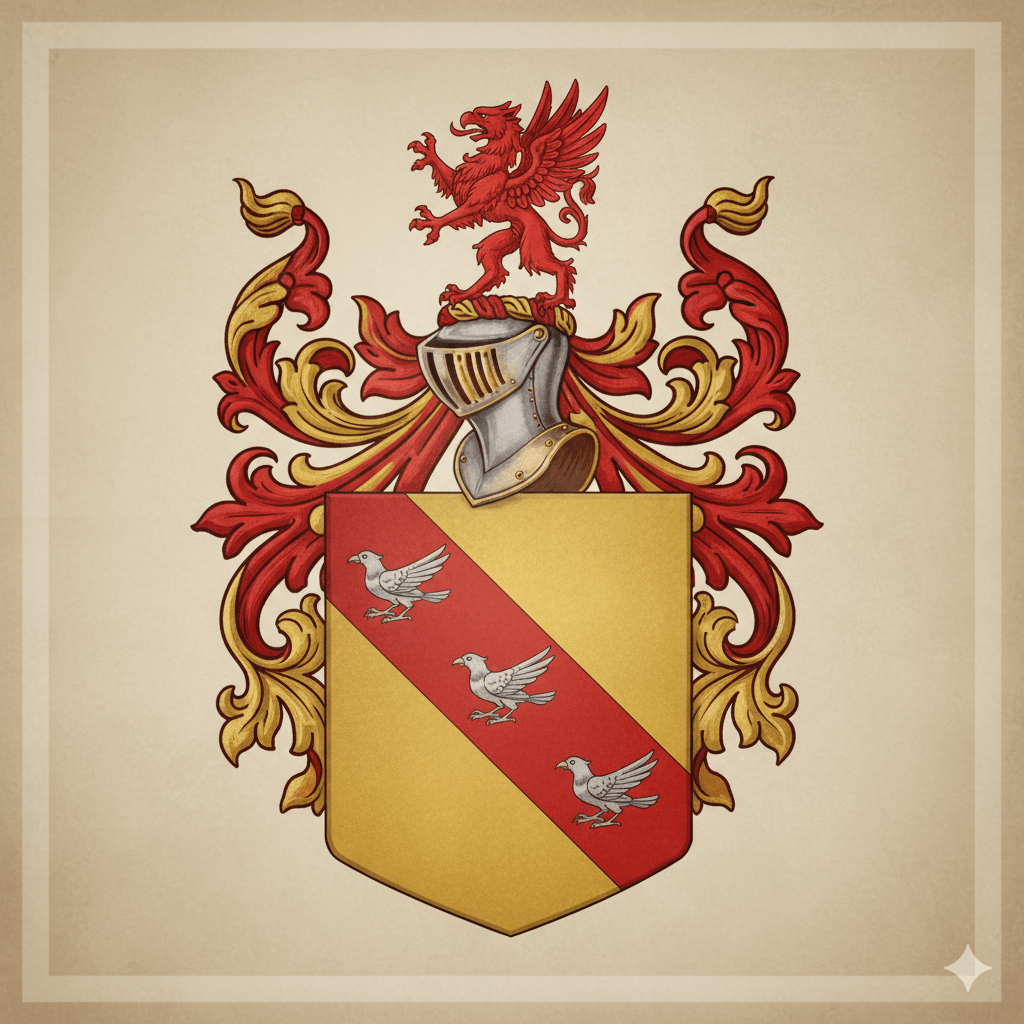
A parody of a family coat of arms designed with acorns as elements, with the motto "ex gladnis potentioribus" Latin for "from Mighty Acorns"
From Mighty Acorns
  • Those Who Remained: Part I

    When we last discussed the Callin families who settled on a farm near Olivesburg in what was then Milton Township, Richland County, Ohio, we took a look at who was displaced before white settlers, like the Callins, could move in. Brothers James and John Callin, the sons of our theoretical Revolutionary War soldier, James Callin, arrived on that farm in 1810 (James and his wife and children) and 1816 (John and his wife and children). Between them, James and John raised 15 children on that farm, many of whom would marry and move to states further to the West.

    Last year, we spent time talking about those families who left, the “Milton Township Diaspora” – this year, I want to spend some time with those who stayed. But even making that simple statement – that they “stayed” near Milton Township – is not as straightforward as it sounds. County and Township boundaries shifted as the population of Ohio grew, and the names of some places either changed or were never formally incorporated. Sometimes people moved from one place to another; other times, the names changed around them. And all of that makes it hard to find records to piece together the story of the families who lived in the area.

    Thomas and Nancy (Burget) Callin

    Thomas was the son of James and Mary Callin. He was born in Pennsylvania about 1801, and would have been about 9 years old when the family relocated to Milton Township. Assuming the six children counted in James and Mary’s household in 18201 were all their children, Thomas is the only one who did not leave Milton Township after he married.

    All I know for certain about Nancy Burget is that The Callin Family History tells us that Thomas was “Married to Nancy Burget 1822” and that a record found in “Ohio, County Marriages, 1774-1993” (Film Number 000388735) confirms their marriage in Richland County on 20 Nov 1823. I have a couple of theories about who her family was.

    In 1820, just a few lines below James Callin’s household, Thomas Burget and Boston Burget are also listed. Each of them have a female counted in their household the right age to be Nancy (Females – 16 thru 25). These two men might be descendants of Sebastian Burgett, who emigrated from Germany and settled near Robbstown, Westmoreland County, PA, around 1773. According to the account of the founding of Burgettstown, Smith Township, Washington County, PA2 (selectively edited for length):

    “The land on which Burgettstown is situated was located by Sebastian Burgett, a native of Germany, who emigrated to this country with his wife and three children… two sons, George and Philip, and a daughter Agnes. He removed to near Robbstown (West Newton), Westmoreland Co., before 1773… He came to this part of the country [referring to Smith Township] and located upon a large tract of land, which later was secured to his heirs. His name is mentioned as early as 1780 in connection with the Virginia certificate of George McCormick, Henry Rankin, and others whose lands he joined….

    “On the 28th of September, 1789, George Burgett, in behalf of himself, Philip, his brother, and Agnes, his sister, entered into an article of agreement with Roxanna, the second wife of Boston Burgett, for herself and her children [listed by name]…

    “About this time [June 1810] Mr. [George] Burgett removed to Jefferson County, Ohio, and later to Richland County of the sameState. [sic]”

    The account doesn’t name the children of George or Philip, but there are several tantalizing details in this account that I will need to follow up on. Not only do I want to figure out whether/how Nancy Burget was related to this family, but the discussion of a “Virginia certificate” for the land in Westmoreland County, PA, could lead me to the land records that could tell me where the Callin family came from!

    Also take note that “Sebastian Burgett” is also referred to in that sketch as “Boston Burgett” (where it mentions “Roxana, the second wife of Boston Burgett). One of the children of Sebastian/Boston and Roxana that I did not include in that quote was named “Boston,” and he is said later to have “studied medicine with Dr. S. J. Perry, of Burgettstown; removed from the township.” (I haven’t been able to determine if he is the Boston Burgett in the Census above.)

    The Children of Thomas and Nancy Callin

    Between their marriage in 1823 and Thomas’s death in 1841, the couple had ten children. I suspect Thomas may have died of tuberculosis, but we don’t really know. If he was sick, that may explain why he didn’t leave Ohio when his siblings did. Or, since we don’t know when his brothers left for Iowa with his mother, Thomas’s death may have come slightly before the rest moved away, and Nancy might not have wanted to leave behind the only home she knew with her surviving children.

    Whatever the situation, Nancy had three sons in their late teenage years to help her run their Milton Township farm and to care for the other children. I don’t believe this is the same farm that James Callin settled, because the Callin Family History says that Aunt Mary sold that farm when she left for Iowa.

    Of their ten children, only two are known to have survived childhood and had children of their own. Three of their sons who did survive childhood never married:

    James Callin (1823-1879) – little is known about James, who was listed under the name “Jane” in The Callin Family History. He appears in the 1850, 1860, and 1870 Census counts in his mother’s household, working as a farmer. He died at age 56.

    George Callin (1825-1865) – was a farmer, listed in the Boyd household in Vermillion Township, Ashland County, in 1860. His 1863 draft registration described him as unmarried, living in Richland County. The Callin Family History gives us this brief bio: “George, born 1825, died 1865; shot by a rebel sharpshooter while on pickete duty in North Carolina.” But according to Civil War Soldier records, he seems to have enlisted in the 178th Ohio Infantry and died in New York of an unnamed disease. That unit did see action in the Carolinas during the spring of 1865, and were at Raleigh and Charlotte until they mustered out in June, so it’s possible George was shot, then transported to a hospital up north, where he contracted an infection. He was 40 years old when he died.

    Elliott Callin (1841-1865) – was a farmhand living with his mother and brother James in Weller Township. He enlisted in the 26th Regiment, Ohio Infantry, on 8 Jun 1861. He died at age 24 in the hospital at Camp Chase, near Columbus, Ohio, on 16 Nov 1865, after being discharged at the rank of Corporal on 16 October. His unit served extensively in West Virginia, Kentucky, Georgia, Tennessee, and Alabama, New Orleans, and finally San Antonio and Victoria, Texas, where they mustered out on 21 October.

    Several of their daughters survived infancy, but still died young. None of these six children survived to adulthood. They are buried together in the Old Olivesburg Cemetery:

    • Caroline (1829-1847) – died at age 18
    • Sally (1830-1834) – died at age 3
    • Mary Ann (1836-1854) – died age 18
    • Able (1838-1839) – died in his first year
    • Emoline (1840-1851) – died at age 10

    Surviving Sons

    Two sons survived and had families of their own: Thomas Jefferson and Marquis Callin. We talked about Marquis’s family in “How the Headlines Got It Wrong” last January, and I have not been able to add any new information to that story.

    Thomas Jefferson “Jeff” Callin (1827-1902) married Susannah Egner in 1848, and made his living as a shoemaker. Jeff’s brother, Marquis, lived with him and probably also apprenticed as a shoemaker for a time.

    Jeff and Susan had two daughters in 1850 and 1851, Alice and Mary, who both died young; but the their six other children survived to adulthood. Their oldest son was Martin, whose story appeared in “A Tragic Wealth.” That story also links to stories about their other sons, Fred, George, and Delbert. You can read about Clara (Callin) Mohn on the old Mightier Acorns blog, and I covered all of them, including their youngest daughter Minnie (Callin) Urich, in a 2015 post, “The Sons of the Shoemaker,” over there.

    There Are More Than Just Sons…

    The six surviving children of Jeff and Susan each had several children, but among those grandchildren, only one had a son to carry on the Callin name; the rest either had daughters or no children at all. William Jefferson Callin (1885-1949) had a son, Joseph, in 1909, but his wife, Mary Elizabeth Zeiters (1890-1970) divorced him in 1911 when she was pregnant with their second child, a daughter named Virginia.

    Elizabeth remarried, and her second husband, Carl Don Lindsey, adopted Joseph and Virginia, and raised them as his own – as Joseph and Virginia Lindsey. Joseph died in 1983, but he and his wife did not have any children, and so the paternal line of descent from Thomas Callin is no more.

    Which means there are a lot of descendants of Thomas Callin who probably have no idea they are descended from Thomas Callin! I lost count before I reached 100 surviving descendants, and they are all living, so I don’t want to share any identifiable information, but here is an incomplete list of the surnames of living descendants:

    Knepper, Donnell, Davis, Kirkendall, Barnd, Kissel, Cutright, Motter, Washburn, Slone, Backensto, Green, Neeley, Baker, Jones, Roberts, Steele, Kessler, Lashley, Bowman, Trauger, Vanderpool, Dorion, Gullett, Harrer, Shealy, Mohn, Kratzer, Preston, Keller, Williams, Oberlin, Hess, Ports, Zimmerman, Souter, Montgomery, Tucker, Wirick, Koser, Swank, Rihel, Meininger, Clark, Teeter, Ament, Wallenius, Tschorn, Liles, Reed, Faulkner, Burkett, Mahon, and Hart…

    I only wish I had the time to track them all down and say hello!

    1. There is a weird quirk in the 1820 Census where they have two overlapping categories: “Males 16 to 18” and “Males 16 to 25.” Hugh, born about 1803, is counted in both categories; Thomas, at 19, is only counted in the second. ↩︎
    2. History of Washington County, Pennsylvania : with biographical sketches of many of its pioneers and prominent men by Crumrine, Boyd, 1838-1916; Ellis, Franklin, 1828-1885; Hungerford, Austin N. ↩︎

  • Ahnentafel #9: Nancy Witter (1925-2004)

    As revise my paternal grandmother’s WikiTree profile, I find that I don’t have as many records to cite that tell us about her life. I have scans of her husband’s diplomas, but not hers. I have records of his military service, but only a handful of letters capturing her wartime experience.

    I can’t help thinking about the million tiny ways women are erased from our history. It’s not a thing we do consciously, so it’s hard to correct for it. Correcting for erasure doesn’t mean that we should re-tell Nancy’s story in a way that isn’t true. We can’t tell Nancy’s story without talking about the people who were most important to her, like Bob and her father, and her brother, Richard.

    We can, and should, make sure her story is centered on her when we tell it. But also keep in mind that her story, the way she told it, works overtime to center everyone else.

    Best Friends and Equals

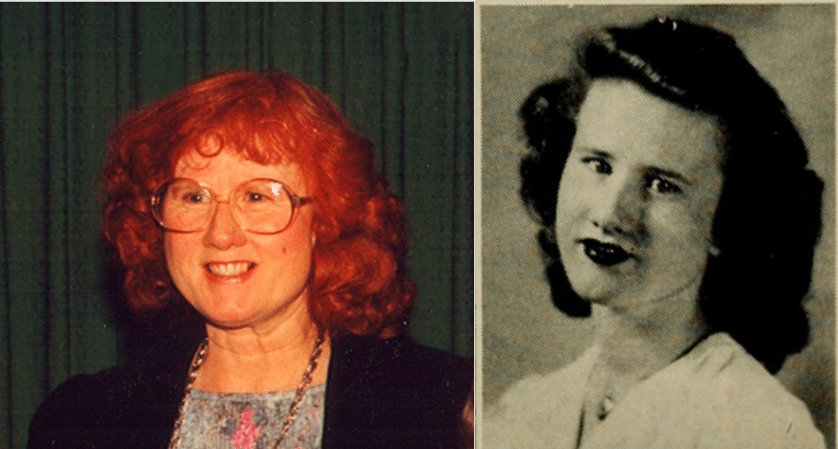
    The woman I knew as Grandma Nancy is the woman in the photo above: the dark orange 1980s top with wide lapels, the horn-rimmed glasses, the smile-that-isn’t-quite-a-smile, and a face that I sometimes see looking back at me from my children, my dad and sister, and from my mirror. These annual yearbook photos from her career as an art teacher are a small part of the record we have left, and the only photos that don’t show her with someone she loved.

    Most photos she is in show her with Grandpa Bob. Bob and Nancy were best friends and equals. They did almost everything together for more than half a century, from when they met in Glendale, Arizona, in 1941, until Nancy died in 2004. Their whirlwind courtship, raising their children after the war, their parallel careers as teachers, touring the country with their friends and family in their camper; all of it they did together. This is how I knew them, but their lives were so much more than I could have understood as a kid. And all of it often gets reduced to a tangible but empty statement about how long they were married:

    Sixty-tree years.

    Calling Bob and Nancy equals does not mean they were the same, of course. She was as intense as he was easy-going. He was the pastor, but she was often the organizer and enforcer. Most of the time, their differences complemented each other and made them a better team, but now and then, as in any marriage, conflict could spill out.

    When my cousins were little, they took to calling him “Grandpa No-Bob” because Nancy would scold him so often for everything from absent-minded mistakes to intentional pranks. His sense of humor1 was just twisted enough that he would intentionally wind her up, and when she realized he was teasing her, she would roll her eyes, and give him one last scolding before letting him be.

    But ultimately, they found a balance and a center, and no matter where they went or what they did there, you knew they were happiest when they were together.

    Depression and the Dairy Farm

    When we were kids, we laughed at their playful dynamic, but now, as a man the same age Nancy was when I was first really getting to know Grandma, I know things that change the way I understand her. Having raised a son on the autism spectrum, I know more now about inherited traits and how we humans develop coping mechanisms for them. And I’m no psychology expert, but I have learned about the effects of childhood traumas and how those traumas can manifest in adulthood.

    I think Grandma would scoff at the idea that she suffered “trauma” of any kind, because those kids who grew up during the Great Depression framed that time as an obstacle to overcome – which they did. Hardship was not a thing that was done to them, and they would have a hard time viewing themselves as victims because from their point of view, that was just how the world was.

    You can go back and review the stories Nancy’s mother, Merle (Huff) Witter, told about settling in Glendale, AZ, in the 1920s, you can see how close their family was to abject poverty.2 Nancy’s dad, Dick Witter, worked hard, first at farming beets, and when that market dried up, cotton, which failed. They managed two dairies (first, the Witters Jersey Dairy, and later, the Okay Dairy). So, they got by, and fed, clothed, and educated their two children, which was no small thing.

    And this is an important point: they did not see themselves as “poor” because they had neighbors who were worse off. For example, Nancy is named in a book about country singer Marty Robbins3, based on the memories of his twin sister, Mamie Robinson. Mamie captured a sense of the way children perceived themselves on the scale of “rich” and “poor”:

    These were depression years for everyone, although at the time it seemed as if some were far richer than others in this farming community. It wasn’t until years later that we found out that other families were just as doubtful about making it financially as we were.
    “Besides, riches are all a matter of how you see things. I thought my friend Nancy was really rich when I visited her and saw that she lived in a house that wasn’t falling down, and that she had her own bedroom with pretty blankets and bedspreads.
    “Years later she told me she liked to visit me as a child because I had so much more to play with than she did. By that she meant spaces to roam, trees to climb, and the endless thickets that served us as imaginary rooms and houses in which to play.”

    I also learned, long after Grandma was gone, that her father, Great-grandpa Dick Witter, may have had a drinking problem. My dad remembers being very young (around five years old, maybe, so about 1950) and Grandpa Dick taking him to get a soda. Young Ted didn’t think anything of it, beyond enjoying a root beer, until Nancy came storming into the bar, excoriating her father for taking her son into such a place.

    By itself, that story may not mean much, but one other fact that turned up in The Arizona Republic on page 11 of the paper published on 25 July 1946, in a section listing Divorce cases:

    WITTER, Merle H. vs. Howard R. (dismissed, request of plaintiff).

    The timing of this dismissed divorce case, four years after Bob and Nancy were married, suggests that this could have been part of what we might call a mid-life crisis, for either Merle or Dick; it could also suggest that if Dick had a drinking problem, this was Merle’s ultimatum to him to kick the habit. We simply don’t know whether Nancy’s reaction to her dad taking her son into a bar was related to the dismissed divorce case, or what it all means.

    At this point, we may never know, and it would be irresponsible to guess. But if we don’t record the facts we have, all of it will be lost in history.

    Friends, Family and Fierce Loyalty

    Whenever I find a letter to or from Nancy, or run across another photo of her, I find evidence of just how deeply she valued those around her. But this, too, is nearly impossible to document and cite along with hard facts.

    Sometimes, our family will share stories that joke about how silly and innocent she and Bob sounded in their love letters before and after the attack on Pearl Harbor.4 Many jokes were aimed at her tendency to keep every scrap and sentimental artifact. After her mother, Merle, died in 1985, Nancy’s house grew more crowded with boxes of photos, letters, her childrens’ homework assignments and art projects, unused art supplies from her teaching career, and old newspapers. The family usually chalked that hoarding behavior up to her growing up in the Depression, but it was also evidence of how hard she tried to hold onto those those she loved.

    I see evidence of that loyalty in photos like this one, in which Nancy and her best friend from high school, Bobbe Harris, posed with Nancy’s only surviving grandparent, Rosa (Murray) Huff, Merle’s mother.

    Bobbe Harris (left), Nancy Witter (right), and Rosa Edith (Murray) Huff, seated; about 1942.

    Rosa was Nancy’s last surviving grandparent from 1936 to 1943. Nancy was eleven years old when Rosa’s husband, Nancy’s Grandpa Albert, died in Arizona. And Nancy’s namesake, Nancy (Shriver) Witter, Dick’s mother, also died in Kansas in 1936. If you revisit “Granda Merle’s Travelogues,” you can see her referring to Albert and Rosa as “momma and daddy” throughout her stories.

    I was only twelve when Granda Merle died in 1984, but even I picked up on her tendency to casually refer to parents and grandparents as if everyone knew them, as if they were only a few miles away at their own homes instead of long passed away. Nancy did the same thing. She spoke often of “momma” or “daddy” as if they were just in the next room, or as if the anecdote she was sharing had just happened earlier that week. It was one way she honored them, by keeping them close in her heart and keeping their memories alive.

    Nancy and Bob kept up their friendship with Bobbe Harris and her husband throughout their respective liftetimes. They would go camping together in the 1980s and 1990s, until disability, age, or illness prevented them from maintaining their RVs or safely traveling. When Nancy spoke about Bobbe, she referred to her with that same level of cherished reverance, to the point where an observer might assume Bobbe was a relative.

    All of this – the sense of deep emotion, the inter-family affection, the common stories about everyday things – are all but impossible for a family history to record. And so, over time, as the people who remember the feeling of knowing “momma and daddy” in each generation disappear and take their memories with them, we lose the “soft tissue” of their stories and are left with only the “bones” of records that tell us the hard facts.

    Those records with their facts inexorably favor the men, recording their military service, preserving their tangible accomplishments (completing school, acquiring degrees and businesses). We have some of those same sorts of records for Nancy, but records don’t capture love, loyalty, strife, or everyday character.

    Those are all things we should strive to keep alive in our family histories, so we understand the men better, and so we don’t lose the women altogether.

    1. See “You Shoulda Seen the Other Guy!” for receipts! ↩︎
    2. See “Grandma Merle’s Travelogues,” particularly part four, “Farming and Motherhood” ↩︎
    3. See “Famous Playmates↩︎
    4. See “When Things Got Serious↩︎
  • Intentions vs. Reality

    A cautionary tale about subscriptions.

    Somehow, a decade or so ago, I signed up for Ancestry’s Worldwide Access membership around the holidays. That means that every Christmas, when budgets are being trimmed with tinsel and assaulted by cats, my wife would find a not-quite-$500 charge that she hadn’t taken into account.

    Now that we’re a bit older and the kids are all independent, it’s not the problem that it once might have been, but it is a large expense that coincides with the holidays. My wife has been asking me to change our billing cycle, and this year, I remembered to do something about it.

    Ancestry allows users to “pause” a subscription, so I did that. Rather than buy my annual membership in December, I hit pause until February. What that means is that Ancestry keeps all of my trees intact, with the sources I have attached, but I can’t view any of the sources that aren’t included in their free membership level.

    And that feels like a problem, because after ten years, I have put an investment of nearly $5,000 and untold hours of my labor into building what I have built on Ancestry, and there is no mechanism for maintaining that investment of money and labor in any permanent way. At least not one that doesn’t commit my future cousins and descendants to paying Ancestry more money.

    Copyright and Public Records

    U.S. copyright laws are notoriously (and needlessly) complex beasts, and while I don’t like the way that complexity seems to always work against someone like me (ie, someone who is not a corporation with a fiduciary responsibility to shareholders), it’s not the fact that someone is making money off my labor that bothers me. What bothers me is the way the maze of rules and guidelines that outline “the Right Way” to do things never leads to me benefiting from my labor.

    The first thing to understand is that Ancestry does not hold, and does not claim a copyright on public records – but they do claim copyright on images they made of those records and the indexes they made of those records.

    Ancestry does not claim an exclusive right to images already in the public domain that it has converted into a digital format. However, the Websites contain images or documents that are protected by copyrights or that, even if in the public domain, are subject to restrictions on reuse. By agreeing to these Terms and Conditions, you agree to not reuse these images or documents except that you may reuse public domain images so long as you only use small portions of the images or documents for personal use.

    (Ancestry Terms and Conditions, Revision as of August 1, 2014)

    “The Right Way” to do what I do, from Ancestry’s point of view, is to pay them for access to their proprietary images and indices, and then cite them on sites like WikiTree (using their Sharing Links) or include smaller screenshots (as I often do here) with attribution.

    In practice, that looks like this. For example, when I wrote about Finding John Witter, and built his WikiTree profile, the source citation looks like this – see the “Ancestry Sharing Link” in the third citation:

    Detail from Sources section of “Johannis Witter” WikiTree profile.

    If you follow that link, you go to the Ancestry page created when I generated the link using the Sourcer App – and this is all you get unless you are also a paying Ancestry member:

    Ancestry Sharing Link landing page for the 1790 federal census.

    And as unsatisfying as that is, especially for those who can’t afford a full Ancestry membership, that’s the best we can expect. A few individual WikiTree profiles might be able to get away with re-uploading an image of a census page or other record, but that is a lot of work and it puts the user at risk for violating WikiTree’s terms of service about hosting copyrighted images.

    You can also try to find other sources for the same records, but… if they aren’t on a free site like FamilySearch.org, you won’t have a lot of options.

    The Right Way Forward

    While I’m not entirely satisfied with the prospect of leaving behind a well-documented tree that no one will be able to access without paying a hefty sum to a corporation, I don’t have any other real options at this point. I’m using Ancestry and WikiTree “the right way,” and plan to keep doing so. I just need to figure out a better End Goal. I don’t know if that will end up being some form of hard copy publication or a digital Thing(tm) to pass on to posterity. I guess I will have to keep paying attention to the rest of the community to see what they are doing.

    If you’re not already aware of the annual RootsTech convention, it is happening in March, and you can read about it and register here: RootsTech 2026

    You can also find other writers trying to tackle the topic; here is Linda Stufflebean – Going Digital with Genealogy Research (Nov 2024).

    And you can find more folks, particularly in the Substack communities, through Robin Stewart on GenStack – check out her “Your Sixteens” challenge if you need prompts for writing down the stories you have uncovered with your research.

  • Ahnentafel #8: Bob Callin (1920-2007)

    Let’s begin our new weekly Ahnentafel series with my paternal grandfather.

    Sprucing Up a Profile

    One of the great things about a wiki – like WikiTree – is the way it saves the previous versions of every page. There are a lot of reasons why this is great. For one thing, if someone else makes edits that turn out not to be correct, you can easily go back to an earlier version of the page. But for my purposes today, the great thing is that I can show you some “before” and “after” views of Grandpa Bob’s page.

    If you click on this link, you can see that I replaced the placeholder information that had been in the Biography since 2019 with a complete, sourced biography on 1 December 2021.

    In the 5 years since I made those edits, I’ve learned a lot about making better source citations on WikiTree. You can do a lot more with a citation than you could do even in 2021, giving any interested cousins access to the documents you used to write your biography, and often allowing you to link to images of the documents, where available.

    And creating those source citations is easier than ever if you install the WikiTree Sourcer App. (Here’s a handy How-To guide.) You will still need to review any citations you generate using the app carefully to make sure they have the information you expect, and to make sure they display correctly after adding them to your profile. (All magic comes with a price, dearie!)

    Expanding a Biography

    The version of Bob’s biography that I added in 2021 came from The Callin Family History, which I published a couple of months later. Since then, I’ve learned a few things and found a few more sources and stories I’d like to add. When you look at the profile now, the sources should all have publicly viewable links to Ancestry documents or media files (particularly for his diplomas). You can also see that I added small details, like:

    • The story of how he was accidentally scalded by boiling water as a 2-year-old, which was found in a newspaper clipping from his mother’s scrapbook.
    • Two 1950 Census records showing his young family living in Glendale while he pastored a church near Prescott.
    • A possibly apocryphal story about his name, added in the Research Notes section.

    There is always more to add, such as the small details gleaned from transcriptions of letters written by Nancy, his parents, and others. Some of those details are already touched on in his obituary; some of them give the reader a sense of the family’s relationship dynamics, and hint at the drama in their lives.

    But you also have to consider whether a future reader of this WikiTree profile will be interested enough in those details to make it worth the effort of documenting, citing, and uploading images of artifacts to websites.

    What Might Not Make the Cut

    It’s impossible to distill everything you knew and loved about a person into a sourced and documented history, so WikiTree also has a section for adding “Memories” – special personal recollections about a loved one that might not have a source outside of you. (I added a Memory about Grandpa Bob’s love of western novels and trains.)

    There are other things that probably bear mentioning, but are hard to include on a WikiTree profile. We know that Bob was an aircraft mechanic during the war, and I remember him showing me this postcard of the AT-6, a training variant of the T-6 Texan, and telling me that was the aircraft he maintained at Luke and Yuma airfields, where U.S. pilots trained. I also know that he got his personal pilot’s license in 1968 – we have this photo of him with his airplane, and a pilot’s log that was in with Great-grandma Bertha’s scrapbook and all of the Callin/Witter/Huff photos.

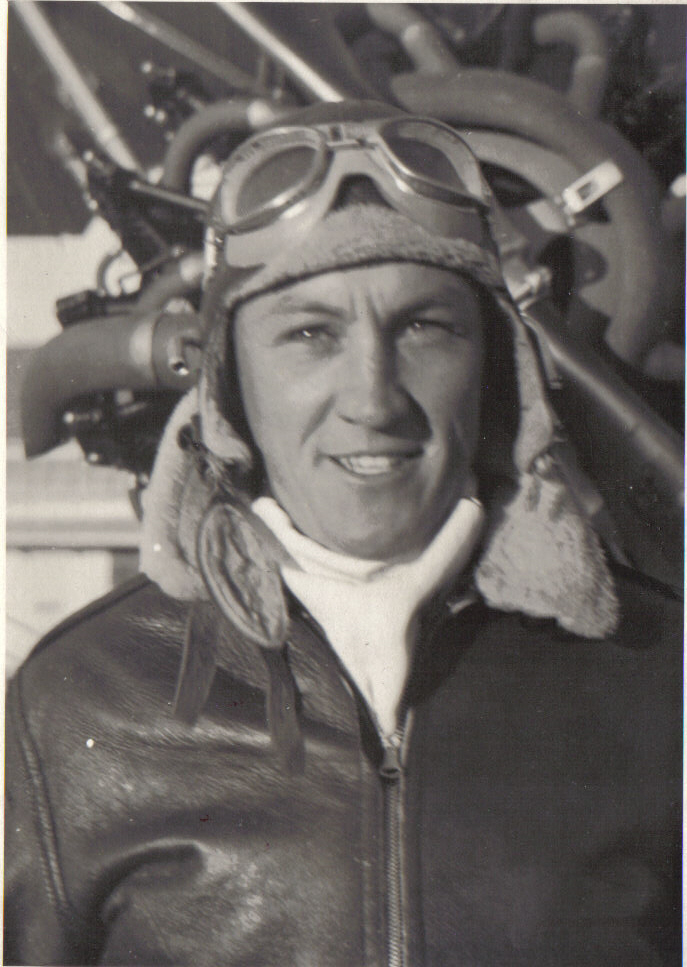
    But there are a lot of unknowns involved in telling that part of his story. I don’t know why he stopped flying in 1971, for example. It may have proved too expensive to keep up; he may have decided to prioritize family camping adventures. I do remember that he was very proud to see me in my U.S. Air Force uniform when I came home for my first visit after enlisting in 1994. (See the featured image.)

    And then there are the hints of family strife.

    When Brothers Part

    Bob’s brother, Norman, died in Baltimore County, Maryland, in 1964. I never met Norman’s family, even though I lived in Baltimore County for 15 years. But I may have found a small clue to understanding Uncle Norman’s Missing Family.

    When Bob and Nancy were living in Glendale, his folks, John and Bertha, lived in Orlando, FL, and wrote to them often. In November 1948, John mentioned something vague when discussing the family’s plans for Thanksgiving:

    I don’t know for sure what we will do. Norman + Ruth + family are trying to come down here [to Florida, from Baltimore] but he has been so sick so much I don’t know whether they will be able to make it or not. Norman is back at work. Sorry they have to act as they do t’word you, but just forget it. They will see the error someday.

    I know that Bob and Norman visited Florida at the same time in the 1950s, because I inherited some photos of them at the beach. In one, you can see their dad, John, just off camera, so that visit must have occurred before 1956. I would guess that both photos were taken on the same day, since Norman appears to be wearing the same shirt in both. (I’ll refrain from comment on Bob’s attire!)

    But while I can see the contours of a story there, it’s not enough to assert that I know anything about the nature of their relationships. And since everyone involved has died, we may never know what happened.

    Ancillary Editing

    For now, I’m happy to have Grandpa Bob’s profile as complete and up-to-date as I can make it. While reviewing his page, I can also take a look at his siblings’ pages, and see if there are any improvements I can add to them or their childrens’ pages. (I owe Aunt Vicki’s page an overdue update, too. We certainly have enough material for a proper biography!)

    Next week, look for “Ahnentafel #9: Nancy Witter” – and if you’re reading this in the future, look for a link to it in the comments section below.

  • Who We Displaced

    About 1810, James Callin brought his family west from Pennsylvania and established a farm in what is now Milton Township, Ashland County, Ohio. James and his brother, John, raised 15 children on that farm, most of whom were born in Pennsylvania before the families relocated.

    Finding records of the Callin family’s arrival in Ohio have been fruitless, so far, but we do see both brothers listed in Milton Township on the 1820 Census, so we know they were there. We have so far taken the word of John’s grandson, George W. Callin, who claimed in his 1911 Callin Family History that James came to Ohio from Westmoreland County, Pennsylvania, in 1810, and that John followed with his family in 1816.

    We also know from the history of the area that Ohio became a state in 1803. The Lewis and Clark Expedition began to survey the territory in 1803, which made it possible for the Federal Land Office system to sell that land to white settlers. Before that, the American army fought a campaign known as the Northwest Indian War, which culminated in the 1794 Battle of Fallen Timbers, near modern day Maumee. We have talked about how it is possible that the James and John Callin listed in the Kentucky Mounted Volunteer Cavalry present at that battle were the father and uncle of the James and John Callin who settled in Milton Township.

    Breaking the Binary

    Humans love binary thinking. This is why so much of the history you find is centered on conflict. The stories we repeat tend to reduce those conflicts to Us vs. Them, with clear lines and precise dates. We like heroes (Us) and villains (Them) and only enough nuance to drive a dramatic narrative in which the heroes win and the villains die or limp away to cry in obscurity.

    Even when we try to break that pattern, to “correct” the narrative, we have a tendency to simply re-cast who the heroes and villains were, or add a third group that we can think of as “neutral” – which causes its own set of problems when you are trying to find out What Really Happened.

    If the father of James and John Callin fought in the Northwest Indian War, his sons probably knew it. They almost certainly shared many of the same fears of the native populations that other European settlers carried – as shown in the stories passed down by two Callin families we talked about in Fear of the Foreigner. “Breaking the binary” means altering the formula of their story, allowing for more nuance than the traditional European view allows for.

    Altering the formula does not mean changing the facts. The facts are that white settlers like James and John Callin were given an unprecedented opportunity for people of their class and status: to acquire land. That acquisition meant everything to them. Not just wealth, not just status that was unattainable in Ireland or rural England, and not just survival. A chance at controlling their own lives. And no matter who they saw as a threat to that chance, they were going to do whatever was necessary to take it.

    They didn’t see themselves as “white settlers” or “European” at that time. They saw themselves as part of a bewildering kaleidoscope of culture, ethnicity, and religion. Scots-Irish Presbyterians like the Callins probably had a British identity thrust upon them, but even within the broad category of “British” you had a variety of competing groups of English, Welsh, Irish, and Scottish people who spoke their own languages and belonged to various Protestant groups or Catholic traditions (and possibly a few less official holdovers from centuries-old Celtic and Norse traditions). The “Dutch” among them would have included any number of people from early colonial Netherlands, as well as more recent German-speaking arrivals with their own religions and political allegiances. The U.S. version of North American history also tends to forget or minimize the presence of French and Spanish groups, especially those who lived outside of the British colonies.

    To the Callin family, that crowd would have been reduced to “Us” in the coming generations of storytelling. So who was reduced to “Them”?

    The Wyandotte Nation

    The Wyandotte Nation is a Native American Tribe of 7,150 tribal citizens, headquartered in Wyandotte, Oklahoma. According to their website,1 they are made up of “remnants of the Tionontati, Attignawantan and Wenrohronon (Wenro), all unique independent tribes, who united in 1649-50 after being defeated by the Iroquois Confederacy.”

    The origins of these tribes can be traced back to an earlier Iroquois group known as the Wendat. By the 15th century, the precontact Wendat occupied the large area from the north shores of most of the present-day Lake Ontario, northward up to the southeastern shores of Georgian Bay. From this homeland, they encountered the French explorer Samuel de Champlain in 1615. They historically spoke the Wyandot language, a Northern Iroquoian language. They were believed to number more than 30,000 at the time of European contact in the 1610s to 1620s.

    The Wendat were not a single nation, but a confederacy of several nations. The bewildering kaleidoscope of culture, ethnicity, and religion that described the encroaching European settlers certainly described the people who were already living on the continent. The Wyandot people who survived diseases and wars brought by the French, Dutch, and British colonists were displaced from Lake Ontario into the area south of the Great Lakes. They tended to ally themselves with the French, who called them the Huron. Their adversaries, the Haudenosaunee Confederacy (Five Nations, or Iroquois), tended to work against the Huron and allied themselves with the Dutch, and later, with the English who displaced the Dutch.

    Disease cut the numbers of these Huron/Wyandot people in half, and their conflict with the Haudenosaunee drove them out in 1649, into the upper Lake Michigan region, where they settled at Green Bay, then at Michilimackinac. One hundred years later, after surviving numerous conflicts over trade with other indigenous nations and Europeans, the Huron-British Treaty of 1760 recognized the Huron (Wendat) as a distinct nation and guaranteed that the British would not interfere with the nation’s internal affairs.

    And End to Centuries of Ongoing Conflict

    Of course, the 1760 treaty wouldn’t end conflict in the area. A treaty with one European government was only good until that government ceded territory to another European government after one of the endless series of wars going on around the globe. After the British ceded the Northwest territory to the new American government, the Wyandot would join the Northwest Confederacy and spend nearly 10 years trying to prevent American settlement in their lands.

    But after 1795, the Treaty of Greenville forced the Northwest Confederacy to cede southern and eastern Ohio and to recognize the U.S. rather than Britain as the ruling power in the Old Northwest. For the Wyandot people, this was the beginning of a 35 year period of struggle that would end when the U.S. forced them to relocate to Oklahoma.

    For settlers like the Callin family, 1795 represented a watershed moment when the possibility of truly breaking free of the centuries of conflict in Europe and finding a place they could build their own lives on their own land became a tangible thing. If we choose to believe that James Callin fought in the Northwestern Indian War, we can also imagine that his motivation was to finally live free of the constraints of Europe’s overbearing conflicts over religion, feudal fealty, and constant conquest. I don’t say that to excuse the cruelty the new American government chose to inflict on the survivors of the defeated indigenous confederacies, but only to add the perspective that from James Callin’s point of view, he was just one individual taking advantage of a chance that few have ever had.

    If that chance came at the expense of strangers he would never have to face, he probably found it easy to dehumanize them and ignore their suffering, allowing his God to take the blame or credit for whatever happened. And by 1830, when the Wyandotte nation was removed from Ohio to Oklahoma, his grandchildren had already begun to outgrow their new homeland and move further West.

    Dispossessed vs. Diaspora

    Humanity has learned a lot in the 200 years since the Callin family settled in the State of Ohio. And we still have a lot to learn. For example, I don’t really know for sure that any specific Wyandotte people spent much time on the land now known as Richland County, Ohio. They, or rivals groups, may have passed by or camped there. No one would have recorded that information. But I know they were in the general area, and I know what happened to them.

    If I had the ability to go back and tell James Callin about the miracles and wonders that would come about within a few generations of his, I doubt I could change his mind about the wars he fought, or make him fear his indigenous neighbors less. Perhaps if he had been able to see that we would figure out how to fight off disease with sanitation and vaccines, or feed millions of people with industrial fertilizers, he might have been able to see the Wyandotte people as less of a threat.

    I’d like to think that, armed with the knowledge I have, I would have done something differently in that time, but if I had lived then, I would not have had knowledge of what was to come. No one can see the future. We can barely see the present, and look how hard we have to work to see the past!

    So I’ll keep doing my best to see my ancestors, and those they impacted, as whole people with entire cultures and histories that I can barely wrap my mind around. And I’ll do it for as long as I’m allowed to do so.

    1. I encourage you to visit https://wyandotte-nation.org/ and take some time to get to know the history and people who remain. ↩︎
  • When we are just starting out in genealogy the best piece of advice we get is to “start local.”

    Depending on your immediate family, this might be very simple, or (more likely) unexpectedly complicated and messy.1 Growing up, I was taught to think of the classic nuclear family (one dad, one mom, 2 and 1/2 kids) as “Normal” – with the assumption being that mom and dad also came from a similar family.

    Of course, reality is an endlessly inventive and creative beast, and families can vary wildly from what I was taught to believe was “Normal.” So wildly, in fact, that “Normal” turns out to be a rare oddity.

    (Would you like to see a song about it? Well, here ya go!)

    Sorting out the Who’s Who of your immediate family is step one. Talk to the living, learn their stories. If your grandparents, aunts, and uncles are still there when you are starting out on your genealogy journey, learn what they can tell you about where they lived, how they grew up, and what they experienced. Take the best notes you can! (Record who said what for your future citations!) Along the way, you’ll learn about their parents and find yourself needing some kind of family tree software to keep track of them all.

    Building That Tree

    Whether you come from a blended family or from a sprawling extended family, or from a relatively small “nuclear” family, finding out about your ancestors starts with who you know, but takes you back through time, beyond what the living can tell you.

    That’s where the research comes in, and that’s where all of the different systems for reporting who your ancestors were can start to make sense.

    The Ahnentafel system is one way to do that. Actually, if you check out that Wikipedia article, you’ll see that there are several systems that share some of the same characteristics – but basically we’re talking about a way to count backward through ALL of your previous generations. Usually, it starts with yourself as the subject:

    The subject (or proband) of the ahnentafel is listed as No. 1, the subject’s father as No. 2 and the mother as No. 3, the paternal grandparents as No. 4 and No. 5 and the maternal grandparents as No. 6 and No. 7, and so on, back through the generations. Apart from No. 1, who can be male or female, all even-numbered persons are male, and all odd-numbered persons are female. In this schema, the number of any person’s father is double the person’s number, and a person’s mother is double the person’s number plus one. Using this definition of numeration, one can derive some basic information about individuals who are listed without additional research.

    You or your family may also need to account for adoptions, non-paternity events, same-sex couples and/or transgender individuals – and some software and online trees have begun to account for those factors. The Ahnentafel concept is designed to count your biological ancestors, so before 1978, when in vitro fertilization became practical, it will probably work for 99.9% of families without much need for adaptation.

    Outgrowing “My Sixteens”

    If you’ve been a Mightier Acorn for more than a few months, you’ve probably read about My Sixteen and Her Sixteen – my effort to document all 16 of my 2nd-great grandparents, and all of my wife’s 16. The goal for that extended exercise was to make sure that all 32 of those individuals have WikiTree profiles. (And there are copious links on both of those Sixteen pages!)

    I’m ready for the next step, which would be to move back to the next oldest generation – but I’ve also learned a lot about what makes a good WikiTree profile good, and before we go further back in time, I feel like I need to do some “gardening” on the more recent generations.

    So what I’m going to do is this:

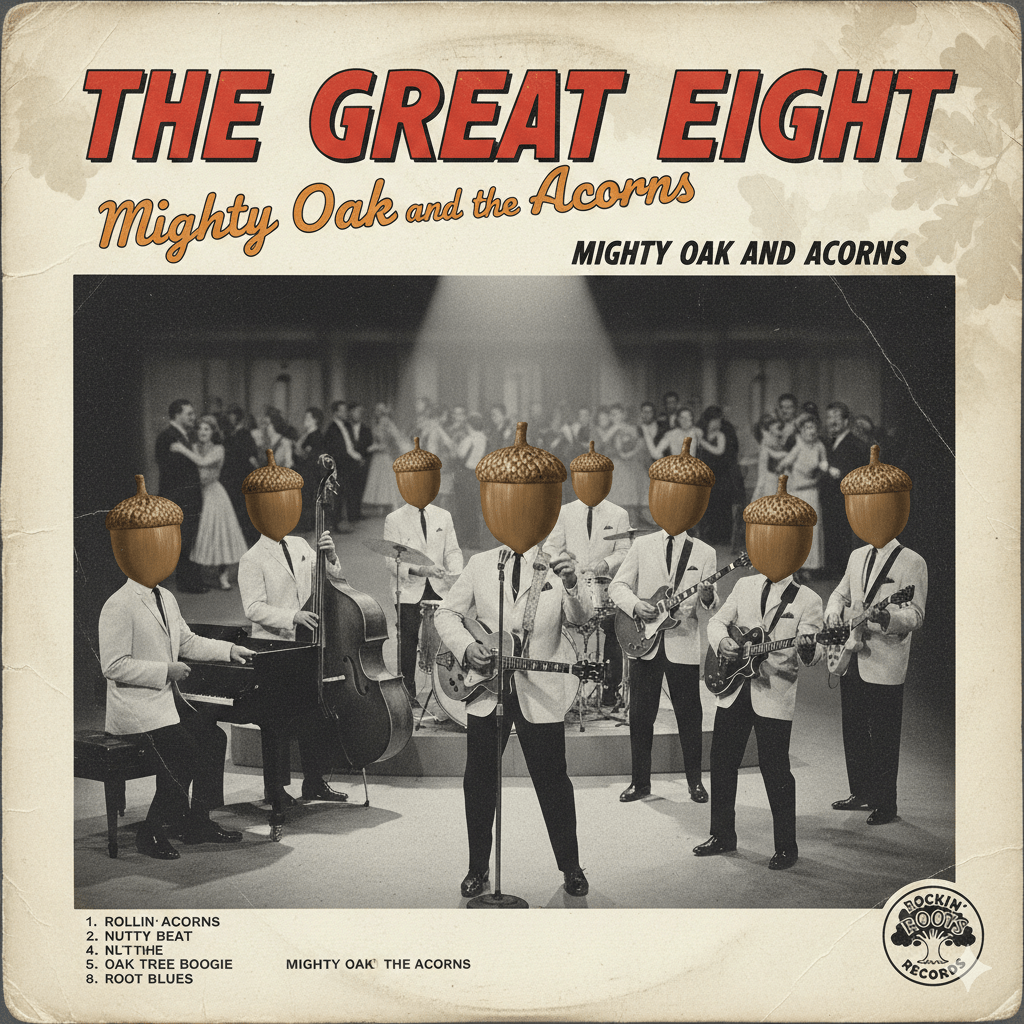
    Starting with my own kids as “1.” (the “probands”), I’m going to skip the living generations (me and my wife, 2 & 3; our parents, 4-7), and start with the Great Eight. Every week, staring next Friday with #8, Bob Callin, we will look at the health of their WikiTree profile, and I’ll talk about what I’ve learned about the life story of each person, how I learned it, and what I might still need to learn.

    If you want a preview of who is coming up from week to week, there is an easy way for WikiTree users: go to my WikiTree profile (Callin-50), click the pulldown arrow to the right of my name, and look for “Tree Apps”.

    Once you’re there, change from “Fan Chart” to “Ahnentafel Ancestor List” using the pulldown:

    As we work our way back through the earlier generations, we should learn a thing or two about a thing or two – and maybe if you follow along with your own Ahnentafel, we might even find some overlap…

    Because we’re all cousins if you go back far enough!

    Not Just My Idea

    Lest you think I might be stealing ideas from others without giving them credit, I’ve seen other genealogy bloggers do some form of this for years:

    Feel free to link to your own Ahnentafel or “52 Ancestors” series, or that of someone you follow, in the comments!

    Bonus Internet points if your list and mine have the same people on them!

    1. See “Counting Cousins” for example ↩︎

  • I realize that everyone is busy this time of year, so nobody would be likely to notice if I just skipped a couple of posts, but I didn’t want to leave you wondering if I plan to come back – I do!

    But my house is very full, and my attention will be on the living this week. Our weird traditions this year will include goofy “winter olympics” games, and a fire in the back yard while watching the grand-dogs gambol and frolic.

    Here’s hoping that you and yours are well, and braced for the New Year.

    Until Boxing Day…

  • The Last of the Milton Township Diaspora

    Since April, I have been sending out snapshots and overviews of the families that once lived in Milton Township, Ohio. Before we get into the last of the Callin families that moved away in the 1840s, let’s review the timeline.

    If my suspicions about James Callin, the veteran of the Revolutionary War, are correct, he was part of the Kentucky Mounted Cavalry that participated in the Northwest Indian War, a military campaign against a Confederacy led by the Wyandot people, who were trying to keep Americans from settling the region north of the Ohio River valley. James and John Callin were listed as privates “under the command of Captain Joshua Baker, Major Notley Conn’s Battalion, in the Service of the United States, Commanded by Major General Charles Scott, from Jul 10 to Oct 21, 1794” – and almost certainly fought in the Battle of Fallen Timbers, which took place at the site of the present-day city of Maumee, Ohio.

    • Based on the earliest record I have that might show our James Callin, he was at least 21 years old and paying taxes in Hempfield, Pennsylvania, in 1773.
    • Based on the furlough recorded in the 4th Virginia Regiment’s muster rolls, he may have gone home to be married in late 1778/early 1779; I estimate that his son, James “2nd”, was born at that time.
    • After the Revolutionary War ended in September 1783, James took his family and “settled on government land in Westmoreland Co. in Western Penn., where they remained the remainder of their lives,” but we don’t have any evidence of this outside of The Callin Family History.
    • By 1794, James (age 42), may have been living in Kentucky, or he may have heard that his former commander, Gen. Scott, was recruiting for his militia and came from Westmoreland County to join. It is also worth considering that the James and John Callin we see in the Kentucky militia were his sons, but they would be 15 and 14 years old, at best, and unlikely to be accepted in the militia.

    But by 1810, the sons were 31 and 30, and Ohio had been a state for seven years. And as of 1820, our speculation ends and the U.S. Census records the brothers, James and John, in Richland County, on a farm in Milton Township.

    The Last to Leave

    Elder brother James “2nd” and his wife, “Aunt Mary,” had six children, most of whom were born in Pennsylvania before the family moved to Ohio. Aunt Mary was a founding member of the Hopewell Presbyterian church. In 1820, James was killed by a neighbor.

    Their two daughters, Elizabeth and Sarah, married sons of Benjamin Montgomery, and the Montgomery families ended up in Rochester, Indiana. Their three younger sons, Hugh, Alec, and James, left for Iowa, taking Aunt Mary and their wives and children with them. Their wives included another of Benjamin Montgomery’s daughters, who married Hugh, and a cousin, Margaret. Only the elder son, Thomas, stayed in Milton Township.

    Younger brother John married Elizabeth Simon in Pennsylvania, and they had six children before moving to join James and Mary on the farm in Ohio in 1816. They had three more children after arriving in Ohio, including Margaret, who would later marry her cousin James and leave for Iowa. Their oldest son, also called John (1802-1825), died at age 23. Ten years later, the senior John Callin died of tuberculosis and was buried in Olivesburg Cemetery.

    Six of their surviving children remained in Ohio. The oldest, Sarah, married John Scott and left for Winnebago County, Ilinois. And finally, Eliza Callin married James L. Ferguson.

    We don’t actually know when most of these families left Ohio – the scant evidence we have suggests they left within a year or two of 1840. But The Callin Family History says that Eliza and James Ferguson moved to Indiana around 1851, and their two youngest children were John D. Ferguson, born in Ohio in 1848, and Minerva, born in Indiana in 1854.

    Since they appear in the 1850 Census in Jackson, De Kalb County, Indiana, I think they must have moved in 1849. By then, Milton Township had also left Richland County. Ashland County was formed out of parts of Richland and neighboring counties, and part Milton Township became what is now Milton Township in Ashland, and part of it became what is now Weller Township in Richland County.

    Meet the Fergusons

    James Ferguson was a farmer, as you might have come to expect of the men of his generation. We don’t have records to pin down the details of his marriage to Eliza Callin, but their first child was born in 1833.

    We also don’t know where they were living between their wedding and their move to Indiana in 1850. There is a James Ferguson listed in 1840 living in Brown township, Delaware county, 133 miles to the west of Milton township; this James Ferguson had children of ages that match our James Ferguson. The important thing for us is that we have them placed in Indiana in 1850.

    By 1860, Eliza’s mother, Elizabeth (Simon) Callin, was living in the Ferguson household on James’s forty acre farm near Auburn in De Kalb county. The Callin Family History says that she died in November 1864 and was buried in Auburn. It could be that she moved to Indiana with James and Eliza, or she followed along during the 1850s. She certainly got to spend her last few years with her younger Ferguson grandchildren.

    Of the eleven Ferguson children, only George died without leaving behind a family of his own. The Callin Family History says that he was twenty-seven years old when he was “Killed in battle on the Potomac, Feb., 1865.” If our George is the George Ferguson who enlisted in the 13th Regiment of the Indiana Infantry, they would have been some 380 miles south of the Potomac in February 1865, engaged in operations around Wilmington, North Carolina. George may well have enlisted in another state, though, as many young men did if they could not find a regiment in their home state. If that was the case, he might well have been killed on the Potomac.

    Eliza died on 17 November 1870, and was buried in the Evergreen Cemetery in Auburn. In 1885, James seems to have grown ill, and he updated his will accordingly (transcribed by me – consider all of the spelling irregularities to be part of the original):

    “Know all by these presents that I James L. Fergeson son of Jackson township in DeKalb County State of Indiana being of sound mind and memory do make and publish this my last will and testament, revoking all former wills by me made; that is to say
    “First–I give and devise unto Six daughters Mary McNabb, Elizabeth Reed, Mildred Ettinger, Margaret J. Gallaher, Sarah Myers, and Eliza Myers, in equal portion all my household goods of every name and character to be by them divided
    “Second–To my Son John D. Furgeson I devIse the entire use and possession of the forty acres of land I own in said township for the term of two years from my death upon the express condition that he pay or cause to be paid all my debts; expenses of my last illness and funeral and the taxes on said land for the two years
    “Third–All the balance and residue of my estate real and personal I devise (except as Stated above) unto my three Sons James L Furgeson Jun- Nicholas Perrine Furgeson and John D. Furgeson in equal portions and Shares- provided that they shall and will pay or cause to be paid within three year from my death the sum of Four hundred and twenty (420) dollars – that is to Say – that they Shall pay to each of my above named daughters the Sum of Sixty (60) dollars and to said John D Furgeson who has purchased the interest of Clarissa J Copp daughter of my daughter Minerva Copp deceased in my estate the further Sum of Sixty (60) dollars, Interest is to be charged on said. Four hundred and twenty dollars if not paid within Said three years
    “Fourth- I name and advise that my Son John D Furgeson act as the Executor of this will.
    “In witness whereof I hereunto Subscribe my name and affix my seal this 12th day of December 1885”

    Patterns and Dynasties

    Not only did this Ferguson family have a lot of children, ten of those children had families ranging in size from two grandchildren to nine grandchildren – giving Eliza 47 grandchildren.

    Eliza’s two eldest daughters married men named McNabb (I haven’t established whether they were related to each other), and two of her younger daughters married brothers named Myers. One of the Myers grandchildren was the grandmother of Wiley Cowan, whom you might remember from previous posts.1

    There are so many descendants in that branch of the family, I could probably spend several years posting about one descendant per week. But we all must make choices about where to spend our focus and our resources, so for now, I will let them go and hope that I’ve been able to help some of their living descendants find their way back to Milton Township.

    1. Wiley was the subject of three 2024 posts, beginning with Unboxing Wiley. ↩︎
  • Counting Cousins: An Open Question

    How many cousins do you have?

    I know, it’s a tricky question – “We’re all cousins if you go back far enough!”

    But seriously, do you know how many 1st, 2nd, or 3rd cousins you have? Because every now and then, I start to think about the answer, and … I end up sidetracked doing something else, because I don’t have an easy-button or an app to answer it for me.

    (This is where you may have an app or an easy button, and yes, please do share the link in the comments!)

    It’s a tricky question because looking “up” the tree is always so predictable and easy to grasp – 2 parents, 4 grandparents, 8 greats, etc. In contrast, looking “down” the tree becomes a crazy-quilt of ever-branching forks, complicated by the system of “once-removed” and generational overlap.

    There are Eight of Us, But…

    I’m one of two siblings. Our parents had siblings, and their children are my First Cousins – and there are Eight of us. Simple enough, but…

    How many cousins do each of my First Cousins have?

    That’s not simple at all. For example, my cousin Tim was the only child of my Aunt Judy, my mother’s sister. However, I never knew his dad – and I only vaguely think I know that Uncle Jack had more kids. If he did, they aren’t related to me genetically at all; and I certainly have no idea whether he had siblings, so if he did, Tim has an unknown number of half-siblings and First Cousins who are not related to me.

    Tim also wouldn’t count my dad’s niece and nephews as First Cousins, so of the Eight of us who are first cousins from my point of view, Tim is only really related to four of us.

    In other words, I have no idea how many cousins Tim has!

    Add another interesting wrinkle – among the Eight people I count as my First Cousins, three are girls, but two were adopted. My sister was not. One of my adopted cousins has been getting in touch with her biological family, and may know about her set of First Cousins, but I don’t know if there are any cousins in her bio-fam, or how many there are. My aunt’s husband was an only child, so while my adopted cousin’s brothers only have four First Cousins, she could have many more than her siblings do!

    Expanding the Circle

    The problems of figuring out how many cousins there are in a given generation feels impossible, even when just trying to count how many Second Cousins I have. On my dad’s maternal side, Grandma Nancy had one brother, who had one son, and he had two sons (one biological). Grandpa Bob’s brother Norman had three kids, with eight children between them who would be my Second Cousins.

    Nine so far, so let’s look at the maternal side. Grandma Bert’s sister had four kids… who had 2, 2, 1, and… 12 children? And Grandpa Russ had 11 siblings, so I think I have πR2 Second Cousins, total.

    I can’t even begin to think about counting Third or Fourth Cousins at this point, if only because I’m not sure I’ve done my homework that far “down” the tree from all of my great- and great-great-grandparents.

    Who’s Got a Number?

    So, dear fellow Acorns, how many cousins can you count?

  • Placeholder for an Untellable Story

    A sexual predator has died.

    I’m not going to tell you that story, because it’s not my story to tell. It belongs to the survivors who were damaged by that person, and by those who served as enablers and protectors to the abuser. It does not belong to those enablers and protectors, either, even though they might see themselves as victims, too.

    For a family historian, this story sits uncomfortably in a place made only of memory. There are no public records to document what happened. The private records that tell parts of the story may never come to light. Only those involved know that the story exists, and even they only know their small part of it. The whole story can never be told, and the jagged pieces that remain will never fit together. The only true thing those jagged pieces share with the whole is that both are sharp and continue to do damage to those who know their part of the story.

    The whole story died with the only person who experienced all of it, and even before they died, they almost certainly lost most memory of what they had done. The human mind is not a recording device. It only captures a fraction of the stimuli of light, sound, and other sensory input that bombards it for, in this person’s case, 652,536 hours. Whatever fraction of what got processed and interpreted into memories was rewritten each time they were recalled, and faded away completely if they were not recalled.

    Biases affect a person’s recollections – shame, fear, discomfort, etc. – a foggy sludge in which the memories get buried. With age, time and disease will rob a person of their memories altogether, or leave them clinging to fragments that only make sense in brief flashes.

    So the story, such as it was, has been untellable for some time. And now that the perpetrator is gone, it will grow increasingly untellable. And yet, the story lingers in those dangerous fragments, waiting to cut again.

    Facts and Feelings

    There is a popular lie that says, “facts don’t care about your feelings.”

    The family historian knows facts, like date of birth, date of marriage, date of death, but truly only cares about them because of the feelings they brought. The joy and pain of a child arriving, the terror and joyful anticipation of a wedding, the looming finality of deaths that may be sudden or lingering, dreaded or eagerly awaited. The feelings are what make the facts a story.

    Fact: one February afternoon, we took out children to an indoor trampoline park in Timonium. I have videos, with timestamps, so I can prove that it happened. I can watch my children bouncing and having a ball.

    Facts are the feet of a jumper pressing into the elastic fabric of a trampoline; life is the exhilaration at the weightless apex of the jump. Life is the tuck and roll of the somersault. Life is feeling.

    Not all of our facts have good feelings to go with them. Sometimes I wasn’t the best parent. Sometimes I shouted in anger, sometimes I told embarrassing stories in front of impressionable friends. Nobody’s perfect. I made mistakes.

    When we make mistakes, there are three things that must happen before we can expect the feelings caused by the mistakes to change. We have to acknowledge the mistake, change the behavior, and try to make amends. Even if we do all three things, feelings may linger.

    In the stories I tell, I sometimes find facts about events that left everyone involved with hard feelings. We know about The Double Life of Uncle Jack, but we can only guess at how his daughter felt about being abandoned. We know the contours of Leo Callin’s “Tale of Two Mildreds,” but can only speculate what really ended those two marriages. The newspapers may tell us scandalous stories of alcohol, passion, interfering mothers, and hard economic times, but even if those are reliable facts, they may never reveal what the true feelings were.

    We don’t know, in those stories, whether mistakes were acknowledged, behavior was changed, or amends were made. But I know some of the facts of the untellable story, and I know that those three things did not happen. As far as I know, they were never attempted; and it’s possible that the disease that affected the sexual predator made acknowledging anything a moot exercise by the time it ran its course.

    Nomanisan Island

    None of us is every truly alone, and nothing we do is without consequences.

    The damage that abusers do is only part of the damage. They also depend on those around them to make excuses for their behavior, turn a blind eye to uncomfortable allegations, to believe them over their victims. There is a ripple effect as those around them who are not being directly abused contribute to the abuse, whether they know that’s what they’re doing or not.

    When you’re the target of abuse of any kind, especially for a long time, you learn who to trust and who not to trust. And you learn not to give anyone the benefit of the doubt, because even someone who thinks they are being kind can hurt you.

    “Surely, it’s not as bad as you think it is?”

    Or

    “It’s all in the past, now. Can’t bygones be bygones?”

    Well-meaning words that might be helpful in another situation. A situation that didn’t have an Untellable story in the center of things, a black hole shifting the gravity well that the speaker couldn’t see. That’s a consequence of not telling the story to everyone: they can’t know that they’re amplifying the harm done by the predator they are unwittingly defending.

    Leading to

    “Why are you holding a grudge? You need to learn to forgive.”

    No. In this case, you need to learn to live with not knowing the whole story, and show some grace to the survivor.

    No Closure For Abusers

    There is more than one kind of abuse.

    There is often more than one abuser. The one who is not a sexual predator may try to convince their target that their abuse isn’t abuse at all, or if it is, it’s not on the same scale as the predator. But that’s a lie. Harm is harm, and hiding behind a different kind of harm doesn’t change it into something good.

    There is a path to coming back from some kinds of abuse, but they all depend on the abuser’s choices. They must acknowledge what they did wrong. They must stop the abuse. They must find a way to make amends – and that does not mean that the target of their abuse must tell them how to do so.

    Demanding that the target of their abuse meet them halfway, or that they accept responsibility for any part in the abuse, is a continuation of the abuse. Making that demand nullifies the “stop the abuse” part of the formula. Is this an insolvable problem? It might be. I suggest seeking professional therapy to try to solve it.

    The End of the Story

    Since I can’t tell you the story, this will have to serve as the “ending” – I’m sorry if it is unsatisfying. I’m sorry if you are uncomfortable. I’m uncomfortable with it, too.

    I’d tell you my part, but I can’t do that without doing more harm, and I can’t simply say nothing without doing a different kind of harm. Is this an insolvable problem? It might be.

    But I put this placeholder here to remind you that when you’re telling your innocent family stories, and you get a frosty response or a hostile reaction, that might be a sign that you are missing some jagged, uncomfortable pieces of the whole story.

    Try not to make it worse. Don’t press the issue or demand that someone tell you the whole story, because that may not be possible. Don’t react with anger. Just show some grace, and leave them some space.

    The truth is, most of our stories are Untellable.