
The Callan Name Study keeps growing, and as it does, I keep finding interesting people to tell you about.
If you know of an interesting Callan (no matter what spelling they used), take a look at the master list (a spreadsheet you can find here or on WikiTree) and see if I have them in the database. If not, you can add them with this form!
An Electric Personality
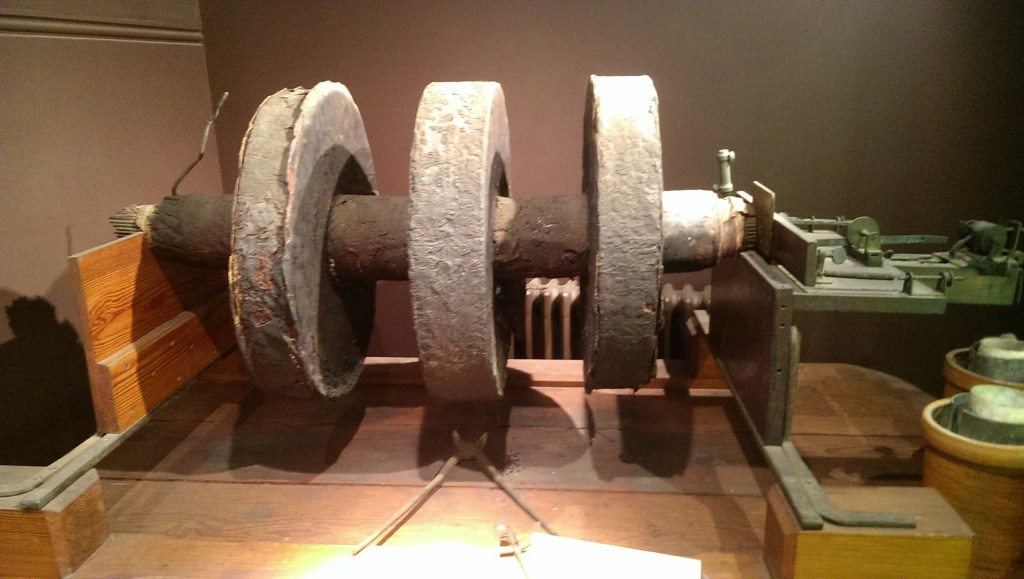
Nicholas Callan (1799-1864) was a boy from Dundalk in County Louth, Ireland, who became a Catholic priest and physics professor. He invented the world’s first primitive induction transformer, developed new galvanization techniques, and improved designs for large batteries while teaching at Maynooth University in County Kildare.
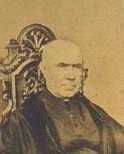
His WikiTree profile tells us his father’s name was Denis Callan. Catholic Church records, which usually record the Latin version of a person’s name, recorded Denis as “Dionysa” and Nicholas as “Nicholaum.” This may be useful information to factor into your searches, since we don’t always think to search for Latin spellings or Latin translations of names.
The source cited on WikiTree describes Denis’s family as “a well-to-do family of considerable local reputation who, in addition to farming extensively, were bakers, maltsters, brewers and distillers.” There is a long tradition in European societies of families passing family assets or businesses to the first-born son and “giving” younger sons to the military or the ministry. And it appears that Nicholas had at least one older brother, Thomas, and possibly another called John, who did not enter the clergy.
What Gets Remembered
If you visit both of Nicholas’s profiles, on WikiTree and on Wikipedia, you quickly see how the two sites differ in the types of information they collect.
Wikipedia has rules about notability and rules against including “original research” in its articles, which means that if I were to try to add the information I’ve found about Nicholas’s father, Denis, or any of his other siblings to his Wikipedia article, I would probably violate those rules.
WikiTree doesn’t have the “notability” problem, in that anyone we can attach to the World Tree deserves their own profile page. And by the nature of the work we’re doing, most of our WikiTree work would be considered “original research,” because while the facts are in the sources we cite, we often draw conclusions about relationships between people that are not directly stated in those sources.
“Articles must not contain any new analysis or synthesis of published material that reaches or implies a conclusion not clearly stated by the sources themselves.”
When we find a birth record for Nicholas and then pull together additional records for his siblings by searching for the names of his parents, we’re analyzing the records and synthesizing that information to reach a conclusion. In WikiTree, that is our bread and butter; on Wikipedia, that is a poison pill.
So, “what gets remembered” on Wikipedia is very different from what gets remembered on Wikitree. As we look at notable people on Wikipedia who belong to the Callan Name Study, you’ll see other situations where the information that belongs in one place does not belong in the other.
Which means that we have to be mindful to put info where it belongs, and link the profiles and articles to each other so nothing gets lost.
Who Gets Remembered
I’m sharing Nicholas’s story today because I think that highlighting notable cousins makes the Callan Name Study seem more interesting and relevant to general readers. If the only things I said about the Name Study were “come look at this massive spreadsheet” or “come help do a bunch of work,” I doubt many of you would pay attention. And if you’re still reading, I suspect that proves the point!
People tend to be more invested in a history project if they can see a direct connection to their own story, or if there is a chance that their family might have notable people in it. That’s not a criticism – that’s just how the brains of social primates work!
But this presents its own set of challenges, because when we’re chasing what people tend to be interested in, we don’t always think to record things that they are less interested in. And that means that the record of a notable person, like Nicholas Callan, may not include information about his family. And the family record becomes important when our goal is to tie Nicholas – a celibate priest who had no known children – to the larger family tree.
And remembering all of those people, or as many as we can, is the point of a Name Study.
Your Call to Action
If you’ve come this far, I hope you’ll feel interested and invested enough to do a little digging and take note of what needs work in Nicholas’s family. I know the WikiTree profiles for his parents and siblings need more work; see if you can find them on FamilySearch, and maybe add some sources to their WikiTree pages?
Or maybe all of this reminds you of someone in your family tree you think of as “Notable” – maybe they are, but nobody has made a page for them, yet?
If their surname is Callan, be sure to let me know what you find!
Until next time, cousin…


Say hello, cousin!