
“What’s an ‘Ahnentafel’?” you ask – read this introductory post for my explanation.
Heartland, Industrialized
The first generation of people born after the Civil War were people who saw America becoming an economic powerhouse and growing into a world power. Once the transcontinental railroads were completed, getting goods from rural areas to urban hubs became so much easier that it would have been difficult to stop that transformation. Scratching a living out of a plot of land in the center of our continent was replaced as the pinnacle of achievement in the public imagination by the real possibility of reaching a worldwide market to sell whatever you could make, and the wealth that could be made in a factory overthrew the old notions of wealth that were tied to the land.
That’s why historians call it the Industrial Revolution. And it happens to be part of Earl McCullough’s story.
There is an irresistible urge in every human to compare their life, familiar and tedious, with that of another, different and strange, and imagine that whatever that other person has is better.
Many of us spend time on genealogy because it lets us imagine a better life in the past. Studying the lives of our ancestors allows us to build a fantasy of a time when the world was simpler, slower, easier to understand, and free of the baggage, boredom, and stress of our modern world. We sit at desks doing post-industrial jobs that feel pointless and unfulfilling, and imagine that the lives our ancestors led were better, that they had answers we have lost, that they carried wisdom we should have embraced when we were younger.
But we forget that each generation of our ancestry was made up of people who were also looking for something better, and part of figuring out their story is figuring out what their life was better than.
The End of an Old Century
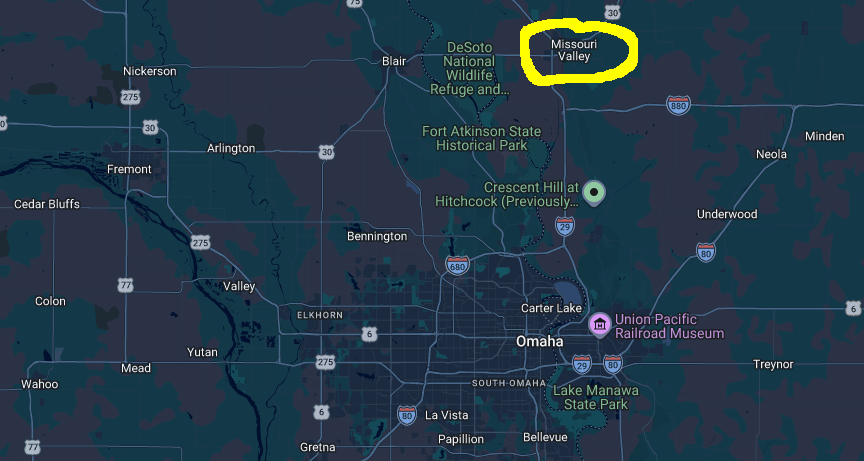
Earl Randolph McCullough was born to an Iowa farm family in Missouri Valley on 30 October 1881.
Our idealized, modern image of what farm life was like probably bears little resemblance to what Earl would have seen. Farm work supported the McCullough family, but farmers generally absorbed the worst shocks of the “boom and bust” economic cycles that came along with industrial growth. Good years probably outnumbered bad ones, and the farm kept the family from starving, but when the rest of the world is exploding with opportunity, there doesn’t seem to be much future in life on a farm.

This is the world Earl saw in 1905. This is where he found a job in the rail yard, where he would begin a career as a signal maintainer. The next year, he would marry the daughter of a Dutch immigrant from Ackley, another farm town in the middle of Iowa. He married Mary Blom and they moved to Fort Dodge, where they began raising their family.
In their first ten years, Earl and Mary had two sons, Harry (1908) and Elbridge (1912), and then two daughter, Helen (1915) and Caroline (1917). Helen died at age two, in February 1918, probably a victim of the Spanish Flu.
Earl and Mary lived with their young family at 1123 Ave. B in Fort Dodge during the First World War. A family man in his mid-30s would have been “too old” to go fight, but Earl played his part. As we learned from The Ballad of Mrs. Steele, keeping the railroads running despite pulling a significant number of young men out of the labor pool to go fight was an important part of the war effort.
But if people like Earl held any romantic notions about the great industrial machines they worked on and the corporations that owned them, the events of the War should have brought them back to reality. The dangers and company abuses drove the rise of labor unions, and the stories coming back from the trenches showed the dark side of mechanization when it was applied to killing soldiers.
A New Beginning
I may be reading too much into a gap between children’s birth dates, but I suspect that the stress and uncertainty of the war years had something to do with the four year gap between the death of Helen in 1918 and the birth of Earlene in 1922. Two years later, John was born, and two years after that: twins!
Sadly, the twins, Bernice and Bernard, were born prematurely and did not survive. Bernard only lived 1 month and 23 days, and his death was attributed to “malnutrition, 4th degree,” which suggests the damage happened before he was born, and the treatment available in 1927 could not save him. Bernice lived for another couple of months before she succumbed to pneumonia.
Again, I may be making assumptions, but I think the facts suggest that Earl and Mary soothed their grief over the loss of the twins by having one more baby. Bernice died in February, and eight months later, their youngest son, Robert Lee McCullough was born.
The Golden Years
Earl worked steadily for the railroads until about 1940, when he retired and began listing his occupation as “traveling mechanic”. By 1941, he and Mary had moved from Fort Dodge to Council Bluffs, on the Iowa side of the Mississippi River, across from Omaha. Most of their children and grandchildren lived there, so that’s where they wanted to be.
And that’s the dream that so many of us still hold out hope for: that someday, we can set down our tools and have enough to live near those we love.
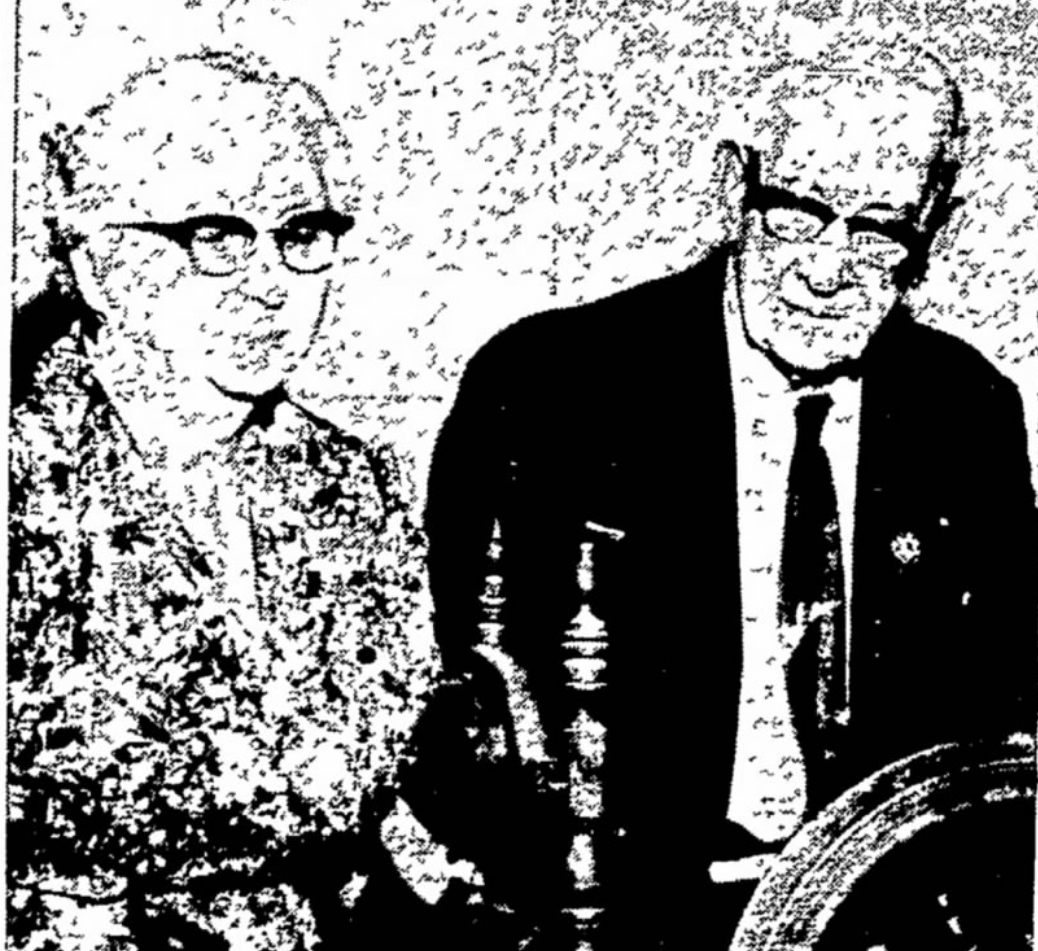
After living through one world war, Earl and Mary must have been horrified to see a second one. But while their two youngest sons did serve in the military (John, in the new “Air Force” and Bob in the Navy), their service did not cost them what it did so many other families.
And just as Earl had benefited from a post-war boom at the beginning of his life, his final decade saw another post-war boom that placed the United States at the top of the international power structure. As far as objective reality is concerned, his life, like any life, was full of victories and defeats. But for Earl, there was a definite arc to his story, taking a poor farm boy through a career working around trains, and ending up in a comfortable, modern town, surrounded by children and grandchildren.
It’s almost enough to make nostalgia a tangible thing.


Say hello, cousin!