
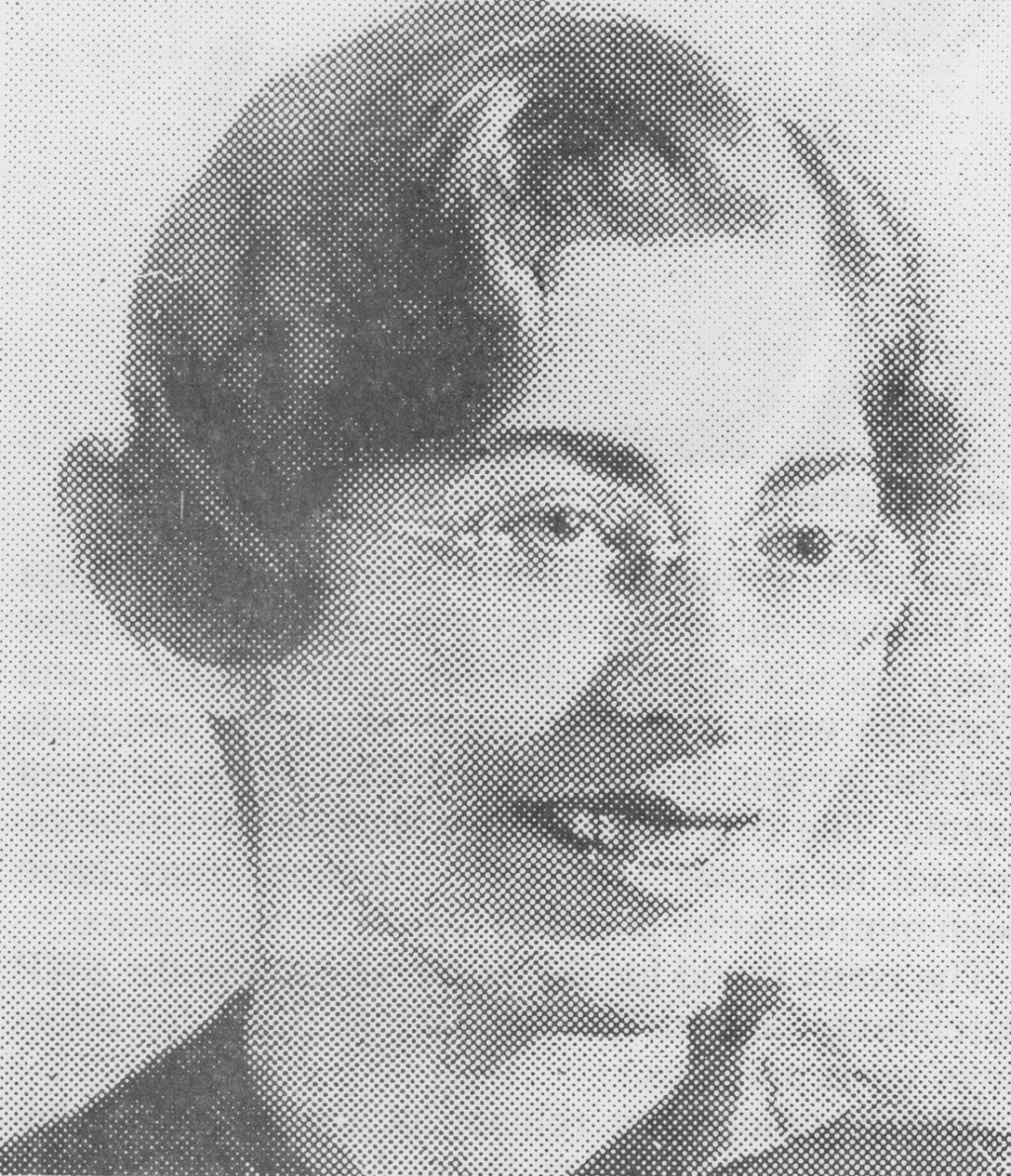
Sylvia Lorraine Callen was born in 1914 in Milwaukee, Wisconsin. Her grandparents, Solomon and Carrie, were married in the Russian Empire and had six children between 1880 and 1888 before immigrating to the United States and settling, first in Menominee, Michigan, and then in Milwaukee.
Sylvia is notable for her alleged work as a spy for the Soviet Union during World War II, but questions remain about what her role was, or how much she knew about what was happening around her.
Is It A Spy Story?
Espionage is a complicated and confusing subject. Who knew what, and when? Who did what, and why? Even if we have excellent records of the facts, they don’t necessarily answer the questions of motive, or who was spying on whom. We are but humble genealogists, and we trade in facts, but facts cannot tell us Sylvia’s whole story.
Fortunately for us, we can learn at least a little bit about Sylvia’s side of the story. On 29 May 1947, Sylvia was interviewed by an investigative committee for the Socialist Workers Party (SWP) about her background. Her responses were published in 2018.1 The interview took place after Louis Budenz, an activist who renounced Communism in 1945, claimed that she was a part of the young Communist movement in Chicago and was recruited by Budenz into the Communist Party USA’s “secret apparatus” in 1937.
The SWP decided not to take action against Sylvia after her interview. For decades, her denial that she had been part of a plot stood, but in the early 2000s, the United States declassified the Venona project, which referenced Sylvia under the cover name SATYR and revealed that she did work for Soviet intelligence services.
So what do the sources tell us? And what does it all add up to?
In Her Words
I want to give Sylvia as much control of her narrative as I can, so when you see her quoted in the first person, those quotes are from the SWP interview published in 2018:
My father’s name is John Callen. He has been a salesman for many years. Neither he nor any other member of my family entertain or ever entertained any political views other than the average citizen.
Sylvia’s father, John, was the youngest son of Solomon and Carrie, born on 3 December 1888. He listed his place of birth on his World War I and World War II registration cards as “Markovke, Russia” – which isn’t helpful, since there are villages of that name in almost every region. Her grandfather, Solomon (aka “Sam”), wasn’t very precise about giving his date of birth, either, and every record gives a different year for the family’s arrival in America. I estimate that it was between 1889 (after John’s birth) and 1897 (the earliest city directory placing Sam in Menominee). The family likely fled Russia after the horrible famine of 1891-1892, and the expulsion of Jewish families, like theirs, from Moscow and other major cities as the Russian Tsar blamed the Jewish population for the empire’s problems.
Sam and Carrie raised their children in Milwaukee, and as near as I can tell, everyone was naturalized before World War I. The Russian Revolutions that brought down the monarchy and led to the creation of the Soviet Union played out while Sam sold fruit and his children were educated and built lives of their own. John grew up to be a salesman, and Sylvia, his eldest child, graduated from Washington High School in Milwaukee.
I myself did not know that there was such a thing as a radical movement until I was about 19, at college. I lived in Milwaukee until about 1932. I went to Madison, Wisc. to attend the University of Wisconsin. I met Zalmond Franklin and we got married in February 1935. We were together on and off for about a year. I graduated June 1935 and left school. Franklin remained at school. After graduating I looked for work and finally found a job in a Milwaukee drug store and worked there for a while as sales clerk.
There is a lot of historical context to unpack. Sylvia’s new husband, Zalmond, was in Spain during the Revolution, apparently supporting the Republican government as a Soviet operative. The Soviet Union and Mexico supported the Republican government while Fascist Italy and Nazi Germany supported the Nationalist faction that eventually won power in 1937.
The first unanswered question we have is whether Sylvia knew about Zalmond’s Soviet connections, and if so, how much she knew. If you read Zalmond’s biography and the SWP’s assessment of him and his father, it seems he was a very active communist agent. However, the timing of events suggests that Sylvia was not privy to his assignments or activities.
In the Fall of 1935 or Spring of 1936 I went to Chicago to live with my folks. There I entered the Chicago University to study social service. I went to school there for four quarters, working one summer for the Jewish Social Service outfit there, and then went to work for the Chicago Relief Administration where I worked until I came to New York.
In the summer of 1937 I joined a YPSL circle in Chicago.
Young Peoples’ Socialist League (YPSL) was the youth movement of the Socialist Party, within which the SWP conducted its activity at the time.
The Work of the Spy
Sylvia was apparently in Chicago during those early years of her marriage. According to Louis Budenz, he recruited her into the communist organization there in 1937. In his telling, she was assigned to go to New York, where she joined the Socialist Workers Party under the name “Sylvia Caldwell.”
I came to New York in May 1938 to go to work for the Hebrew Association for the Deaf. I worked part time there and helped out in the National Office of the SWP in spare time. In December…I was asked to take a full-time job in the SWP National Office as the office secretary was leaving to take a job in industry.
The SWP brought her in as the secretary to their leader, National Secretary James P. Cannon. She organized Cannon’s schedule, had access to all party records, finances, and international correspondence, and she took dictation of his letters, memoranda, and political reports. If she passed information that Cannon had about Leon Trotsky’s whereabouts in Mexico, her actions may have played a part in Trotsky’s assassination in August 1940. Whether she knew that was the result of her work or not is an open question.
Sylvia and Zalmond were both in New York during those years. In 1939, he worked as a security guard at the Soviet Pavilion in the 1939 New York World’s Fair, and in 1942 and 1943, he received classified material from the research being done on the atomic bomb at Columbia University and passed it to Soviet intelligence. Both Zalmond and Sylvia were referenced in decrypted intercepts from the VENONA project, which began in February 1943.
The fact that she used the name Caldwell and apparently hid her marriage from the SWP lends weight to Budenz’s story that she was working for the Soviets. But even given the evidence confirming that she was a Soviet spy, there is also reason to suspect that she may not have been an enthusiastic one.
“I Liked Them As People”
When Sylvia told the SWP about joining the socialist organization in Chicago, she revealed an insight between the lines. Americans have always had trouble understanding the difference between communists and socialists, but Sylvia’s experience shines some light on the divide between those groups:
I came to join the YPSL chiefly, I guess, because I was so lonely. I did not fit in with the friends of my family and I had no circle of my own. At the University in Madison, I got my first contact with radicalism and in a vague way I got to feel that socialism is a good thing. I heard Norman Thomas speak at the Socialist Club of the University of Chicago and he made a deep impression on me. I wanted to know more about socialism, so in my loneliness, I consulted the Chicago telephone directory for the address of some socialist organization, and founf [sic] the Socialist Bookstore.
Did you catch that? Her “first contact with radicalism” seems like a reference to falling in with Zalmond and his circle of friends at the University. But in Sylvia’s words, later in the interview, she expanded on that characterization:
My first contact with radicalism was at Wisconsin University where there was a group of the National Students’ League. My husband joined the League, 1935 semester, and I joined too just because he did. But I really didn’t know what it was all about. I don’t know whether the YCL [Young Communist League—the youth movement of the Stalinist Communist Party] had a fraction there at the time, but there was a radical group, bohemian types, of which my husband was one, and which was considered the “Communists” on the campus. I never knew whether my husband had any communist affiliations, but knew he was radical in his views and he may have been a member. I do know that his parents were either communists in ideology or just on the fringe of the Communist Party. They once gave a house party for the Friends of the Soviet Union.
Some years ago I heard that my former husband had been in Spain during the revolutionary days there. So I imagine he must have become a YCLer after our separation. Or he may very likely have been one before. I did not know enough then to be able to detect that and he never trusted me with any information about his activities.
It’s possible that she said those things to the SWP to maintain her cover. But if they are true, these remarks seem to confirm that she wasn’t aware of Zalmond’s activities, or of his father’s. She said something else that stood out when she described her experience with the Young People’s Socialist League (emphasis added):
At the time I was working as a social worker in Chicago. The work I was doing, by the way, did not help me any. The patronizing attitude toward the poor was very distasteful to me. Well, so I went to the Socialist Party bookstore for some of their literature. There I met Lydia Beidel. She told me about the Young People’s Socialist League in my neighborhood and invited me to attend. I went. They met at Belle’s house. There I met a number of people. They seemed so different from the people I had known and made me feel so at home that I returned to a number of meetings and then joined the Circle. They were different from the other type of radicals I had known at college and I liked them as people. In the summer of 1937 I joined the YPSL circle on the North Side, Chicago.
There is still a lot we don’t know, but the claim that she liked the Trotskyist Socialists “as people” tells me where her sympathies rested, and indicates some grey area between the characterizations of Sylvia being either a “committed communist spy” or a complete innocent.
Après la Guerre
Zalmond and Sylvia divorced in 1943, and he remarried Rose Richter, the sister of Nathan Einhorn’s wife. Einhorn was a journalist and secretary of the American Newspaper Guild (ANG), which was known for recruiting people into the Soviet espionage circle. Einhorn complained that Zalmond bragged too much about his contact with Soviet intelligence, and Zalmond Franklin was removed from active work.
Sylvia’s activities, according to the VENONA intercepts, involved passing correspondence from the SWP to the KGB in 1943 and 1944. The correspondence was about Leon Trotsky’s widow and gave financial reports from Trotskyist groups to the KGB. Even if she was passing information about Trotsky to the Soviets as early as December 1938, it feels inaccurate to say that she was spying on America for the KGB. And while she doesn’t admit to doing that, I imagine that when she learned that her work for the Soviets led to Trotsky’s death, it soured her on that relationship. Of course, we don’t know when she would have learned that, or how long it took for her to extricate herself from her role as a spy.
By 1950, Sylvia was working as a secretary in Chicago, where she lived with her parents. In 1951, she married James Donald Doxsee (1920–2005). James was a veteran of the U.S. Army Air Corps during the Second World War, and he and Sylvia seemed to just want to put her past behind them.
But in 1954 and 1958, she was called before a grand jury to testify about her relationship with the KGB. After invoking her Fifth Amendment rights in 1954, she confessed in 1958 to meeting with individuals to pass on the correspondence she collected from the SWP. No charges were brought against her, and she did her best to disappear into her new life after that.
The Past Behind Us
Sylvia and James eventually moved to Mesa, Arizona, and then to Eugene, Oregon. James died in 2005, and Sylvia passed in 2012 at the age of 97.
Her obituary described her as a “homemaker”.2 And for half a century, at least, that appears to have been true.
- London, E. (2018, August 14). An “exemplary comrade”: The Socialist Workers Party’s 40-year-long cover-up of Stalinist spy Sylvia Callen. World Socialist Web Site. https://www.wsws.org/en/articles/2018/08/14/sec1-a14.html ↩︎
- “Sylvia Doxsee obituary”. The Register-Guard. 2012-01-29. p. 12. Retrieved 2026-07-09. ↩︎
 Mightier Acorns
Say hello, cousin!