
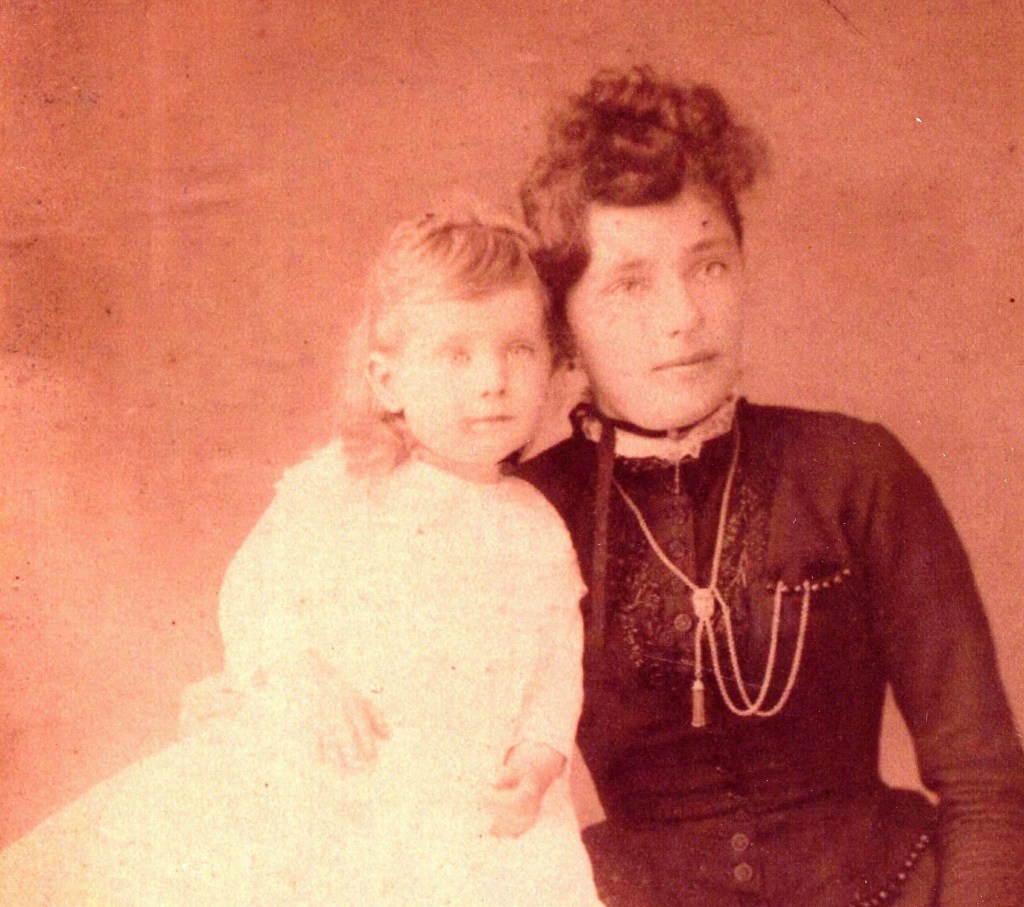
Alice Hale was born on 16 April 1865, as the Civil War was ending. Her parents were Thomas B Hale (1836-1914) and Elmyra Spitler (1843-1904).
Alice was the first child of Thomas and Elmyra, but she had three older half-siblings from her father’s first marriage to Mary Bowman (1835-1862): Ella (1857), Rilla (1858), and Baker John Hale (1861).
A Farmer’s Daughter
Alice grew up on her father’s farm in Washington Township, Hancock County, Ohio. She and her sisters were probably responsible for baking bread, churning butter, and processing fresh vegetables from the family garden, canning and pickling them to store for the winter. Laundry would have been an all-day chore, taking up a lot of the family’s time: boiling water by hand, scrubbing clothes on washboards, and hanging everything out to dry. Thomas’s household had nine children and his wife, plus Mary Spitler, probably one of Elmyra’s nieces, which meant more work for everyone, but also more hands to do it.
Three Short Years
Alice may have known Allen Greenlee from school, or through the social circles of church and local events in Hancock County. Even if she didn’t, her father probably knew who Allen was; a prominent farmer like Thomas Hale would have been aware of a young teacher and Cass Township clerk. He probably even knew about Allen’s 1882 trip to the county court on a “charge of bastardy.”1
I don’t have any documents or letters to tell me what their relationship was like. They might have been acquainted since childhood, or introduced sometime in 1883. Alice may have been blissfully unaware of Allen’s legal troubles, but if Alice knew or found out about Allen’s relationship with a girl from the next township over, things may have gotten difficult between them.
However tense the relationship might have been, Alice and Allen were married in August 1884, and soon had a baby daughter, Bertha May Greenlee.
Alice and Allen were married for, at most, three years. We don’t know exactly when he died in 1887; only that he was buried in Bechtel Cemetery. We don’t know the cause of his death. We only have those few newspaper items that tell us anything about him or his life. They tell us he was ill in the fall of 1885, and moved his family in with his father-in-law while he recuperated. They tell us that he paid the tax on businesses that sold liquor in December 1886. They tell us he ran for office as a Democrat.
These are small details that might mean nothing. Being a Democrat whose parents were divorced, a man who sold alcohol, and who may have had a child out of wedlock, living with a disapproving (Republican) father-in-law, who likely had strong opinions about the Union cause and temperance – all of these details might also mean those three years were contentious and difficult for Alice.
But in the end, we just don’t know.
A Second Life
Typically, when a spouse died in that era, my ancestors remarried after about two years. Alice and Bertha probably went back to live with her father after Allen’s death, and on November 28, 1889, she married George McClelland Cramer (1861-1937).
George (listed on the 1870 and 1880 censuses by his middle name, McClellan) was the son of Adam and Christina (Klinger) Cramer. He was born on October 23, 1861, and grew up in the Seneca County section of Fostoria, Ohio, where his father was a grocer and a postmaster.
George was 28 when he married Alice and adopted Bertha. He was a brick mason and bricklayer – steady work, as paving bricks invented in the late 1880s became an important part of the growing road infrastructure in American cities. He continued in that business his entire adult life, retiring during the 1930s.
George, Alice, and Bertha added another baby to the family in 1894, when Bertha’s half-sister, Mamie, was born. Despite being nine years apart in age, the two were very close. Mamie became a school teacher when she grew up. She was still living at home with her parents in 1920, when Bertha’s daughter, Yvonne, came to live with them.
Mamie married Harlan Richard in 1922. Harlan was a machinist, and while he and Mamie never had children of their own, they spent a lot of time around their niece and nephews. In 1959, they retired to Florida, where Bertha and John Callin were living.
Alice and George
Once again, I find myself with a “happy ever after” sort of ending. We all know life isn’t a fairy tale, but for this generation of American Midwesterners, a steady income, good health, and a stable community were about as good as it got. George and Alice Cramer enjoyed their good health and relative prosperity in Fostoria and Findlay, where my Grandpa Bob Callin was born in 1920.
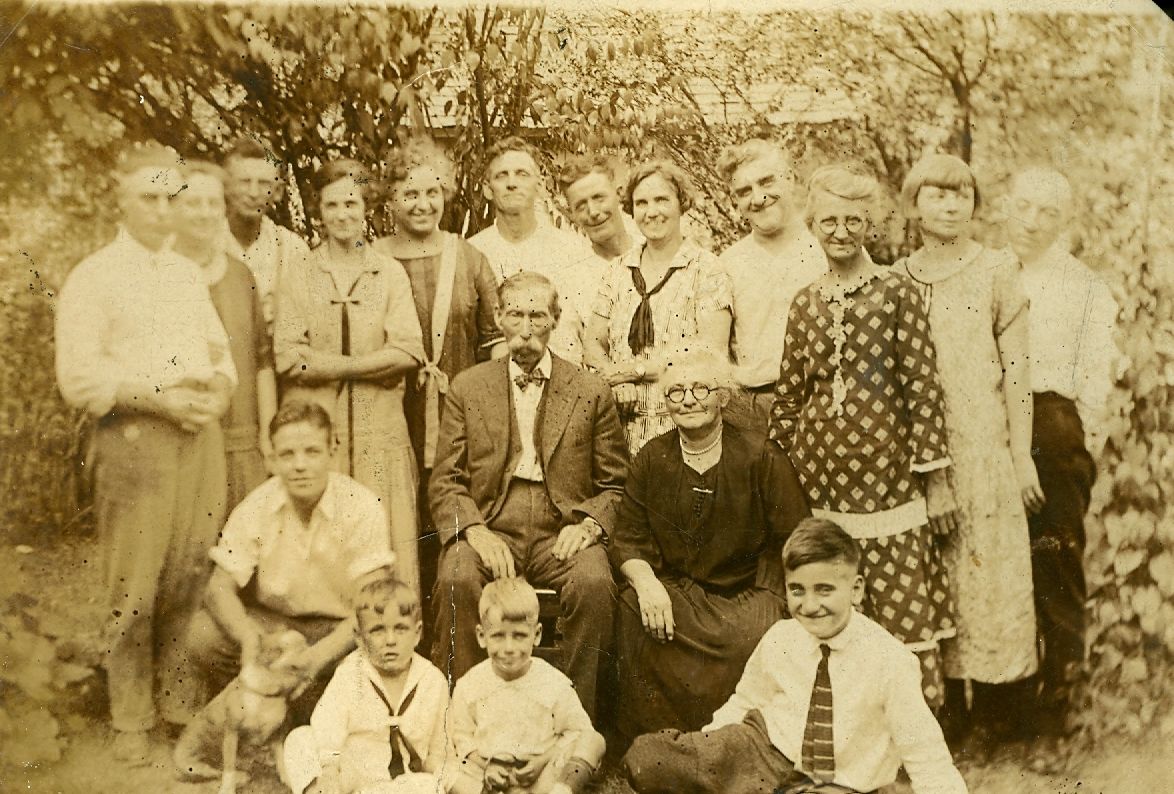
Unfortunately for me, their obituaries are not available online yet. I know that George Cramer died in 1937, and Alice followed a few years later in 1942. By then, her daughter and son-in-law and her three grandchildren, Bob, Yvonne, and Norman, were all living in Florida.
But even without written evidence, the simple, fond fact of their presence permeated the lives of their family. I know from fleeting references in letters and the few recollections Grandpa shared that George and Alice were surrounded by people who loved them and whom they loved.
So “happily ever after”? I’ll take it.
- We talked about what that meant in Allen’s Ahnentafel post. ↩︎


Say hello, cousin!