
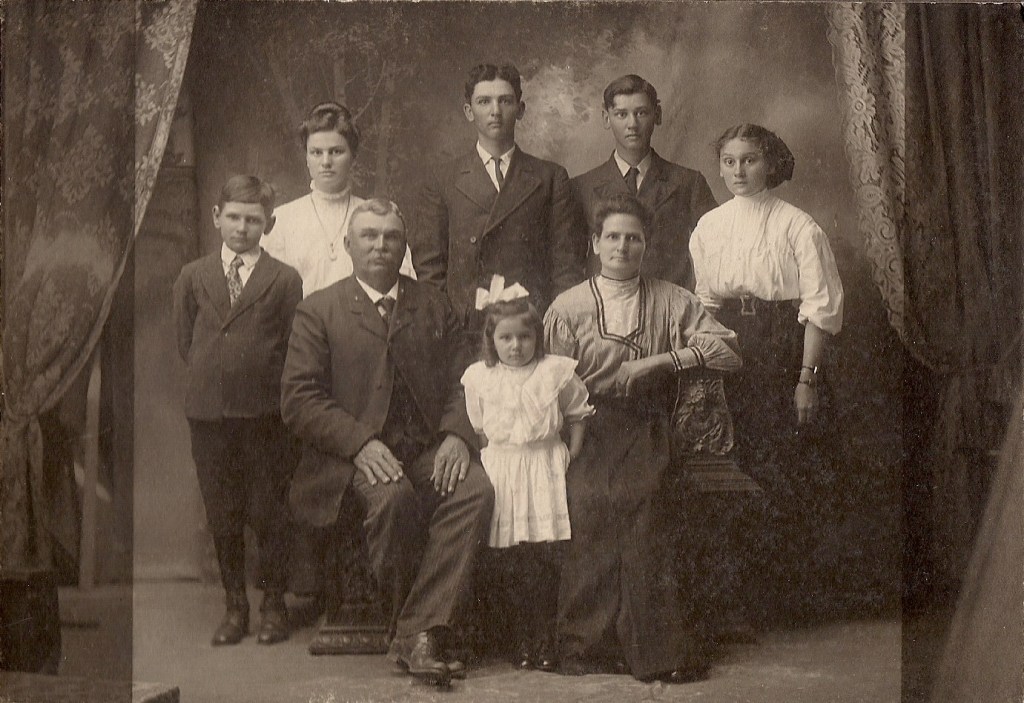
My 2nd-great-grandfather, Abraham Howard Witter (1859-1918), was born in Pennsylvania, but his family settled in Pottawatomie County, Kansas, when he was a boy. Abe married Nancy Ellen “Ella” Shriver on 11 Feb 1885, and they lived in Belvue Township, raising seven children in Wamego and in St Marys.
1892: A Microblog
I used to teach a class on social media collaboration to other federal employees. This was something that existed a couple of years on either side of 2010, when MySpace was on its way out, Facebook and Twitter were just two among many vying for supremacy, and everyone thought GeoCities was quaint, ancient history.
The people taking the class were a cross-section of highly technical early adopters (some of whom were old enough to know COBOL), linguists, various kinds of math and engineering people, and of all imaginable ages and backgrounds who shared one universal characteristic: they were not allowed to access their phones or the internet during the workday. So, they weren’t afraid of technology or new ideas, but they were not part of the rise of smartphones the way the rest of the population was.
When I got to the section of the lecture on Blogs and “microblogging” apps, I always got the same question. They would hear about these apps where you could post your thoughts for millions of strangers to see, and they would ask me, “Why? Why would anyone think anybody else would care?”
In all the years I was a Twitter user, I never had an answer for that question. The closest I have come to an answer struck me while doing family history research.
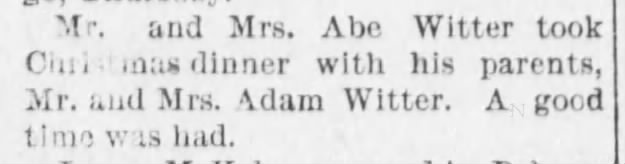
Westmoreland, Kansas, 29 December 1892 – Westmoreland Recorder:
The Facts Will Document Their Feelings
The first time I found a snippet like this, I didn’t know what to do with it.
Is it… proof of anything? Yes. Is it evidence? Absolutely. Evidence of what, exactly? How do I file it?
In this case, it puts a son and his parents in the time and place they are supposed to be. That’s a fact that was already established by various records. But what makes this special is dead simple: “A good time was had.”
You could, if you wanted to be a cynical spoilsport, ask, “Who cares? Why would anyone think anybody else would care?” It’s such a small, pointless expression of people enjoying a moment, but it means that my ancestors enjoyed their moments together. That’s not an insignificant thing, even though it is small.
It isn’t much, but it’s something, and that does make it the perfect Tweet.
The Busy-ness of Life
I don’t know if you have noticed, but I have struggled to find hooks when I write about this generation of ancestors. There is an unavoidable pattern: they were born somewhere, their family moved during their childhood, and they led unremarkable lives in a growing American Midwest.
But they weren’t “unremarkable” in the sense that “they didn’t deserve to be remarked upon” – they simply weren’t dramatic or tragic. The things they did were part of the background of history, not the sorts of things that
That’s not to say they didn’t suffer tragedies or endure their share of drama. It’s just that they happened to live during a time when disease was less prevalent than it had been a generation or two before, due to better sanitation, and there was a little bit more leisure time, due to various inventions and economic advances. A lot of them, like Abe Witter, lived between the time of the Civil War and the First World War without directly participating in either one.
The things that made life hard tended to hit everyone, not just the Witter family. Abe and Nancy lost their first child, a girl named Myrtle, in infancy; but that was something that still happened often enough to be unremarkable, and the rest of their children were healthy and grew up to have families of their own.
Abe was a farmer, which meant constant work and chores for everyone; but this was the end of an era when nearly everyone farmed, or at least grew some of their own food, and everybody had chores and work to do. They didn’t think those things merited constant documentation, and the little things that made life enjoyable rarely put a family’s name in the papers.
Rarely, but sometimes…
Postcards and Postscripts
At some point, I remember seeing postcards handed down by the Witter family.
“The Witter Boys” were builders, and one postcard credited them with building a local church in Allen County, Kansas. Of course, I don’t remember which church, or even which generation of “Witter Boys” it was, although it was most likely Abe and his brother Joe.
I do remember that the postcards seemed hard to categorize, like the little newspaper mentions. They often carried a paragraph or two in brief sentences sketching out the million different ways people can say, “There’s nothing much going on here, but I thought I’d tell you about it, anyway.” I only had a few of them, but I got the impression that the family wrote to each other like this any time they were unable to visit frequently.
It’s hard to know how to save all of that or capture it in a story, but it’s still important to know that they were telling each other, “I’m here. I miss you. And things aren’t too bad right now.”
That’s what Tweets are for.


Say hello, cousin!