
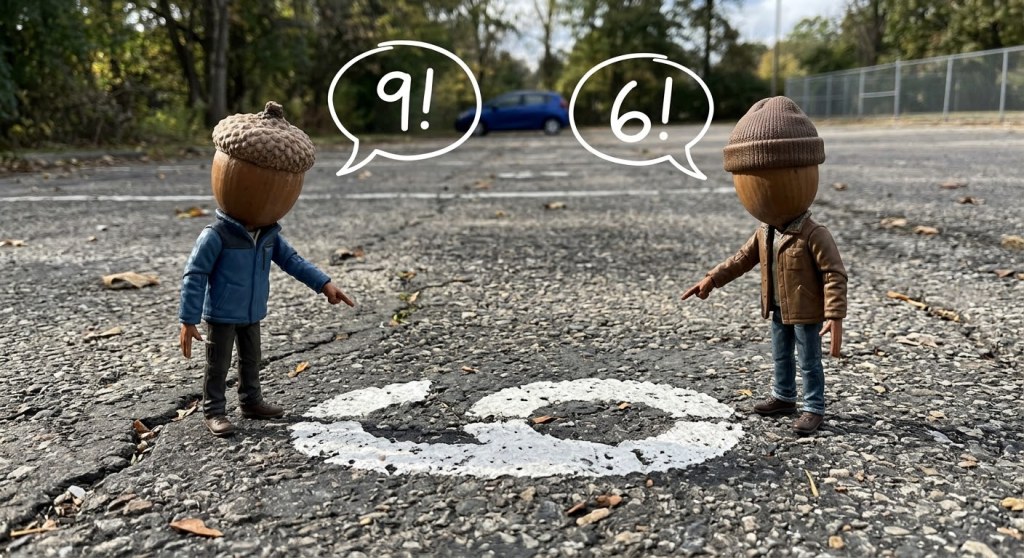
My inbox can sometimes go for months without any direct genealogy activity. There are always lots of impersonal notifications and updates. I do have regular readers here who like and comment on my posts. And I get some periodic interaction from the Substack Genealogy community. But it’s a rare gift when somebody finds me and sends a message through Ancestry or edits a WikiTree page.
This past month, though, I had a veritable flood of messages!
- A cousin from Byron Herbert’s branch of the Callin family found me.
- A descendant of the Mysterious McNabbs subscribed and reached out to say hello.
- Several people contacted me through Ancestry about the Callan Name Study, and
- User L Sauls took my Callan Name Study: The AI Conundrum post and turned it into a question on WikiTree’s G2G forum (“This member needs some geek help“)… which led to another helpful WikiTree denizen finding a way to get me the data I needed.
But in the middle of these messages and notifications, something dropped in my WikiTree notifications that didn’t look quite right.
Kinds of Wrong
Whether you are just starting out or have a few years of research experience under your belt, you have errors in your genealogy. So do I. We all do.
The whole point of engaging in this hobby is to figure out what is wrong and correct the record. But there are different kinds of “wrong” that might be at play in any situation. Most mistakes in genealogy are errors in correlation; we incorrectly match a piece of evidence to what we think are known facts. Errors usually persist when other researchers don’t question your evidence, don’t compare all of the dates, don’t look for contrary evidence, or simply don’t read the original record carefully. In rare cases, a mistake comes from an intent to deceive others; this might be a lie about a birthdate on an official record (to get married or join the military, for example) or it might be a fabrication by an unscrupulous historian trying to connect unrelated families.
All mistakes are vexing.
If you follow Nate Douglas over at No Parents Listed, he has been confronting the mystery of his great-grandfather’s parentage, and the stubborn refusal of the records and the DNA evidence to come together and cough up an answer. In his 16 Sep post, he summarizes the most common “wrongness” that many of us struggle with in both our own work and the work that others do:
In the last three months, I’ve found more documented genetic convergence than I found in all the years before it.
And that work’s taught me something ugly about online trees: sometimes the brick wall is visible before the tree owner sees it. The drift. The wrong date. The wrong place. Children glued to the wrong couple. Sometimes it’s the wrong person entirely, marching through generations because somebody clicked “accept” in 2011 and nobody’s had the nerve to interrogate the corpse.
I like the way he distills that frustration that we all feel when we realize that a piece of evidence we took for granted turns on us (or evaporates). And depending on how you read that last line, you might have missed the subtle way the blame creeps from the person in 2011 who made the original mistake to everyone in the intervening years who didn’t catch it.
That blame gets on all of us.
Extending Some Grace
Fear of that blame causes us to be timid.
Whether you are the person who made the original mistake or one of the people who notices it and wrestles with the choice of bringing it up, none of us is comfortable confronting a mistake.
Factor in a selection bias within the genealogical community for people who are predisposed to devoting solitary hours of a significant portion of their lives to poring over documents and piecing together facts about dead ancestors, and I think you’ll find that many of those people are also highly allergic to interpersonal confrontation.
And so we either avoid “correcting” someone else’s mistakes, or we overthink our position and offend the person we’re “correcting” with our arguments. You must prepare yourself to extend a little bit of grace and forgiveness to the other person, whether you are the one offering a correction or you are the one being corrected. Keep in mind that both people are probably uncomfortable and embarrassed about the situation.
Don’t be timid.
Show some grace (for yourself and the other person).
But keep evidence at the center of the conversation.
Confronting the Error
Since it is a wiki, WikiTree has built-in systems for notifying you when a page you are interested in or responsible for gets edited. Most of the edits I get notifications for are small things, like categories being added or typos being corrected. Occasionally, someone will connect their family member’s profile to one of “my” profiles1 – most often, they are researching a descendant line for a shared ancestor. I delight when that happens, because that’s the baseline for WikiTree collaboration.
This week, I saw a notification that someone had added “Thomas” as a child of “Baker,” so I clicked to see the profile. I don’t know as much about Baker’s origins as I would like, so I was hopeful that this new connection would tell me more. The first red flag was that Baker already had a son named “Thomas B.” (my direct ancestor), so while it is always possible that my direct ancestor might have had a sibling I didn’t know about, it seemed unlikely that they would have the same given name.
Further investigation showed that the profile for this new “Thomas” had an 1805 birthdate; Baker’s birthdate was about 1803. The source information for the new “Thomas” cited a FamilySearch record for an 1850 Census, but I couldn’t find any such record for a Thomas in the Township and County cited in 1850 on either FamilySearch or Ancestry.
It quickly became clear that a) something was wrong, and b) I would need the other person to help me clear it up. So, I did my best to craft a neutral response and commented on the new Thomas’s profile:
It looks like your Thomas Hales may not be attached to the right family – Baker Hales already has a son named Thomas, and your Thomas was born about the same time as Baker.
I wanted to try to find you more information to work with, but I couldn’t find the 1850 Census record you cited in either FamilySearch or Ancestry. Do you have a link to the record you found, or more information about Thomas Hales?
The Worst Case
If you have ever sent a message like that, you probably dreaded the response and loathed the time you spent waiting for one.
I hoped that my tone wasn’t offensive, or that I didn’t confuse the issue. I did my best to put it out of my head after I hit send, but my back brain continued to second-guess my word choices. I braced for a hostile reaction, or who-knows-what sort of information dump the other person might have had on hand. The worst case I could imagine was some kind of permanent limbo state where we couldn’t agree on who belonged to which family, but kept arguing unconvincingly at each other.
I had no reason to fear.
In this case, the person responded right away, removed Baker as the father of their profile’s Thomas, and left it at that. I do wish I could have found more information to help with their research, but outside of a mutual breakthrough, this was the best case for an exchange like this.
Living With Wrongness
This whole experience just reminded me that what we do is a process, just like “science” is a process, and not a single, solid Thing. The records we have to work with are not a perfect representation of who and what our ancestors were, any more than a “map” of the solar system represents anything more than a fleeting glimpse of something that approximates reality.
Reality is a cloud of rocks of various sizes whipping around each other at incomprehensible speeds while we try to keep track of the tiny crumb we happen to live on.
And people are often very uncomfortable with how uncertain even our most certain works of history really are. Errors creep into the most factual of records, and those are subject to loss and damage as our rock spins through its orbit. The best we can do is come up with something that seems logical: “I know I’m here, and I know Mom and Dad were here before me, so it stands to reason that I can figure out who their parents were…” …with the occasional snippet of paper to “prove” we’re close to being right.
Living with Wrongness is actually the largest part of what we do. I think it’s healthy for us to recognize that and acknowledge that the reason we do what we do is that we want to help bring some order to the chaos.
In a way, it’s appropriate that there are no absolutes in genealogy, because no matter what you can prove, everything really is relative.
- I say “my” because I’m just a steward for the page, not an “owner” ↩︎


Say hello, cousin!