
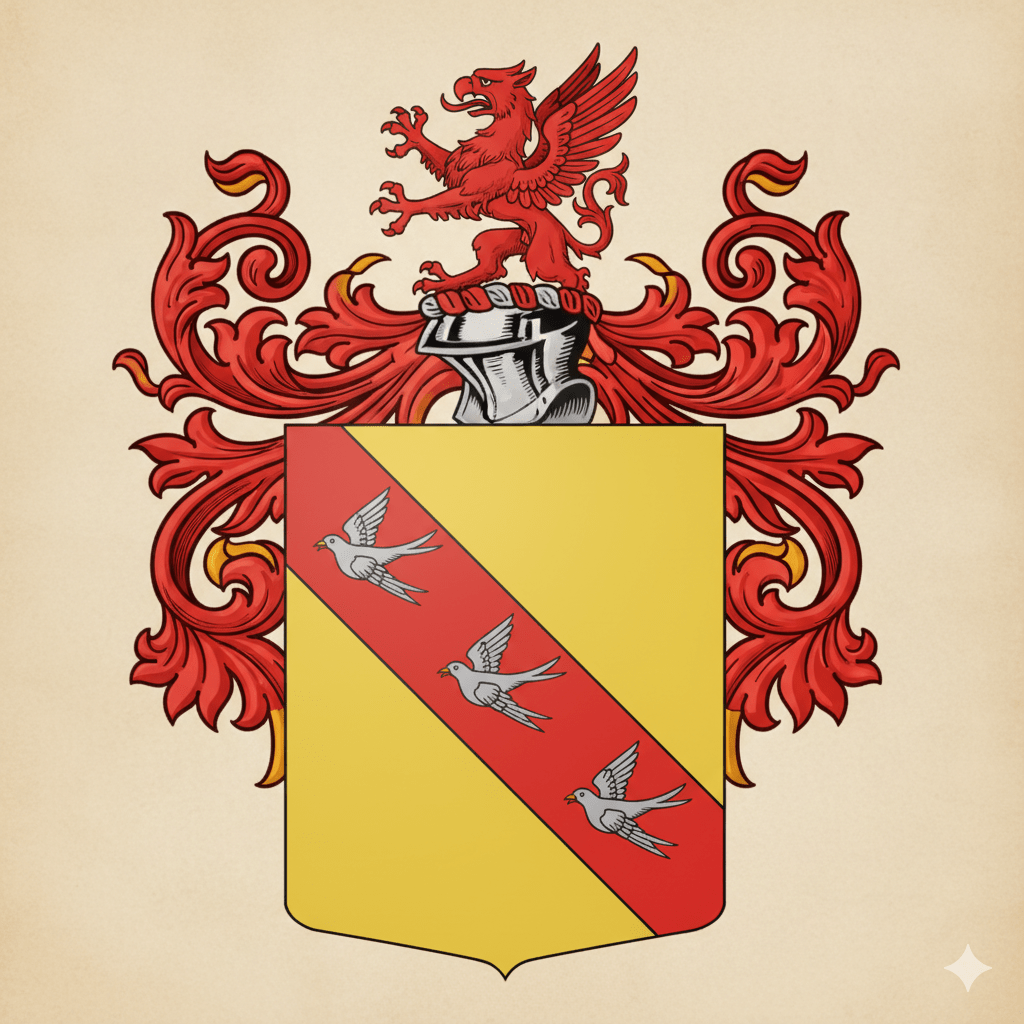
The Callan Name Study keeps growing, and as it does, I intend to tell you about it. If you know of anyone with a Callan surname (no matter what spelling they used), take a look at the master list (a spreadsheet you can find here or on WikiTree) and see if I have them in the database. If not, you can add them with this form!
What’s In a Name?
“Why would I care about a Callan Name Study if I’m not a Callan?”
I can’t really answer that for you. Maybe you can trace one of your ancestral lines to a woman born with a Callan surname; maybe you’ve discovered an adoptee in your line who was born a Callan. Your motivations and interests are your own.
But one reason I’m posting these updates is that I think a lot of people out there are hesitating to dive in and run a study on their own surname. I figure if you are thinking about it, seeing the steps I take and the lessons I learn could help you get yours going.
And if you want to practice on my Callan study before signing up to do your own, I won’t be sad!
Visit Callan Name Study to get started.
By Any Other Name
Deciding what name variations count as “Callan” has been an interesting puzzle.
The obvious variations are Callan, Callen, Callin, and Callon, and in most cases, it’s easy to see that the newer spellings were often chosen by a generation of educated siblings who were born to a generation or more of (usually) farmers who (usually) emigrated from Ireland and whose records were written down by clerks who weren’t familiar with their accents or the spellings used in the homeland. In other words, most roads lead back to people from Ireland using the spelling “Callan,” which itself is supposedly a simplified spelling of one of the older forms of the name in Gaelic.
Deciding which spelling is “correct” often comes down to the question of how the family spelled the name on their headstones. If there are no headstones or if the family left no Bible or didn’t have a consistent spelling to use on their official documents, you may be stuck guessing which spelling they might have used.
I did say “most roads,” and even though it’s too early for me to say much, I can see a few alternate origins emerging for a few groups of “Callan” folks.
See more on the veracity of surnames from Elizabeth Petty Bentley over at Mission Genealogy: “What Was My Ancestor’s Surname?”
For example, sometimes the spelling “Calen” is just a variation of “Callen” that dropped an “L” – but there is at least one family group that originated in Sweden or Norway, and took the surname from the land or township where they were living when the law regulating the use of surnames was passed.
There are also some French and German lines that bear some resemblance to one of the Irish variations, and I don’t know yet whether that is because Irish immigrants to those lands were “localized,” or if those variations trace from another name, like Kälin. Several American “Callen” families came from Russia, and were either originally rendered as “Calinoff” or “Kalinov” or simply adopted an “American” spelling like “Calin” or “Callen” on arrival.
I’m excited to learn more, but it will require some digging once the initial collection is done.
Organize, Organize, Organize
According to the advice I was able to find online before I started this endeavor, the first step in compiling a Name Study is to collect as many individual names as possible from available records.
This means pulling together variations of the name that show up in local vital records, census records, cemetery databases, etc. The Callan One Name Study spreadsheet is where I’m trying to compile all of that information, which is why I keep sharing that link and inviting people to look through it.
I’ve also taken some of the work I did based on the 1901 and 1911 Ireland Census for County Louth and folded it into the Ancestry tree, which can be found here:
That took some effort, because I exported the GEDCOM from my Calln Family History tree, and then “pruned” it down from more than 19,000 names to just under 6,000, which took half of the month of May. Before and after:
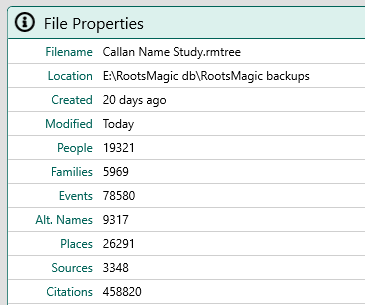
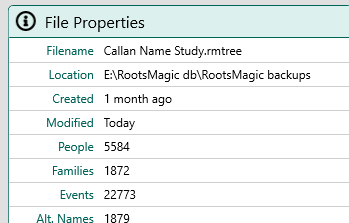
Barbara Tien, of Projectkin, asked whether I had considered joining the Guild of One Name Studies (GOONS), and while I’m not opposed to doing so, I haven’t seen a benefit to doing so right now. The services they offer seem like things that I will benefit from later, after I get things together and have something to publish. They seem to offer web-hosting and networking/advertising, which I will need at some point, but I’m not ready to take those steps yet.
I did take some of the advice I’ve read about leveraging AI tools, and asked Gemini for help compiling lists from available census records, so I have a collection of spreadsheets that it was able to generate for each publicly available census in the U.S., UK, Australia, and Europe. What I don’t know is whether these are “complete” or accurate.
Another reason I am hoping to attract more eyes to the spreadsheet – the more people I have going through it and looking for matches (to their family trees, to WikiTree, to FamilySearch, etc.), the better and more complete picture we will have of how many Callans there were in each of those censuses.
This month promises to be busy enough to keep me away from the keyboard, so I don’t expect to make much progress until the end of the summer – but I’ll keep you posted, anyway!


Say hello, cousin!