Tad Callin has been working on family history and genealogy since the late 1990s. He does most of his research on Ancestry and posts what he learns to WikiTree.
As I type these opening sentences, it is Tuesday afternoon, October 14, 2025. Despite having all the time in the world, thanks to the ongoing Disruption, I find myself in the position of not having any new content ready to post this week for the first time in nearly two years.
Facing the blank page with a deadline, even one I set for myself, is a stressful thing to do. I work the way I do so I don’t find myself in that position very often. So my first thought when I realized I have backed myself into this corner was:
What an opportunity!
Staying Ahead
Normally, I keep several weeks’ worth of posts in my Drafts folder. That means keeping track of about six posts at any time, in various stages of development. During normal times, I only get to work on family history stuff in between the normal business of life, usually stealing an hour or two after work during the week or digging in for a few hours on Saturday or Sunday.
My process involves taking some of that precious time and going through the trees I have on various platforms. I go looking for gaps or questions, and add notes and updates to new draft posts, tacking ideas onto them until I can string together a thousand or so words into something like a story.
When I keep enough new ideas going in draft, it is easy to spend a little time each week scheduling those that are ready to be posted, reviewing and editing, and maybe finding or making something to illustrate the post.
The furlough began a couple of weeks ago, after I had already decided to put some quality time into working on the Callan One-Name Study. Putting time into that project ate into the time I usually reserve for putting the blog together, and now, I have “caught up” to myself!
Getting Ahead
For those of you who aspire to write regularly, I suspect that many of you struggle with this “blank page” moment; and I can recommend taking a few steps to get out ahead of your own deadlines so that you can be more in control of your production schedule.
First: pace yourself.
Don’t feel like you need to produce a fully researched master’s thesis every week to be successful. This is a blog – a web log – tracking your progress and giving you a platform to say, “Here’s something interesting!” I’ve set my pace for Mightier Acorns to be two posts per week, and while I usually have to fight to keep my word count under 1500 words, I also remind myself that 500 words can be enough.
When I plan out the drafts for several weeks in advance, I can also identify those ideas that “have legs” and threaten to expand to several thousand words, and break them into pieces.
Second: “Perfection is the Enemy of the Good”
Nobody likes to feel like their content is disposable, but… it kind of is. For me, the content on my blog is meant to be fun. (We all have different ideas about what “fun” means.) As far as I am concerned, the work that needs to be of the highest quality is what ends up on WikiTree. (And even that is meant for constant, small improvement over time.)
If the point of your blog is to act as your personal JSTOR, then yes, you should work hard to make everything correct. But if the point is to share highlights to draw your family in or share tips with your fellow genealogists, they will forgive you if you have an occasional grammatical error. So don’t spend too much time on “making everything perfect” or you will never get ahead.
Third: Don’t be afraid to repeat yourself.
Not only am I happy to re-post favorite essays (usually adding either an illustration or a research update), I’m also happy to cover the same terrain as older posts. (See “On Writing Consistently” for some of these tips, written differently!)
Take A Break Sometimes!
In drafting this post, and looking at my schedule, I can see that I’ve been doing much of what I set out to do with Mightier Acorns since re-launching on WordPress in June. And, since I know I’m going to be busy for much of the rest of this week, especially Saturday, I think I can allow myself some time off.
So, if you have read this far, be advised: I will not be posting anything new on Friday. And if Saturday goes horribly wrong, you may not see anything the week after… but rest assured, I’m still enjoying this work, and I’m looking forward to rejoining you soon!
We already know about some of the tragedies Virgie’s family survived, such as losing Frank to a train accident during World War I. But there seem to be other moments in her life that probably caused some trauma. And figuring out what happened may require reading between the lines of the records.
Isaac Ballard: Upstanding Citizen or Scoundrel?
Virgie Ballard’s father was Isaac Emmerson Ballard (1859-1923). He grew up in Iowa, moving with his family to Missouri around 1870. Isaac moved back to Iowa by 1880, when he lived with his widowed sister, Rachel Fredericks, and her three children in Glenwood, Mills County, Iowa. In 1885 he resided with his parents, who had moved to Pacific Junction in Plattville Township, Mills County, Iowa. Their neighbors were a family named Rupe.
Mary Ann Rupewas born on 3 Mar 1867 in Nebraska City, Nebraska. After Mary Ann married Isaac in 1886, they had five daughters, the youngest, Vivian, born in 1894. Isaac seemed to have steady work as a brakeman for the railroad, and served as a constable in Mills County. In 1896, he was elected as marshal of Pacific Junction, in addition to already serving as constable for Platteville township and the depot policeman for the C.B.&Q. railroad.
But despite the praise of his “efficiency and faithfulness,” trouble lay ahead. Isaac was sued in 1901 for false arrest, along with fellow constable Oliver Zorns and former Council Bluffs policeman Jack Pinnell. The complainant was a man named Joseph S. Scott who alleged that he and his father were arrested by the constables in October 1899 and were held overnight in an unheated room, leading to the untimely death of Scott’s father.1
In May of 1901, Isaac was acquitted by a jury2, but that did not end his problems. He was separated from his family on 15 April 1901, and he filed suit for divorce against Mary Ann “on a charge of abandonment” in December 1903.
Despite the fact that Isaac sued Mary Ann for abandonment, events suggest there was more to the story than that. He soon remarried Edna May Purvis (1879–1972) on 18 Jul 1904 in St Joseph, Missouri, and they moved to Oakland, California, where Isaac was working as a switchman for the railroad. In 1912, the couple had twins, a boy and a girl, before moving back to St. Joseph by 1920.
When Isaac died there in 1923, his obituary only mentioned his second family:
“Isaac E. Ballard, 51 years old, died at his home near Lake school at 3:15 oclock [sic] Monday afternoon. He is survived by his wife, one son, and one daughter, Ellis and Evelyn Ballard, and one brother, James, at Battlett [sic], Iowa. Ballard was a member of the Brotherhood of Railway Trainmen lodge No. 92. Funeral services will be held from the family home at 2 oclock Wednesday afternoon. Burial will be in Ashland cemetery.”
While we may not know the circumstances, we can tell that the breakup of the Ballard family left Mary Ann and her daughters to get by on their own. The fact that none of his living daughters were mentioned in his obituary suggests a deeper story that isn’t in the available records.
Before I create an idea of what kind of person Isaac was, though, I need to see what I can learn about Mary Ann.
The Rupe Family
Mary Ann was the oldest daughter of James Douglas Rupe (1842–1916) and Amanda Jane Martin (1845–1906). She grew up with two younger brothers and two younger sisters. Another sister, Jennie, was born in 1880, but appears to have died in infancy.
James Rupe was a private in the Confederate army, according to his gravesite record in Glenwood Municipal Cemetery, but because there was more than one James Rupe serving in the Confederate army from Missouri units, I don’t know which one he was. I also don’t know exactly when or where he married Amanda Martin; the 1900 Census says they were married in 1864, and Mary Ann, their eldest, was born in Nebraska in 1867.
James was a farm laborer, and he took the family to live in Green Township, Nodaway County, Missouri, near Maryville, when Mary was small. Her sister, Sarah Margaret, was born there in 1871, but by 1875, the Rupes had returned to Mills County, and Mary Ann’s siblings were born in Pacific Junction. All of them remained in Iowa, and most of them had large families of their own.
Sarah Margaret (Rupe) Fitch (1871–1948) married Simeon Fitch in 1900, and they had two sons and a daughter before Simeon died in 1916. This was Simeon’s second marriage, and the oldest of his five children from the first marriage was a year younger than Sarah.
John Redmond Rupe (1875–1945) and Samuel Levi Rupe (1881–1947) married sisters, Henrietta and Elma Livengood. John and Elma had two children, plus Elma’s two sons from her first marriage to Allan Arnold (1863-1904). Samuel and Etta had nine children between 1901 and 1923.
Louella (Rupe) Hill (1877–1949) married Sherman Henry Hill (1868–1926) in 1895, and they had eleven children, ten of whom survived to adulthood.
All of which suggests that Mary Ann’s children had a lot of kin nearby when they were growing up. So, how did Isaac’s and Mary Ann’s daughters fare?
The Ballard Daughters
Virgie’s older sister was Florence Ballard (1887-1964). Florence married Hart Mantor Allen at age 16 in October 1903, but by 1905, Florence was living alone under her maiden name in Glenwood. Mr. Allen remarried in California in 1908 (to another woman named Florence), so it seems likely that this first marriage during the same time frame that her parents were divorcing may have been what we would call “acting out” today. Florence married a second time in 1917. She and William Kim (1881-1952) did not have any children of their own, and they moved to Salem, Oregon, by 1920, where they remained for the rest of their lives.
Bessie M. Ballard (1891-1975) married Daniel J Aalberg (1882–1963) on 26 Nov 1908 in Minnehaha County, South Dakota, where they raised a their family of two sons and three daughters. Bessie and Daniel divorced during the 1930s. Dan Sr. was remarried to Mrs. Myra Baker by 1940, and Bessie married Alfred P Thorvalson in 1936 in Minnesota. Their children were mostly grown by then, with their three eldest married with families of their own (Hobert, Virginia Fenner, and Lorraine Morris), and Dan Jr. in the Army at Fort Francis E Warren Military Reservation, Laramie, Wyoming. Their youngest, Gwendoline, lived with her sister, Mrs. Lorraine Morris, in 1940.
Virgie’s youngest sister, Vivian, married Bert Glancy Gatch (1889-1964) in 1912, after she turned 18, and the couple moved to Sonoma, California, during the 1920s. They never had children of their own.
Virgie had one last sister: Hattie Ballard, born December 1892. She appeared in the 1895 and 1900 Census with her family, but I wasn’t able to find her in the records after 1900. Some of the unsourced information I can find on Ancestry gives a date of death on 10 July 1902, which I can’t confirm. But, if their 10-year-old daughter died in that summer, it’s plausible to think that the trauma of that loss could have been what drove a wedge between Isaac and Mary Ann and lead to their divorce the following year.
Left With Speculation
Sometimes, even though we can find records to give us names, dates, and places, we are left with questions. Even when we have contemporary newspaper accounts, or if we had letters from the people involved, we can’t entirely trust the points of view expressed.
When that happens, answering questions like “What happened to their daughter?” or “Why did they divorce?” can only be answered by a best guess: speculation. And as long as we make it clear when we guess, that might be okay.
But we should always keep digging.
Newspapers.com, The Daily Nonpareil, Council Bluffs, Iowa; “Sues Officers For Damages“, Sat, Aug 25, 1900, Page 4. ↩︎
Newspapers.com, The Daily Nonpareil, Council Bluffs, Iowa; “In The District Court.” Wed, May 29, 1901, Page 4. ↩︎
I mean that in every sense of the word. The things a human brain is capable of doing are “impossible or difficult to believe,” and yet, we owe our existence and continued survival to our brains doing those unbelievable things.
“Belief” is the focus of this essay, by the way. Belief and stories, and the place where they run up against reason and evidence.
Where Stories Come From
We tell ourselves stories for several reasons. The earliest known writing system, cuneiform, was used by ancient Mesopotamians living in what is now the modern Iraq to record transactions in clay tablets, but the same Sumerian culture also wrote down The Epic of Gilgamesh, the earliest known work of fiction.
We know that before writing was invented, human cultures relied on oral traditions, passing down their histories and their genealogies through memorization and repetition. This continued even after the invention of writing. African griot traditions carry into the modern age even though the power structure of the kings who used to sustain the griot caste no longer exists. Evidence found through archaeology tells us that art, whether the music of the griot or the paintings found in caves from 20,000 to 40,000 years ago, has always been a part of human life.
The writer John Green talks about the paintings found in a cave in Lascaux, France, in 1940, and I often think about what he said in his Anthropocene Reviewed essay, after pointing out that the hand stencils found in the cave tell us how different life was for early humans:
But they also remind us that the humans of the past were as human as we are. Their hands indistinguishable from ours. These communities hunted and gathered and there were no large caloric surpluses so every healthy person would’ve had to contribute to the acquisition of food and water. And yet somehow, they still made time to create art, almost as if art isn’t optional for humans.
I don’t believe art or storytelling is optional for humans. Our brains constantly process information received through our senses, and making sense of all of that information requires us to build a framework, a story, to explain what we see, hear, or feel.
Sometimes, as we do with our family history research, we create scenarios to explain the information we find, and to help predict where to look for more evidence. But often we find ourselves without evidence or an easy explanation, and that’s where our storytelling and imagination tend to run wild.
“Not Knowing” Is Scary
We don’t like to sit with “I don’t know” for very long.
How many times have you run into a dead end in your family history research and told yourself a “placeholder” story to explain the gap you have found? I didn’t know for a long time what happened to William Zardy Sly, the grandson of Harriet E. Callin (1838–1907), so I told myself that he must have died after 1907, leaving a widow and a small child behind. Telling myself that story led me to stop looking for evidence, until another cousin filled me in on the Double Life of Uncle Jack! Without the evidence of cousin Leanne’s testimony and personal knowledge that Zardy had left behind his old life, created a new identity, and became her Uncle Jack St. Clair, there is no way I could have arrived at the truth using my usual sources of evidence.
When genealogists run into dead ends like these, it is tempting to make leaps or to rely on the hearsay and guesswork of others. We ran into an example of this with my Livingston ancestors in Two Steps Back. I’m sure you have your own frustrating examples of someone stringing together a version of your tree that doesn’t hold up when more evidence is found.
And it can be frustrating to try to correct the record when the person who strung that fanciful version together doesn’t want to let go of the story they have been telling themselves.
Invested In Stories
There are a lot of reasons why someone might insist that a story they tell themselves is true even when the evidence shows otherwise.
We are social primates whose survival depends on our family and community, and so if the community has decided that something must be true, we risk losing that community if we don’t accept it, too. This can lead to a range of consequences, from simply having to admit to being wrong to losing jobs or relationships that we value.
The stakes aren’t always that high, but as human beings, we tend to prefer the first version of a story we hear, especially if it has some emotional core that appeals to us.
Take the story I first learned about my Hessian soldier ancestor, Leopold Zindle. I really liked the version of his story that I found in 2014. The story that he defied a British officer who struck him with a sword in the street, and that the people of Morristown, NJ, came together to protect him and accept him held a deep appeal to me. But as I learned later, in the story behind the story, Leopold did not defy a British officer (it was a German-speaking American officer), he did not defy him alone (there were two of them involved), and the event did not happen in front of the town (it happened on the road to Philadelphia, and led to the return of the German prisoners to Morristown).
I liked the romance of the first version of Leopold’s story, but as I found new facts and evidence, I had to let go of that romance so that I could get at the truth of what happened to him. And the truth was much more interesting and complicated, even if it was less appealing to my romantic sense of story.
In the case of Zardy Sly, I wasn’t deeply invested in his story. I am not his direct descendant, and I didn’t have an idea in my head of what kind of person he was. But I imagine that his abandoned daughter might have built a story to explain why her father was gone. And if she told herself a story that gave her comfort or helped her heal from his loss, finding out that he had a second life with a second wife (one that his parents and siblings knew about) could be emotionally devastating.
If you spend any time in a genealogy forum (like r/Genealogy on Reddit) examples abound of what can happen when DNA evidence reveals a “non-parental event” (NPE) that upends years of research.
Revising our personal stories and histories can be upsetting, and sometimes we are motivated to resist that revision, no matter what the evidence says.
Magical Thinking: What You “Believe In”
I’m using the phrase “Magical thinking” to describe the idea that wanting something to be true badly enough can make it true.
This goes beyond the countless examples of people inventing stories to explain evidence that doesn’t make sense to them. People often fall back on magical thinking to explain away new evidence that contradicts a story they love. Magical thinking is never about what you can prove; it is always about what you believe in.
For example, even though we have seen 400 years of advancements in astronomy, archaeology, and biology – discoveries about DNA, the finding of new burial sites and ancient settlements, and the building of more powerful telescopes – despite the growing body of evidence that shows with greater and greater precision the age of our planet and our universe, and how our ancestors came to be, there is an alarming number of people who insist that their story about an Earth that is only 6,000 years old is real.
And if you have encountered someone who believes that, in spite of all evidence to the contrary, you know how upsetting any argument about it can get. It doesn’t seem to matter to them that other people who share their faith have found ways to reconcile the old stories with the new science. The idea that they should let go of this story becomes an attack on their identity, on their sense of who they are, and on their community.
When you are in a conversation with someone and you realize that they feel that their beliefs are being challenged, the best course of action is usually to back off. If they arrived at their position without evidence, it is unlikely that any amount of evidence will convince them to change their position. At least, not in the moment. And forcing the issue can lead them to double down on their beliefs, dismiss you and your evidence, and make it harder for you to present your case to them in the long run.
Such is the power of magical thinking.
So, What Do We Do?
The truth is, I don’t know an easy way to convince people to change their minds once they have decided to protect their story from evidence to the contrary.
The best suggestions I can offer are to model the behaviors you wish they would adopt. Do your best not to alienate the other person, and then demonstrate how you work:
Document the evidence you have, including the context needed to understand it.
Be open about your doubts; allow for the fact that your interpretation of the evidence could be wrong. But also make it clear what evidence you would need to either prove or refute your story.
Build on what you can prove without a doubt, and on facts that are not in dispute. Frame your disagreement around the points that you agree on. “We know that grandpa enlisted in the army, but we don’t know what happened to him afterward. If he died, we would expect to see a document; if he started a new life with a new name, we might see DNA evidence.”
Avoid absolutes. And avoid framing your conclusions as “beliefs.” Rather than saying, “I believe the newspapers version of Leopold’s story is false,” say, “The evidence provided by his commanders and the letters of his fellow prisoners suggest that Leopold’s story was this, instead…”
Above all else, you have to be willing to let people be wrong. Especially when their being wrong presents no threat of harm.
If we were talking about the welfare of a child or a case where being wrong does present a harm (like, allowing someone who doesn’t “believe in” vaccines to put your health at risk), you wouldn’t just “let it go.” But if we’re talking about the stories of people who are long dead, there is no reason to try to force someone to accept your facts.
Sometimes, the wisest course is to let the elephant think the magic feather allows him to fly. Just make sure he doesn’t try to jump off the roof.
There is something soothing about diving into a database of messy, human data and bringing some sense of order to it. King Crimson captures the feeling I experience in their classic 1981 track, “Frame by Frame”:
Frame by frame (Suddenly) Death by drowning (From within) In your own, in your own analysis Step by step (Suddenly) Doubt by numbers (From within) In your own, in your own analysis
The first time I heard Adrian Belew and Tony Levin hit that harmony on the word “analysis,” I felt the way I feel when I am deep inside a spreadsheet, pulling information from query results and putting it into profiles, wiki pages, or online trees.
“Doubt by numbers”… yeah, that feels like the practice of critical thinking!
Frame by Frame
Which brings us to the Callan Name Study, and my ongoing effort to know what can be known about the Callan (or Callen, or Callin) folks who found their way from Ireland to America. If you recall one of my earlier posts about this, I had started collecting the households from the 1911 Census for Callan (and spelling variants) in County Louth. I quickly saw the value in combining the data from the 1901 Census, too, and over the last couple of weeks, I’ve devoted some time to refining what I’ve learned documenting links to Ancestry, FamilySearch, and WikiTree profiles in my Callin One Name Study spreadsheet.
As of this writing, I have recorded nearly 670 individuals, and I have at least one link to a public profile (most of them on Ancestry) where the records can be examined by anyone who is interested.
This can be some slow and painstaking work, but as I press on, I expect that some helpful patterns will emerge. New DNA connections to me through these Irish Callan families would be very helpful, of course, but they will be very distant. There is a small chance that I’ll figure out who Dr. Fred visited in 1907. I might even stumble across the family that came to Pennsylvania before the Revolutionary War – though I suspect that will be a long shot.
There are a lot of possible goals and several ways that putting this work in could benefit my research down the road. But, if I’m honest, I don’t really expect any answers to my immediate questions to come from this effort.
I just like doing it.
Suddenly, a Story
Nicholas Callan is one of the first profiles to come out of this effort. Born in 1838, he’s the father of 11 children and was a tenant farmer in Allardstown until his death, sometime before 1901. His widow was the former Mary Feehan (or Feeghan), and she maintained their farm in Allardstown through the 1901 and 1911 Census, with the help of several of her children. Two of their daughters, Elizabeth and Josephine, lived with Mary’s brother, Patrick Feehan, and their cousin (Patrick’s son, also named Patrick) lived with Mary Callan in 1901.
A lot of the records we have give us imprecise information, or facts that are hard to match up with other records. For instance, the eleven children were all baptized in the Roman Catholic church, and almost all of them can be found in baptismal records, which list both of their parent’s names and two sponsors. While the sponsors aren’t necessarily relatives, most of the sponsors I found had the surnames Feehan and Callan, and several of them were women with the surname Hughes.
These sorts of relationship clues, combined with the very specific information about the towns, townlands, parishes, and baronies within County Louth may not provide a solid proof of certain connections, but studying all of that information can help figure out where to look for more records.
It’s a lot like assembling a jigsaw puzzle, in that the contours of the pieces may take a while to start forming the big picture.
Today, 1 October 2025, is the beginning of the next fiscal year, FY2026.
Yesterday was the official date of separation for dozens of my former colleagues, friends, and mentors who chose the deferred retirement option offered earlier this year. I can’t help but feel a sense of deep loss and sadness at this unnecessary exodus.
And today is the beginning of a government shutdown because Congress couldn’t agree on a spending bill. So I will be furloughed from my federal job starting today. Rumors are that this furlough is going to be used to illegally fire many more federal workers.
Unlike the highest ranking civilians in charge of the federal government these days, I am bound by laws and an oath I took to support and defend the Constitution, so I am not going to tell you my opinions about this, or give you a call to action. I’ll simply state that whether you are one of the ~70 million people who actively chose this, or you are one of the 90 million who allowed it when you refused to vote last November, it’s not too late to contact your elected representatives and tell them how you feel about the situation we find ourselves in. I trust democracy, even in a country filled with people who seem intent on maintaining an ignorant, alternative reality, and I trust that if everyone adds their voice to demand a fix, those in power will eventually have to listen to reason.
While we sit at home, mostly helpless, and wait for this situation to be resolved by those elected representatives, I will try to set aside the anxiety and stress of not knowing what my personal fate will be, and will try to treat this the way I have treated previous shutdowns. In the past, they have been too brief to harm me and my family – a privilege that I know is not shared by everyone – and the law provides back pay once we we return to work. If the law still matters.
Finding myself with extra time on my hands in the house should mean that I get to dive a little deeper into the Callan One Name Study, and maybe take some time to write the sort of genealogy posts that I don’t usually have time to write.
Everybody1 has eight Great-Grandparents – the parents of their four grandparents. For my kids, those eight people are vague memories from photos taken when they were too small to understand who all the people around them were.
If you’ve been reading Mightier Acorns for any amount of time, you’ve run across many references to My Sixteen (or, for my wife’s side, Her Sixteen), but in my efforts to reach back further in time to more distant ancestors, it can be easy to lose track of those more recent generations.
To help my far-flung cousins, and those of my wife’s family, I’ve been building separate, public Ancestry trees based on each of our children’s’ eight Great-grandparents. If you’re descended from one or two of these fine people, or from their ancestors, take some time to explore their history…and yours.
The Robert Callin Project
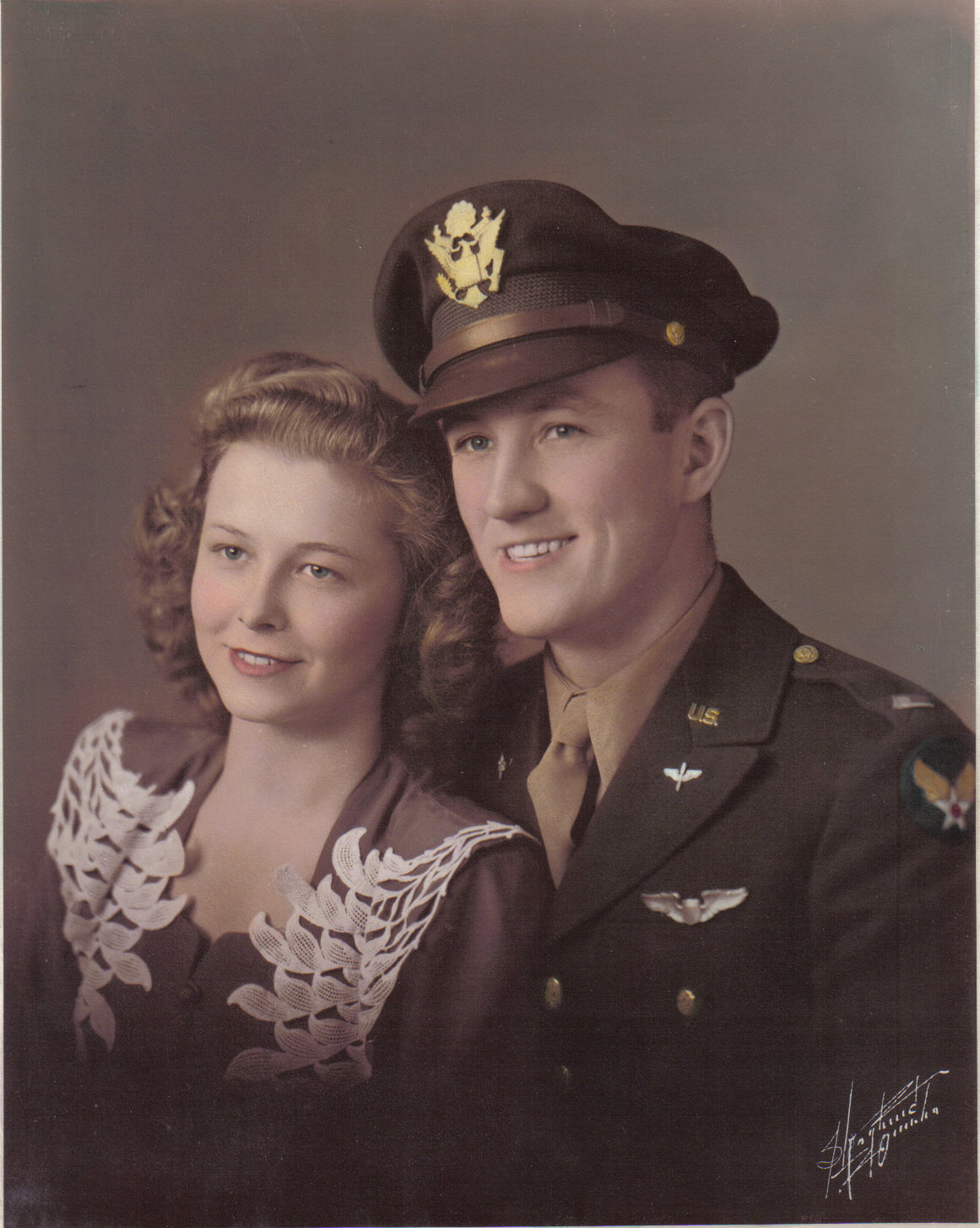
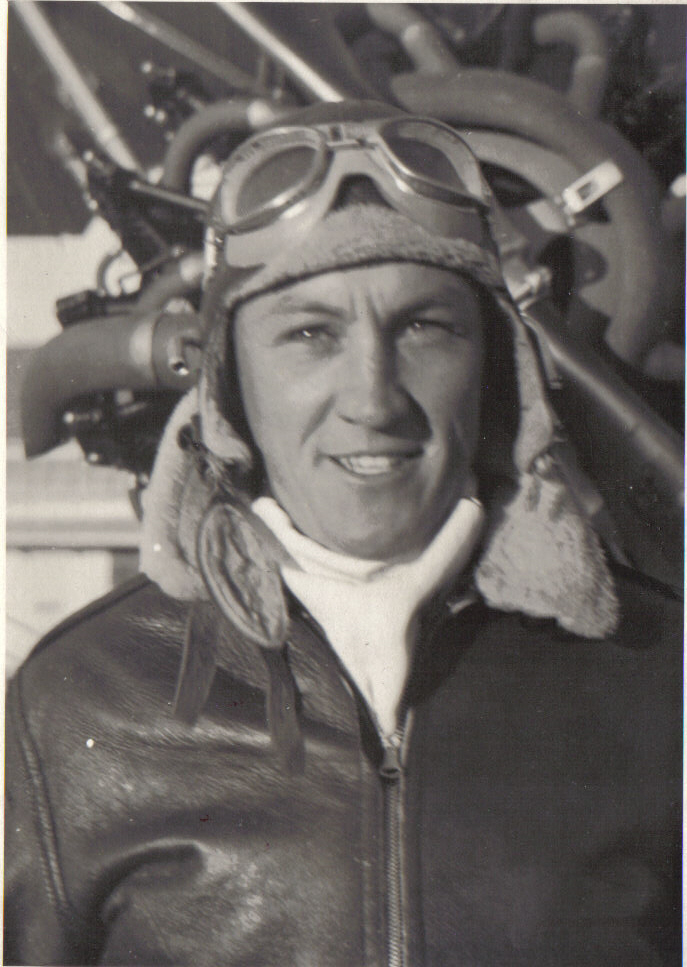
Bob Callin, also known as “Grandpa No-Bob” to me and my cousins, was a sweet man with a wicked sense of humor. Many of our stories about his antics involved Grandma Nancy telling him, “No, Bob!” – thus the nickname. His Ancestry tree is The Robert Callin Project.
The Nancy Witter Project
Like the desert climate she grew up in, Nancy could be intense, but she was known for her fierce love for her family and friends. Married during World War II, she and Bob were public school teachers who spent their free time traveling the country in their RV. Her Ancestry tree is The Nancy Witter Project.
The Russell Clark Project
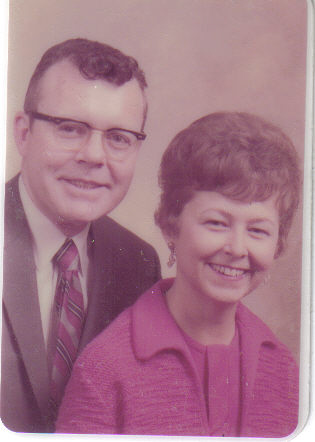
Russ Clark was A Fire In the Desert, and wanted nothing more than to save your soul. Not surprising considering the heritage of Baptist ministers in his tree! His Ancestry tree is The Russell Clark Project.
The Alberta Tuttle Project
Grandma Bert followed Grandpa Russ to the ends of the earth, usually in a camper or trailer. Whenever she could she took her organ. Her Ancestry tree is The Albert Tuttle Project.
Here is a snapshot gallery if you’d like to see their trees without visiting Ancestry:
Robert Callin ProjectNancy Witter ProjectRussell Clark ProjectAlberta Tuttle Project
Robert McCullough Project
My wife’s Grandpa Bob died long before I had a chance to meet him, but his family remembers him fondly. His Ancestry tree is the Robert McCullough Project.
June Shuffler Project
Grandma June’s legendary Christmas cookies are well known in our house. Her Ancestry tree is the June Shuffler Project.
Arvid Holmquist Project
We know a lot less about “Bud” Holmquist, as his infamous criminal career upended his family in the 1950s. We are still figuring out the story between his prison sentence and his death in 1996. But his Ancestry tree is the Arvid Holmquist Project.
Merilyn Martin Project
Grandma Merilyn also died before her great-grandchildren had a chance to meet her. Her Ancestry tree is the Merilyn Martin Project.
Here is their snapshot gallery:
Robert McCullough ProjectJune Shuffler ProjectArvid Holmquist ProjectMerilyn Martin Project
“As far as we know the Callins in this country all descended from one man, James Callin, who with his brother John (who never married), emigrated from Ireland to America about the commencement of the Revolutionary War.
“Our fathers tell us that these two brothers enlisted in the Continental Army and fought under Lafayette at the battle of Brandywine and remained in this army till the close of the war. These brothers settled on government land in Westmoreland Co. in Western Penn., where they remained the remainder of their lives, John sharing the home of James, who married about the year 1778.”
When George refers to “Our fathers,” he is most likely referring to his father (William) and uncle (George), and perhaps their younger brother, James. Their father, John, died in Ohio in 1835, a year before William was married, so George W. and his generation never knew their grandfather.
Likewise, I suspect that William, Uncle George, and Uncle James never met their grandfather James, but instead heard the stories about his experiences in the Revolutionary War from their father and uncle.
Fortunately, there are muster rolls from the Revolutionary War1 showing that a man named James Callin did serve in a unit that would have put him at the Battle of Brandywine, although Lafayette did not have a command in that battle. Considering that Lafayette went on a triumphant national tour in 1824 and 18252, it makes sense that the Callin men would emphasize their ancestor’s possible connection to this celebrity, and James does appear to have served when and where they claimed.
But when it comes to the land records, we have been less fortunate.
Where Did James Callin Live?
Several of James Callin’s descendants have tried to find the records that would tell us where he lived – starting with requests sent to the National Archives, and branching out into online databases as they become available. So far, our searches have come up empty.
He does not have a Revolutionary War pension application on file – not for any Pennsylvania unit, not for his Virginia unit, and I have found no “James Callin” of any spelling in other states.
If you read my previous posts (see footnotes), you know that the muster rolls show James and Edward Callin serving in the Revolutionary War and James and John Callin serving in the Kentucky Cavalry under General Scott. Assuming the James Callin in the Kentucky Cavalry is the same James Callin, it is possible that he “settled on government land in Westmoreland Co. in Western Penn.” after the War (so, after 1783), but sold that land and moved to Kentucky by 1794, when he appeared in the Kentucky unit.
A fire destroyed Revolutionary War pension and bounty land warrant applications and related papers on November 8, 1800, so we wouldn’t expect to find an application submitted before that date.3 Congress passed a pension law in 1818, granting pensions for life to Revolutionary War veterans who had not been disabled, based on financial need. Congress amended the 1818 law in 1820 and again in 1822. The pension legislation enacted in 1832 gave full pay for life to officers and enlisted men who had served for two or more years and partial pay for service of six months to two years. We saw two examples of applications for Revolutionary War soldiers who filed under the 1832 law in “William Bowen: Two Revolutionary War Veterans” – but no such application exists for James Callin.
The Evidence of Absence
I need to emphasize that I am still speculating here – failing to find records does not mean that the records didn’t exist, and may not mean that they don’t exist. But looking unsuccessfully in the places they should be may tell us something. The fact that no veteran or widow applications exist for James Callin or his widow after the 1832 law suggests strongly that he and his wife might have died before that date. The lack of an application under the earlier laws may suggest they died as early as 1818.
Of course, I have yet to find any evidence of a James Callin (of any spelling) who died in Pennsylvania, Virginia, Ohio, or Kentucky between 1794 and 1832, and I don’t know where, within that vast area, I should be looking.
I suspect that the answer is in a box of records from one of the many small places that existed within that territory that was claimed by Virginia before the Revolution and were later displaced by a state or county government after the end of the War. Until someone finds that box, we will remain…
Barbara Tien at Projectkin put together a wonderful timeline of Lafeyette’s Tour if you’d like to explore the story of one of the country’s first Superstars! ↩︎
A few years ago, my Aunt Vicki entrusted me with a priceless artifact: a water and heat-damaged notebook full of poems written by our ancestor, John H. Callin (1840-1913).
Transcribing the handwritten poems became my COVID project in 2020, and if you have ever worked with handwritten materials, you know it was no easy task. I am proud of the finished product, which you can find for sale on Lulu.com:
Hardcover (only): $38.10
The Making Of…
Here’s a sample of what I had to work with. At first, Vicki sent me images like these, rather than risking the loss or further damage to the book from sending it through the mail. But this proved to be unworkable, if only because I kept having to pester her with questions about specific words or lines.
With some research in the Library of Congress archives, I was able to illustrate a few of the poems with public domain images. My goal was to make all of the poems legible and understandable to a modern audience, so there are a few endnotes to explain some of the background experiences that informed John’s poems.
This poem was most likely written after he and his men of the 21st Independent Battery of the Ohio Light Artillery were dispatched to head off General Morgan’s army. The 21st was deployed to Camp Dennison, Ohio, at the end of May 1863, and they put up a solid resistance in July when the Confederates attempted to capture the area. Morgan and his troops entered Ohio on 13 July, and battled their way north. Eventually, Morgan was flanked and cut off by Union forces on July 26, 1863 at the Battle of Salineville, near Lisbon, Ohio. At 2:00 p.m., they surrendered to Union Maj. George W. Rue of the 9th Kentucky Cavalry near West Point, Ohio, approximately 8 miles northeast of Salineville.
John’s war record suggests that he was personally involved in pursuing and stopping Morgan, and he wrote about it with some passion:
The Morgan Raid
When Morgan plunged across our lines, There to enact his dark designs, He roused the northern patriot minds, To a state of desperation.
He knew his blade—that wily chief, And plunged the peaceful heart of grief, Then hastened off, his stay was brief, To his sword of depredation.
He saw the vistige of his clan, And heard of deeds of that bold van, Which fired the heart of Northern man, To restrain this bold invader.
Who strewed the ground with burning red, And numbered many with the dead, Then on into Ohio sped The vile and intrepid raider.
Ah, here he met the Union brave, Numerous as Pacific waves, Awaiting only to make graves, For the Morgan devastators.
The Union breasts were filled with ire, And Federal hearts were now on fire, And wilder than Secession’s pyre, Burned the hate of raid creation.
Then in pursuit our braves were sent, Who proudly on their mission went To capture were their soul’s intent, And feed them on our rounders.
We pressed them hard o’er field and stream While oft the unsheathed sabre gleams, As over hills our weary teams, Dragged the heavy bronze Twelve Pounders.
And on Ohio’s looming banks, Surrounded by the Federal ranks, Ended were all the raiders pranks, By Union braves and musketry.
When our malignant cannons roar’d, Morgan resigned his rebel sword, And many traitors there were lowered By our fatal artillery.
And now within States Prison shades, Thou there can think of all thy raids, From private to guerilla grades, Thou chief of blood and misery.
Other Highlights
Artistically, these poems follow some strict rhythmic and rhyming structures that might not appeal to a modern audience, but which sound to me like the kind of poetry a young John H. Callin might have been surrounded by in his semi-rural Protestant community. They often feel like they are informed by the hymns he sang in church or the sorts of romantic poetry that might have been translated from French and German and imitated by American poets.
Whatever you may think of his skill as a poet, the subjects he chose and how he felt about them give us a deep insight into the mind of a Union soldier, both on the battlefield and in the years after.
John wrote poems about his experiences, like The Morgan Raid, but also about popular figures (like Generals Grant and Lee) and events that weighed heavy on the minds of Union soldiers. John wrote about several events that he wasn’t present for, but which were certainly the subject of stories around the campfire:
John also wrote about love and his longing for someone back home – someone who was probably not my great-great-grandmother, Amanda (Walker) Callin! John married Lucy A Patterson after the war, on 27 Oct 1865. It is unclear whether she is any relation to the Captain James W. Patterson who commanded John’s unit during the war. If she is the daughter of Martin Patterson (1818–1891) and Abigail Osgood (1820–1908), then she appeared in her parents’ home under her maiden name in 1870. (John’s whereabouts in the 1870 Census are not known.) John and Lucy divorced in 1873 in Bowling Green, Wood County, Ohio, according to John’s pension record in the National Archives, with the note that there were no children from this marriage.
If any of this sounds interesting to you, it might be worth picking up a copy of War Poems to commemorate your own Union soldiers – and maybe consider donating a copy to your local library?
Our Witter family was impacted deeply by the 1918 influenza pandemic, which occurred near the end of the first World War. Grandma Merles begins this section by talking about that, and how she had to rely on her sisters, Bertha Sample (nicknamed “Bercie”) and Iva More.
Was during the winter of 18 when we had the flu so bad, and Roy [Sample], my brother-in-law, contracted the flu, as well as Dick’s father [Abe Witter] in Kansas. And it was at Christmas time, just a few weeks before Christmas, and I think it must have been in 18 that Roy passed away, and it was about that same time that Dick got word that his father had passed away. And he couldn’t get any furlough to go back to his father’s funeral, much less his brother-in-law’s, so we didn’t attend either one of them.
But then, when we came back, after it was over, the Armistice was signed, and we got out of the Army the first of the year, they thought it would be a help to Bertha and the children if Dick and I went to their house to stay…at Bercie’s house, until we could get possession of our own place up the ranch and get that in living condition again. It had been rented while we were gone and … that was south of town and we didn’t find it in too good of shape.
But anyway, I was sick, and it seemed to be…bother Bertha, and instead of helping her, why, we decided I was a hindrance to her, so we moved over to Iva’s place. Am I supposed to tell you…?
(The tape stopped here, probably so Merle could ask her daughter, my grandma Nancy, whether she should talk about her miscarriage. Then the recording resumed.)
It was probably while I was at Iva’s place that I lost the first baby.
A short time after that, we got possession after going over the house, and we moved back out there. We had our own furniture at our place in town there, so we didn’t have to buy all new stuff again.
And then we put in a crop of cotton. Cotton had gone so good that half of the people in the valley, the farmers, had become millionaires, that last year with cotton, there was such a demand for it. So we put in a full acreage of cotton. I think we had our own 20, and we had another 20 beside us, we had grandpa and grandma’s place, they had 10 acres, and our neighbor had 30 acres, and we had the slaughterhouse 10 acres all in cotton. We were gonna get rich fast to make up for lost time. The War was over, there wasn’t any particular demand for cotton, and cotton went kaboom. And we went kaboom with it, and lost the ranch.
(Another brief interruption.)
Nancy wants to know where grandpa’s 10 acres was. Well it was out on Palm Lane, I’m not sure it want’ very far out of town, about during that first mile I guess, and there was a row of olive trees west of Palm Lane, and there was a row of olive trees and palms along there, right beside his 20 acres.
The year that we had our lovely cotton crop and eventually the bust, Richard was born in Febraury the 23rd [1921], and when he was about …well, the cotton had already gone kerflooey the summer before, the year before he was born in February, and Dick had rented a acreage quite a way south of town, never can remember the locations of anything. And when Richard was about six weeks old, we moved into the old house, an old house down there where the … that was down in the Cartwright neighborhood and close to the Cartwright church at the canal along there… and we stayed down there then until after he’d harvested his wheat crop. It was quite a ways to go drive back and forth from where we was to down there two or three times a day. So after that was harvest then, well we moved back to our own place.
But soon after that we gave up the place for the cotton debts and we moved to the slaughterhouse. The slaughterhouse … northern avenue and east of grand avenue… or west of grand avenue. And Richard was about 2 …I guess he was 2 in February when we moved out there, just a little bit before the fourth of July. We left there wasn’t… we wasn’t fully move yet, and we had some things in the chicken-burger house stored in there. We’d moved the busiest necessary things out, and we was taking our time about getting the rest of it over to the place, I guess.
When there come a sort of a hurricane wind storm through there, and moved the house a little bit, and felled one of the trees right at the house – our house south of town. Why, we got grandpa and grandma in the car with us, and Richard and I, and we was gonna go down Grand Avenue, that was where it hit hardest, the row of big trees down there, and we was gonna go down to see the damage that was done.
We was a-drivin’ along, grandpa and grandma was in the back seat and Richard was standing between em, and he looked up at grandma and says, “Grandma, that old wind just de-libately just blowed all our trees over.”
(Earlier, when Merle referred to “grandpa’s 10 acres,” she was referring to land owned by her father, Albert Huff, who had moved back to Kansas about 1913. Judging from Merle’s recollection below, Albert and Rosa returned to Arizona in 1921 or 1922.)
Grandma and Grandpa, after all of us kids came out here one by one, I came back out here because I liked it better out here, and my two sisters were out here, and soon after that, Bert sold out his place back in Kansas and he came out here. So grandpa and grandma got discouraged and sold off their place and they really sold the place that time. And they moved out here, and I don’t remember what year it was. I think Richard was about 4 or 5 months old when they came. They bought the 20 acres, the acreage, they wanted to invest their money in something and land was all they knew to invest it in, when they bought the lot on A avenue… it was A then… and I imagine that they must have stayed at Bertha’s or with Iva, I don’t know which or part both, while their house was being built.
And they moved and they lived in that last house until each one of them, first daddy, and they about seven years later, mother passed away. During World War… oh…
(Another brief interruption.)
Grandpa passed about seven years before mother did, and mother passed away in 1943. And that was during World War… Vickie was about three months old, and Richard was over in the islands… well, they weren’t in Australia, but they were around… New Guinea, when she passed away.
I think when I left off, we were living at the slaughterhouse, and we… daddy got a job as janitor at the Glendale Grammar school. It was at unit one, and we bought a little house there, and we lived right next to the grammar school. There was a vacant lot between us and there. We lived on Harlan place, and D avenue. That’s where Richard got started at kindergarten very young, because the teacher, Mrs. Meredith came by every morning, and would say, “Dickie, get your hat, and come on to school.” And so finally one morning, he got his hat and went to school without notifying anybody else. And when I missed him, I was frantic. I went in every direction and eventually, all of the neighbors was a huntin’.
And finally somebody went over to the school and asked Dick, he was working over.. He’d seen anything of him, and he said no, he hadn’t. But he says, “Did you look around in the Kindergarten?”
Well no one had, we’d run to lateral 18 and every place else, frantically looking. So Dick walked over and tiptoed so he could look down in the kindergarten, and there was Richard as big as life right up beside Mrs. Meredith just enjoying every minute of it.
So after that, I let him start to school. So it come along, that was before Christmas. So he started to school, and in February, when his birthday came along, I had baked him a birthday cake and he wanted to take a piece to his teacher. So I didn’t know that the kids took birthday cakes, full cakes, there, so I just sent a piece of cake to his teacher. And she divided it up a bite or two for each one of em, and she says, “Dickie is five years old.”
Richard says, “No, four.” And she went ahead with her work a little bit, and she says, “Dickie is five years old.” And he said , “No, four.” And he put up his four fingers to show her that he was four. But she couldn’t out-talk him, and that was something because she was a good talker. But she kept saying he was five and every time he corrected her and said he was four.
So she stayed at school after the children had gone and waited until dad came to janitor her room just to ask him how old Richard was. Daddy told her that he was four, and she says, “No wonder, all of this winter, when I been trying to get him to come to school, his mother kept saying he wasn’t old enough.”
And while we was still at that house, and Richard had his kindergarten, he went the rest of that year and all of the next, before he was really old enough to start school And that year, the next March, 1925, Nancy was born.
And she didn’t get started to school as early as Richard did. But we lived there in that little house until about 2 or 3 years more. We were still leiving there when she was about 2. So we must have live there about 2 or three years more. And then we went …we moved back out… we sold that house and moved back out to the slaughterhouse, rented that, and we started the Witters Jersey Dairy. We had that for 2 or 3 years.
By the time we sold that, we sold that or traded to the uh… We sold the dairy then to the Bennet brothers, or rather we used the dairy for a down payment to 60 acres north of town, about 3 and ⅝’s miles north of town. And we were living there, when Nancy started to kindergarten her first year. We …she could of in the Peoria district, she could have gone to the first grade, but we had already enrolled her in the kindergarten at Glendale before we made the move, so we took here… and Richard also that first year. After that, they went on the bus to the Peoria school.
(Long time readers might remember the Famous Playmate Richard and Nancy met riding that bus!)
And after we’d been up on that other place north of town, we farmed at first, we decided to start another dairy, and that was …Okay Jersey Dairy. This was a bottle dairy, glass bottles, and we peddled and delivered our milk to our customers in Glendale.
Thanks for following along with Grandma Merle’s Travelogue! And thanks to our cousin, Pat Witter (Richard’s son) for providing the cassette!
What is a “bloomer”? And what does it have to do with Rev. Samuel L. Tuttle?
The answer to the second question is “Nothing! And that’s how I knew to look for another Samuel Tuttle!” The answer to the first question depends on context1, but our context was the census record for the Tuttle family in 1850.
Up until the point where I actually looked at the documents I had collected, I believed that my 4th-great-grandfather was Reverend Samuel L. Tuttle (1815-1866), who also lived in Morris County, New Jersey. But the 1850 Census listed my ancestor’s occupation as “Bloomer” and not “Minister” which made me start questioning all of those inherited trees I had been collecting up to that point.
“Bloomery” refers to an old process of smelting iron ore. The use of blast furnaces to make iron was already replacing the outdated pit and chimney method in 1860, according to an answer on WikiTree.2 The 1860 Census reflects this, recording Samuel’s occupation as “Forgeman” – which Ancestry has transcribed as “Largeman.” (Another example of the need to review original documents.)
In 1870 and 1880, he is just listed as “laborer,” which doesn’t tell us a lot. But at least by studying the other household members, we can be reasonably sure this is the right family.
If you look at that 1860 record, you can see Mary’s brother, Joseph Zindle, living with them; and the 1880 includes Mary’s sister, Abby (Zindle) Starr. The connection to Joseph is important because I don’t have any direct evidence showing Mary to be the daughter of Charles Zindle and Lydia Hall. She married Samuel in 1846, and so she doesn’t appear with her parents in the 1850 Census – but Joseph does!
Finding Samuel’s Parents
Samuel has a similar problem to Mary, in that he would have probably been in his father’s household in 1840, which did not name individual household members. So I needed to find another document somewhere that could tell me his parents’ names.
Another descendant of John Jackson Tuttle, Rob Trautz, found that document in 2010 and sent me a transcript of it. Unfortunately, I haven’t been able to find a digitized version of the original:
Samuel L. TUTTLE’s death certificate.
Samuel Landon TUTTLE Age: 59 yr, 1 mos, 4 days Occupation: Laborer Birthplace: Horse Pond, Rockaway Twp. Last place of residence: Rockaway How long resident of this State: Life Place of death: Rockaway Morris Co. Father’s name: Squire TUTTLE, country of birth: NJ Mother’s name: Mary BURNETT, coutry of birth: NJ Date of death: 5-May-1882 Cause of death: Bright’s disease of the kidneys Length of illness: 8 weeks Medical attendant: John W. Jackson, resided Rockaway Date of death certificate: 8-May-1882 Undertaker: John Jones, Rockaway NJ Place of burial: First Presbyterian Church of Rockaway Cemetery, NJ
The only problem I find with this piece of evidence is that the record I can see on Ancestry in the New Jersey, Deaths and Burials Index, 1798-1971 database gives his date of death as “8 May 1881” – which is close enough to be a transcription error. (I have also seen a pattern before where the index records and the actual death certificates were a year off, but I don’t know what causes that error.)
If that date of death and his age at death are correct, then this document says that Samuel’s birthdate is Friday, April 4, 1823.
Wavetops: Squire Tuttle and Mary Burnett
As I suspected, there is very little direct evidence to confirm that these are Samuel’s parents. However, Squire Tuttle appears on the 1840 and 1850 Census, and there is a marriage record for Squire Tuttle and Mary Burnett in Morris County dated 28 Sep 1812. From there, I have leads to investigate for Samuel’s siblings (he seems to be the youngest of four, a brother, Zenas Tuttle, and sisters Esther (or Hester) and Jane).
But I’m suspicious of the name “Squire” – usually that’s a title, and as a given name, it is unique enough that I should easily find more records for him. I wonder if the reason I haven’t been able to turn up more records might be because he had a middle name that transcribers or clerks mistook for his given name, and I need to find out what it was and search for that?
Whatever the case may be, I have a lot of work to do before I can start adding Samuel’s family to WikiTree! (But his descendants are well-represented!)
You must be logged in to post a comment.