Tad Callin has been working on family history and genealogy since the late 1990s. He does most of his research on Ancestry and posts what he learns to WikiTree.
Family history research often serves as a metaphor for life – there is so much to learn, so much to do, and so little time to do it all. If you’re familiar with “spoon theory,” this is the season when you are most likely to run out of spoons. And that’s okay.
During the holiday season, we’re all going to experience that stretching sensation of having too much to do all at once. We will try to set healthy priorities, and ideally, that will mean putting our focus on the living. If you’re lucky, you may get to spend some of your time with family talking about your research. Hopefully, you’ve got a few entertaining stories about your common ancestors to share, and you might learn a few in return!1
But after the visitors have all returned to their homes and the decorations have been packed away, and your time becomes your own again, you may find yourself overwhelmed when you turn back to your research. Where do you begin? What are your goals?
What will your focus be in the coming year?
Making Choices
It is not lost on me when I write one of these “genealogy advice” posts that the advice I’m offering is advice that I’m struggling with myself. And one of my greatest recurring struggles is deciding which part of my tree needs the most immediate attention.
Which tree can I grow this year?
If you’ve been following my journey from Blogger, through Substack, and onto WordPress, you’ve seen the results of the choices I made during previous holiday seasons play out in weekly posts.
For the first eleven weeks of 2024, I was “Climbing the Ladder to Providence,” taking the time to scrutinize the chain of evidence connecting me back to John Greene of Providence, Rhode Island. That choice led me to discover that I was probably not related to the John Greene who helped found the First Baptist Church of Providence along with Roger Williams and 10 others. That wasn’t the outcome I wanted, but that choice was a good one, because I learned a lot on the journey.
In between those posts, I spent time each week looking at the families belonging to the 32 surnames of my 2nd-great-grandparents and those of my wife – My Sixteen and Her Sixteen – and then looking for the “Wavetop” ancestors: the most distant ancestors I could find along those lines.
The lesson I have taken from doing things this way is this: Choosing where to put your focus is not a Zero-sum game. You aren’t choosing which research you’re going to do – you’re just choosing which research you’re going to do next.
Personally, I forget that sometimes, and I need to remind myself that if I tried to do everything all at once, I wouldn’t get anything done! But breaking the task down into reasonable weekly goals means that eventually, I can devote some attention to everybody.
Selection Bias: Telling You Where to Look
If, like me, you are limited to doing the bulk of your research online, you may find that your choices are limited by what is available via the internet. (The missing 1890 U.S. Federal Census comes to mind as a big gap for many people.) When that happens, you may find it necessary to skip a branch or three until you can plan a trip to do local research, or until the records you need are digitized.
Letting the gaps in available data guide your resource decisions is a form of selection bias – and it is something you need to factor in when you’re deciding where to spend your precious time. One way I have tried to overcome my own selection bias is to use this blog platform to document where my gaps are. While you aren’t wrong to move on and do the research that is available to you right now, you need to remember to circle back to those ancestors who seem out of reach. For me, that exercise in pursuing topics based on where the gaps are is an ongoing thing.
This year, whenever I wrote about my most distant Callin ancestor, James Callin, I emphasized how much of what I know about him is theoretical. In James’s case, we haven’t found the records we would expect to find where earlier researchers suggested we should find them. And so, when I come back around to the Callin line, I need to think about filling in what we might not know about his wife’s family, or look for patterns, like the Milton Township diaspora, which might open up a new line of evidence.
While James Callin might be a “brick wall” ancestor, there are avenues of inquiry that might get me around that wall someday. Sometimes, this can feel futile – like the old joke about the guy who dropped his keys in the road, but is looking for them on the sidewalk where the streetlight is, because he can see better there.
The Callan Name Study is one of those avenues; researching the surname as it appears in places like Ireland or Kentucky may be a longshot, but even if I never find what I’m looking for, I can at least leave a map of where I have searched for those who come after me. Maybe I can build a path to get someone else to the goal.
If you’ve been tracking my posts on the Milton Township diaspora, they are an example of what can happen when someone follows up on your research later on. George Callin didn’t actually know who all of his cousins and second-cousins were when he published the 1911 Callin Family History. But he included the names of those he did know about, and told us where they were last seen. When I came along in 2015 and started hunting for James Callin’s descendants, I was able to add the Montgomery families and the descendants of Sarah (Callin) Scott and to my 2020 Callin Family History.
All of which is a long way of saying, “It’s okay to search where the light is, but also do what you can to move the light.”
Taking My Own Advice
As we muddle through December, I may need to prioritize the living over my twice-a-week blog schedule. I’m okay with that if you are.
And as we head into 2026, and whatever awaits us there, I intend to keep working on the family history because it brings me joy.
I feel fortunate to be spoiled for choice when it comes to the directions I could follow. No matter what direction I choose, I will have interesting things to tell you, and since I’ve done as much as I can with the “Sixteens” for now, I’ve decided on a new approach to coming up with topics on a weekly basis. (More on that later in December!)
Hopefully, working through my choices will help you clarify yours. If so, I’d love to hear about it! Don’t be shy – drop a note in the comment section.
I hope you’re taking good notes and/or recording these stories for your archives! ↩︎
The family trees we find online are rickety things, unreliable and often unsupported by evidence. You climb them at your peril, and you should never blindly accept what they say without applying some basic critical thinking skills to evaluating what they claim. (If someone tells you they have evidence for a claim but just aren’t sharing it, that’s the same thing as not having any evidence, as far as your research should be concerned.)
You know this, but sometimes even your most careful research can lead you to a family that has been researched… let’s say “less carefully” than you might like. Whether you are curating a private tree on Ancestry or trying to help clean up a world tree at FamilySearch or WikiTree, everyone gets to a point where the only information you can find is missing sources and contradicts itself.
For me, the Piper family from Amberson Valley, Pennsylvania, is one such family. My 4th-great-grandfather and his (probable) sister both married Pipers, and I’ve had a struggle sorting out who was related to whom, and how.
Our Firm Foundation
I laid out the chain of evidence I have for my Witter ancestry on WikiTree:
My 4th-great-grandfather, Abraham Witter (1786-1882) married Catharine, “a daughter of Daniel Pipers, of Amberson’s Valley,” but even that evidence, taken from Abraham’s obituary, is unreliable. In 1968, Harry E. Foreman published “Conococheague Headwaters of Amberson Valley…” essentially a one-place study of Amberson Valley in Franklin County, PA.1 According to Foreman (pg. 151, in the WITTER section):
Abraham Witter was married to Catharine Piper daughter of Adam Piper, Sr., and Mary Witter (1784-1865) was married to Daniel Piper (1777-1837), son of Adam Piper and brother of Catharine Piper Witter.
Abraham and Mary were children of John Witter.
If you want to review the evidence I have that Abraham is most likely the son of John Witter, you can take a look at the WikiTree profile for Johannis Witter. (If you’d like to revisit the process I went through to find and test that evidence, I talked about that process in Finding John Witter and Measuring Up to a Master.)
With all of that background in mind, I’m pretty sure that it would be appropriate to attach the WikiTree profile for Mary (Witter) Piper to Johannis (John), and the fact that Foreman arrived at that conclusion seems to corroborate that finding. However: we’re still not in territory where we have “proven” the relationships between Abraham and the people we think are probably his siblings (Mary Piper and Samuel Witter).
And I’m about to add another uncomfirmed name…
A Clue! A Clue!
Several weeks ago, Brad reached out to tell me he found something interesting in “Measuring Up to a Master;” I shared a newspaper item from The Franklin Repository (Chambersburg, PA) dated 16 October 1804, advertising John and Joseph Witter’s cloth processing business. In it, they advised customers to drop off the cloth they wanted to have processed at locations around Metal Township, including “Mr. Cridler’s tavern at the Burnt Cabbins.”
As it happens, Brad is descended from Mr. Cridler, Frederick Kridler (b. 16 Feb 1770), and the Kridler family has passed down an artifact labeled “Family Register” that lists Frederick’s wife and 12 children, and their birthdates. According to Brad’s evidence, Frederick was born in 1770 in Frederick County, married in 1795, and re-located to Franklin County, PA, in 1799, where he was a tavern keeper.
The family register provides the date of his marriage (April 4, 1795), and his wife’s name and DOB: “Elizabeth Weter born May 15, 1776.”
What Consitutes “Proof”?
This chain of evidence is thin; that spelling of Witter is phonetically closer than the name on some of John Witter’s documents (Wetter, Witters, Withers, etc.). And there are three unidentified females in the household of “John Withero [or “Withers”]” in Frederick, Maryland, on the 1790 U.S. Census – Elizabeth could be one of them. That puts the two families in the same county before Elizabeth and Frederick’s wedding date.
But nobody has been able to find any documents that state that the Elizabeth Weter in the Kridler Family Registry is the daughter of John Witter, and until we find something like that, this relationship should be treated like the hypothesis that it is. (n., “a supposition or proposed explanation made on the basis of limited evidence as a starting point for further investigation.”)
The thing that I find maddening about all of this is that I lived in Frederick, Maryland, from 2003 to 2005, and had I known any of this information about the Witters then, I might have been able to pop in at The Maryland Room in the C. Burr Artz Public Library, and get some hands-on help! (I also lived in Baltimore County for 15 years, so that would have been an easy trip to make.)
For now, I’ve added Elizabeth to my Ancestry tree (The Nancy Witter Project), and I hope to find some clues that will either support or refute our hypothesis that she is the sister of Abraham, Samuel, and Mary Witter. If I find enough, and if it fits in the “support” column of the ledger, maybe we’ll build her a WikiTree page one of these days.
There may be some useful documents out there; I know of at least one Kridler will with some names that seem to match our folks. However, the Kridler family was large and there were several people in it with similar names, so until I’m more familiar with who was who, I am not ready to use that will as proof of anything.
Until we have proof, all of this is speculation and fantasy – and I hope that including her in my Ancestry tree doesn’t just add to the noise while I’m doing my homework!
According to George W. Callin’s 1911 book, The Callin Family History, Sarah Callin (1801-1872) was born when her family still lived in Westmoreland County, Pennsylvania. Her father was “John Callin, 2nd son of James 1st, [who] emigrated with his family from Westmoreland Co., Penn., to Ashland County in 1816 and settled on 60 acres of his brother James’ farm who gave him a life lease of it.”
Sources disagree on her date of birth, but if it was in 1801, she would have been 15 when her family moved west to Ohio, and 22 when she married John Scott. All George knew about their family was summed up in one line:
“Sarah, born 1808, married John Scott, moved to Ills. About 1840.”
Like we saw with the Callin families who moved to Iowa, George Callin did not know what happened to his aunt Sarah after 1840, and he was born 6 years after the Scotts left Ohio. But that is just the beginning of their story.
The Scott Family in Illinois
Joseph Scott was born in Pennsylvania in 1765. He may be the Joseph Scott who appeared in Washington, Pennsylvania, on the 1790 U.S. Census, but according to other researchers, he moved with his wife, Elizabeth Mary (1778-1848), to Ohio where all of his children were born. His oldest child, John Scott, was born in Richland County, Ohio, on 6 October 1798.
John Scott married Sarah Callen in Richland County on 18 January 1823. John and Sarah had their first three children there in Richland county before they left Milton Township about 1836. John and Sarah’s fourth child, Rebecca, was born while they were in Michigan, putting them in that state in 1837. And soon after that, they settled in an unincorporated area called Harrison, near Rockford, Illinois, in Winnebago County.
Sarah and John lived out their lives in Harrison, and died just a few weeks apart from each other; he died on 20 January 1872, and she died on 6 February 1872. They are buried in North Burritt Cemetery.
George Scott (1827-1905) was about ten years old when his family left Richland County, Ohio, so he likely had childhood memories of his Callin cousins from Milton Township. He and his wife, Lucetta Beach, had two sons and three daughters. Their grandchildren mostly remained in Winnebago County, though their sons both moved away later in their lives (to North Dakota and to San Diego, California). Their daughters married men named Knight, Johnson, and Wicks,
James Scott (1832-1916) married Charlotte Brown about 1856, and raised a son and two daughters in Winnebago County. Their son, Christopher Columbus Scott, left no children behind, but their daughters did. Their older daughter, Mary (Scott) Taylor had one child; a granddaughter, Charlotte “Lottie” Taylor, who married Walter Scott Wicks, a grandson of George Scott and Lucetta Beach. Their younger daughter, Ina Belle, had seven children with her first husband, Bert Deuel.
Rebecca Scott (1837-1928) was probably born in Michigan, before the Scotts settled in Winnebago County. She married Edward Robert Sharp (1835-1887) in 1856, and they gave Sarah and John six Sharp grandchildren. Of their two daughters, only the younger one, Donna A (Sharp) Randerson (1865-1940), had children: three sons.
Cyrus H Scott (1843-1931) had four children with his first wife, Mary Wishop (1844-1902). Their daughter never had children, and their youngest son died at age 20, having never married. Cyrus had a daughter with his second wife, Ida May (West) McDonald (1864-1928). That daughter, Laura, married a man named Malcolm Ferns, but their daughter died in infancy in 1929, and Laura divorced Malcolm in 1932, and doesn’t appear in the records after that.
Lucina Scott (1847-1910) married Joseph Dobson (1838-1928) and also had six children. Their grandchildren included 25 Dobsons, 10 Riels, and 5 Homans.
Dozens of Cousins
I did my best to document the Scott descendants in The Callin Family History, and if any of their hundreds of living descendants are interested in representing that family on WikiTree, I would be delighted to help. If the price tag on that 800-page tome is too hefty, there is a lot of information on my old Blogger site. (That link should give you a good start!)
I’m still amazed that it was possible to find this branch of the family based on the very thin clues George W. offered in the original Callin Family History — a feat made possible because someone added John and Sarah’s grave markers to Find A Grave:
From there, armed with their Richland County, Ohio, marriage record, I was able to pull together census records and kept digging until I found the 1916 death record for James Scott that gave his mother’s maiden name as “Sarah Callion” – which is probably as conclusive as things are going to get for this connection!
So the lesson is, run down every lead. You never know how far you’ll have to go to find what you’re looking for.
Note: this is a fictional representation based on my research (follow links and footnotes if you want to know more). To tell this story, I made assumptions about how these men might have thought and felt, and even about how the cousins might have been related. These assumptions are based on the available facts, but they might not prove to be true as further evidence comes to light.
When Patrick, James, and Edward Callin met in Hanna’s Town that late summer morning in 1777, the cousins had different goals in mind.
They were young men in their twenties who lived in the surrounding Hempfield Township, but the eldest, Patrick, already had a family of small children, while young Jim and Edward had arrived from Ireland more recently and had not yet settled down with wives. Patrick intended only to bring home what he could find at market, but his cousins did not plan to return home that day at all.
The Callin men had come to town to make a commitment.
It had been two years since the Hanna’s Town Resolves were adopted on May 16, 1775, and since then, King George had sent military troops – both English regulars and German mercenaries – against his own people. Thomas Jefferson had written a Declaration of Independence that was adopted in Philadelphia and voiced some of the same complaints as the Hanna’s Town Resolves. Then New York had been occupied, and even the pacifist Quakers governing Pennsylvania realized they needed to authorize a militia.
“There is your recruiting officer,” Patrick said, pointing towards a man in a prominent corner of the square. His uniform stood out in the crowded market, and he had posted the Militia Act, passed in March of that year, on a board behind him.
“No,” said Jim, “I cannot bring myself to serve in an Army for the Friends. Cousin Edward has alerted me to another option.”
“What other option? You don’t mean to enlist with the Virginians, do you?” Patrick knew that as of 1776, Virginia had claimed the land of Westmoreland County, including Patrick’s own farm. Patrick himself felt torn between loyalty to his adopted country and his frustration with their government, but he hadn’t realized his cousins’ distaste for the way the Quakers and their German neighbors governed Pennsylvania ran so deep1.
Knowing where to placed one’s loyalty had become a difficult thing.
“Cousin, you know better than I do how our people have been used by these two-faced Friends!” Jim said. “They claim to want peace with French & Indian savages, then they put us out on land they aren’t willing to let us defend! You know well they regard us all the same as the Paxton Boys – but now that they feel caught between the frontier and the Crown, they deign to let us fight for them?”
He turned to scan the square, and spotted another man in uniform, standing with a group of young farmers and townsmen in a less well-trafficked corner. “If I must fight either way,” Jim said, “I will fight with real fighters.”
“He is at this time transporting large armies of foreign mercenaries to complete the works of death, desolation and tyranny,” Thomas Jefferson said of King George III in the Declaration of Independence.
As early as August 1775, when the news of the Battle at Bunker Hill reached the European continent, Prince Friedrich Wilhelm II of Hesse-Cassel offered his ranks of well-trained soldiers to the British king, knowing that Britain did not have enough troops to overtake the massive American colonies. At that time, Hesse-Cassel was one of seven principalities that made up what is now Germany.
Friedrich’s officers, coming from either the ranks of the aristocracy or the middle class, were well-educated, receiving advanced instruction at the Collegium Carolinium in Cassel, where they studied foreign languages, mathematics, and engineering. The men in the ranks were culled from the peasant class, frequently stolen off the streets by gangs of recruiters, and were segregated into units of Jägers (light infantry) or artillerists. The former group was made up of the sons of gameskeepers and foresters, and the latter tended to be the sons of industrial workers from the cities. At the bottom of the hierarchy were the “expendable people” (entbehrliche Leute): school dropouts, servants, unemployed tradesmen, or wandering homeless youths who were seized off the streets by recruiting gangs. All were indoctrinated with the German concept of Dienst, or sense of service, and swore a personal oath to Prince Friedrich2.
Twenty-one-year-old Leopold Zindle found himself stepping off a cramped English ship after several uncomfortable weeks at sea, wearing the uniform of a private in the Hesse-Kassel Erbprinz Regiment. Whatever he had experienced as a boy from Essingen, and however invisible or expendable he may have been on the streets of Germany, he now found himself provided with an impressive uniform, weapons, and freedom from having to think about what to do next.
“Do as you are told,” shouted the officer waiting for them to disembark, “and you will not be beaten. Fail, and you will run the gauntlet.” Leopold could see two lines of 150 soldiers each, facing each other, as another solider ran between them, stripped to the waist. He watched 300 soldiers, laughing as they beat the running man with whatever clubs or weapons they had on hand, and he resolved never to be so undisciplined as to receive such treatment.
With his attention on his duties at camp, keeping watch, and endless marching, Leopold did not have much time to devote to keeping track of where his unit was, or puzzling out what their strategy was. But he couldn’t help notice that the “American savages” they had been sent to subdue did not live up to the image of the dirty, drunken heathens described by their officers. Instead of finding rude huts and seedy fields, the regiment often marched past well-tended fields, and tidy towns full of well-built houses, many of which were occupied by people who spoke German!
Leopold’s fellow soldiers shared this opinion of the American populace, but took a dimmer view of the American soldiers. More experienced men described the poorly equipped and poorly drilled Continental soldiers they had seen during their time in Rhode Island and New York. Leopold’s sergeant frequently raised his canteen in mock salute to the Americans who had suffered through the famously brutal winter at Valley Forge, but had kept fighting throughout 1778 anyway.
“But of course,” he would say, “They owe it all to Von Steuben!” then spit on the ground.
On the morning of August 19th, 1779, while camped at the Fort at Paulus Hook in New Jersey, Leopold was awakened by shouting just before dawn. He and his fellow soldiers scrambled to dress and prepare their weapons, but in the early morning darkness, it was impossible to know friend from foe, let alone how many foes there were. By sunup, Leopold and 157 other prisoners were being led away by the 300 or so men under the command of Major “Light Horse” Harry Lee.
The prisoners were marched inland for several days, joining a larger body of the Continental Army long enough for General Washington to work out what to do with them. Leopold was among those sent to work for Jacob Faesch of Mount Hope, where barracks were built for 200 men. Their work produced cannonballs, which Faesch sold to the Continental Army. Faesch and many of the other towsnpeople Leopold encountered spoke German dialects, which made the coming years of manual labor in this foreign land easier to face.
For four years, Leopold was fed and sheltered in exchange for his labor, and he slowly learned about the people he was sent to subjugate for the British crown. Four years during which his homesickness would burn away in the coaling job and be replaced by something else.
Edward and Jim joined the 4th Virginia Regiment of Foot in 1777 a week after the Battle of Brandywine. A week after that, Philadelphia was captured by the British. It was a difficult time to be a new recruit, but they soon faced the British on the battlefield at the Battle of Germantown.
Their regiment was assigned to the 4th Virginia Brigade, commanded by Brigadier General Charles Scott. The young soldiers were impressed by General Scott. They learned from their new comrades how well their unit had been handled under General Sullivan’s Wing at Brandywine, where their actions bought time for Gen. Washington and the charismatic young Marquis de Lafayette to retreat without greater losses.
The first few months in the Army were grim, but at least they were together in the same regiment. They marched together into Valley Forge on 19 December 1777, and marched out again on 19 June 1778. Of the 12,000 men who established the camp, between 1,700 and 2,000 men died from outbreaks of typhoid, dysentery, influenza, pneumonia, and typhus, all made worse by the cold, wet weather and the inconsistent availability of food.
Those who survived that winter came out better trained, because Baron Friedrich von Steuben, a Prussian military officer, stepped in as drillmaster. He taught the soldiers how to use the bayonet, and most importantly, how to re-form lines quickly in the midst of battle. Sadly, a month before leaving camp, Edward was claimed by the 6th Pennsylvania Regiment, and would no longer be so close to Jim.
Their first major engagement after leaving Valley Forge was fought near the Monmouth Court House in modern day Freehold Borough, New Jersey. Jim and Edward were both once again technically under command of Gen. Charles Scott. Jim and the 4th Virginia were led by Col. William Grayson after Maj. Gen. Charles Lee shuffled his troops before the battle began. Edward was under command of Lt. Col. Josiah Harmar in Scott’s detachment in the forward screen. The results of the battle were inconclusive, but the majority of losses on both sides were due to heat-related illness and the Continental Army retained possession of the battlefield. For the first time, Edward thought, victory seemed within reach.
Now that they were in different units, it was harder for Edward to keep track of Jim. He got word that Jim was sick during July and August, recovering at Camp White Plains. He also heard when Jim took furlough that winter and went home to marry.
In June of 1779, Edward’s unit was deployed under Maj. Gen. Sullivan on his expedition to respond to attacks on American settlements made by Haudenosaunee (Iroquois) and Loyalists during the previous year. The Haudenosaunee had supported the British during the 1777 Battles of Saratoga, as well, and Sullivan’s army carried out a scorched-earth campaign that destroyed 40 villages throughout the Finger Lakes region of western New York. The campaign drove just over 5,000 Haudenosaunee to Fort Niagara seeking British protection, where many of them starved and froze the following winter, as the British were unable to supply them. This had the desired effect of stopping the attacks. It also depopulated the area for post-war settlement.
Edward’s regiment spent the rest of the year in garrison at West Point and probably wintered at Morristown. Jim had returned from furlough and camped with his unit near Morristown in November 1779. The next year, Edward’s regiment took part in a number of small engagements in New Jersey and again wintered at Morristown; but Jim was supposed to have been sent to serve with General Scott again. Edward knew the Virginians had marched nearly 800 miles from Morristown to Charleston, South Carolina, only for Continental General Benjamin Lincoln to surrender, but he didn’t know if his cousin had marched with them. As far as he knew, Jim was being held prisoner.
By this point, at the end of 1780, Edward was tired. He had served his three-year enlistment as of September, but the end of the war was nowhere in sight, harsh conditions persisted, and the army had not released him. On 1 January 1781, 1,500 soldiers from the Pennsylvania Line, the 11 regiments under General Anthony Wayne’s command, protested that their three-year enlistments had expired and complained that they had not been paid.
For a week, the mutiny could have ended violently, but General Anthony Wayne and Congressional President Joseph Reed knew that how they treated these men now – men who had served more than a full enlistment already – would affect their ability to recruit. Since the men brought complaints that officers had tricked or punished soldiers to extend their enlistments, Reed concluded it would be better to meet their demands.
Edward took a $20 bounty, and clothing, and went home.
Apres la Guerre
To simply say that “war changes men” is not enough. How it changes them depends on their character, and on the things that circumstances force them to endure.
Jim Callen had a difficult enough time abiding by the authority of the Pennsylvania Quakers before he went to war and he came home with an even deeper mistrust of government. He never talked to his family about what happened to him when the Virginian regiments marched South, but he complained bitterly and often about the “decisions by committee” in Congress that kept Washington from acquiring needed supplies. He wouldn’t speak at all of his experiences after the surrender at Charleston, except to say that General Scott had been betrayed, and all Virginians with him. He would follow Gen. Scott again, fighting with the Kentucky Mounted Volunteers at the Battle of Fallen Timbers near what is now Toledo, Ohio, in 1794.
Edward also had trouble talking about his experiences. While the expedition against the Haudenonsaunee had been framed as justice in response to their attacks, the sight of highly trained soldiers razing a village full of freezing and starving families never sat well in his heart. When he married and looked for land to raise his own family, he wouldn’t consider the towns in the Finger Lakes region.
Leopold’s change was probably the most dramatic. He began his journey as an aggressor, seeing himself as the civilized warrior sent to bring order to a wilderness. Four years working for Mr. Faesch had convinced him that there was already a new kind of order in this New World, and he wanted to stay there to build his life. Despite the attempts of three armies – German, British, and American – to compel his allegiance during those four years of war, he decided to stay in Morris County as his own man. An American man.
Jim and Edward never met Leopold, despite spending the New Jersey winter of 1778 within 17 miles of each other. Who knows how many of Leopold’s cannonballs the other two men saw fired on the British. Who knows how many of Jim’s and Edward’s defensive engagements kept the British from putting a torch to Leopold’s barracks. After the war, they would never know that they made each other’s lives possible.
Just as they could never know that the great-great-granddaughter of Leopold’s great-great-grandson would marry the great-great-grandson of Jim’s great-great-grandson – or that a great-great grandchild of that marriage would write this story in 250 years.
My maternal grandparents were Alberta Tuttle and Russell H. Clark, Sr. I recently acquired a digital copy of the video tape they made in 1990 for their 44th wedding anniversary, which starts with the two of them sharing the story of how the met, and then consists largely of Grandma reading a list of the places they lived. Here is just a text-based sample of their humor and personality.
Russ: Bert and I met on a blind date. A fellow sailor brought me to New Jersey to meet Bert, and we had a terrific time. We just did the town. We did everything that money or love can possibly do. We spent about 6 hours with this other couple, and then at the end of the evening, we separated. And at the time, the next morning, I was supposed to be shipping out, and we knew that we wouldn’t see each other any more. Undoubtedly, we thought that maybe we weren’t ever going to ever see each other again, because it was wartime.
I went away and spent about nearly two years in the military, got injured, went into the hospital, they brought me back to the United States on a hospital ship. And I kept quiet and didn’t get in touch with her until I was able to get around again. And then we got together, we set a date, and we had a terrific time at that meeting. Everyone was so friendly. Her mother and dad were exceptional people. We got acquainted, they took us…her mother and father took us out to a dance that evening at a nightclub in New Jersey, and we really enjoyed ourselves.
Of course, then I had to keep going back and forth to the hospital until I got my discharge. Then, when I was discharged from the military, I took up my abode in Maplewood, New Jersey, to be near Bert. And we, by the time we were really getting serious, we had gotten to know each other real well, and we knew that we were in love with each other, and we became engaged. This went on for a year because her father did not want us to get married right away.
And it was hard on us, but we were up to it. We did a good job of waiting, and then that wonderful day came when we got married. We were married on March the 2nd 1946. We went to the church and there we were joined together.
The Tuttle family on 2 March 1946: Lyle (left), Bert, Edna, and Alfred
Bert: When he came to the house, everybody just stood all together – my girlfriend, this fellow that brought him. And they just all stood there like a bunch of dummies. My father was sitting down waiting for an introduction and nobody would do it so Russ stuck out his hand and said “I’m Russ Clark, sir.” Well, that made points with my dad, believe me!
So, we talked a while and also I remember before Russ came, I asked Eddie – Eddie Hadley was the name of the sailor – I asked him, I said, “What kind of a fellow are you gonna bring me?”
He says, “Oh, he has no teeth and he’s bald and he’s short and dumpy.” and I said, “I wouldn’t put it past you a bit, Eddie. That’s just about the way you’d do it. I’m not sure whether I really want to go or not.”
So they finally convinced me to go ahead. I’d never been on a blind date before. But when I saw him at the door, I knew this was going to be okay.
I told my mother I said, “This is the first time I’ve ever been out with a man!” I’d been going out with boys, say about 17 or 18, but then when Russ decided he wanted to marry me, he went to my dad, and he said, “She’s still wet behind the ears, she’s too young.” Of course, I was 20, and I was too young? So, I said, “Okay, dad, I’ll wait til I’m 21.” … But anyway, I finally convinced my dad I was old enough to get married.
So he accepted it, and we set the date, and we got together on the anniversary an engagement dinner with my grandmother and grandfather. And we had a big dinner to celebrate our engagement on March the 28th 1945.
And then we talked over when we were going to get married, and we chose March the 2nd 1946. And then we went on our honeymoon to Washington D.C.
Russ and Bert, bound for DC!
Well Seasoned Travelers
From that point, Grandma went straight into a 17-minute recitation of all of the places they could remember living. Even if you leave out a few brief stays in this town or that, it is an impressive list. When Grandma passed in 2017, I celebrated her in “When Grandma Played the Organ,” where I said:
“All I knew when I was a kid was that seeing Grandma and Grandpa Clark was an adventure. They always had a new house in a new place, or if they were between houses, they would have a different motorhome or trailer to live in. As we got older, we learned what they meant by “disability” and “fixed income” when they talked with the other adults at dinner.
“She wouldn’t complain, but sometimes we could tell that all of the moving around was hard on her. She would talk about finding a church home, putting down roots, and having a house she could call her own. Sometimes they even stayed on a piece of property long enough to build a house, and she could get her organ out of storage and set it up in her living room. I particularly loved the visits when she had room for her organ because she would play and sing those old revival hymns that made such a grand first impression on the churches they visited.”
People don’t really comprehend just how much my maternal grandparents moved around in their lifetime. I know they don’t because I see their reaction when I mention even an abbreviated list of their homes. And after I transcribed their anniversary video, I have been struggling to find ways to express their seemingly constant mobility.
When she listed off the places they lived, Grandma would sometimes have to give an inexact place (if they were living in their mobile home) or list several places they lived within one town in one year. Still, even leaving out a few details, I count 36 moves between their wedding and their 44th anniversary. Here is a map I made to try to wrap my head around it all:
A Larger Project for the Future
Someday, I’d like to re-edit the anniversary video and share it here. But while it is a precious thing for the family, it wasn’t meant for a wide audience, and I intend to respect that. There is a lot of information about my living aunts, uncles, and cousins that doesn’t need to be shared online, and the 1990 technology it was recorded on doesn’t do a good job of showing the photos and documents Grandma and Grandpa held up to the camera as they spoke. I suspect some modern editing (and a lot of time!) will make their story more presentable for future generations.
So, for now, I have this map, a lot of photos to hunt down, and some goals!
Among the other disruptions in October, Microsoft alerted me that my computer’s operating system would no longer be supported. Rather than try to upgrade to Windows 11 (not really an option for a system as old as mine) or buy a new PC during America’s economic collapse and government shutdown, I decided to install an Ubuntu operating system.
Long story short, I am now using “Noble Numbat” after several days of transferring/backing up files and trial and error. (What is a “numbat” you ask?)
In addition to unearthing some files I had forgotten about (which I am already drafting into future posts!) the installation process required me to sit and wait for things to happen, which got me thinking about how some of the technological changes in our recent history have changed the way we live.
The Humble Inventor
My great grandaunt, Emma Beatrice Callin, married George Delorain Matcham in 1907 in Fostoria, Hancock County, Ohio. George was the kind of person you might picture when you read about America’s Progressive Era.
George D. Matcham with his second wife, Emma B. Callin – photo dated 1907.
George was not a healthy boy, suffering from unspecified conditions that kept him from making a living in more physically demanding professions, and forcing him to delay his studies at Oberlin College. But after completing his business studies, he took out several patents on farm equipment, which provided him and his first wife, Marion, with an income and the means to invest in the resort they developed later in Linwood Park, on Lake Erie.
Just for fun, if you have any ancestors who were inventors, you can look up their patents on the U.S. Patents and Trademark Office website. I found George by looking for “Matcham” in the “Everything” field:
When Emma’s great-grandfather, John Callin, died of tuberculosis in 1835, his probate documents included “A true and accurate inventory of the goods & chattels of the Estate of John Callen” that was appraised at a value of $231.50. That amount in 1835 is equivalent in purchasing power to about $8,522.78 today.
That inventory doesn’t have a lot of things listed; if you leave off the livestock, there are a few key pieces of farm equipment, like the “patent plough Double & Single Trees” ($2), an “Iron pinned Harrow” ($4), and a wagon ($40, now a $1,478 value). At the top of the list, you can see John’s $12 “Rifle Gun,” which is the rough equivalent of $442 today – about the same price as a low-end rifle in 2025. (If only you could still get a car for under $1500!)
Nineteenth century Ploughs – from the Plough article on Wikipedia
That generation that included George and Emma saw several historical trends in the development that would have astounded a man like John Callin. John’s entire world was built around working the land with his sturdy, but simple, tools. Feeding his family, selling crops and his labor; those were his priorities. The innovations that went into building the railroads and improving crop yields using less human labor transformed the United States from an agricultural backwater into an industrial powerhouse, capable of not only feeding the world, but transporting its goods globally.
But the world that George and Emma faced was one in which the population of the world was outgrowing the ability of even the most productive farmers to feed it.
A German scientist named Fritz Haber changed all of that when he developed a process for making nitrogen-based fertilizer. Of course, Haber’s story is complicated; he’s the same scientist who created the gas used to exterminate people in the Nazi concentration camps in World War II. And the innovation that allowed farmers to increase their production so dramatically also cost them something that modern Americans still pretend we have.
How We Innovated Away Our Independence
John Callin’s son, William, was known as a physically strong man who cleared more than 160 acres of land to establish the farms where he raised his family. He was the sort of man that later generations thought of as a “rugged individualist,” even though he depended heavily on his neighbors and his community for his survival; especially when he was later afflicted with “rheumatism,” the reward for all of his hard, physical labor.
One of his descendants described him by saying he “was an industrious, hardy, persevering man, possessing great physical strength, but had only a limited knowledge of books. He had a mind of keen perception and sound judgment, and was well fitted for pioneer life.” But William wanted something better for his sons. He knew better than most how hard it was to make a life the way he had, and he probably knew that the American model of raising large families on a few hundred acres of farmland was not sustainable. He made sure his children were educated, so that they could thrive in the world of business and industry that was growing around them.
His son, John Henry Callin, became a teacher, and after surviving the Civil War, he became a businessman and local leader. He did not work a farm, and neither did any of his children. His sons followed his example, working as teachers and professors, investing in property and building houses, or working on the railroads.
Like so many other Americans who left farm life behind to find work in cities, they made a trade. They increasingly depended on others for their food and sustenance. Growing your own food has always been hard, time-consuming work, and after World War I, Fritz Haber’s marvelous fertilizer innovation made it easier for those who still farmed to support those who didn’t.
And since then, we have all lived with the trend of small, independent farmers being bought up by international corporations – Cargill, Archer Daniels Midland (ADM), Bunge, BASF, and Wilmar International, just to name a handful. The average American has no idea how they might feed themselves without products from these companies arriving at their local grocers.
I doubt that my 3x-great grandfather, William Callin, who cleared acres and acres of Ohio forest with his five sons and turned his land into prosperous farms, would recognize anything I do as “work.” He probably would have been appalled that his grandchildren were leaving the farms he worked so hard to establish so they could earn wages in factories. Industrialization was, to men like William, something to be resisted, and they made compelling moral arguments against it. In 1869, The New York Times described the system of wage labor as “a system of slavery as absolute if not as degrading as that which lately prevailed at the South”.
If you look at things from William’s point of view, or at least from the point of view of Midwestern American Protestants like him, the only thing more morally outrageous than not working would be to have someone else steal your labor. This would explain why people like William and his brother George were willing to defy the law and help enslaved people escape from the South.
You may notice the contradiction there – that William wanted something better for his sons, and would have been appalled by the way the industrialized world steals labor and exploits every resource in the pursuit of maximizing sharehold benefit.
We all live with that contradiction today. Our current disruptions are driven by it. People may not think deeply about the roots of their problems, but they instinctively know that they are being ripped off. They blame all the wrong people for it, of course. They allow themselves to buy into any number of false binaries to explain the trap we are all in, boiling everything down to battles between “civilizations,” races, cultures – everything but the actual conflict that has always plagued humans.
Who holds the power over everyone else?
Our technologies are at a point where we could feed everyone, house everyone, and focus on curing more of the diseases that threaten everyone. But we allow those who control our access to food, housing, water, and health care to tell us that our neighbor is a drain on resources. We let them use our fear of each other to cheat us out of our future.
Americans, especially those who consider themselves to be “white,” carry a lot of fear inherited from previous generations – fear of the Native people we displaced, fear of the people we enslaved, fear of the immigrants we needed for labor, fear of those who believe differently. That fear works both ways; the surviving Native people have a reasonable fear of exploitation, the descendants of enslaved people have suffered through hundreds of years of being “othered,” and anyone coming here to find a better life lives under constant fear that they will be rejected.
The question you have to ask is this: do we have to continue to accept those fears? Or can we look past our fear and find a way to take advantage of those technologies that promise to make our lives better? Can we stop blaming our neighbors for being as dependent on our corporate masters as we are, and turn our attention to convincing those corporate masters that they are better off continuing to feed all of us? They have the means to do so.
Without all of us out here to consume their products, they don’t have any of their wealth or power. And they tell us every day that’s what they fear.
And that’s why they keep developing newer, more disruptive technology.
Using the information in the excerpt from the Berlin Family book provided by the Allen County Public Library Genealogy Department, I was able to find some census records and clean up the mess I had made of John Berlin’s WikiTree profile. (It’s better now, if you want to go see!)
I’m satisfied that my ancestor, his wife, and his daughters and sons-in-law have better biographies now. But I still have too many records for too many men named John Berlin, and I’m not sure what to do with them all.
Cleaning Up Behind Myself
Over the years, I’ve added questions and half-supported theories to the wiki pages for my 3rd-great-grandmother, Elizabeth (Berlin) Callin, and her immediate family. This means that those pages are “works in progress,” sometimes for years, and for many people, having that sort of unfinished work out where anyone can see it is embarrassing.
I see it as an opportunity, though. The hope is always that someone will see where I am stuck and suggest a helpful resource. But in the case of the Berlins (John and Maria (Scheirly) Berlin, Elizabeth and William Callin, and Catherine (Berlin) Young and her husband Michael), those pages were simply unfinished for many years.
Now, even though there are still gaps and questions to be filled in, at least I’ve added narratives with source citations for anyone interested in working on that line.
Johns Berlin
Now that my own ancestors are ready for visitors, I’m not sure what to do with the information I’ve pulled together from various sources over the years trying to make sense of the documents and secondary sources describing men with similar names and biographical details.
There appear to be at least two other men who fought in the War of 1812.
“THE BERLIN FAMILY “In 1794 one of the soldiers who came from Eastern Pennsylvania in the army to put down the “Whiskey Insurrection” was Jacob Berlin. He got a furlough in Pittsburgh to come out to that part of Franklin township now included in Penn, to visit his uncle, Jacob Berlin, who had settled there some twenty years before. He so liked the country that in the spring of 1795 he returned with his wife, formerly Miss Eve Carbaugh. “He finally settled between the Fink and Lauffer farms. His children were four daughters and six sons, viz.: …John, Frederick, Joseph, Samuel, Powell, and Elias, of whom Powell removed to Forest County, Frederick to Clarion, and John to State of Ohio. Col. Elias Berlin, the youngest son, was born in 1803…His brother John served in the war of 1812.”
And there is this on pg. 668 within the biographical sketch of Jacob Baughman, father of Anna Baughman:
“After his marriage Adam Baughman settled on a farm in Armstrong County, about seventy miles up the Allegheny River, and here four children, viz.: Catharine, Michael, Polly, and Jacob, were born. Upon the death of his brother Henry…he sold his place in Armstrong County and returned to Westmoreland, and became the owner of and occupied the homestead until his death. Here the following children were born, viz.: Elizabeth, Margaret, Peter, Anna, Henry, Christian, and Lydia…Anna, wife of John Berlin, six sons and three daughters…”
John Berlin “B”: This is the man we know about from his extensive War of 1812 pension application. It is possible that he could be the same person as John “A,” but it’s hard to tell from the available evidence. I summarized his pension file thusly:
“John Berlin turns up in the War of 1812 Pension Application Files Index, 1812-1815 and from that record we learn that he served from 21 April 1813 to 22 November 1814, in both Captain William Craig’s and Captain Jonathan May’s companies in the Pennsylvania Militia. The record also shows that he married his second wife (the widow claiming his pension) in 1830 in Columbiana county, Ohio. (Happily, his first wife, Anna Coy, is also named.) It also lists residence dates for Van Wert county, Ohio (1851-1856) and Canton, Stark county (1871); he died in Stark county in 1874.”
I may have gotten the date of death wrong, however; that could have been the date of the application for benefits – if so, then John “B” died in 1878:
Regardless of who those other John Berlin families might be, or how many there are, I need to figure out how to acquire at least the 4th volume of Reginald Berlin’s 5-volume book. There are two copies – one at the Allen County Public Library in Indianapolis, and one at the Midwest Genealogy Center in the Mid-Continent Public Library in St. Louis.
Before I make a long trip, however, I took one last stab at reaching out to the Berlin family in Pennsylvania to see if I can get their permission to re-publish the set of books on Lulu, making them more widely available to more people (whether to buy for themselves or to donate to their favorite local library or genealogical society).
Until such time as I can get my hands on a copy of that book, I will be waiting for the fall of this particular Berlin Wall!
In previous posts (see “Religion“) I have touched on ways that you can use what you know about your ancestors’ religion to learn more about them.
Knowing what specific faith group they ascribed to can tell you a lot. Sometimes you can learn about them from detailed church records, like the Quakers in the U.S. or extensive Roman Catholic church documents in Ireland. Sometimes, what you learn about their church affiliation can explain choices they made, such as their position on abolition or making risky cross-country trips to start a new life.
Studying your ancestor’s faith traditions will never be a straightforward process. Simply applying a religious label to a person is never enough to understand or explain who they were. We all contain multitudes – and no group of people is a seamless monolith.
Quakers (for one example) were known as pacifists, but examples of Quakers enlisting in the U.S. military go back to the Civil War1. That kind of apparent contradiction is an opportunity to dive a little deeper into what makes a person a Quaker, and illuminate how your ancestor related to their time and place.
But that deeper dive will require you to ask difficult questions. These questions will be difficult both in the sense that the answers may be buried in dense, academic language, and in the sense that you may find yourself having to confront dearly held beliefs in a way that makes you uncomfortable.
Take a breath – and take notes on what you need to study later.
The Founding Myth: “They Came for Religious Freedom”
Like most American kids in the Cold War era, my grade school history classes breezed through the arrival of Europeans on the North American continent and simply described the Pilgrims and the Puritans as people who fled Europe because they were being persecuted for their beliefs. While this summary is not quite “false,” it fails to convey how violent everyday life could be throughout pre-colonial Europe, and it reduces all of the differences between people to a false binary. It also oversimplifies how that violence was driven by the corrupting power struggles between Churches and what we now call States or even Corporations, spanning a period of more than 1,000 years.
That way of telling the history also fails to admit that those fleeing persecution immediately began persecuting everybody else as soon as they had the power to do so:
The religious persecution that drove settlers from Europe to the British North American colonies sprang from the conviction, held by Protestants and Catholics alike, that uniformity of religion must exist in any given society. This conviction rested on the belief that there was one true religion and that it was the duty of the civil authorities to impose it, forcibly if necessary, in the interest of saving the souls of all citizens. Nonconformists could expect no mercy and might be executed as heretics. The dominance of the concept, denounced by Roger Williams as “inforced uniformity of religion,” meant majority religious groups who controlled political power punished dissenters in their midst. In some areas Catholics persecuted Protestants, in others Protestants persecuted Catholics, and in still others Catholics and Protestants persecuted wayward coreligionists. Although England renounced religious persecution in 1689, it persisted on the European continent. Religious persecution, as observers in every century have commented, is often bloody and implacable and is remembered and resented for generations.
The way we were taught our history allowed us to believe that the religious persecution in Europe magically ended when those persecuted groups arrived in the colonies, allowing students to assume that since modern America has “religious freedom” and “separation of church and state,” those were concepts that existed here already. But, in fact, the Puritans who established the Massachusetts Bay Colony treated their neighbors just like their oppressors in Europe had treated them, due to their “conviction…that there was one true religion and that it was the duty of the civil authorities to impose it, forcibly if necessary.”
It took European colonists nearly 300 years (from arrivals in the 1500s until the ratification of the U.S. Constitution in 1789) to establish a country where the law of the land assumes that people with differing faiths can live in the same town without murdering each other. To this day, it is considered impolite to discuss Religion or Politics, not because “you might offend someone,” but because a lot of people still struggle with the notion that their personal beliefs should not be “inforced” on everyone.
The downside of not talking about Religion, of course, is that few people are capable of thinking rationally about religious concepts. Like these:
All Schisms Great or Small
Do you believe that individual people have free will?
If you are an American, I predict that you will answer “Yes” without thinking about it2. But in certain parts of Europe during the Protestant Reformation, Calvinists taught a strict notion of predestination that ruled out free will; and disagreeing with their position could get you arrested, prosecuted, and in some (admittedly rare) cases, killed for your heresy. Today in America, Calvinist denominations like Presbyterian and Reformed churches still exist, though I wonder how much emphasis they place on this concept, or how divisive it is.
The point is that these sorts of schisms in Christianity are as old as Christianity. Some of the earliest divisions were stark, revolving around the question of Jesus was human or divine or something in between. Since I was raised as an evangelical Christian and never met another Christian who thought this, I was surprised to learn that “53% of folks professing Christianity and 43% of evangelical Christians agree with the statement, ‘Jesus was a great teacher, but he was not God.’”3
One of the most influential schisms was between the original view of Peter and the Apostles that Jesus was the Jewish Messiah and the view of Paul that led to the development of the Christian church separate from Judaism. If you are familiar with Christian history, you should be aware of the Council of Nicaea in 325 A.D. in which (among other things) decisions were made about which books would be included in the Bible and which would not. If you read up on the various schisms from the first 300 years of church history, then read the statement of faith known as the Nicene Creed, you might see how the Council attempted to bridge differences that seemed at the time to be unbridgeable. And if you study the Protestant Reformation that took place more than a thousand years later, you might recognize some of the same arguments cropping up again with some new twists.
The Great Awakenings
Understanding at least the general background of all that history is necessary to understand the periods in American history referred to as “The Great Awakenings” – which is where most Americans will find ancestors intersecting with religious history.
Many of you will be able to trace your own religious heritage through at least one line of your ancestry. I was raised in the Southern Baptist church, both of my grandfathers were ordained Southern Baptist ministers. The Southern Baptist Convention was founded in 1845, so it wasn’t really a choice for the generations before the Civil War. On my paternal grandfather’s side, folks seem to have favored either the Methodist churches or one of the non-denominational groups, usually (confusingly) referred to by names like “the Christian Church,” “the Church of Christ,” or “Disciples of Christ.” My paternal grandmother’s people were descended from “Pennsylvania Dutch” groups, consisting mostly of Lutherans or German branches of different Protestant groups. And, of course, I’ve written before about our Quakers.
However far up you may trace your religious roots, as you work your way back “down” your tree, you may find cousins belonging to newer, increasingly more diverse, faith groups that grew out of those Great Awakening periods, especially those founded in the 1840s. In each case, you will need to learn what drove those different groups to form or to split from older churches. Did they differ over ideas like adult baptism vs. infant baptism? Did they follow a strict orthodoxy guided by clergy or did they base their faith in their conscience and a direct, personal relationship with God?
This is where your personal beliefs may create a bias that makes it harder for you to understand the beliefs of your ancestors. Perhaps your grandparents converted from an older faith, and passed down acrimonious notions about that older faith to you. Will you be able to look past “that group is wrong and bad because they teach X” and understand your great-grandparents were really like?
And how deeply did they “believe” in the things you associate with their church? (Were they strict or lax about “rules” like swearing, dancing, drinking, etc.?) Were their political beliefs driven by their religion, or the other way around?
Everything Is Relative
In genealogy, you often have to decide “what is true” without having solid evidence. We do the best we can, and some evidence (like courthouse records or personal letters) are as solid as we can get. Even with the best records, we know that clerks can make mistakes and not every event gets recorded4. And personal letters might be unreliable, depending on context; one unreliable narrator can foil a whole theory.
Once we arrive at a conclusion, we like to assume that we can rely on that conclusion, and often reject new evidence that casts doubt. Especially if the work to gather and analyze that evidence was hard to do. Religion is often about placing faith in a “firm foundation” – believing things without evidence, and rejecting ideas that challenge that foundation. Combining the two disciplines can create a conflict between evidence and belief.
But if you want to be sure your foundation is solid, you have to be willing to re-examine it, test it, look for cracks, and be willing to repair it.
Yes, I am aware that most people aren’t aware of the differences between “choice,” “agency,” and deterministic philosophies. This is a broad assertion meant to make a point, not an academic dissertation. ↩︎
After a lot of digging, I’m ready for the next part of the Milton Township Diaspora – but this part of the story didn’t go where I was hoping to go.1
Our Story, so far…
Let’s begin with a condensed timeline of what the 1911 version of The Callin Family History tells us. This is the outline of the story that can be backed up with records:
James “1st” Callin – supposedly came to Pennsylvania from Ireland and fought in the Revolutionary War. James married in late 1778, and had at least two sons: James “2nd” and John, who settled on a farm in Milton Township, Richland County, Ohio.
James “2nd” settled in Milton Township around 1810, and died in 1820, when he “was killed in an altercation with a man named Fowler who struck him over the head with a rifle”.
John brought his family, allegedly from Westmoreland County, Pennsylvania, about 1816; John died of tuberculosis in 1835.
James “2nd” and his wife, who we’ll call “Aunt Mary,” had six children (that we know of):
Two daughters, Elizabeth (1798-1834) and Sarah (1807-1830) married sons of Benjamin Montgomery – we discussed their descendants in a couple of previous posts.
One son, Thomas (1802-1841) married Nancy Burget and their surviving children remained in Richland County after Thomas’s death. (We’ll talk about them another day.)
The other three sons married and had families by the time they decided to move to Iowa around 1840:
Hugh (1803-1846) – married Lucinda Montgomery, probably the daughter of Benjamin Montgomery.
Alexander (b. 1808) – referred to in The Callin Family History as “Alec.”
James (“3rd,” I guess?) (1810-1844) – married his cousin, Margaret Callin, the youngest daughter of John Callin.
What George W. knew, and when he knew it.
George W. Callin, who published the 1911 Callin Family History, was born in 1846, so he didn’t know any of these relatives. But his father, William, the older brother of Margaret, was the son of John Callin, and William grew up on the farm in Milton Township alongside all of these older cousins.
What we know from George’s account is that after his cousin/brother-in-law James died, William left his wife and small children at home in Ohio and made the 600 mile trip to Iowa to bring Margaret and their two small sons back to Ohio. Here is what George said about that:
“James Callin with his wife and baby moved to Iowa where he died in 1844. William Callin, brother of Margret, went to Iowa and brought her and the two above named children home to Ashland Co. after her husband’s death.”
George tells us about those “two above named children” – William Callin and Warren Callin – but he does not tell us anything about Hugh, or about the two sisters who married Montgomery men1. However, here is what George tells us about Alec (emphasis mine):
“Married and moved with his family and mother to Iowa about the year of 1840. “The mother referred to was “Aunt Mary”, wife of James 2nd who was killed with a gun. She sold the farm and went with Alec to Iowa where she died some years later. Nothing has been heard from that branch of the family since 1845.”
So, beginning from the assumption that the three sons took their mother and their wives and moved to Iowa around 1840, I was able to find records to support these general facts2. I know Hugh’s family lived in Louisa County, and that Aunt Mary is buried in Muscatine. I gather that there was a significant outbreak of one or more disease (cholera, typhus, typhoid, who knows?) which took James 3rd in 1844, and may have taken Hugh and Aunt Mary in 1846.
But what about Alec “with his family”?
The Search for Alec
For a long time, I didn’t find any records that I could tie to our elusive Alec. I eventually found a handful of land purchases using the U.S. Bureau of Land Management General Land Office Records database, but no census records. So periodically, I would go back and search again to see if there were newly digitized records, new databases, or variations of the search that I hadn’t tried before.
These records show Alexander Callin/Callen buying land in Iowa:
If you read that 1843 transaction, it describes him as “Alexander Callen, of Washington County, Illinois.” And looking again, there is a record for an Alexander Callan in “Illinois, Public Land Purchase Records, 1813-1909” dated 12 October 1838. Plugging the location info from that record into the BLM-GLO database gives us two 1840 records for 40 acres each in Washington County, Illinois:
Armed with some certainty about his possible locations, I was able to find an Alexander Callan in Wapello, Louisa County, Iowa, in the 1850 Census, and in Des Moines County in 1854. This 1854 record provides his name and the number of people in his household (5 males, 4 females). The 1850 Census only lists him as a farmer age 30 (born in 1820), born in Pennsylvania, and living in the household of the Gilliam family. This suggests the rest of his family lived somewhere else.
Casting a slightly wider search than I had tried before netted another land transaction for Alexander Callan dated 30 October 1857 in Schuyler County, Missouri. That lead me to an 1870 Census record in Fabius, Schuyler, Missouri, where 56-year-old Alexander (abt 1814) lived with his wife, Elizabeth and 8 children, four of whom were born after that 1854 record!
Two Steps Back – One Inch Forward
Long Story/Short: the man I have been chasing through land records all these years is not the Alec Callin from The Callin Family History. The man in Schuyler County, Missouri, was Alexander CELLAN. All of the evidence I’ve been gathering fits the story told on his Find-A-Grave memorial. The land purchases he made (mapped out in the image at the top of this post) match up with the places mentioned in that biography, and if you look at where each of his children (listed in 1870 and 1860 Census records under the names “Callen” and “Kellan”) the place of birth for each child lines up with the land purchases – showing his eldest born in Philadelphia, and subsequent children born in Illinois, Iowa, and Missouri.
But…
There is one small sliver of silver lining. Remember that 1850 Census in Wapello? The Cellan family (spelled “Alexander Kellon”) also appears in the 1850 Census, living in Yellow Springs, Des Moines County, Iowa. The 1854 state census record in Yellow Springs also fits with the Cellan family, but that 1850 record in Wapello that doesn’t fit into their story.
So I think record for Alexander Callan in Wapello in 1850 might be the man I’ve been looking for, after all! The date and place of birth fit, and the land record I mentioned above in Louisa County dated 1854 describes a land purchase by “Alexander Callen of Muscatine County” – none of which matches the records associated with the Cellan family.
These are two big discoveries for me. 1) I finally found a record for Alec Callin where I have been expecting to find him, and 2) I have another name variation (CELLAN) to include in the Callan One Name Study.
Now, if you’ll excuse me, I have to go and revise the family tree in several places.
The records and my reasoning showing that Elizabeth, and Sarah are likely the children of James “2nd” were laid out in two posts on my old blog: Elizabeth’s discovery was in Echoes & Rhymes (2018) and Sarah’s were in Here We Go Again (2020) and The Other Montgomery Connection (2020). ↩︎
For those of you reading this in the far future, the second “No Kings” rally was held last Saturday. My wife and I are both U.S. Air Force veterans, and the small, non-partisan grass-roots veterans group we belong to was invited to speak at the rally in San Antonio. Our speaker closed by evoking our shared anti-fascist family history:
I stand here with the ghosts of my grandfathers at my back, brave men who fought fascism in the Army and the Army Air Corps during WWII. We, brothers and sisters and siblings, in uniform and out, we volunteered to share the burden of protecting democracy, promoting justice for all, projecting the best of us for the world to see. The Constitution we swore to defend is calling upon us again. And I cannot ignore the call to stand up and answer this administration’s chaos, fearmongering, and open displays of hatred with this reminder of why we serve.
My family is proud that all four of our grandfathers played a role in stopping Nazi Germany from creating an empire based on European Christian nationalism and fascist-style dictatorship. But at the time, before Japan attacked Pearl Harbor, Americans were starkly divided over the question of whether America should join the war, and on which side. Fascist and pro-Nazi Americans rallied around an “America First” policy, arguing for an isolationist position of neutrality that would have allowed the Axis Powers to overtake Europe and Russia. Many of those Americans bought into pseudo-scientific ideas of a Christian, European “superman,” a master race, that had the right to rule over everyone else.
But others in America had a different idea about what a Superman should be.
The comic book Superman embodied “truth, justice, and the American Way” – a useful propaganda tool for reminding people that the American experiment was about preserving democracy, a system with flaws, but one that rooted political power in those being governed.
There has never been a simple binary of political thought in America, even during World War II. But when push comes to shove, we have, as a nation, historically chosen to fight for more democratic ideals. And the reward for defending those democratic ideals has generally led to more prosperity, less violence, and more equality for the citizens of democracies.
That support for democracy is supposed to be the foundation for all of the things that have made our society more free, more equal, and more prosperous – but it would be a mistake to pretend that significant numbers of our own citizens disagree strongly with the notion of democracy and the concepts of self-government.
Not Our First Conflict
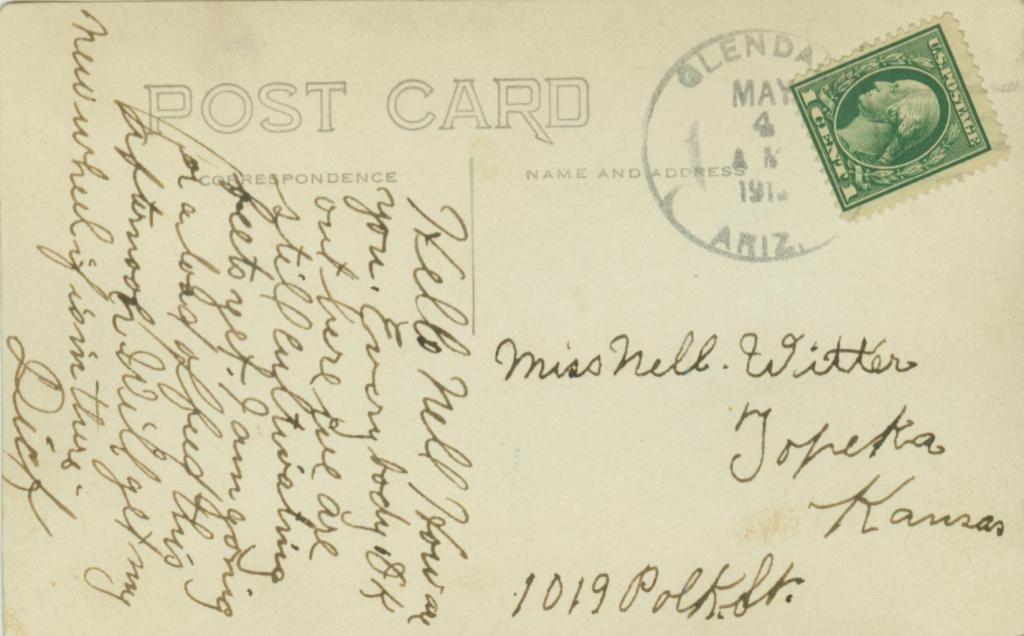
American involvement in World War I was far smaller that World War II, and my own family’s involvement was smaller, too. My great-grandfather, Dick Witter, enlisted in the Army and was stationed at the training base near San Diego, California1; but he never went overseas or saw combat. Few of my distant cousins did. But that war did represent the first time that America was seen as a major influence on world events.
Dick Witter, left, and his brother Clarence, during World War I.
One of Kate’s ancestors was Frank Shuffler, who was too old to enlist in World War I, but was killed in a train accident after taking a job with the railroad to make up for the number of young laborers who did enlist. We touched on Frank’s story, and on the part the railroads played as America began growing into a world power in The Ballad of Mrs. Steele.
And all of that growth and development only began after the war that was fought over the existence of slavery.
The War Between the States
When you reduce all of the arguments about the causes of the American Civil War down to the most basic question, that question is: does any person have the right to own another as property?
After the Revolution, and the ratification of the U.S. Constitution2, Americans struggled with the contradictions inherent to any democratic form of government. In the states that allowed slavery, those with the power to own others argued that it was their God-given right to do so. Even though the secessionist movement leading to the Civil War saw themselves as resisting a tyrannical federal government in Washington that deprived them of their rights to their property (ie, other people), many of them sought to restore a system in which those who own land own the labor of those living on that land.
Many of my ancestors fought to preserve the Union, and to establish basic, fundamental rights for every individual. Even though many of them personally held segregationist views and believed that the freed slaves could not live side by side with white Americans3, they still fought for the principle of individual freedom. Just a small sample:
Of course, there was one exception, that of John Shaw May, who was commissioned in the Confederate 6th Regiment, Kentucky Cavalry. (See Dangerous Times in Kentucky for that story.)
The Original “No Kings” Event
And, of course, the more I dig, the more I uncover ancestors who played a role in the American Revolution. People who risked far more than anyone marching with a snarky sign surrounded by inflatable cartoon costumes.
There are those today who try to argue that only people whose ancestors were here for these wars can be counted as “real” Americans, or “heritage Americans.” Many of the descendants of these men would like to hold them up as heroes and claim a piece of their valor to justify choices that undermine the foundational principles of democracy that they all fought for.
I can’t do that.
I can be grateful that they fought for their principles, and acknowledge that my life has been better than it might have been had they not fought, and not won, their battles. But I can’t claim their valor as my own, and I can’t pretend that they were anything other than the flawed humans that we all are.
If my theory about James Callin is correct, then he participated in the last battles that drove the Shawnee, Delaware (Lenape), Miami, and Wyandot people from their ancestral lands. And before fighting in the Civil War, Joseph Frey (newly immigrated from Germany) fought in the Mexican War that helped the slave-owning Texans move the U.S. border on nearly 80,000 Mexican citizens and a large but unspecified number of Native Americans. These events are a part of U.S. history that modern Americans are ashamed to talk about. Our history of accepting slavery and the violence that followed Reconstruction poisons our political discourse to this day.
But despite their mistakes, the world my ancestors fought to give us is one in which each individual has rights. The government those individuals choose, using the rules agreed upon in the Constitution, is supposed to derive its power from those people, and use its power to preserve those rights.
Today’s government was barely elected by a plurality of voters – and the current administration’s actions since taking office certainly resemble the grievances against the King of England that led my ancestors to fight in the Revolutionary War.
I believe to my core that there is a peaceful resolution available to us, and it’s in the Constitution that I swore to uphold. It will require courage from elected officials, many of whom are not known for their willingness to put their voters ahead of their donors. But that solution is still there, and that is why I will continue to demand it from my representatives.
And even if you don’t have a pedigree of American soldiers like mine, if you’re an American now, you should demand that, too.
I highly recommend that you read Pauline Maier’s book, “Ratification: The People Debate the Constitution, 1787-1788” sometime. It reviews the arguments made for and against the ratification of the Consitution in each of the original 13 states, using press and pamphlets from that time period. Some of those arguments will sound painfully familiar to modern readers. ↩︎
Henry Louis Gates, Jr. published “Lincoln on Race and Slavery” and it is eye-opening to see how the Great Emancipator talked about these issues in his speeches and letters. ↩︎
You must be logged in to post a comment.