Mightier Acorns

Journeys through Genealogy and Family History

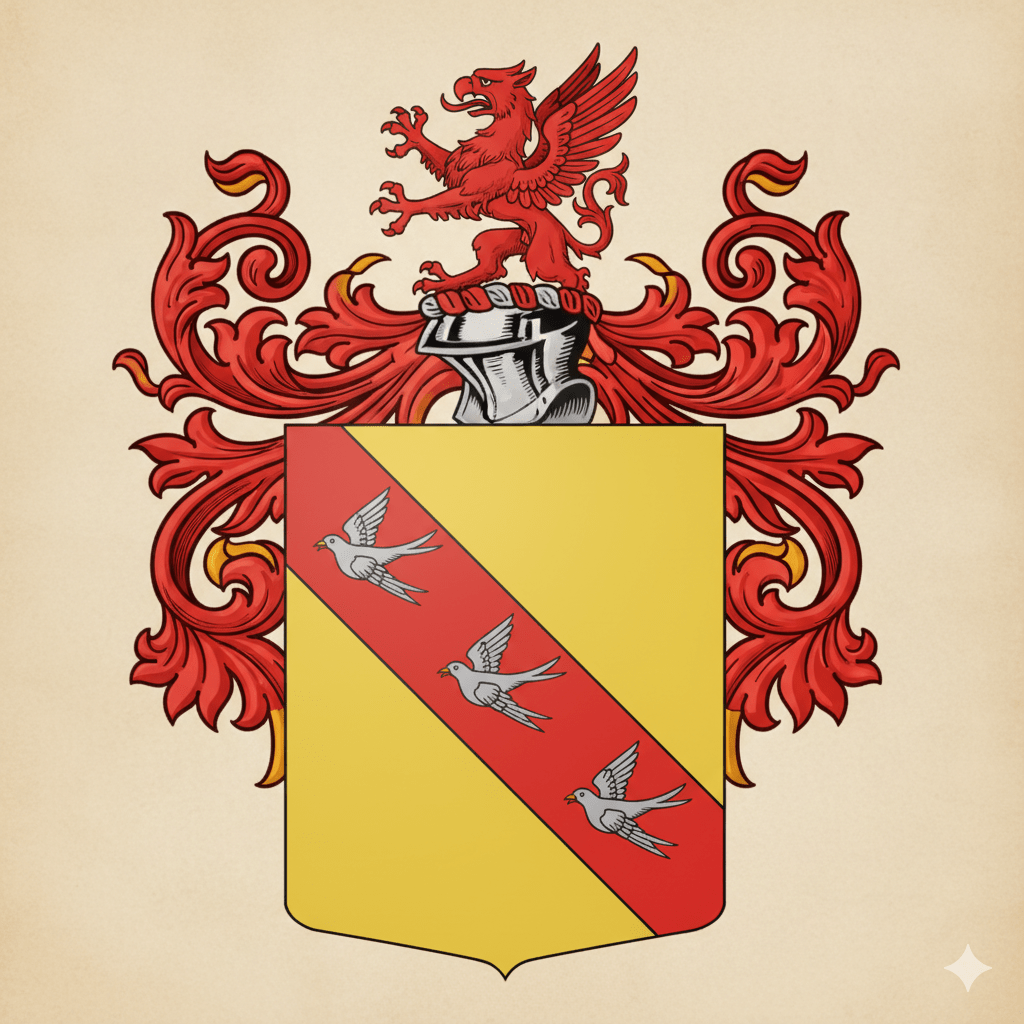
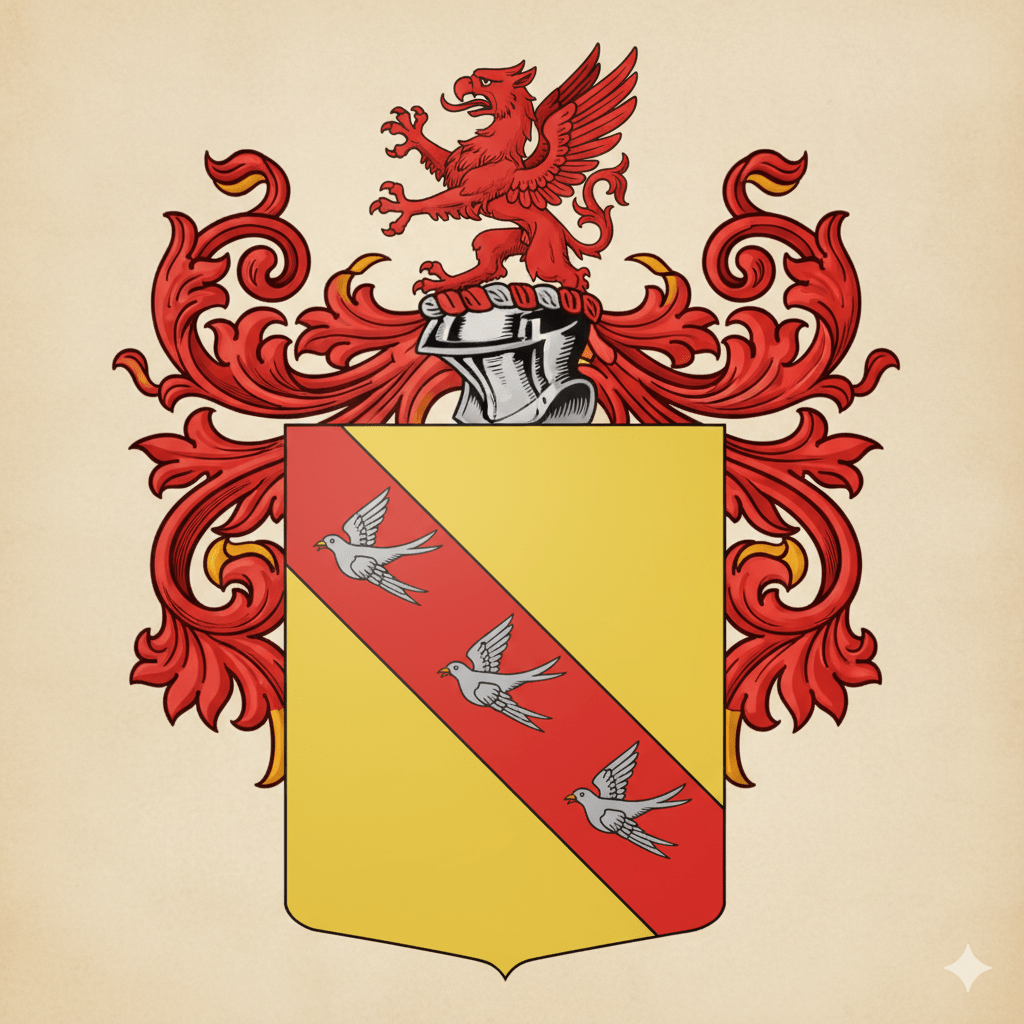
A parody of a family coat of arms designed with acorns as elements, with the motto "ex gladnis potentioribus" Latin for "from Mighty Acorns"
From Mighty Acorns
  • To recap part I:

    John Callin (1870-1835) and Elizabeth Simon (1780-1864) were born and married in Pennsylvania, according to the scant information given about them in The Callin Family History. The good old CFH was published in 1911 by their grandson, George W. Callin (1846-1921), who was born a decade after John’s death. Most of what George knew about his grandparents probably came from his father, William. George may or may not have remembered Elizabeth, because she moved to Auburn, Indiana, with George’s aunt, Eliza (Callin) Ferguson, in 1849, when George was 3 years old.

    But Those Who Remained would have remembered his ancestors, too, and probably shared stories with him.

    Those Who Departed: John “Jr.”

    The oldest child of John and Elizabeth was also named John Callin. This John Callin was born in Pennsylvania about 1802 and came to Milton Township with the rest of his family in 1816. He died there in 1825, according to the CFH, but we don’t have a Find A Grave memorial or any information about his cause of death.

    Amazingly enough, young John was the only one of John and Elizabeth’s nine children who did not survive long enough to marry and have children. We already talked about the three sisters who left Ohio:

    That leaves five Callin siblings who stayed in Ohio, although, as we’ll see, they spread out through Huron, Richland, and Ashland counties, and many of their children went further than that.

    But let’s begin with the oldest surviving son: George Callin (1804-1879).

    George and Polly, Likely Abolitionists

    George’s wife was Mary Ann “Polly” Lewis, whose family moved to Ohio from New York. Our cousin from this branch of the family, Megan, wrote to me last time I posted about this family and offered additional info about Polly’s family:

    “[Polly’s] older sister, Hannah Simons, nee Lewis, also came to the Firelands, right to the same area the Callins settled. It is my guess that they brought Mary Ann [aka Polly] to Ohio. I have no idea who got here first, the Callin or Lewis girls…Hannah Lewis’s husband, Cyrus Simmons, came to Peru in what may have been inherited ‘Sufferers Lands’ or Firelands” (they were from Litchfield, Connecticut, his father was on the NY line in the revolution)…The Simons also had a daughter, SABRA Ann (1835-1930), and another [named] Mary Ann (Polly) (1821-1882), nieces to Geo and Mary Ann Callin.”.(of course a George, too.)”

    We have talked before about George and Polly’s faith1, and about the memoir by their grandniece, Rosemary Callin2, that claims their farm was a stop on the Underground Railroad, so this may not be new information for you. But Rosemary recalled being told this story by her father, George W. Callin:

    Father said they were warned not to say nothing at school about it, but their cabin was a station on the Underground Railway. I don’t know whether it was William or Elizabeth, probably the latter, who awakened them softly in the middle of the night and led them to the window. The moon flashed out and they saw a white man, maybe William, leading a string of blacks through the clearing around their cabin and into the woods. They were on their way to Great Uncle George’s barn. From there he would take them onto the next stop.

    Records of their marriage and where they lived before 1850 are elusive, but the 1850 Census places George and Polly in Peru Township, Huron County, Ohio. William – George’s younger brother and George W.’s father – had cleared his own farm in Milton Township (which was in Richland County in 1840), and moved to Peru Township in 1849. So Rosemary’s account almost certainly describes something that happened in the 1850s. If the story about Elizabeth taking the children to the window happened in 1855, George W. would have been about nine years old, and the youngest of the children, Zimri, would have been about five.

    Peru Township is north and west of Greenwich Township, on a diagonal with one other township between them. Greenwich Township was where the Society of Friends (Quakers) operated the Firelands “Underground” Railways. Early activity would have begun in the 1830s, and increased through the end of the Civil War in 1865.

    Echo of the Past

    As I write this post, America in 2026 is experiencing something similar to what George and Polly, and William and Elizabeth, experienced in the late 1850s. Political divisions over who we should be as a country created sharper and starker dividing lines as a minority of people who believed that a corrupted system based on treating human beings as property pushed for nationwide enforcement of laws that the Callin family (at least THIS Callin family) considered to be immoral.

    The Fugitive Slave Act of 1850 explicitly put our two Callin families, and anyone else running an underground railroad, on the wrong side of the law. Slave patrols could cross into free states and kidnap enslaved persons, even those who were legally free, as in the case of Rosetta Armstead in 1855. Studying this time in American history, I can’t avoid seeing parallels with the 2025 surge of Immigration, Customs, and Enforcement (ICE) operations to kidnap people who are in the U.S. legally, operations that exceed their legal charter, and lead to examples of violating the rights of due process guaranteed in the Bill of Rights and attacking U.S. citizens who object to this.

    As more of my friends and neighbors across the country are caught up in the protest movement against ICE, I also see family and friends who are choosing to ignore the immorality and illegality of what the federal government is doing. I am gaining a new understanding of the long, slow unfolding stresses and anxiety that families like George and William Callin endured as they resisted immoral laws without knowing when or how a coming war might affect them.

    The Next Generations

    George and Polly had two sons and four daughters. Two of those daughters did not have children; Amelia (Callin) Horton was the youngest child, and was described as suffering from “delicate health” before her death at age 50. The other was Sabra Ann, who we discussed not long ago3.

    Only one son, John C. Callin (1830-1905) had male descendants, but he only had two kids (a son and a daughter) and one grandson, Arthur James Callin, who never had children. John C.’s two children were James Callin (1855-1930) and Jennie M (Callin) Clausin Strohm (1857-1924). James raised his children in Huron County, but later moved to Chicago, Illinois, and then to Elkhart, Indiana. Jennie lived in Denison, Iowa, with her first husband, and lived in Council Bluffs, Iowa, and later, Saint Paul, Minnesota, with her second.

    James’s youngest daughter, Helen (Callin) Ladd, adopted two children, and his older surviving daughter, Ada Cecilia (Callin) Forgey, did not have any children. Jennie’s granddaughters were Jean Marjorie Clausin (1909-1964), who appears not to have had any children, and Louise Harriet (Clausin) Pattee (1905-1998), whose sons were Carl Bert (1930-1993) and Lloyd Garrison Pattee Jr. (1932-1998).

    George and Polly’s eldest daughter was Minerva (Callin) Smith Robinson Daggett (1834-1895). Minerva had five known children with her first husband, a blacksmith named John N Smith (1830-1867) who died in Rockford, Winnebago County, Illinois. It is possible that Minerva knew her Aunt Sarah’s family, but George W. appears to have lost touch with her after the Smiths moved away from Ohio. Minerva had two more children (that I know of) with her second husband, Dana A Robinson (1818-1891), and they lived in Burlington, Coffee County, Kansas. I have been unable to find more information about her descendants.

    The second son of George and Polly was named after George’s brother (my 3rd-great-grandfather): William H Callin (1834-1919). He married an English girl4 named Ellen C. Channing (1838-1916) and they had four daughters, who they raised on their farm in Huron County:

    And lastly, George and Polly’s daughter, Lovina (Callin) Rickey (1839-1877), married Ed Rickey (1831-1896) and had two sons, so there may be a smattering of cousins out there with the Rickey surname. Ed and Lovina moved to Williams County, Ohio.

    The Thread of History

    Most people focus on their paternal surname when they get into family history; that makes sense, of course, since that’s “your name” and most novice researchers can be easily overwhelmed by the exponential increase in the number of surnames found in each generation.

    That bias towards the familiar is also compounded by geography. I’ve noticed that the people listed here that stayed in Ohio were close enough for George W. Callin to know and include in his book. Some of those who moved away were close enough to attend the Callin Family Reunions that were documented in local papers during the 1900-1910s, and their names, at least, appear in the CWF.

    But those who did not remain in Ohio offer the challenge of obscurity – a challenge that only focused research can overcome.

    1. See “Religion: Tool and Problem↩︎
    2. See “Silk or Satin↩︎
    3. See “Two Girls Called Sabra Ann↩︎
    4. See “The Girl From England” on the old Blogger site ↩︎

  • I never met my wife’s paternal grandfather, so I don’t have the same kinds of deep memories of him that made writing my own grandparents’ profiles both easy to write and hard to support with sources.

    And while I have asked if anyone would like to share their memories with me on this public platform, I haven’t heard back from anyone. I’m not surprised that those who remember him best wouldn’t necessarily want to open up to me. After all, I’m just a guy who married their niece and shows up in the Midwest once every decade or so. (They are also, mostly, in Minnesota, so they are occupied with more serious concerns.)

    For me, at least, this makes the challenge into a more familiar one. I’ve written hundreds of biographies for people I never knew. And I hope what I always hope:

    I hope I do him justice.

    Too Young to Fight in the Big One

    All four of my kids’ great-grandfathers served in the U.S. military, but Bob McCullough was still in school when the Second World War broke out. He matriculated as a freshman at Thomas Jefferson High School in Council Bluffs, Iowa, in the fall of 1942, and graduated in the spring of 1946. He turned 18 in October of 1945, so he enlisted in the Army Air Corps, serving from January 1946 to 3 May 1947.

    His brother John was three years older than Bob, and also graduated from Thomas Jefferson High School. When John married his high school sweetheart, Elaine Shuffler, on 23 April 1945, Bob was his best man and Elaine’s sister, June, who was also a TJHS student, was the maid of honor.

    After he finished his year in the Air Corps, Bob married his high school sweetheart, the aforementioned June Shuffler, on 30 August 1948. This time, John was his best man, and Elaine was matron of honor. Bob and June established their family in Council Bluffs, where they had the first of their six children. Bob worked at the grain elevator.

    Then the Korean War broke out, and Bob served another tour in the military from 10 March 1951 through 11 July 1952. As it happens, he served with another young man from Council Bluffs named Charles Martin – we’ll meet Charles’s sister, Merilyn, in a few weeks!

    Bob McCullough’s senior yearbook photo

    From Iowa to Minnesota

    Bob and June moved to Minnesota around 1959. This is typically where standard research techniques start to fail us, and storytelling becomes more desirable, because the records I have can’t answer questions like, “Why did they move?” or, “What was different for them about life in Minnesota?”

    The newspapers of the time carried pretty descriptions of both McCullough-Shuffler weddings, and listed a lot of names that are useful for the FAN approach. Some of the names are familiar; family names like Roundtree and Jensen who I know are related to the two families I’m studying. The friends and families in Council Bluffs seemed to be a close-knit group before 1959, but as life goes on, friends marry and move away, older family members may die, and sometimes the sorts of tragedies and traumas that people don’t like to discuss (divorce, or the loss of a child, perhaps) may push a circle of friends and family apart.

    What I do know is that Bob and June settled into life in Shakopee, and I think Bob worked (at least for some time) as a baker. I know that their older children ended up back in Iowa, and the younger children tended to stay in Minnesota.

    A Step Back to Reflect

    The trick to writing a genealogy blog like this one lies in finding the “so what” twice a week. Most of the time, my expected audience (including my close relatives!) know as little about the people I’m studying as I do, so if I think something that I learn about a family from 100 years ago is interesting, chances are good that my audience will think so, too.

    But writing about more recent generations has an added risk, not just that the people who don’t know me or my family won’t be interested in what I have to say, or bored by stories I think are charming. I also feel I need to tread carefully so that people who did know the family I write about won’t be hurt by something I say.

    Every family has some drama; some more than others. Some families have dark secrets or traumas that they don’t want discussed. It’s possible that a researcher like me could stumble into something hurtful or harmful, or might share a “cute and innocent” story that triggers the darker memories, or whitewashes someone who did something wrong.

    Sometimes, people just don’t want to dwell on the sadness of having lost someone. Bob McCullough died at age 56, an age I’m close to myself. He didn’t leave behind any “small” children, but they were robbed of many years they should have had with him.

    And for many people, that is reason enough not to dwell in the past.

  • Amos Clark: Weighing Evidence

    I found a secondary source that may help answer the questions I had when I wrote Wavetops: Amos Clark – but untangling what it says from what it means and interrogating the source on the question of how do you know that? may end up leaving me with a paradox: more information and more questions.

    The question I’m trying to answer has to do with the origins of my 3rd-great-grandfather, Amos Clark (unknown DOB-1848). Here are the facts I have:

    • He married “Sally Stumbough” on 8 April 1824 in Lawrence County, Ohio.
    • Their family appeared in Perry Township, Lawrence County, Ohio, in 1830 and 1840.
    • Amos died in 1848, and his will named his children1.
    • In 1853, the local newspaper in Ironton (Lawrence County), Ohio, The Spirit of the Times carried a Notice for the estate of Amos Clark2 on 12 April… and then a few weeks later, on 31 May3, printed that “The late advertisement of Amos Clark’s estate in our paper, was not that of Amos B. Clark, who is well and favorably known to many of the citizens of this county, as some have supposed. He is still alive and kicking.”

    At first, I assumed that the 1853 estate notice was for a different Amos Clark, because the husband of Sally Stumbough died in 1848, but I have seen that probate cases can take years to resolve themselves, especially when minor children are involved. So that estate notice could be for my ancestor. But we also know that we can’t assume any record for the name Amos Clark is my ancestor, because another Amos B. Clark was still alive and kicking in 1853.

    The puzzle I have to solve now is “which pieces of information pertain to my Amos Clark?”

    From New Jersey to Ohio

    One piece of information kept popping up on various unsourced family trees, so I decided to start investigating where that information came from. Supposedly, Amos Clark was born on 3 November 1802 in Westfield, Union County, New Jersey. After coming up empty on records searches, I finally found this book: Clark of Elizabeth Town in New Jersey by Elmer Sayre Clark.

    This book, published in 1942 by Professor E.S. Clark, a Fellow of the Institute of American Genealogy, is not organized like a family history document. It begins with a few pages labeled “Summary of Lineages” that lists families under 16 surnames. I assume these might be the author’s Sixteen great-great-grandparents, but he doesn’t tell us that.

    After the Summary, there are three pages that provide the heraldic definitions of the coats of arms for nine of the families, and then Professor Clark turns on the fire hose. What follows is more than 200 pages of will transcripts, correspondence with descendants, lists of names with what look like inline references, and essays with the byline “By the Editor” – an undifferentiated, un-indexed mass of genealogical information. Fortunately, since the book was digitized, we can search through the text for names.

    Despite these challenges, Professor Clark’s book appears to support the origin of Amos Clark that I kept seeing.

    • From the “Summary of Lineages“:
      • CLARK(E):
        • Samuel (1768-1856), of Scoth [sic] Plains, N. J. m 1791 Mary dau. of Elias Darby of Scotch Plains, N. J.; removed to Hanging Rock, Ohio, thence to Gashland, Mo.
      • SAYRE/SAYER:
        • Phoebe (1797-1845), m 1814 Samuel Clark of Hanging Rock, Lawrence Co., O.”
      • DARBY/D’ARBY:
        • Mary (1768-1806), of [Elias] m at Westfield, N. J. 1791 Samuel Clark.
    • From the “Letter from Daniel Carpenter, Oct. 20, 1913” on page 202:
      • “Samuel Clark was born in Elizabeth, N.J., March 11, 1768; died in Clinton County, Missouri, Oct. 7, 185-2, or 6… married to Mary Darby probably around 1790, who was born July 17, 1768…” [8 children were listed; I selected these five to make my case:]
      • [1.] Samuel was born March 20, 1792 [married Phoebe Sayre, above]
      • 2. Cornelius, born Nov. 22, 1793
      • 3. Joel born Oct. 10, 1795
      • 4. Hannah, born Feb. 14, 1798, m. Wm. Carpenter, 1812, d. Sept. 18, 1881
      • 6. Amos, born Nov. 20, 1802
      • “Cornelius, Joel and Amos lived and died in Lawrence County, Ohio, leaving a number of descendants still living there.”

    This still isn’t conclusive or primary evidence, but there seems to be agreement from multiple accounts provided by people who remembered their grandparents’ stories. You can piece together from the information above that Samuel Clark (1768-1856) and Mary Darby (1768-1806) married and had their eight children, and Dan Carpenter’s letter states that they moved, along with Dan’s grandfather, Benjamin Carpenter, to Lawrence County, Ohio, about 1803-5, settling on the river about one mile above Hanging Rock.

    There are more details to tease out of this book; as I said, it is densely packed with references, side comments, and details that need to be teased out and confirmed with primary source records. But the one thread that makes me think I’m on the right track comes from that 12 April 1853 Estate notice in the Spirit of the Times.

    Assuming that estate is for the Amos Clark who died in 1848, the administrator’s name is Cornelius.

    Tantalizing.

    But Who Was Amos B. Clark?

    That other item from Spirit of the Times telling us that “Amos B. Clark” was still alive in 1853 may lead to more of the information we need to solve this puzzle. There are some clues in Professor Clark’s book.

    As it happens, Professor Clark includes a biographical sketch of Ephraim S. Clark, sourced from another book, “Portrait and biographical album of Livingston County, Illinois,” published in Chicago by the Chapman Brothers in 1888 (pp 198-202). On page 207 of Prof. Clark’s book, he lists the fourteen children of Samuel Clark (1792-1840) and Phoebe Sayre (1797-1845), including a son named Amos:

    “Amos, born March 27, 1825, married Lucy Reither, and they have one child; Amos is a shoemaker by trade, but he is now [presumably in 1888] a travelling salesman”

    That sketch states that this Clark family relocated to Indiana around 1830, so further research into Amos Clark and Lucy Reither will be needed before I can say whether he is our “Amos B. Clark” or not.

    What Goes Into WikiTree

    If you haven’t already done so, you should follow the link to Amos Clark’s WikiTree bio, where you can see how the page has been edited to reflect these developments. Take note that the Biography section is meant to be a narrative constructed out of facts that can be sourced to primary records, while “unknowns” and theories can be discussed in the Research Notes.

    Wherever possible, I like to include as much information as possible for future researchers. You will probably notice that when I don’t know whether something is correct, I explain why I don’t think it’s correct and try to link to the sources so other researchers can examine them for themselves. I also try to provide a link to and a transcript of the relevant document, though a source citation doesn’t have to include either.

    When editing your own WikiTree profiles, make sure you proofread it a few times while asking that key critical thinking question: “How do you know that?” If the text answers that question, then you’re doing something right!

    1. The exception is that my 2nd-great-grandfather, Joel Clark, is either not named or is mis-named as “Jacob”; see Amos’s WikiTree entry for more. ↩︎
    2. Newspapers.com, Spirit of the Times, Ironton, Ohio; Tue, Apr 12, 1853, Page 3, https://www.newspapers.com/article/spirit-of-the-times-amos-clarks-estate/125497327/ ↩︎
    3. Newspapers.com, Spirit of the Times, Ironton, Ohio; Tue, May 31, 1853, Page 2, https://www.newspapers.com/article/spirit-of-the-times-amos-clark-still-a/21733341/ ↩︎
  • Ahnentafel #11: Alberta Tuttle (1925-2017)

    My maternal grandmother, Grandma Bert, was the last of my grandparents to leave us, surviving her first husband, Grandpa Russ1, by 15 years. She lived nearly 92 years, and she spent all of that time furiously pouring her energy into loving her family.

    What to Call Grandma

    Her name was Alberta, and Grandpa would call her “Bert,” a name I knew from watching Mary Poppins. But I don’t remember referring to her by her name when I was growing up, and it never came up until I had kids and had to figure out what to tell them to call my grandparents!

    This is NOT Grandma Bert

    When we were kids, if we were referring to them, we usually called them “Grandma and Grandpa Clark,” to differentiate them from “Grandma and Grandpa Callin,” and addressed them as either Grandma or Grandpa in person. So, when I asked how they wanted to my kids to address them, that was the first time I really saw how uneasy my grandmother was with her own name.

    I think she was aware that everyone talked about “Grandpa Bob” and “Grandpa Nancy,” and “Grandpa Russ” seemed to work for him, but Grandma was in a quandary. She didn’t seem to dislike the name Alberta, but she behaved as though it felt too formal for her warm and bubbly personality. She didn’t seem to mind when Grandpa called her “Bert,” but that seemed too familiar – and I heard her say once or twice over the years that she didn’t think she “should use a man’s name.”

    In the end, everyone close to her called her Mom, Grandma, or (if they weren’t related to her) Alberta, and my kids would call her Grandma Alberta or (maybe if they were talking about her) Grandma Bert.

    Aggressive Acts of Service

    Grandma was an intense and energetic person, forever busy and focused on others. After she died in 2017, I wrote this about her in “When Grandma Played the Organ“:

    It didn’t matter where they were, whether you were in their home or they were in yours; Grandma would be busy. She loved to take care of her family. She was forever bustling around the kitchen, cleaning up, playing with the children, singing – always showing us all how much she loved us through those acts of service.

    But also, when I wrote about times that she and Grandpa Russ visited us, in “A Fire in the Desert,” I said this:

    None of these visits ever lasted long enough for my sister or me, but Mom and Dad seemed to uncoil a little bit whenever the clouds of dust would follow the caravan du jour down the road toward their next stop – usually my cousin’s house a few miles away. Looking back, I can see how my dad, who was always happiest building and tinkering with his handy projects around the property, might have looked forward to not having his father-in-law offering advice on how to build and tinker better. And since they were mom’s parents, I could see how maybe there were lingering childhood issues that every family has that made her feel progressively less in control of her own home until the visits were over.

    Whenever Grandma was there, she did everything she could to help. She would dive into meal preparation or cleaning, always bustling ahead of mom or following behind and re-cleaning or “fixing” things – sometimes going overboard in her effort to help out. This would wear on mom’s nerves, but if she said anything about feeling pushed out of her kitchen or pointed out that coming in and “cleaning” the house she had just cleaned felt like criticism, Grandma would be hurt. “I’m only trying to help!”

    Now that I’m older and I’ve seen other families with a similar dynamic, I can understand what was going on. Mom was proud of her home and worked hard to keep it orderly. Grandma wanted so badly to show everyone how much she loved them, she couldn’t help sending the wrong message.

    I know they talked about it and worked on being gracious with each other, but every now and then, Mom might have to gently convince Grandma to just relax and visit with us. But a lifetime of energetic service to others meant that she was not in the habit!

    Life After Grandpa

    Grandma outlived Grandpa Russ by 15 years, and I know how lonely she was without him. I don’t remember much about those years, because I was busy moving my family across the country to Maryland, and once I got settled there, I often worked 14 hour days in addition to an hour-long commute. But I remember what Grandma said when she called me to tell me her good news.

    She had met a man at her church, Sherwin, and he had proposed. Once I congratulated her, and told her how happy I was for her, she joked, “We had to get married, you know!” She thought that was pretty funny, given that she was 79 years old and had a hysterectomy when she was in her fifties. I’m pretty sure she used that line on everyone in the family, and probably at the wedding. (In case anyone wondered how I acquired my sense of humor, I’m descended from four hilarious, and sometimes surprisingly inappropriate grandparents!)

    When Sherwin died in 2008, they had only been together for about four years, but he left her a nice house in Sun City and enough of a nest egg to keep her comfortable and independent. Once again, she struggled to stay busy and keep the loneliness at bay. I know she went through a rough time when her older sister, Lyle, died in 2011. They had lived 2,000 miles apart for more than 50 years, but she told me that loss was the one that made her feel like the only one of her generation left.

    But in her last couple of years, Grandma managed to find more friends at her church and stayed more engaged. She even met and married Jack, a preacher who reminded her a little bit of Grandpa, with big dreams to save the desert Southwest.

    In the end, Grandma did stay with us longer than the rest of her generation. She loved us all as vigorously as she could for as long as she could, and we were lucky to have had her in our lives.

    1. See Ahnentafel #10 from last week. ↩︎

  • Doing the FAN Dance

    For those who may not know, “FAN” stands for “Friends, Associates, Neighbors” – and it is a research strategy that encourages genealogists to look beyond their direct ancestors and examine the broader community surrounding them. Aryn Youngless posted a great intro to the FAN method on her Substack last October: “The FAN Method: Breaking Through Brick Walls

    I have been on a quest to find the records I need to either confirm or refute the Theoretical Military Career of James Callin and to find out where in “Westmoreland County, PA” he raised his family. This quest has led me to pursue the FAN Method, starting with the Milton Township Diaspora. Looking at the Friends/Associates/Neighbors of the Callin family in Milton Township gave me a lot of information about James Callin’s children and grandchildren, but when it comes to the man I have been hunting, I have only found more questions, so far.

    At least they have been very interesting questions…

    Hints & Allegations

    We have an alarmingly small pile of solid evidence to work from, and much of what we have only hangs together if we assume that the information recorded by George W. Callin in his 1911 Callin Family History (the “CFH”) is correct. Here is a table to show what I mean:

    Person from 1911 CFH:Claim in CFH:Record(s):
    James “1st” Callin“…emigrated from
    Ireland to America about the commencement of the Revolutionary War.”
    Muster rolls show James Callin (var. spellings) in 4th Virginia Regiment of Foot from 1777 to 17791.
    1773 tax roll in Hempfield, Bedford County, PA – same record shows Patrick Callen
    “…settled on government land in Westmoreland Co. in Western Penn., where they remained the remainder of their lives…”No records found in NARA or BLM-GLO databases; may be in Augusta County deeds, 1743-1800?
    James “2nd” Callin“James 2nd, with his family moved from Penn. to Ashland Co. and located on a farm about the year 1810. He was killed in an altercation with a man named Fowler who struck him over the head with a rifle, this occurred about the year 1820. He was buried in Oliversburg2 Cemetery.”1820 U.S. Census: places household in Milton Township, Richland County, OH; same page as a neighbor, Sutton Fowler.
    – Burial site never found.
    Mary “2nd”“Record of James 2nd…Married about 1800, name of wife Mary 2nd, name unknown.”– No marriage record found yet; possibly hiding wherever the land records are hiding (ie, Augusta County, VA)
    “Record of Alec Callin…2nd son of James 2nd…Married and moved with his family and mother to Iowa about the year of 1840.
    “The mother referred to was ‘Aunt Mary’, wife of James 2nd who was killed with a gun. She sold the farm and went with Alec to Iowa where she died some years later. Nothing has been heard from that branch of the family since 1845.”
    1830 U.S. Census: Mary “Callon” is head of her household in Milton Township, Richland County, Ohio.
    1840 U.S. Census: Mary “Callen” household is in Milton Township.
    Find-a-Grave memorial #62700832: Oak Grove Cemetery, Muscatine County, Iowa; died 26 April 1846.

    Finding Mary’s burial site in Muscatine County was a breakthrough, not just because a “Mary Callin” appeared in Iowa, but because of the other information on her headstone which might help answer the question:

    “Who was Aunt Mary?”

    The headstone over Mary Callin’s grave is an obelisk with four sides. One side has Mary’s information, but on another face of the same headstone you can see two more names:

    A third face records the burial of their son, John N Rayburn (1831-1856). So, now I have a LOT of questions, and this feels like a job for the FAN Method.

    “Who was Callin Rayburn?” – People don’t usually bury strangers in their family plot, so I would assume that “Aunt Mary” Callin is related to the Rayburn family in some way. If she wasn’t a relative, and the Rayburns were generously helping to bury an unfortunately destitute neighbor, I would expect her to have a separate marker, or no marker at all. And as it happens, Callin Rayburn is a son of Eleanor (Callen) Rayburn, the daughter of Patrick Callen, who we saw in the 1773 Hempfield tax rolls next to James “1st” up in the table above.

    Callin Rayburn’s wife was the former Mary Brandon, which we only learn from the 1932 death certificate of their son, Hiram Rayburn, who was born in Muscatine in 1845 and died in Renton, Washington, where they recorded his mother’s maiden name. Interestingly, Hiram had an older brother, Madison, who was born around 1840 in either Pennsylvania (per the 1850 census) or Ohio (1860 Census and his 1862 Civil War Soldier Record). This suggests that the Callin Rayburn family lived in Armstrong County, PA, until about 1837, and moved west around 1840, ending up in Iowa by 1845. If Madison was born in Ohio, that makes me wonder if the family stopped in Milton Township on their way West, and if that is what prompted James 2nd’s sons to move, too?

    Callin Rayburn’s sister was also named Mary, and her married name was Brandon; which means that our “Aunt Mary” was almost certainly not Callin Rayburn’s sister, but I wouldn’t be surprised to learn that Aunt Mary Callin’s maiden name was Rayburn or Brandon, either.

    “Who Was Elizabeth Simon?”

    We’ve been focused on James 2nd and his wife, but we also have another name to provide a clue. James 2nd’s brother John married Elizabeth Simon in 1801, according to the CFH. The book also says she moved to Auburn, Indiana, with her daughter’s family, the Fergusons, and died there in November 1864. I have a single record, the 1860 U.S. Census, which places Elizabeth Collin in the home of James and Eliza (Callin) Ferguson in Jackson Township, DeKalb County, Indiana.

    While I have gone looking for a “Simon” family in those places where I suspect the Callin family lived, I have come up empty, so far. I wouldn’t rule out the possibility that Aunt Mary’s maiden name could have been Simon (or a variant spelling, like “Simmons” or “Simons”). I have kept an eye out for the name in census pages and local histories, too.

    What to Watch For

    The most promising lead I have at the moment is the database of land records for Augusta County, Virginia3, where I hope to find James “1st” Callin’s land records.

    If I do, I expect I might also find the Burget family (remember what I said about them in “Those Who Remained: Part I”?), and possibly some Rayburn, Brandon, or Simon families.

    Even if I don’t find James “1st,” I know that if I find any of those surnames in land records, that might at least tell me where to look for some of the missing marriage records – for James “2nd” and Mary, for John and Elizabeth Simon, and possibly even for James “1st” and his unknown wife.

    And if we find any of the above, we’ll be much closer to being able to “prove” our theories about this family!

    1. I think the muster rolls that show James on furlough in 1778 may indicate that is when he got married, which also matches the timing in the CFH account. ↩︎
    2. “Oliversburg” is a typo in the CFH; it should read “Olivesburg”. ↩︎
    3. Specifically, this source: Augusta County deeds, 1743-1800. ↩︎
  • Ahnentafel #10: Russ Clark, Sr. (1920-2002)

    My maternal grandfather, Russell Hudson Clark, Sr., was the first of my grandparents to pass away in 2002. When he died, I was told there were several contributing health factors, including Alzheimer’s disease and lung cancer. The lung cancer was attributed to the smoking habit that he had during World War II and the decade that followed.

    When I learned that fact, I remember thinking, “So that’s true, then,” because Grandpa Russ told me many things over the years, and it could be difficult to separate the strictly factual from the metaphorical. I put it that way because I don’t think his intent was to deceive me when he told me stories that weren’t strictly true; I think in his calculus, the things he told me were lessons, meant to instruct me.

    Proverbs 22:6: “Train up a child in the way he should go, and when he is old he will not depart from it” (KJV/NKJV)

    But good intentions don’t make things true, and metaphors do not make good source citations.

    The Power of a Voice

    Grandpa Russ told me, my sister, and our cousins many tales when we were growing up. Many of them involved tobacco, for reasons we never fully understood at the time.

    “When I was a boy, about your age,” he said, addressing a 12-year-old me and my 8-year-old sister, “I wasn’t supposed to cut through the barns where they kept the vats of sheep dip, but I did anyway, because I had found a big plug of chewing tobacco, and I didn’t want anyone to see me try it. You know, that big, furry monster in your Star War movie is called “Chewbacca” because it’s short for “chewing tobacco,” don’t you? They’re just trying to get kids to think it’s cool to use it, but I snuck into that barn and took a bite like I’d seen the men in our town do, and I didn’t know that you were supposed to spit out the juice… and let me tell you, that made me sick at my tummy!”

    When he told us stories, especially these cautionary tales, his oratory took on a cadence and style that I find reminiscent of blues singer B.B. King. I once mentioned this to him, and it made him uncomfortable. Here’s a clip to demonstrate – imagine the previous paragraph being told to you in this man’s voice:

    When he told the sheep dip story, he explained that the vats held a liquid for treating parasites and that the sheep would be lowered into the vat (dipped) and then set free. Then he told us that when he took his shortcut through those barns, he went up on the walkway above the vats, and he saw a nice hat floating in one of them. He fished out the hat and wore it into town, where a woman came running out of a store, screaming at him, “Where did you find that hat?”

    And, of course, the woman’s husband was the owner of the hat, and they found him in the vat when Grandpa showed them where the hat had been floating.

    “He was drunk on whiskey, and fell in to drown, and that’s why you must stay away from tobacco and alcohol!”

    Trust, but Verify

    I never found a shred of evidence to suggest that story actually happened. It certainly could have, but I can only guess at the year (about 1932), the location (somewhere in Kentucky or Arkansas), and I only have one solid fact to look for (man drowns in a vat of sheep dip).

    Most of the stories like this that Grandpa told us were unverifiable. Some were obvious retreads of morality tales, like those frequently shared by pastors from the pulpit. Some of those tales even showed up in email forwarding chains that spread around the early internet in the 1990s.

    But some of them did seem true. Or “truth-adjacent”…

    1 Thessalonians 5:21: “…but test everything; hold fast what is good.” (ESV)

    I joined the Air Force in the summer of 1994, and Grandma and Grandpa Clark came to visit when I returned home from language school for Christmas break. At one point, Grandpa pulled me aside to share several stories about his time in the Navy.

    In one, he was serving aboard a ship that was part of a convoy delivering materiel to Murmansk, Russia, under the Lend-Lease program. He described waking up one morning in a thick fog, and seeing the topsides of German U-boats passing through the convoy, looking for the American ships, but somehow unable to locate them.

    In another, he was on shore leave in England around Christmas time, and he described a great alcohol-and-heroine bender in which he found himself singing in a nightclub. After hearing him sing, a U.S. Army major came up to him and offered him a job with his touring group in the USO. The major took his name and contact info, and said he was headed out the next day for several performances, but that he would be in touch. That army major’s plane disappeared, and Grandpa never did get his chance to sing with the Glenn Miller Orchestra.

    These stories might have been plausible, though there is certainly room for embellishment. They carried elements of the cautionary tale (with the inexplicable new addition of heroine use) mixed with facts that could almost be checked (assuming there are records of a ship with Grandpa on it visiting Murmansk or England).

    But are they “true”? And if there is no way to know, is it appropriate to repeat them in his biography?

    The Hard Truths

    The difficulty of documenting a life like that of Russ Clark does not lie in finding evidence to show you what is true. I have documents. I have Grandma Bert’s Travelogue. I have our stories. The difficulty lies in how you curate his stories, how you frame them, and what you lead the reader to think of him.

    As a child, I was taught (in part by Grandpa Russ) that liars are bad, wicked, and evil people. Grandpa tried to teach us to watch out for evil people. The tool of storytelling he used on us sometimes put him at odds with his own definition of evil, but that contradiction led me to value the underlying truth of a story, even if it isn’t literally true.

    As an adult, I can look back at the people who influenced me and see what they were trying to teach me…but also what they taught me without meaning to. No one in my family intended to make me an atheist, or set out to formally train me in critical thinking skills, but I ended up being what I am and doing what I do because I spent my childhood trying to figure out how to test everything and hold fast to what was good. That’s my inheritance from Grandpa.

    Growing up in the poorest parts of America during the Great Depression with a father and older brothers who (probably) drank and (almost certainly) cheated on their wives shaped Grandpa’s idea of what a Bad Person was. “Gossiping” was part of what made a Bad Person bad, so he tried to avoid telling us directly that his father drank and left his mother to raise nearly a dozen children; but he made it pretty clear what he thought of people who would do such things.

    My job is to find the facts about those people, and I try to do it in a way that demonstrates some grace for their behavior, even when it did harm to those around them. At the end of his life, there was no way to know which of the stories he told were strictly true, which were “lessons,” or which were products of the Alzheimer’s disease that crept slowly through his brain and altered his personality. As he and his siblings left us, they took most of their stories with them.

    And all of this – this essay, these stories, the guesses I have to make about what was strictly true – is what we have to build on.

    Nirvana, 1993: “All in all is all we are.”

  • Those Who Remained: Part I

    When we last discussed the Callin families who settled on a farm near Olivesburg in what was then Milton Township, Richland County, Ohio, we took a look at who was displaced before white settlers, like the Callins, could move in. Brothers James and John Callin, the sons of our theoretical Revolutionary War soldier, James Callin, arrived on that farm in 1810 (James and his wife and children) and 1816 (John and his wife and children). Between them, James and John raised 15 children on that farm, many of whom would marry and move to states further to the West.

    Last year, we spent time talking about those families who left, the “Milton Township Diaspora” – this year, I want to spend some time with those who stayed. But even making that simple statement – that they “stayed” near Milton Township – is not as straightforward as it sounds. County and Township boundaries shifted as the population of Ohio grew, and the names of some places either changed or were never formally incorporated. Sometimes people moved from one place to another; other times, the names changed around them. And all of that makes it hard to find records to piece together the story of the families who lived in the area.

    Thomas and Nancy (Burget) Callin

    Thomas was the son of James and Mary Callin. He was born in Pennsylvania about 1801, and would have been about 9 years old when the family relocated to Milton Township. Assuming the six children counted in James and Mary’s household in 18201 were all their children, Thomas is the only one who did not leave Milton Township after he married.

    All I know for certain about Nancy Burget is that The Callin Family History tells us that Thomas was “Married to Nancy Burget 1822” and that a record found in “Ohio, County Marriages, 1774-1993” (Film Number 000388735) confirms their marriage in Richland County on 20 Nov 1823. I have a couple of theories about who her family was.

    In 1820, just a few lines below James Callin’s household, Thomas Burget and Boston Burget are also listed. Each of them have a female counted in their household the right age to be Nancy (Females – 16 thru 25). These two men might be descendants of Sebastian Burgett, who emigrated from Germany and settled near Robbstown, Westmoreland County, PA, around 1773. According to the account of the founding of Burgettstown, Smith Township, Washington County, PA2 (selectively edited for length):

    “The land on which Burgettstown is situated was located by Sebastian Burgett, a native of Germany, who emigrated to this country with his wife and three children… two sons, George and Philip, and a daughter Agnes. He removed to near Robbstown (West Newton), Westmoreland Co., before 1773… He came to this part of the country [referring to Smith Township] and located upon a large tract of land, which later was secured to his heirs. His name is mentioned as early as 1780 in connection with the Virginia certificate of George McCormick, Henry Rankin, and others whose lands he joined….

    “On the 28th of September, 1789, George Burgett, in behalf of himself, Philip, his brother, and Agnes, his sister, entered into an article of agreement with Roxanna, the second wife of Boston Burgett, for herself and her children [listed by name]…

    “About this time [June 1810] Mr. [George] Burgett removed to Jefferson County, Ohio, and later to Richland County of the sameState. [sic]”

    The account doesn’t name the children of George or Philip, but there are several tantalizing details in this account that I will need to follow up on. Not only do I want to figure out whether/how Nancy Burget was related to this family, but the discussion of a “Virginia certificate” for the land in Westmoreland County, PA, could lead me to the land records that could tell me where the Callin family came from!

    Also take note that “Sebastian Burgett” is also referred to in that sketch as “Boston Burgett” (where it mentions “Roxana, the second wife of Boston Burgett). One of the children of Sebastian/Boston and Roxana that I did not include in that quote was named “Boston,” and he is said later to have “studied medicine with Dr. S. J. Perry, of Burgettstown; removed from the township.” (I haven’t been able to determine if he is the Boston Burgett in the Census above.)

    The Children of Thomas and Nancy Callin

    Between their marriage in 1823 and Thomas’s death in 1841, the couple had ten children. I suspect Thomas may have died of tuberculosis, but we don’t really know. If he was sick, that may explain why he didn’t leave Ohio when his siblings did. Or, since we don’t know when his brothers left for Iowa with his mother, Thomas’s death may have come slightly before the rest moved away, and Nancy might not have wanted to leave behind the only home she knew with her surviving children.

    Whatever the situation, Nancy had three sons in their late teenage years to help her run their Milton Township farm and to care for the other children. I don’t believe this is the same farm that James Callin settled, because the Callin Family History says that Aunt Mary sold that farm when she left for Iowa.

    Of their ten children, only two are known to have survived childhood and had children of their own. Three of their sons who did survive childhood never married:

    James Callin (1823-1879) – little is known about James, who was listed under the name “Jane” in The Callin Family History. He appears in the 1850, 1860, and 1870 Census counts in his mother’s household, working as a farmer. He died at age 56.

    George Callin (1825-1865) – was a farmer, listed in the Boyd household in Vermillion Township, Ashland County, in 1860. His 1863 draft registration described him as unmarried, living in Richland County. The Callin Family History gives us this brief bio: “George, born 1825, died 1865; shot by a rebel sharpshooter while on pickete duty in North Carolina.” But according to Civil War Soldier records, he seems to have enlisted in the 178th Ohio Infantry and died in New York of an unnamed disease. That unit did see action in the Carolinas during the spring of 1865, and were at Raleigh and Charlotte until they mustered out in June, so it’s possible George was shot, then transported to a hospital up north, where he contracted an infection. He was 40 years old when he died.

    Elliott Callin (1841-1865) – was a farmhand living with his mother and brother James in Weller Township. He enlisted in the 26th Regiment, Ohio Infantry, on 8 Jun 1861. He died at age 24 in the hospital at Camp Chase, near Columbus, Ohio, on 16 Nov 1865, after being discharged at the rank of Corporal on 16 October. His unit served extensively in West Virginia, Kentucky, Georgia, Tennessee, and Alabama, New Orleans, and finally San Antonio and Victoria, Texas, where they mustered out on 21 October.

    Several of their daughters survived infancy, but still died young. None of these six children survived to adulthood. They are buried together in the Old Olivesburg Cemetery:

    • Caroline (1829-1847) – died at age 18
    • Sally (1830-1834) – died at age 3
    • Mary Ann (1836-1854) – died age 18
    • Able (1838-1839) – died in his first year
    • Emoline (1840-1851) – died at age 10

    Surviving Sons

    Two sons survived and had families of their own: Thomas Jefferson and Marquis Callin. We talked about Marquis’s family in “How the Headlines Got It Wrong” last January, and I have not been able to add any new information to that story.

    Thomas Jefferson “Jeff” Callin (1827-1902) married Susannah Egner in 1848, and made his living as a shoemaker. Jeff’s brother, Marquis, lived with him and probably also apprenticed as a shoemaker for a time.

    Jeff and Susan had two daughters in 1850 and 1851, Alice and Mary, who both died young; but the their six other children survived to adulthood. Their oldest son was Martin, whose story appeared in “A Tragic Wealth.” That story also links to stories about their other sons, Fred, George, and Delbert. You can read about Clara (Callin) Mohn on the old Mightier Acorns blog, and I covered all of them, including their youngest daughter Minnie (Callin) Urich, in a 2015 post, “The Sons of the Shoemaker,” over there.

    There Are More Than Just Sons…

    The six surviving children of Jeff and Susan each had several children, but among those grandchildren, only one had a son to carry on the Callin name; the rest either had daughters or no children at all. William Jefferson Callin (1885-1949) had a son, Joseph, in 1909, but his wife, Mary Elizabeth Zeiters (1890-1970) divorced him in 1911 when she was pregnant with their second child, a daughter named Virginia.

    Elizabeth remarried, and her second husband, Carl Don Lindsey, adopted Joseph and Virginia, and raised them as his own – as Joseph and Virginia Lindsey. Joseph died in 1983, but he and his wife did not have any children, and so the paternal line of descent from Thomas Callin is no more.

    Which means there are a lot of descendants of Thomas Callin who probably have no idea they are descended from Thomas Callin! I lost count before I reached 100 surviving descendants, and they are all living, so I don’t want to share any identifiable information, but here is an incomplete list of the surnames of living descendants:

    Knepper, Donnell, Davis, Kirkendall, Barnd, Kissel, Cutright, Motter, Washburn, Slone, Backensto, Green, Neeley, Baker, Jones, Roberts, Steele, Kessler, Lashley, Bowman, Trauger, Vanderpool, Dorion, Gullett, Harrer, Shealy, Mohn, Kratzer, Preston, Keller, Williams, Oberlin, Hess, Ports, Zimmerman, Souter, Montgomery, Tucker, Wirick, Koser, Swank, Rihel, Meininger, Clark, Teeter, Ament, Wallenius, Tschorn, Liles, Reed, Faulkner, Burkett, Mahon, and Hart…

    I only wish I had the time to track them all down and say hello!

    1. There is a weird quirk in the 1820 Census where they have two overlapping categories: “Males 16 to 18” and “Males 16 to 25.” Hugh, born about 1803, is counted in both categories; Thomas, at 19, is only counted in the second. ↩︎
    2. History of Washington County, Pennsylvania : with biographical sketches of many of its pioneers and prominent men by Crumrine, Boyd, 1838-1916; Ellis, Franklin, 1828-1885; Hungerford, Austin N. ↩︎

  • Ahnentafel #9: Nancy Witter (1925-2004)

    As revise my paternal grandmother’s WikiTree profile, I find that I don’t have as many records to cite that tell us about her life. I have scans of her husband’s diplomas, but not hers. I have records of his military service, but only a handful of letters capturing her wartime experience.

    I can’t help thinking about the million tiny ways women are erased from our history. It’s not a thing we do consciously, so it’s hard to correct for it. Correcting for erasure doesn’t mean that we should re-tell Nancy’s story in a way that isn’t true. We can’t tell Nancy’s story without talking about the people who were most important to her, like Bob and her father, and her brother, Richard.

    We can, and should, make sure her story is centered on her when we tell it. But also keep in mind that her story, the way she told it, works overtime to center everyone else.

    Best Friends and Equals

    The woman I knew as Grandma Nancy is the woman in the photo above: the dark orange 1980s top with wide lapels, the horn-rimmed glasses, the smile-that-isn’t-quite-a-smile, and a face that I sometimes see looking back at me from my children, my dad and sister, and from my mirror. These annual yearbook photos from her career as an art teacher are a small part of the record we have left, and the only photos that don’t show her with someone she loved.

    Most photos she is in show her with Grandpa Bob. Bob and Nancy were best friends and equals. They did almost everything together for more than half a century, from when they met in Glendale, Arizona, in 1941, until Nancy died in 2004. Their whirlwind courtship, raising their children after the war, their parallel careers as teachers, touring the country with their friends and family in their camper; all of it they did together. This is how I knew them, but their lives were so much more than I could have understood as a kid. And all of it often gets reduced to a tangible but empty statement about how long they were married:

    Sixty-tree years.

    Calling Bob and Nancy equals does not mean they were the same, of course. She was as intense as he was easy-going. He was the pastor, but she was often the organizer and enforcer. Most of the time, their differences complemented each other and made them a better team, but now and then, as in any marriage, conflict could spill out.

    When my cousins were little, they took to calling him “Grandpa No-Bob” because Nancy would scold him so often for everything from absent-minded mistakes to intentional pranks. His sense of humor1 was just twisted enough that he would intentionally wind her up, and when she realized he was teasing her, she would roll her eyes, and give him one last scolding before letting him be.

    But ultimately, they found a balance and a center, and no matter where they went or what they did there, you knew they were happiest when they were together.

    Depression and the Dairy Farm

    When we were kids, we laughed at their playful dynamic, but now, as a man the same age Nancy was when I was first really getting to know Grandma, I know things that change the way I understand her. Having raised a son on the autism spectrum, I know more now about inherited traits and how we humans develop coping mechanisms for them. And I’m no psychology expert, but I have learned about the effects of childhood traumas and how those traumas can manifest in adulthood.

    I think Grandma would scoff at the idea that she suffered “trauma” of any kind, because those kids who grew up during the Great Depression framed that time as an obstacle to overcome – which they did. Hardship was not a thing that was done to them, and they would have a hard time viewing themselves as victims because from their point of view, that was just how the world was.

    You can go back and review the stories Nancy’s mother, Merle (Huff) Witter, told about settling in Glendale, AZ, in the 1920s, you can see how close their family was to abject poverty.2 Nancy’s dad, Dick Witter, worked hard, first at farming beets, and when that market dried up, cotton, which failed. They managed two dairies (first, the Witters Jersey Dairy, and later, the Okay Dairy). So, they got by, and fed, clothed, and educated their two children, which was no small thing.

    And this is an important point: they did not see themselves as “poor” because they had neighbors who were worse off. For example, Nancy is named in a book about country singer Marty Robbins3, based on the memories of his twin sister, Mamie Robinson. Mamie captured a sense of the way children perceived themselves on the scale of “rich” and “poor”:

    These were depression years for everyone, although at the time it seemed as if some were far richer than others in this farming community. It wasn’t until years later that we found out that other families were just as doubtful about making it financially as we were.
    “Besides, riches are all a matter of how you see things. I thought my friend Nancy was really rich when I visited her and saw that she lived in a house that wasn’t falling down, and that she had her own bedroom with pretty blankets and bedspreads.
    “Years later she told me she liked to visit me as a child because I had so much more to play with than she did. By that she meant spaces to roam, trees to climb, and the endless thickets that served us as imaginary rooms and houses in which to play.”

    I also learned, long after Grandma was gone, that her father, Great-grandpa Dick Witter, may have had a drinking problem. My dad remembers being very young (around five years old, maybe, so about 1950) and Grandpa Dick taking him to get a soda. Young Ted didn’t think anything of it, beyond enjoying a root beer, until Nancy came storming into the bar, excoriating her father for taking her son into such a place.

    By itself, that story may not mean much, but one other fact that turned up in The Arizona Republic on page 11 of the paper published on 25 July 1946, in a section listing Divorce cases:

    WITTER, Merle H. vs. Howard R. (dismissed, request of plaintiff).

    The timing of this dismissed divorce case, four years after Bob and Nancy were married, suggests that this could have been part of what we might call a mid-life crisis, for either Merle or Dick; it could also suggest that if Dick had a drinking problem, this was Merle’s ultimatum to him to kick the habit. We simply don’t know whether Nancy’s reaction to her dad taking her son into a bar was related to the dismissed divorce case, or what it all means.

    At this point, we may never know, and it would be irresponsible to guess. But if we don’t record the facts we have, all of it will be lost in history.

    Friends, Family and Fierce Loyalty

    Whenever I find a letter to or from Nancy, or run across another photo of her, I find evidence of just how deeply she valued those around her. But this, too, is nearly impossible to document and cite along with hard facts.

    Sometimes, our family will share stories that joke about how silly and innocent she and Bob sounded in their love letters before and after the attack on Pearl Harbor.4 Many jokes were aimed at her tendency to keep every scrap and sentimental artifact. After her mother, Merle, died in 1985, Nancy’s house grew more crowded with boxes of photos, letters, her childrens’ homework assignments and art projects, unused art supplies from her teaching career, and old newspapers. The family usually chalked that hoarding behavior up to her growing up in the Depression, but it was also evidence of how hard she tried to hold onto those those she loved.

    I see evidence of that loyalty in photos like this one, in which Nancy and her best friend from high school, Bobbe Harris, posed with Nancy’s only surviving grandparent, Rosa (Murray) Huff, Merle’s mother.

    Bobbe Harris (left), Nancy Witter (right), and Rosa Edith (Murray) Huff, seated; about 1942.

    Rosa was Nancy’s last surviving grandparent from 1936 to 1943. Nancy was eleven years old when Rosa’s husband, Nancy’s Grandpa Albert, died in Arizona. And Nancy’s namesake, Nancy (Shriver) Witter, Dick’s mother, also died in Kansas in 1936. If you revisit “Granda Merle’s Travelogues,” you can see her referring to Albert and Rosa as “momma and daddy” throughout her stories.

    I was only twelve when Granda Merle died in 1984, but even I picked up on her tendency to casually refer to parents and grandparents as if everyone knew them, as if they were only a few miles away at their own homes instead of long passed away. Nancy did the same thing. She spoke often of “momma” or “daddy” as if they were just in the next room, or as if the anecdote she was sharing had just happened earlier that week. It was one way she honored them, by keeping them close in her heart and keeping their memories alive.

    Nancy and Bob kept up their friendship with Bobbe Harris and her husband throughout their respective liftetimes. They would go camping together in the 1980s and 1990s, until disability, age, or illness prevented them from maintaining their RVs or safely traveling. When Nancy spoke about Bobbe, she referred to her with that same level of cherished reverance, to the point where an observer might assume Bobbe was a relative.

    All of this – the sense of deep emotion, the inter-family affection, the common stories about everyday things – are all but impossible for a family history to record. And so, over time, as the people who remember the feeling of knowing “momma and daddy” in each generation disappear and take their memories with them, we lose the “soft tissue” of their stories and are left with only the “bones” of records that tell us the hard facts.

    Those records with their facts inexorably favor the men, recording their military service, preserving their tangible accomplishments (completing school, acquiring degrees and businesses). We have some of those same sorts of records for Nancy, but records don’t capture love, loyalty, strife, or everyday character.

    Those are all things we should strive to keep alive in our family histories, so we understand the men better, and so we don’t lose the women altogether.

    1. See “You Shoulda Seen the Other Guy!” for receipts! ↩︎
    2. See “Grandma Merle’s Travelogues,” particularly part four, “Farming and Motherhood” ↩︎
    3. See “Famous Playmates↩︎
    4. See “When Things Got Serious↩︎
  • Intentions vs. Reality

    A cautionary tale about subscriptions.

    Somehow, a decade or so ago, I signed up for Ancestry’s Worldwide Access membership around the holidays. That means that every Christmas, when budgets are being trimmed with tinsel and assaulted by cats, my wife would find a not-quite-$500 charge that she hadn’t taken into account.

    Now that we’re a bit older and the kids are all independent, it’s not the problem that it once might have been, but it is a large expense that coincides with the holidays. My wife has been asking me to change our billing cycle, and this year, I remembered to do something about it.

    Ancestry allows users to “pause” a subscription, so I did that. Rather than buy my annual membership in December, I hit pause until February. What that means is that Ancestry keeps all of my trees intact, with the sources I have attached, but I can’t view any of the sources that aren’t included in their free membership level.

    And that feels like a problem, because after ten years, I have put an investment of nearly $5,000 and untold hours of my labor into building what I have built on Ancestry, and there is no mechanism for maintaining that investment of money and labor in any permanent way. At least not one that doesn’t commit my future cousins and descendants to paying Ancestry more money.

    Copyright and Public Records

    U.S. copyright laws are notoriously (and needlessly) complex beasts, and while I don’t like the way that complexity seems to always work against someone like me (ie, someone who is not a corporation with a fiduciary responsibility to shareholders), it’s not the fact that someone is making money off my labor that bothers me. What bothers me is the way the maze of rules and guidelines that outline “the Right Way” to do things never leads to me benefiting from my labor.

    The first thing to understand is that Ancestry does not hold, and does not claim a copyright on public records – but they do claim copyright on images they made of those records and the indexes they made of those records.

    Ancestry does not claim an exclusive right to images already in the public domain that it has converted into a digital format. However, the Websites contain images or documents that are protected by copyrights or that, even if in the public domain, are subject to restrictions on reuse. By agreeing to these Terms and Conditions, you agree to not reuse these images or documents except that you may reuse public domain images so long as you only use small portions of the images or documents for personal use.

    (Ancestry Terms and Conditions, Revision as of August 1, 2014)

    “The Right Way” to do what I do, from Ancestry’s point of view, is to pay them for access to their proprietary images and indices, and then cite them on sites like WikiTree (using their Sharing Links) or include smaller screenshots (as I often do here) with attribution.

    In practice, that looks like this. For example, when I wrote about Finding John Witter, and built his WikiTree profile, the source citation looks like this – see the “Ancestry Sharing Link” in the third citation:

    Detail from Sources section of “Johannis Witter” WikiTree profile.

    If you follow that link, you go to the Ancestry page created when I generated the link using the Sourcer App – and this is all you get unless you are also a paying Ancestry member:

    Ancestry Sharing Link landing page for the 1790 federal census.

    And as unsatisfying as that is, especially for those who can’t afford a full Ancestry membership, that’s the best we can expect. A few individual WikiTree profiles might be able to get away with re-uploading an image of a census page or other record, but that is a lot of work and it puts the user at risk for violating WikiTree’s terms of service about hosting copyrighted images.

    You can also try to find other sources for the same records, but… if they aren’t on a free site like FamilySearch.org, you won’t have a lot of options.

    The Right Way Forward

    While I’m not entirely satisfied with the prospect of leaving behind a well-documented tree that no one will be able to access without paying a hefty sum to a corporation, I don’t have any other real options at this point. I’m using Ancestry and WikiTree “the right way,” and plan to keep doing so. I just need to figure out a better End Goal. I don’t know if that will end up being some form of hard copy publication or a digital Thing(tm) to pass on to posterity. I guess I will have to keep paying attention to the rest of the community to see what they are doing.

    If you’re not already aware of the annual RootsTech convention, it is happening in March, and you can read about it and register here: RootsTech 2026

    You can also find other writers trying to tackle the topic; here is Linda Stufflebean – Going Digital with Genealogy Research (Nov 2024).

    And you can find more folks, particularly in the Substack communities, through Robin Stewart on GenStack – check out her “Your Sixteens” challenge if you need prompts for writing down the stories you have uncovered with your research.

  • Ahnentafel #8: Bob Callin (1920-2007)

    Let’s begin our new weekly Ahnentafel series with my paternal grandfather.

    Sprucing Up a Profile

    One of the great things about a wiki – like WikiTree – is the way it saves the previous versions of every page. There are a lot of reasons why this is great. For one thing, if someone else makes edits that turn out not to be correct, you can easily go back to an earlier version of the page. But for my purposes today, the great thing is that I can show you some “before” and “after” views of Grandpa Bob’s page.

    If you click on this link, you can see that I replaced the placeholder information that had been in the Biography since 2019 with a complete, sourced biography on 1 December 2021.

    In the 5 years since I made those edits, I’ve learned a lot about making better source citations on WikiTree. You can do a lot more with a citation than you could do even in 2021, giving any interested cousins access to the documents you used to write your biography, and often allowing you to link to images of the documents, where available.

    And creating those source citations is easier than ever if you install the WikiTree Sourcer App. (Here’s a handy How-To guide.) You will still need to review any citations you generate using the app carefully to make sure they have the information you expect, and to make sure they display correctly after adding them to your profile. (All magic comes with a price, dearie!)

    Expanding a Biography

    The version of Bob’s biography that I added in 2021 came from The Callin Family History, which I published a couple of months later. Since then, I’ve learned a few things and found a few more sources and stories I’d like to add. When you look at the profile now, the sources should all have publicly viewable links to Ancestry documents or media files (particularly for his diplomas). You can also see that I added small details, like:

    • The story of how he was accidentally scalded by boiling water as a 2-year-old, which was found in a newspaper clipping from his mother’s scrapbook.
    • Two 1950 Census records showing his young family living in Glendale while he pastored a church near Prescott.
    • A possibly apocryphal story about his name, added in the Research Notes section.

    There is always more to add, such as the small details gleaned from transcriptions of letters written by Nancy, his parents, and others. Some of those details are already touched on in his obituary; some of them give the reader a sense of the family’s relationship dynamics, and hint at the drama in their lives.

    But you also have to consider whether a future reader of this WikiTree profile will be interested enough in those details to make it worth the effort of documenting, citing, and uploading images of artifacts to websites.

    What Might Not Make the Cut

    It’s impossible to distill everything you knew and loved about a person into a sourced and documented history, so WikiTree also has a section for adding “Memories” – special personal recollections about a loved one that might not have a source outside of you. (I added a Memory about Grandpa Bob’s love of western novels and trains.)

    There are other things that probably bear mentioning, but are hard to include on a WikiTree profile. We know that Bob was an aircraft mechanic during the war, and I remember him showing me this postcard of the AT-6, a training variant of the T-6 Texan, and telling me that was the aircraft he maintained at Luke and Yuma airfields, where U.S. pilots trained. I also know that he got his personal pilot’s license in 1968 – we have this photo of him with his airplane, and a pilot’s log that was in with Great-grandma Bertha’s scrapbook and all of the Callin/Witter/Huff photos.

    But there are a lot of unknowns involved in telling that part of his story. I don’t know why he stopped flying in 1971, for example. It may have proved too expensive to keep up; he may have decided to prioritize family camping adventures. I do remember that he was very proud to see me in my U.S. Air Force uniform when I came home for my first visit after enlisting in 1994. (See the featured image.)

    And then there are the hints of family strife.

    When Brothers Part

    Bob’s brother, Norman, died in Baltimore County, Maryland, in 1964. I never met Norman’s family, even though I lived in Baltimore County for 15 years. But I may have found a small clue to understanding Uncle Norman’s Missing Family.

    When Bob and Nancy were living in Glendale, his folks, John and Bertha, lived in Orlando, FL, and wrote to them often. In November 1948, John mentioned something vague when discussing the family’s plans for Thanksgiving:

    I don’t know for sure what we will do. Norman + Ruth + family are trying to come down here [to Florida, from Baltimore] but he has been so sick so much I don’t know whether they will be able to make it or not. Norman is back at work. Sorry they have to act as they do t’word you, but just forget it. They will see the error someday.

    I know that Bob and Norman visited Florida at the same time in the 1950s, because I inherited some photos of them at the beach. In one, you can see their dad, John, just off camera, so that visit must have occurred before 1956. I would guess that both photos were taken on the same day, since Norman appears to be wearing the same shirt in both. (I’ll refrain from comment on Bob’s attire!)

    But while I can see the contours of a story there, it’s not enough to assert that I know anything about the nature of their relationships. And since everyone involved has died, we may never know what happened.

    Ancillary Editing

    For now, I’m happy to have Grandpa Bob’s profile as complete and up-to-date as I can make it. While reviewing his page, I can also take a look at his siblings’ pages, and see if there are any improvements I can add to them or their childrens’ pages. (I owe Aunt Vicki’s page an overdue update, too. We certainly have enough material for a proper biography!)

    Next week, look for “Ahnentafel #9: Nancy Witter” – and if you’re reading this in the future, look for a link to it in the comments section below.