Mightier Acorns

Journeys through Genealogy and Family History

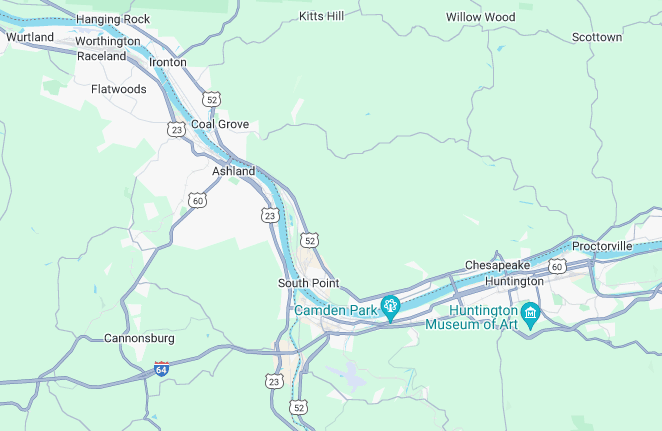
A parody of a family coat of arms designed with acorns as elements, with the motto "ex gladnis potentioribus" Latin for "from Mighty Acorns"
From Mighty Acorns
  • The story behind the book

    You can get your copy here:

    War Poems:Written in the Army
    Hardcover (only): $38.10

    I don’t remember when I first learned about Grandpa John’s book of poems, but I feel like I remember the adults – Dad, Aunt Vicki, Grandma Nancy, and Grandpa Bob – were standing between me and Grandma’s swimming pool at the time, so details are going to be sketchy.

    It would come up on occasion over the years, but it was always something that “Grandma has stashed away somewhere” or, later, “Vicki has in a treasured place of honor.” They probably found it amongst boxes of photos and keepsakes when they were clearing out the old house on Gardenia Avenue in the early 2000s. I think I remember Vicki writing a paper on it and whenever the subject came up, she praised her great-grandfather’s grasp of meter.

  • Surveying the surface of an ancestral ocean

    Last week, I wrapped up the last of the “Family Reunion” series, which gave a (sometimes) brief overview of who each of my sixteen great-great-grandparents was. That was useful because it forced me to revisit each of those families, confirm my connection to them using documentary evidence, and review the WikiTree profiles for each of them. And, I did the same thing for my wife’s Sixteen – which means anyone descended from any of those 32 people should be able to find a connection back to us if they can trace their ancestry back that far.

    Today I’d like to build on that foundation with the first in a new series. “Wavetops” will look at individuals who are as far back on any given branch of my tree as I have been able to go. They might be someone who puts me up against a brick wall – or they might just be someone who got neglected while researching other lines.

    an edited screenshot of the WikiTree profile for Alberta (Tuttle) Clark
    Maternal ancestry for my grandmother, Albert (Tuttle) Clark

    James C Palmer was my 4th-great grandfather. I felt he was a good first Wavetops subject because a) he was a shipbuilder, and b) his name was “Palmer” – as in, the Palm Tree Approach. (I assure you, I am very funny.) The real reason, of course, is somebody on Ancestry asked me a question about James Palmer, and I went on a three-day bender of research to get them an answer – and it turned out I hadn’t written about him here, yet.

    Fun fact: I first signed up for WikiTree on 6 Jun 2019. Before that, I was posting whatever information I could gather into long blog posts at my old Mightier Acorns site. The entry for James C Palmer and Martha Peterson was posted on Sunday, July 16, 2017. And if you look at the “Changes” tab on his WikiTree profile, you can see that I created James’s profile on 17 July 2019 – two years and a day after posting his bio on the blog.

    What I find fascinating about all of this is that the two versions (the blog post and the wiki page) were researched independently from each other. The information I collected and used to write the blog post is in one large, private “master” tree on Ancestry, but the information I used to build the WikiTree profile was collected in a tree called “The Alberta Tuttle Project” – which is public, so you should be able to view it with your (free) Ancestry account. The point of the Alberta Tuttle Project was to rebuild her tree using only verified sources and to apply the skills I had developed for finding and documenting evidence while working on the Callin Family.

    The conclusions I made about the Palmer and Peterson families seemed to hold up between one version and the next, but I found more sources (particularly the 1850 Census) and a lot of city directories with clues that helped me flesh out James’s biography. Now I need to move on to his children and build their WikiTree bios.

    If you have already read his WikiTree page, I don’t have a lot to add to what is there. There is still work to be done on James; I have yet to find death or burial records for him or for Martha.

    Be sure to check out his “Research Notes” section. I did some searching on the people mentioned in the Palmer families in America, but I could not find the will for Alice Palmer mentioned in that story, nor could I find any evidence that belonged to the people named (Alice Palmer, his alleged wife, nor Isreal Palmer, his alleged father). I need to keep digging until I find evidence that either rules out Israel Palmer as James’s father, or tells me who his father is.

    Since all of James and Martha’s children were daughters, it’s highly unlikely that any of their descendants will carry the surname “Palmer” – but if you see are a Palmer and you see me and Carol (the other cousin listed in the “DNA Connections” section) in your DNA matches, you could be descended from a brother or cousin. That would be interesting, so say hello!

    I don’t really know where Wavetops will take us, but if you want to surf along with me: Subscribe!

  • The Box

    I got a call back from Wiley’s niece, Nancy.

    At first, she was understandably hesitant. A strange man calls out of the blue and tells you, “I am a family history researcher, and I think your estranged uncle (who you may or may not have ever met) just died.” What would you think?

    But we talked for several minutes, and I explained what had happened (remember part 1 from two weeks ago?) and how I had gotten involved. Since Wiley was a veteran, there were certain benefits available to next-of-kin (ie, not a distant relative like me), and without a family member to sign for those benefits, it wasn’t clear what would happen to his remains or his estate. I gave her the contact info I had – for the apartment managers, the neighbor, for me – and assured her that while I was curious about my distant family, I did not feel entitled to any information or keepsakes.

    Wiley’s older sister, Fran, lives in California, in a town not more than a 45-minute drive from San Francisco. She hadn’t seen or heard from Wiley in nearly 40 years – and hadn’t know where he was or what might have happened to him.

    Fran couldn’t recall whether there may have been some disagreement over money or a business proposal – the sort of thing that might have seemed critical at the time – but the point was that Wiley had chosen to isolate himself from his closest relatives for his last decades. Now the fact of his death had forced an end to that isolation and robbed them of any chance at reconciliation.

    When the dust settled and Wiley was at rest in Sacramento Valley National Cemetery, his family found time to process what they had seen and learned.

    Going through Wiley’s apartment and having to dispose of his possessions with limited time must have been excruciating, but it had to be done. There were some interesting discoveries. According to Nancy:

    He did have a few old books on WWII, one that detailed the 1st Division Marines arriving in Okinawa, and on the cover of the book, he wrote, “I was there!” … Life has sure changed in the years since Wiley was there. There were also a few pictures of him as a much younger man and we kept them. Truthfully, it was emotional for my 99 year old mother as he had no pictures of any family and she basically feels she never knew him. Apparently he and my grandfather did not get along, and he left home immediately after high school.

    In the end, I think we all felt better for having done our part. Nancy told me:

    We are all doing well, and we do feel some closure about Wiley, especially my sister and me. His picture was always on my grandmother’s dresser and we often wondered where is our uncle, but no one talked about him. His expired passport reveals lots of travel to England and South America…

     It has been interesting for our family to get to know him this summer, but h[e] is now in the VA Cemetary and [we] feel this chapter is closed.

    A few months later, they kindly sent me some things they thought might interest me. They were right! However, I was moving into a new house at the time, and between moving in and renovating, it took me several months to find time to see what was there.

  • Where did Wiley Cowan come from?

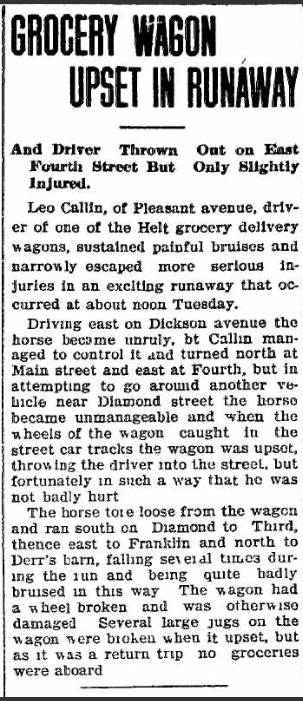
    After the Revolutionary War, we lost track of James Callin. We don’t know for certain where he lived or how many children he had, but we are reasonably sure that he had two sons, James and John, who settled on a farm together between 1810 and 1816 in what would soon become Milton Township, Richland County, Ohio.

    Between them, James Callin and John Callin had 15 children (that we know of) – cousins who all grew up on that farm near the town of Olivesburg. James died in 1820, after being struck in the head with a rifle by a neighbor; John died in 1835 from tuberculosis. And between 1835 and 1840, those 15 cousins got married and began to move away.

    Of John’s nine children, only two sons remained in Ohio. His fifth child, Eliza (1811-1870), married James L Ferguson (1810–1886) about 1832, and after the birth of their tenth child in 1848, they moved to Auburn, Indiana, taking Eliza’s widowed mother with them.

    In March of 1847, while still in Ohio, James and Eliza Ferguson named their ninth child Eliza Ferguson. She grew up in De Kalb County, Indiana, and married Welby N. Myers (1842–1931) there on 16 April 1863, two years into the Civil War. Their eldest child of five was born almost exactly one year later on 13 April: Mary Augusta “Mollie” Myers.

    (Coincidentally, Eliza’s older sister, Sarah, married Welby’s younger brother, Daniel – just to give you an idea of how close the Myers and Ferguson families in Auburn were.)

    Mollie married in Knox County, Indiana, on Valentine’s Day 1884; her new husband, Richard Jefferson Davis Cowan (1863–1948), took her back to his hometown of Greenville in Wayne County, Missouri. They had eleven children, including their fourth child, James Wiley Cowan (1879 – 1973).

    James – who went by either “J. Wiley” or just “Wiley” – grew up in Wayne county, surrounded by extended family from his father’s side. The Cowan family was prominent enough to claim at least one elected congressman, and in the 1870s, there was even a small town called Cowan. But they all worked hard to support themselves in Greenville, and several of Wiley’s siblings left Missouri to seek their fortunes elsewhere.

    Wiley married Beryl Viola Ferguson (1897–1965) on 10 Jan 1919 in her hometown of Paragould, Greene, Arkansas. (I have not been able to find a connection between Viola’s Ferguson ancestors and Wiley’s, but I doubt they were related closely, if at all.) There is no evidence that Wiley served in the war, and his WWI Draft Registration, dated 5 June 1917, stated that he was farming in Mississippi County, Arkansas, to support his parents and siblings.

    After Wiley and Viola were married, they moved Wiley’s parents to Hornersville, Dunklin County, Missouri, and Wiley and Viola went to Detroit. There Wiley probably found work in the auto industry. His older brother, Uriel Cleveland Cowan, had also moved to Detroit, but most of the rest of his siblings either remained in Missouri or gravitated to Illinois or Saint Louis.

    By 1930, they were established in Detroit with their son and daughter, and Wiley worked as an auto mechanic. They lived in Detroit until after 1942, occasionally returning to Hornersville to visit.

    Wiley Cowan family visits, item from Nov 18, 1938, The Twice-A-Week Dunklin Democrat (Kennett, Missouri)

    Cowan reunion Article from Aug 7, 1941, Greenville Sun (Greenville, Missouri).

    Wiley Davis Cowan was born on 11 Jan 1926 in Hornersville and grew up in Detroit and Muskegon, Michigan. He started school at Muskegon High School in 1941. Then, about 1943, his father moved the family to Arcadia, Los Angeles County, California.

    It’s not clear why James Wiley moved his family to California during the war – though wartime opportunities for machinists may have been a factor. His youngest brother, Brewster, and their sister, Thelma, had settled in the L.A. area about 1930. One of his brothers, Everett Austin, had lived there in the early half of the 1930s before returning to Missouri. Another sister, Bessie (Cowan) Krapf, moved there after Wiley’s family did. But even if they were a close-knit family, none of young Wiley’s aunts or uncles had kids his age for him to bond with.

    We can only imagine how the disruption of leaving his friends and his home behind in the middle of high school affected Wiley, and we only have hearsay from surviving relatives who had the impression that he didn’t get along with his father. What we do know is that Wiley Davis Cowan enlisted in the U.S. Marine Corps as soon as he was 18.

    Private Cowan spent the latter half of 1944 and all of 1945 in the First Signal Company, Headquarters Battalion, of the First Marine Division. We don’t have records that tell us exactly where and when he served, but the First Marine Division was heavily involved in the island fighting in the Pacific Theater and it seems unlikely they would have left eager young leathernecks in California during the Okinawa campaign.1

    portrait of Wiley Davis Cowan, probably taken in the early 1950s
    Wiley Davis Cowan, early 1950s

    Some city directories place Wiley in California during the 1950s, and there is evidence of an April marriage and August divorce in 1968, but I don’t know much else for sure until he appears in San Francisco in 1989. In 1995, the city directory placed him in his apartment at 2770 Lombard Street and he remained there until 2022.


    There’s a remote chance that someone out there who knew Wiley might be reading this. If you’re comfortable saying hello in the comments, then please use the Contact Form.

    And if you haven’t already subscribed, you can do that for free anytime – and make sure you don’t miss next week’s post!

    1

    Thacker, Joel D. Thacker, USMC; The History of the 1st Division Through World War II, from the Leatherneck Archives: October 1945, hosted by the Marine Corps Association, https://www.mca-marines.org/, accessed 14 July 2024.

  • Going four generations back to find another line

    This surname can be found among my wife’s Sixteen great-great-grandparents. We have to go that far back to find the first Shepard –

    Harriet Jenevereth Shepard – 18 Dec 1874 – 17 Jan 1923

    Merilyn Martin’s paternal ancestry

    Hattie was the paternal grandmother of my wife’s maternal grandmother, Merilyn (Martin) Holmquist Rossiter. Hattie was the wife of William Findley Martin (1874–1943) and we talked mainly about their son, Howard, in the Martin post last year:

    I am always fascinated by unusual names, and “Jenevereth” is one of the most unusual given names I’ve encountered. Hattie seems to have gotten the name from her maternal grandmother, and I know at least one of Merilyn’s cousins was given the name in honor of Hattie.

    This spelling of “Shepard” is also a bit unusual. Still, the records I found for this family consistently used that spelling, and Hattie’s father is buried under a marker with that spelling. My rule of thumb is that if a family paid to set the name in stone, they probably got it right. (Not always, but often enough!)

    Hattie’s parents were Sylvanus Sylvester Shepard (1850–1921) and Lucy Gertrude Rounds (1848–1920).1 Sylvanus and Lucy were from near Rochester and Syracuse, New York, respectively. They married around 1869 and moved from Onondaga County, New York, to Council Bluffs, Iowa, between 1875 and 1880. Hattie’s two older siblings, Otis D Shepard (1870–1954) and Lillian M (Shepard) Schmidt (1872–1943), both married and each had two children they raised in Council Bluffs.

    Sylvanus Shepard is the youngest son of Anson Nathaniel Shepard (1803-1857) – and his wife, Eunice; but I only recently figured out that there are two men named Anson Shepard with wives named Eunice, and most researchers seem to have them mixed up with each other. Sylvanus was born just after the 1850 Census, so he doesn’t appear in that record but in the New York State Census in 1855. From there, we can see that the family we’re interested in lived in Ogden, Monroe County, New York, and the records suggest that Anson was born around 1803 in Massachusetts, and died between 1855 and 1860.

    I’ve been able to piece together a tentative biography for Sylvanus’s parents, but I’m still searching for records to confirm some of my guesses. For now, the editable sources (Find-A-Grave, Geneanet, and some of the index databases) are a bit messed up. What I can tell is that Anson had at least 8 children with three different wives and he is the youngest son of four born to his parents, Nathaniel and Alice Shepard. Our Anson Shepard was born on 10 Jan 1803, in Otis, Berkshire County, Massachusetts.

    If you’ve got Shepards in your tree, and they look like they might connect to any of these folks, let me know!

    1

    I have not had the cycles to add this branch to WikiTree – but if you’re looking for a chance to practice making WikiTree profiles, I can send you the Ancestry link to any of the folks in this post so you have my sources and notes.

  • Part 1: A note from San Francisco

    On 10 June 2022, I found a note in my Ancestry messages. It began:

    Hi Tad . . . this will seem odd. Your tree shows J Wiley Cowan. Do you have any contact with his family? His son Wiley died in my senior apartment building a week or so ago he was 96. The management “claimed” he had no living will or contacts. Therefore, they will basically keep all of his possessions. I thought to go to Ancestry.com to see if there are any relatives out there.

    I had just published my Callin Family History that March, documenting as many descendants of James Callin as I could, and I remembered the Cowan family. I did the bulk of my work on their branch in 2016 and posted what I had on my old Mightier Acorns blog: Myers Family B – The Cowans of Missouri.

    James Wiley Cowan (1879-1973), Wiley’s father, had two children – and since both were living in 2016 when I was researching that branch, I did not post any information about them. But Wiley’s neighbor, Bronte, had found my work on Ancestry, and she went on to give me some details.

    Wiley lived at 2770 Lombard St., in San Francisco, CA. He was the sweetest of men and it was heartbreaking that he died. He was 96. I found a sister listed but she would have been older. In cases like this the management basically just keeps everything. I know Wiley use to get letters and read them in the lobby. But they will not bother to look for anything. It’s not that he was rich but to see people in his unit that he kept so lovely looting through his life makes me sick. If there are any relatives near San Francisco they should have the right to his things, not managers who are not very nice, to begin with. I know Wiley was a Marine which he was very proud of. Again, sorry for writing out of the blue like this.

    Google maps street view of Wiley D. Cowan's apartment building at 2770 Lombard St., San Francisco, California
    Wiley’s apartment building (on Google maps)

    In the eyes of the law, I am distantly related to Wiley – 4th cousins, once removed – which means that legally, I have no right to claim any “next of kin” status. I did my best to find someone more closely related, but the folks I could find contact information for were almost as distantly related as me, and worse, no one had any memory of James W. and Beryl Cowan. They had moved to California and lost touch with all the family in Detroit and Missouri.

    I gave Bronte the limited information I could find, but after a couple of days, she was no closer to finding an answer.

    The manager is refusing to even take the names of the family members as far as they are concerned they own everything in Wiley’s apartment. Legally they can not even enter the unit as Wiley’s June rent was paid in full until the 30th.

    I think it is important you make contact with the owners of this property. I have seen this before. A very old person dies they claim they had no contact, which makes no sense as we are required to provide one. What they will do is come in and basically loot the apartment of anything valuable and then let the other tenants come for the rest of the property. They are like piranhas fighting over things. Wiley had a lovely apartment with many things he loved in it they should go to his family or to a charity.

    There is also his savings and checking account that will revert to the government if a family member does not come forward.

    Wiley would have been taken to the Veteran’s hospital in San Francisco… He was a Marine. The story from the management was he fell over the holiday weekend and was found, still alive, by his health care person. That is someone who you need to talk to.

    Wiley told me he had a living will. The manager said he did not. The manager is not a person I trust or respect. Only been here a year.

    Again, I had no legal claim to get involved with any of this – and I had just moved to San Antonio the year before, so I was nowhere near the West Coast. Next of kin could contact an elder care attorney to guard Wiley’s property and ensure his family received it. But that wasn’t me.

    The situation felt a bit desperate, so I dug deeper. Wiley’s sister had eluded me before, but I went back and pored over all my other documents, looking for clues.

    I found some.

    There was evidence that Wiley’s sister had married – and while she appeared in early records under what turned out to be her middle name, she began using her first name when she got older. She was older than Wiley – about three years older – so I thought the odds that she might still be alive were slim, but I could find no death records or obituaries for her.

    But once I knew her married name, I found an obituary for her husband and tracked down her daughter’s phone number. If you know me well, you will understand how hard it was for me to make a telephone call, but I did it.

    And I left a message.


    On the off chance that you recognize the Cowan family, please say hello!

    I have more to tell you, next week – when will I tell you about Wiley’s family history connection to the Callin Family History – so if you don’t want to miss the next chapter, be sure to subscribe. My newsletter is free, and you don’t have to give Substack any information you don’t want to give to access my posts.

    Hold on, Wiley! We’re coming!

  • A lifetime of caring for the community

    Vicki Lee Callin was born on 21 April 1943 to Bob and Nancy (Witter) Callin. Bob was an airman in the Army Air Corps (note the “Hap Arnold” star on his shoulder) serving at Luke Field near Glendale, and Nancy and Vicki probably spent a lot of time with her parents on their farm near Bethany Home Road.

    1944: Vicki with Sgt. Bob Callin and mom, Nancy (Witter) Callin

    They had my dad after the close of the war, and Bob went to seminary in Texas before returning to Arizona and finishing his degree at ASU and Grand Canyon College. Nancy also went to Grand Canyon to get her teaching degree, and after Dad and Vicki graduated, their whole family was celebrated as Antelope alumni in 1968!

    The Callin family: all Grand Canyon College alums in 1968

    Vicki married her first husband, Paul, on 31 May 1969. They had two sons and adopted a daughter. Once they were old enough, Vicki started teaching English at Peoria High School in 1984.

    Callin-Vinck wedding announcement, Arizona Republic, 4 Feb 1968

    Vicki and Paul divorced in 1985 – my first memory of encountering a real-life divorce, and not just reading about it or hearing it discussed on Christian radio. She and Paul inadvertently taught me that divorce was not the family-destroying horror that I had been led to believe. It wasn’t an easy experience for anyone, but Vicki continued to run her home, manage her career, and raise three strong, happy adults.

    Vicki eventually remarried Tom Hunt, and after she retired from teaching, she got into local politics. She was on the city council from 2003 to 2010 and 2014 to 2022. Vicki was honored as the 2023 Peoria Independent Hometown Hero for Lifetime Achievement, and you can read about her lifetime of community work and achievement on the Peoria Independent website, where they included a video interview with her.

    Portrait of Vicki Hunt from the City of Peoria Facebook page

    Vicki was always the quintessential teacher, in my mind. She was a strong believer in her Christian faith who worked hard to strike a balance between walking her faith and giving other people room to walk theirs. When you hear her talk about God’s purpose for her in her interview, you see what drove her; but for her students and constituents, she knew to allow them the leeway to find their own way to their own purpose. As long as a person was doing their best to care for themselves and those around them, Vicki was there to support them.

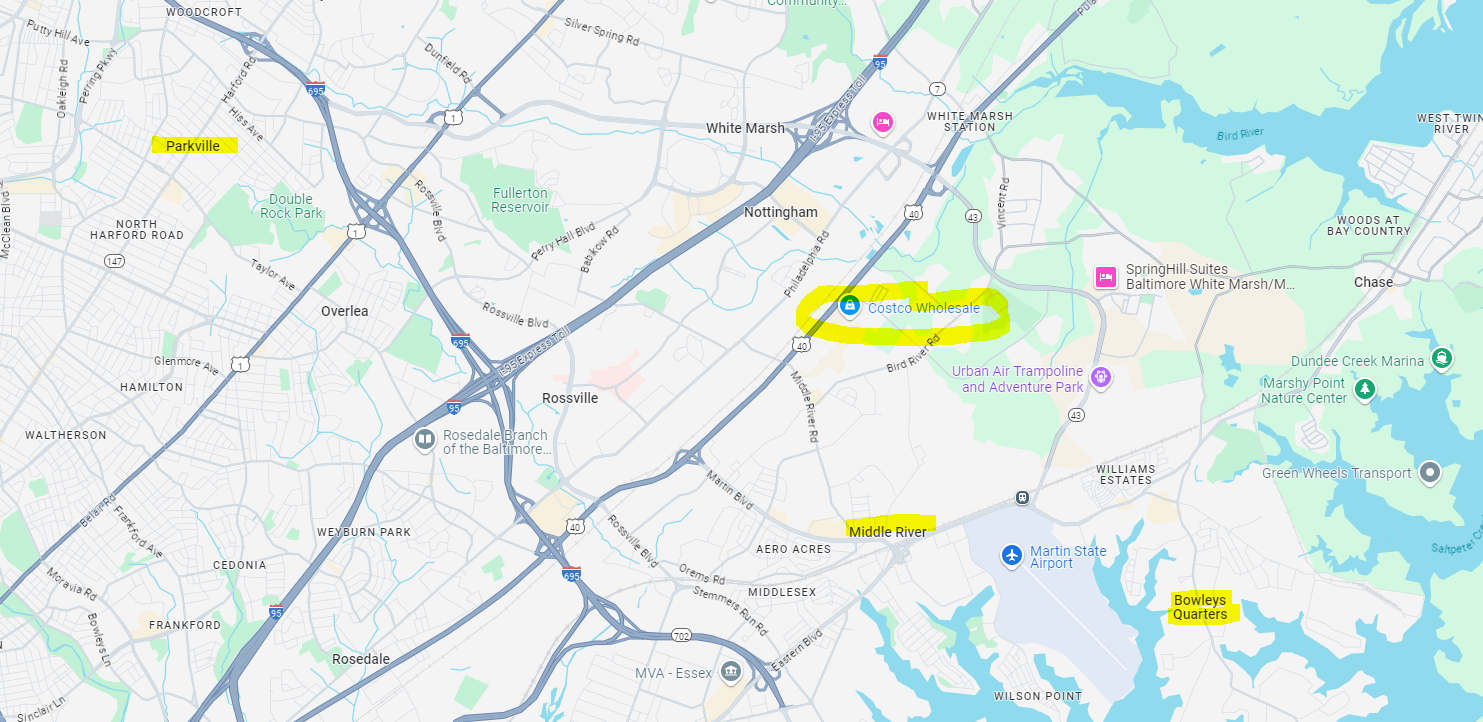
    She was always kind and generous to my children, even though we lived 2500 miles away in Baltimore and rarely got to visit. One of my favorite memories was our recent visit to Arizona in May 2022. Vicki took time to pull my wife, Kate, apart from the group to ask about our son, Lars. She knew we had taken him out of the public school system because the Baltimore County middle school he attended was not supporting his independent education plan after his autism diagnosis. She talked to Kate about her experiences homeschooling him and praised her for doing such a good job, getting him through his 8th-grade year and back into high school. The effect on Kate of having an award-winning educator recognize her accomplishment was profound, and we will always be grateful that she took the time to tell her that.

    Vicki died unexpectedly on 25 July 2024. At 81 years of age, she was still taking care of her family, still thinking about their futures, celebrating a recent wedding and new careers.

    clockwise from the top-left: Carolyn, Chad, Vicki, Tabor, Jeff, Barry, Katie, Addison, Reagan, Macie, Alex, Ryan, and Tom Hunt in the center.

    Vicki will be missed – and in our family, that means that when we gather, we will swap stories about her, share her jokes, and through her, remember those who came before. And in her community, the people and programs she promoted will carry on. Visit the Oral History project at “What’s Happen’ ‘n Art Movement” association to see part of her legacy.

    Because carrying on is what humans do.

  • Going four generations back to find another line

    This surname can be found among my wife’s Sixteen great-great-grandparents. We have to go that far back to find the first Swedahl –

    Ingeborg Olesdatter Swedahl – 01 Jun 1858 – 30 May 1934

    Ingeborg was the maternal grandmother of my wife’s maternal grandfather, Arvid Wesley “Bud” Holmquist:

    Bud Holmquist’s maternal branch

    Of course, this is a Scandinavian family, so the concept of “surname” is not exactly as simple as that. Ingeborg Olesdatter was the child of Ole Sivertsen (b. 1827) and Ingeborg Eriksdatter (b. 1831). She was born on 1 June 1858 in Byneset, a parish in the county of Sør-Trøndelag, Norway. Her family’s farm name was Svedal, one of the farms near the village of Aunet. When Ingeborg and her family came to the United States during the 1880s, several of them used variations of “Svedal” or “Swedahl” as their surname. (To keep things simple, assume that the spelling I use for each of them is the spelling seen on their grave markers, where I could find one.)

    Ingeborg’s older brother, Erik Swedal (or Erick Olsen), was born on 16 Sep 1855 in Byneset and married Anna Arnsen (born “Anna Arntsdatter,” 1875-1958) in 1880. They arrived in New York on 24 May 1886 aboard a ship called the Republic. Erik’s parents and three of his brothers (John, Sivert, and Ole) traveled together. They settled in Todd County, Minnesota, and raised eleven children on their farm in Iona.

    Her next younger brother, Michael Svedal (born Mikal Olsen), was born in Byneset on 17 Feb 1863. While he doesn’t appear in the same emigration record as his parents and brothers, he probably emigrated around the same time (1886), later enlisting in the U.S. Army from 1890 to 1891. He married Johanna Marie Graneg (1860–1947) in 1893, and they adopted a daughter, Nora, whom they raised in Saint Paul, Minnesota.

    Sivert Svedal (born “Sivert Olsen,” son of Ole Sivertsen) was born on 6 Dec 1865 and came over with his parents in 1886. He married and settled in Iona, Todd County, Minnesota, where Erik lived. Sivert and his wife, Bertha (born Bergetta) had a son and a daughter before Sivert’s early death in 1897.

    Born “Johan Olsen,” on 23 Jun 1868, John Olson Swedahl came over with his parents (see above), settling in Saint Paul. He married Mary Carman (1872–1905) in 1898, and after her death, he married Christina Fryklund (1869–1935) in 1907 in Pepin, Wisconsin. John and Christina raised one son and one daughter in Saint Paul.

    Andrew Swedall (born Anders Olsen) was born in on 6 Apr 1871 and appeared in the 1875 Norway census, but when his family emigrated on 5 May 1886, he and his older brother Michael were not listed. It’s likely the two brothers traveled separately for some reason. Andrew Sweedahl is listed at the same address in Saint Paul as John and Ole Sweedahl in 1890 – so that is probably him. Andrew Swedall married Katie Hermann (1870-1957) and lived in Saint Paul.

    The younger Ole Olsen was born on 16 Dec 1878 and seems to have chosen a more adventurous life than his brothers. “Oliver Swedahl,” as he was usually recorded, lived in Montana and then moved up to British Columbia, Canada, where he was naturalized in 1912. He seems to have remained single, and I see no records of children. He was 98 years old when he died on 11 Mar 1976.

    After arriving in the United States, Ingeborg married Gustav Leander – which you might recall from this previous post.

    If you have any Swedal/Svedal/Swedahl ancestors from Minnesota, there’s a good chance you might be connected to this family. I have a lot of work to do before I can put them into WikiTree, so please say hello and let me know you’re there!

  • posted Friday, October 28, 2016

    Note: if you care to revisit the original version of this post from 2016, you will note a few major changes:

    1. I removed the lists of Prof’s descendants for space. His children are linked from his WikiTree profile if you’d like to learn more about them.

    2. I added information about Prof’s third wife, Ella, who I did not learn about until a couple of years after the original post went up.

    If you happen to be one of Prof’s Progeny, drop me a note, or leave a comment!

    Prof’s Progeny

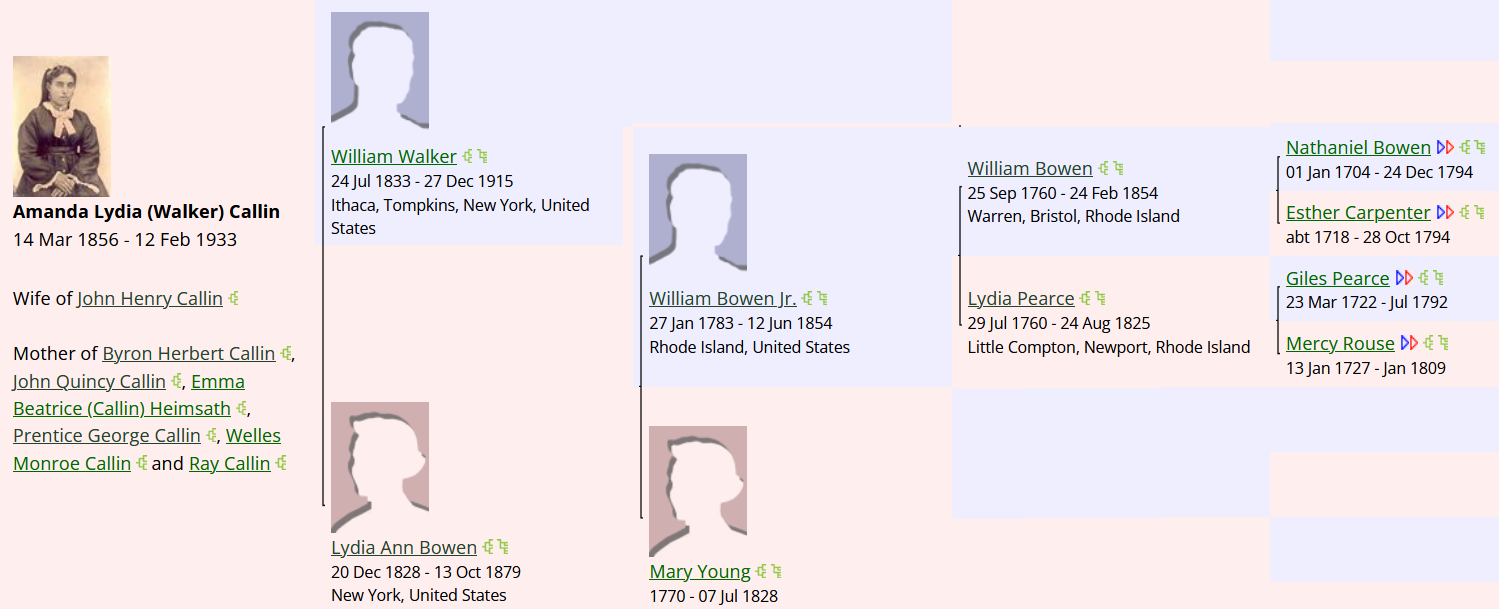
    In our earlier post, 20th Century Callin Clan, we recounted the colorful lives of the children of Civil War veteran John Henry Callin and his wife, Amanda Walker. This week, we will take a look at the descendants of their eldest son:

    Byron Herbert “Prof” Callin (1874-1933) was a complex character. Studying his life, and tracing the records he left behind, it is clear that he was driven by ambitions and desires that conflicted with each other. His choices drove him to abandon his family – more than once – and led to his untimely death. There are a lot of questions we won’t be able to answer, and I will try to stick to the facts – but know that there are some parts of this story that are still contentious, and the implications of what we know happened may provoke some strong opinions among his survivors.

    portrait of Byron Herbert "Prof" Callin (1874-1933)
    Byron Herbert “Prof” Callin (1874-1933)

    Byron was a precocious student, and a well-known teacher from the time he received his teaching certificate at age 16. His nickname, “Prof,” came from his identity as a teacher, and it seems clear that he inherited his love of learning from his father. Prof seemed to have ideas about how the family name should be pronounced (“Collin,” with the round “ah” sound instead of the flatter “a” of “Callin”), and later in his life, he seems to have preferred to be called “Herbert” instead of Byron, feeling that Herbert was more refined.

    He married his first wife, Frances Edith “Fanny” Muir (1873–1946), on 18 July 1896, when he was 21 years old. She was the daughter of one of the Scottish settlers that gave Scotch Ridge its name. John D. Muir (1841–1920) was the son of James Muir and served as a commissioned officer in the Civil War.

    Byron and his father-in-law both featured in the local history of Wood County published in the late 1890s, each receiving their own hagiographic sketch. The impression this gives me is that Byron, as the son of one Civil War hero, felt some societal pressure to marry the daughter of another such war hero. The couple’s fathers may have put them together, and the connections between the Callin and Muir families through the United Brethren Church may have also added to that pressure.

    Byron and Fannie moved to Dayton, where Byron was teaching in 1900; but not long after that, Byron took a teaching job in South Dakota, and left Fannie in Ohio. They had no children, and it seems to me that either Byron felt the Pull of the West (and Fannie did not), or the couple thought that after some time apart, he would return to her. Regardless of their intentions, Byron was living in Aberdeen, South Dakota in 1905; and by 1910, Fannie Muir was divorced, and living in her father’s home in Webster Township.

    old scan of a portrait of Ruby Mary Cole Callin (1885-1973)
    Ruby Mary Cole Callin (1885-1973)

    Byron soon remarried. His second wife was Ruby Mary Cole (1885–1973), and it was during their courtship that Byron was injured by his shotgun during a hunting trip. As the story goes, he and Ruby were riding in a buggy, when the horse became spooked. In the subsequent furor, the gun that he had in the front of the buggy discharged and struck him in the right side of his jaw. He carried a terrible scar on his face for the rest of his life – and in the portrait above, you will note that he keeps his right side turned away from the camera. According to Truman Matcham, Byron’s nephew, the family was always suspicious of the story and felt there was more to it than Byron would admit.

    Ruby was born in Shabbona, De Kalb County, Illinois, where her parents met. Her father, Elijah Cole, moved the family to South Dakota when she was in her teens. While it isn’t clear how long Byron was in South Dakota before he divorced Fannie, he and Ruby were married in 1906 – and they had three daughters in their household by 1910.

    Byron was very much on the move during these years. His children were each born in a different state – Opal in Minnesota, Elda in South Dakota, and Pearl in Montana. Byron was so highly regarded by the town of Plevna, Montana, that they named the main East-West road “Callin St.” (Callin Ave. on the west side). Known then as Herbert Callin, he was the town’s first postmaster and owned the only store “in the midst of the wide prairie.”1

    See Plevna, Montana, on Google Maps

    In 1915, the family was settled in Middlefield, Otsego County, New York – known today as the site of Cooperstown – and they remained there for several years. Byron stayed put until 1923, when he moved the family to Reading, Pennsylvania; after that, it isn’t clear where they went, but probably by 1925, Ruby and the children were living back in Ipswich, South Dakota, and Byron stopped appearing in the records.

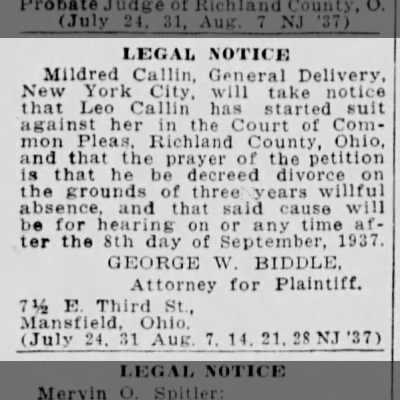
    There is no nice way to say that Prof abandoned his family, but I am told that this is how they felt about it. Around 1930, he divorced Ruby.

    Herbert appeared in 1929 in Coudersport, Potter County, Pennsylvania, where he was married to Sarah “Ella” Estright (1887–1931). Ella was the daughter of Samuel James Estright (1858–1956) and Hannah Lucas (1863–1940). She was born in Sep 1887 and grew up in Milesburg, Centre County, Pennsylvania, remaining at home until at least 1920. H.B. Callin and his new wife ran the Ohio Lunch service station and restaurant, which was quite successful. The couple spent their winters in Florida, and in Jul 1930, they sold their business and moved permanently to Panama City, Bay County, Florida, where their daughter, Dot, was born in Jan 1931. Sadly, Ella’s death in Panama City was reported in Coudersport in April 1931.

    Left alone to raise a baby girl, Herbert quickly remarried Georgia I Hancock (1910-1996) in 1931. Georgia was the daughter of Robert Daniel Hancock (1874–1952) and Arleta Weaver (1874–1955), born on 17 Sep 1910 and raised in Alford, Jackson County, Florida. Herbert and Georgia had another daughter in Jan 1932, less than a year after Dot was born. Then, not quite two years later, Herbert died on 30 Nov 1933 at age 59 after being shot by his sister-in-law during a family disagreement in Alford.

    On 29 November 1933, there was an altercation involving members of the Hancock family and Prof. According to reports in the Palm Beach Post on 30 November:

    Alva Hancock, 23, was In the Jackson county jail Wednesday night charged with the slaying of her brother-in-law, H. B. Collins, about 62, in a family quarrel at Alford. “I won’t be here long,” she told officers after calmly reciting details of the killing. Officers quoted her as saying she shot Collins only after he had shot and wounded his wife, who Is Alva’s sister, and had also fired at her father, R. D. Hancock. A charge of buckshot struck Collins, and he died almost instantly, Coroner Douglas H. Oswald reported.

    A few months later, in May 1934, the same paper reported that the Grand Jury had not indicted Alva, but she was under investigation for firing a shot at her sister, Georgia. Without other records, it’s hard to say exactly what happened that night. Herbert was buried in Mount Hope Cemetery in Lynn Haven, Bay County, Florida.

    Georgia raised her daughters independently until 1942 when she married Abner Mondell Peacock (1889–1973). Georgia and Abner remained together until he died in 1973. Both of her daughters married career military men, one an Air Force technical sergeant, and the other an Air Force colonel. I hope someday to add their children and grandchildren to this history.

    1

  • Going four generations back to find another line

    This surname can be found among my Sixteen great-great-grandparents. We have to go that far back to find the first Hart in my tree. We start with:

    Florence Mabel Hart – 02 Nov 1874 – 03 May 1945

    Florence was the paternal grandmother of my maternal grandmother, Alberta (Tuttle) Clark. Florence was also the subject of “In Search of Lovey Hart” – one of the solid, lower rungs on my “Ladder to Providence” series. She was the daughter of Seymour C Hart (1851–1934) and Hattie Isette Wells (1854–1879), born on 2 Nov 1874 in Clinton, Worcester County, Massachusetts. Her mother died when Florence was 5 years old, and she went to live with her grandmother: Hattie’s mother, Sarah (Fletcher) Wells, also in Clinton, Massachusetts.

    Florence was an only child and didn’t seem to have grown up around other children. Her father remarried, but not until 1890; Florence married the following year, and the older of her two half-siblings, Charles, was born the year after that. Charles never had children, so we don’t expect to find any close cousins with the surname Hart; Florence’s half-sister, Harriet (Hart) Schaub, did have a daughter, two grandchildren, and great-grandchildren.

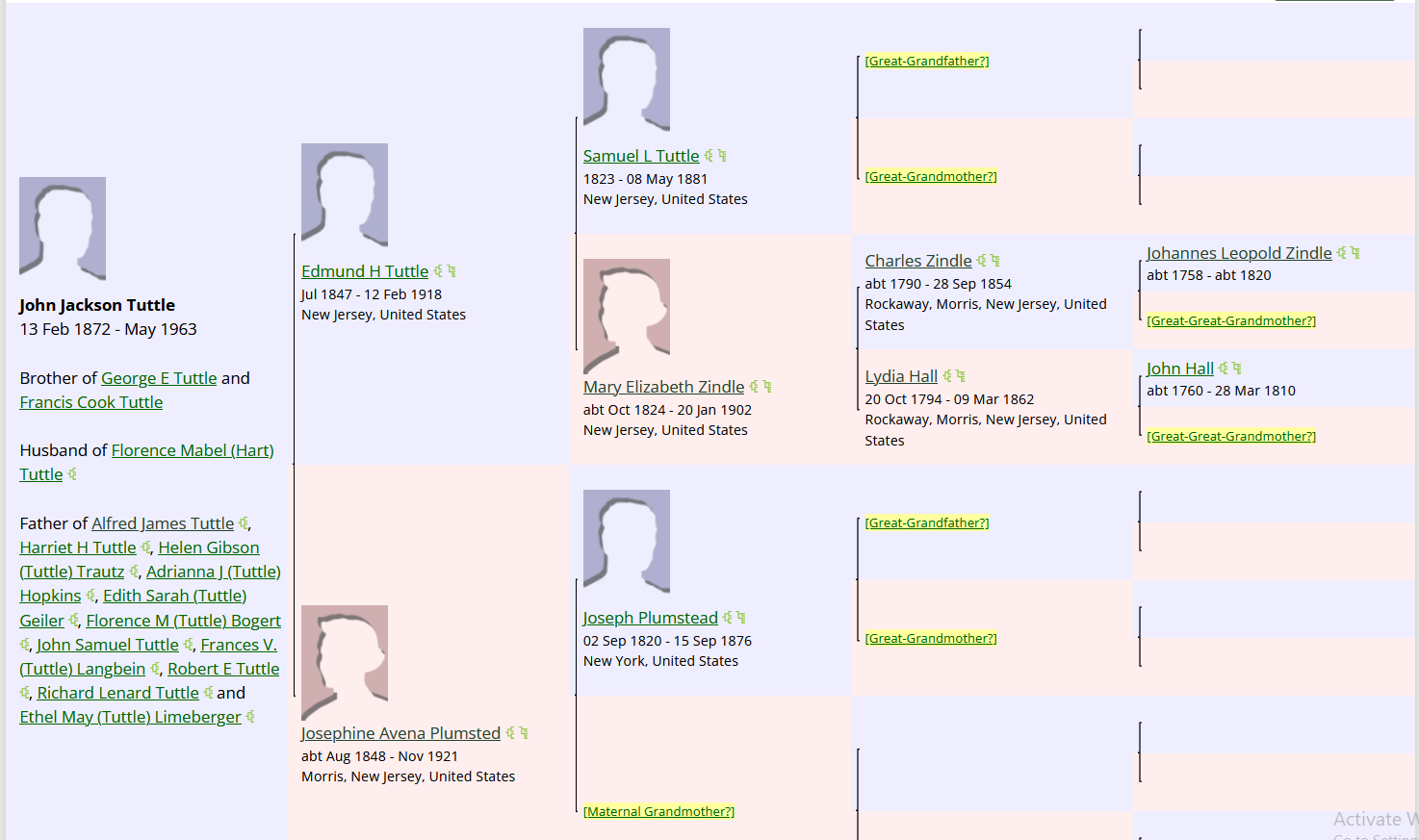
    Seymour Hart was the youngest of four children born to Alexander and Frances Hart in Lewis County, New York. We do have information about his paternal line for several generations, thanks to the Hart Name Study on WikiTree.

    Image capture of Seymour Hart's ancestry from WikiTree
    Ancestors of Seymour C Hart

    Alexander raised his family in Utica, New York, where he was a partner in a business that produced mill equipment – a business he learned from his father, Martin. I was able to determine that Martin was married to Sarah (or Sally) Collins, but I was unable to confirm whether Sally was the mother of Alexander or of his sister, Sarah.

    Martin Hart was the son of Stephen Hart (1767–1857) and Eunice Seymour (1768–1848), born on 30 Oct 1792 in Torrington, Litchfield County, Connecticut. His family relocated to Turin, Lewis County, New York, in about 1800. Martin had six siblings who survived to adulthood, so there may yet be an unknown number of distant Hart cousins out there to find.

    If you have a Hart in your tree, and you think you might be one of those cousins, say hello!