Mightier Acorns

Journeys through Genealogy and Family History

A parody of a family coat of arms designed with acorns as elements, with the motto "ex gladnis potentioribus" Latin for "from Mighty Acorns"
From Mighty Acorns
  • Approaching faith traditions respectfully and academically

    Oh everyone believes
    From emptiness to everything
    Oh everyone believes
    And no one’s going quietly

    John Mayer, “Belief

    Religion is a tricky thing to wrap your mind around. A person’s faith is both a personal, private thing and a public signifier of how they think about moral and spiritual issues. Each of us has a set of beliefs, a moral code, and traditions that we observe – and sometimes learning about the religion of an ancestor can give you insight into what that person was like.

    In the right context, knowing a person’s religion can tell you things that you need to know about them, as a genealogist, such as “how and where they were buried” or “how and why they were married.” Those are external behaviors, though. The tricky part is understanding the internal feelings that inform or come from a particular person’s faith in that particular time and place.

    As a family history researcher, you need to be aware that your assumptions about religion might give you a false picture of what your ancestors’ lives were like. When you find an obituary that declares a person was a “staunch Christian,” you can’t assume that because you also consider yourself a “staunch Christian” you share the same beliefs, or that they would make the same choices you would make.

    Think about how diverse attitudes in your own religious community are towards things like divorce, alcohol, or tolerance of political dissent within the community. Your ancestor’s “staunchness” doesn’t tell you anything about which side of a given issue they would have been on.

    Maybe you do the math and see that a baby was born far too soon after the wedding date. In many/most other cultures, that date discrepancy might signify that the marriage became necessary after the pregnancy was discovered – and could indicate hard feelings between in-laws. There are also communities and situations where this might have been ignored or even encouraged by the community.

    Consider the Oneida Community that existed in upstate New York from the mid-to late-1800s. They formed at the end of the Second Great Awakening, which gave rise to many new religious movements in the United States, such as Adventism, Dispensationalism, and the Latter Day Saint movement. The Oneida famously practiced group marriage, lived communally (in the sense of communal property and possessions), and practiced “male sexual continence” – a concept I won’t go into here, but which is not typically associated with “Christian mores.”

    Granted, most of us won’t find roots in the Oneida community. (I do have a “mother-in-law of 4th cousin 2x removed” who was named “Freelove” and was born in 1846, but that only shows that the Oneidas weren’t alone in holding that particular value.) But you will find ancestors who belonged to faith traditions that regard each other as heretical, backward, apostate, or just plain “weird.” And you will have to be on guard not to draw incorrect conclusions about them.

    You will be well served to treat “religion” the way you would treat the size label on a new pair of shoes – the label may tell you what the size is supposed to be, but you don’t know that they will fit until you try them on and walk around for a bit.

    Just for one example:

    My 3rd great-granduncle, George Callin (1804-1879), was described to me by a cousin who is directly descended from him as “a strict Presbyterian” – implying they were opposed to alcohol consumption and the use of profanity. Meanwhile, another source referred to George’s ancestors as “hard-drinking Scots-Irish Presbyterians,” which on the surface seems contradictory.

    Another source – written by the daughter of George’s nephew, Rosemary Callin – emphasized this memory:

    “Father said they were warned not to say nothing at school about it, but their cabin was a station on the Underground Railway. I don’t know whether it was William or Elizabeth, probably the latter, who awakened them softly in the middle of the night and led them to the window. The moon flashed out and they saw a white man, maybe William, leading a string of blacks through the clearing around their cabin and into the woods. They were on their way to Great Uncle George’s barn. From there he would take them onto the next stop.”

    When you dig into the history of Presbyterians and abolitionist movements, you can see evidence that convictions among members ran the gamut from openly opposing slavery to defending a “moderate” approach to releasing slaves from bondage. But among those who were strong abolitionists, you could see other patterns emerge, as well.

    Abolitionism, temperance and prohibition movements, and women’s suffrage were all deeply linked.1 It seems likely that since George, and probably his wife, Polly, were associated with abolition activism, and their descendants remember them for being sober, you might be safe in assuming that they were part of a community that supported all three reform issues.

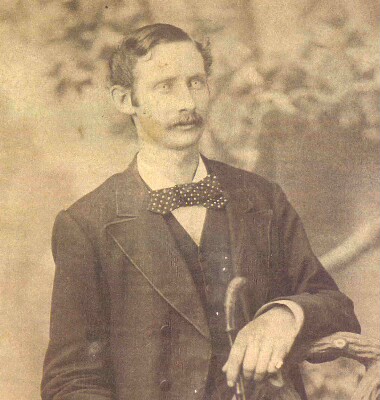
    photos of George Callin and his wife, Mary "Polly" Lewis
    George (left) and Mary A “Polly” Lewis – Presbyterian abolitionists

    While you would not be correct in assuming that anyone remembered as a “strict Presbyterian” would necessarily support any of these movements, knowing that George was involved in at least one of them can give you some insight into how George’s faith looked to him. To break the law and take the risks associated with transporting escaped slaves through Ohio in the 1840s showed a deeper commitment than simple belief.

    Ultimately, a person’s religion doesn’t dictate what kind of person they are or were. Just as your religion is more often a reflection of how you see yourself and how you want to live, your ancestor’s stated faith gives you clues to how they thought about themselves and their place in the world. If you use what you know about a specific faith to prompt questions about the ancestor who practiced it, you can learn a lot about their motivations and their views that you might get from a few words in an obituary.

    Just don’t jump to conclusions. As Paul said in his first letter to the Thessalonians:

    Test all things; hold fast what is good.

    (1 Thessalonians 5:21)

    In this context, “good” means “supported by evidence.”

    If you tested Mightier Acorns and find it to be good, subscribe to hold fast!

    1

    National Park Service, NPS.gov, “Abolition, Women’s Rights, and Temperance Movements

  • The top of my ladder is the bottom of another

    Abe Witter (1859-1918) was my 2nd-great-grandfather – one of My Sixteen. After I added his profile to WikiTree in 2019, another WikiTreer connected it to the profile of Abe’s father, Adam Piper Witter (1829-1909). I have since taken on the Profile manager role for Adam and his father, Abe’s namesake.

    But, in connecting to Abe’s parents, I found myself looking “up” along his maternal line at connections to a Tice family that originated in Germany in the 1500s. Here’s Abe’s ancestry going back to Johann Matthias Theiss, born in a German principality in 1704.

    screenshot of Abe Witter's WikiTree ancestry chart
    Abe Witter’s ancestry chart, from WikiTree

    Of course, I’ve only done the work to verify Hannah’s biographical details, so far. I have my work cut out for me if I want to trust the skeletal, unsourced connections above her in the family tree. The profile for Johann Matthias Theiss, for example, was improved by several contributors through the Palatine Migration project – but the two generations between him and Hannah are placeholder profiles for Peter Tice and Johann Heinrich Tice.

    The profiles for Johann Matthias Theiss’s ancestors are slightly more developed:

    screenshot of ancestry chart for Johann Matthias Theiss
    Johann Matthias Theiss ancestry chart from WikiTree

    Profiles for his grandfather and great-grandfather appear to be well-sourced, but I will have to do a lot of homework before I am comfortable relying on them.

    That homework begins with Hannah. Her biography resembles that of the typical prairie farm wife. She married Adam Witter in Fulton County, Pennsylvania – just beyond the western edge of Pennsylvania Dutch Country. They migrated to Kansas between 1860 and 1865 – just after the years known as “Bleeding Kansas” – and raised their five children there.

    Hannah survived her husband by a decade and went to live with her children in her old age. She spent her last few years in Boise living with her daughter, Mary (Witter) Arnold. Her Idaho death record from 1919 names her parents as Peter Tice and Mary Hower.

    She was 20 when she married in 1852, and 18-year-old Hannah is listed in her parents’ home on the 1850 Census. So building from there, I’m confident we can start building up the profiles of Peter and Mary.

    If you’re interested in this Tice/Theiss line, I’ll post updates as I learn more, and link back to this post. If you drop a note, I’m sure it will motivate me to keep working on this branch:

  • The life of Leo Homer Callin (1893-1958)

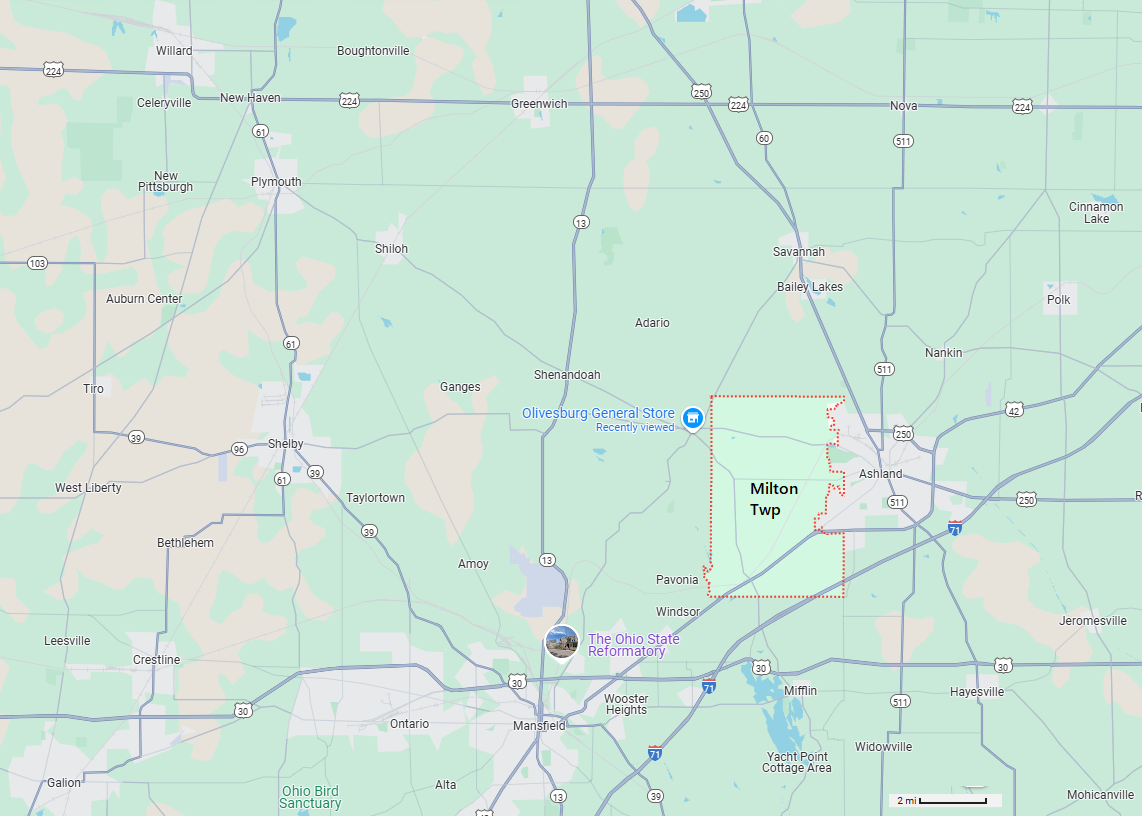
    I am descended from John Callin, one of two brothers who settled in Milton Township, Ohio, in the 1810s. Leo Homer Callin (1893-1958) was descended from John’s brother, James. Their father was (most likely) James Callin, the Revolutionary War soldier I’ve written about

    Leo was the son of George L Callin (1860-1917) and Catherine Bell Imhoff (1868-1941), born on 30 Nov 1893 and raised in Mansfield, Richland County, Ohio. After he finished school, he found work driving a grocery wagon for F. E. Helt. His father, George, and his uncle, Fred, both worked as drivers in Mansfield in 1900 and 1910.

    In September 1910, Leo’s horse became unmanageable, and Leo was thrown from his wagon into the street.

    Mansfield News, 20 Sep 1910

    After that, Leo’s occupation was grocery clerk – not a driver. And you can hardly blame him!

    Leo married Mildred M. Apgar on 6 July 1915, and their daughter, Evelyn Ruth, was born on 27 Dec 1915. In 1917, his draft card claimed an exemption so he could support his wife and child. They were still listed at the same address as late as 1922, but in 1925, Leo was granted a divorce and custody of Evelyn by probate judge C. L. McClellan.

    The divorce was granted on 9 July 1925 in Richland County, Ohio. Less than a week later, on 13 July 1925, Leo married Mildred Hartman in Monroe County, Michigan, just over the state line from Toledo.

    The First Mildred

    Judging from the City Directories records I have found, Mildred (Apger) Callin ran the Callin Beauty Shop at 11 E. 4th Street and lived there with her daughter, Evelyn, after parting from Leo, despite the court’s custody decision. 1926 newspaper ads call her “Mildred M. Callin graduate of the Cleveland Academy of Cosmetology.”

    Mildred seems to have married someone named Smith after 1930. Records and obituaries for her mother (in 1957) and her sister, Flossie (1961), refer to her as “Mrs. Mildred Smith” and she is listed as Mildred Smith, a hairdresser, living in Lakewood (near Cleveland) in 1940. That 1940 census says she is married, but in 1950 she is listed as separated. I have not found a record to tell me who Mr. Smith was. But the last we see of the first Mildred is in Cleveland in 1961, probably working as a hairdresser.

    Evelyn was married twice, and her second husband, William Primm, died in 1979. She died in 2002 in Largo, Florida, and her obituary said, “Survivors include several nieces and nephews.”

    The Second Mildred

    Mildred Hartmann was born on 10 October 1907, meaning she was about 16 when she got pregnant in 1923. Her parents had divorced between 1910 and 1920, and in 1920, Mildred and her brother Frank lived in the Richland County Children’s Home.

    Her daughter, Doris, was born on 26 April 1924 – more than a year before she married Leo. If 30-year-old Leo was the father, that might explain why the first Mildred divorced him. It’s possible that Leo met the second Mildred after the first Mildred left him, and he decided to take care of this young, pregnant girl, but I think the first scenario is more likely.

    They had a second daughter, Betty Jean, born 9 September 1926. I can’t find them in the 1930 Census, but the Mansfield City Directory lists them at different addresses in 1926, 1928, and 1930. In 1932 and 1934, the directory only lists Leo’s name and shows him living back at his parents’ home on 26 Pleasant Avenue.

    screenshot of newspaper item from the Mansfield News Journal dated 7 August 1937
    News Journal, Mansfield, Ohio, 7 August 1937

    Leo’s attorney placed this notice in the local papers, suggesting Mildred left Leo and ran away to New York around 1934, taking their daughters with her. She married Mathias Barth on 10 August 1938, and in 1940 they are all listed under the name Barth living on Gerard Street in the Bronx.

    Betty Jean died on 13 June 1943 from a heart infection – subacute bacterial endocarditis. Her death records give her name as “Betty Jean Edwards” but list her father’s name as “Leo Callin.” She was only 16 and there are no marriage records, so it’s not clear where the name “Edwards” came from.

    Doris Callin married in Dec 1943 and by 1950 had two children. They may all still be living1, so I will simply assume “they lived happily ever after” until I learn more.

    Mildred and Mathias Barth eventually moved to Long Island. Mildred died in Florida on 24 March 1985, and Mathias died in Levittown, NY, on 3 January 1994.

    Post-Mildred Leo

    Leo’s situation deteriorated after his second divorce. He was admitted to the hospital in 1939, and in 1940 the Census listed him in the “paupers infirmary” in Richland county. By 1950, he appears to have been moved to the Central Ohio Psychiatric Hospital in Columbus. He died on 24 March 1958 and was buried in the Columbus State Hospital Asylum Cemetery.

    There is no way to know what Leo’s affliction may have been. Even if some records indicated what his condition was called at the time, the state of psychiatric medicine in the mid-1900s was not very advanced. Treatment could be brutal, and non-scientific notions about how the mind works persist to this day.

    To learn more about researching mental health and disability, check out Emma Cox’s recent interview with Kathy Chater:

    Researching mental health and disability
    My recent interview with Kathy Chater covered researching ancestors who may have suggered from mental health issues. There is a separate Substack post with a list of resources to help with your research. A short clip is below and the main interview is available via…
    Read more

    Leo’s family did have a history of alcoholism and that could explain a lot of Leo’s story. I don’t like to judge, since I don’t know all of the facts, but it seems likely that he made several poor life choices and made life more difficult for two amazing women named Mildred.

    Nevertheless, his grandchildren are my 6th cousins, and they share as much DNA with our Revolutionary War ancestor, James Callin, as I do. I hope that despite the less savory aspects of Leo’s story, they might find their way here and find some satisfaction in learning about their family’s past.

    Thanks for reading Mightier Acorns! Subscribe for free to receive new posts and support my work.

    1

    My general policy is to not post information about living people, but I also think people who live past 100 deserve to be celebrated far and wide. This is my compromise.

  • Rescued from obscurity

    Before we begin: I’ve been struggling to make these Wavetops posts work the way I wanted them to work – so I’m taking a slightly different approach. Instead of pointing at the “top” and talking about the work that still needs to be done, I’m going to start at the “bottom” and work my way up. Surf’s Up, Cousins!

    John Jackson Tuttle (1872-1963) was my 2nd-great-grandfather – one of My Sixteen, of course – and for many years, I looked past the questions I should have had about who his parents were so I could focus on earlier generations. So I only recently thought to dig in and ask myself: “What do I know about John Tuttle’s mother?”

    Screenshot of John Jackson Tuttle's WikiTree Ancestor chart
    WikiTree Ancestor chart for John Jackson Tuttle (1872-1963)

    As you can see from this chart, John’s father was a great-grandson of my Hessian soldier ancestor, Leopold Zindle. Sadly, finding records for the folks on this chart has been difficult. My usual tricks seem to be failing me, partly, because the Tuttle family was so prominent in Morris County, New Jersey, and my particular ancestor, Samuel Tuttle, was not as prominent as some of his cousins. The books that mention Leopold Zindle made vague references to the “prominent Tuttle family” without going into any detail. The Samuel Tuttle that does get mentioned in some of the local history books is the Rev. Samuel Tuttle who lived in Rockaway Township, and not the bloomer from the steel plant.

    After a while, it occurred to me that I was neglecting John’s mother, who I knew as “Avena” from the few documents I had when I started. I’m pretty sure that “Avena” was probably a nickname for “Josephina” but I didn’t find anything at first, searching for those two variations. Then I found a marriage record for “J.A. Plumsted” and “E.A. Tuttle” that set me on the right course.

    Despite having a name to work with, I still had to wring the information I wanted from the databases. Normally, once I have a name and a few dates and places, I can tease what I want out of very fuzzy results. But THIS family was not going to make it easy. They wanted to hide!

    I started with the common assumption that their marriage record from 30 Mar 1870 in Roxbury, Morris County, New Jersey, indicated that the bride was probably from Morris County. I didn’t find a Plumsted family in Morris County in 1860 that had a girl named Josephine or Avena (or any reasonable variation) the right age. I couldn’t find a Plumstead family in 1850 at all, but I did find something interesting in 1870.

    There is a Plumstead family listed in Roxbury in 1870. Succasunna is listed as their nearest post office, which caught my attention because John Tuttle’s marriage was recorded at Succasunna in 1891.) This family consisted of[24]:

    • Joseph Plumstead – age 49

    • Abbey Plumstead – 42

    • Emma Plumstead – 18

    • Joseph Plumstead – 15

    • Mary Plumstead – 7

    Joseph, Abbey, and Emma matched three people in the 1860 record I had already ruled out[22]:

    • Jos Plumstead – age 40

    • Abba Plumstead – 35

    • Jas A Plumstead – 16

    • Harriet Plumstead – 14

    • Adrian Plumstead – 11

    • Emma Plumstead – 8

    • Joshua Plumstead – 6

    • Clarrisa Plumstead – 63

    Okay, so the ages are a bit off for Abba/Abbey, but Jos/Joseph is close enough and Emma is dead on. Joseph/Joshua could be an easy mistake – but I need more information. That’s when I took another look at the 1850 records and found this family in Jefferson, Morris County:[21]

    • Joseph Bumplin – 29

    • Abagal Bumplin – 26

    • James Bumplin – 5

    • Harriet Bumplin – 3

    • Josephine Bumplin – 1

    While Josephine does not appear, at first, to be listed with the other children, James/Jas and Harriet match – and then there is a son named “Adrian” listed who is the age Josephine should be in this record. Adrian Plumsted does not appear in any other records related to this family. And if the family told the census taker her name was “Avena”… I can see how mistakes added up.

    With those pieces in place, I was able to assemble the rest of Josephine’s biography, and move one more branch up the Plumstead tree to a new wavetop:

    Joseph Plumstead (1820 – 1876)

    And so the adventure continues…

    Thanks for reading Mightier Acorns! Subscribe for free to receive new posts and support my work.

    If you are particularly interested in the Plumstead family of Morris County, New Jersey, drop a note!

  • The post I *meant* for last week!

    I failed to post anything last Wednesday and didn’t realize it until my Friday post went live. This happened because when I was drafting my posts, I didn’t have the photos from my daughter’s wedding I wanted to share and I forgot to go back and finish drafting and scheduling.

    So, you get those today instead!

    This was a very small wedding, held at the Redwall Castle near Germantown, Maryland. My youngest child, Mileidy, and her partner, Elliot, both suffer from anxiety disorders and they wanted to have (literally) a small, fairy-tale princess wedding. I think they succeeded – and their choice of venue looked the part:

    Image of Redwall Castle from the Mocoshow website
    Main house front walk, from the Mocoshow webpage

    The man of honor and both fathers spoke at the reception. For my speech, I focused on the fact that my youngest child was the first of my four children to get married, and how happy I was that she got to be first at something after years of being the littlest.

    The family of the couple outnumbered the guests by a little bit, and my two rambunctious granddogs, Jinx and Bug, were delighted to meet so many people.

  • A lifetime in Baltimore without finding my cousins

    My grandfather, Bob Callin, had two older siblings. Bob was the baby, born in 1920; Yvonne, the oldest of the three, was born in 1907, and Norman was born in 1912.

    John Norman Callin graduated from Fostoria High School in Ohio in 1930 and then moved to Orlando, Florida. His parents moved there about that time, probably because great-grandpa John had followed his older brother, Byron Herbert Callin, looking for business opportunities.

    Norman married Ruth Frees Harpster in 1933, and at some point after 1940, they moved their family to Baltimore County, Maryland. I know from his 1964 obituary that he worked as a machinist for the American Can Company for 18 years, so I would guess they moved about 1946.

  • No, not that one – the older one

    I feel like we all say this a lot, but: Don’t accept unverified research until you’ve checked out the sources.

    I don’t know who did the research on my Clark family before I started looking into genealogy, but I was given a tree that showed Amos Clark and Sarah Stumbo (or Stambaugh) as the parents of my 2nd-great grandfather, Joel Clark.

    There wasn’t a lot of information for me to work with in the beginning. I remember finding a marriage record for Amos Clark and Sally Stumbough, dated 8 April 1824 in Lawrence County, Ohio. Joel Clark’s death certificate listed his parents as Amos Clark (place of birth “not known”) and Sarah Stumbo (born in Virginia) – and since “Sally” was a common nickname for “Sarah” I can accept that with Joel’s 1828 birthdate, I have the right people.

    That’s about where I sat for many years before digging into that branch of the family more deeply and learning about the area where they lived.

    The geography of that particular stretch of the Ohio River is interesting because, in the present day, it forms the Huntington–Ashland metropolitan area – which “spans seven counties in the three states of Kentucky, Ohio, and West Virginia.”

    Map of the so-called "Kyova" tri-state area
    Map showing the Tri-state area – note how close Ironton, Ashland, and Huntington are to each other

    Four of those counties – Boyd and Greenup, KY; Lawrence, OH; and Cabell, WV – kept turning up in the records for other descendants and relatives of the Clark family. Joel’s second wife, Sarah Jane Bellamy, was born in Cabell County, Virginia, (in 1836, decades before the state of West Virginia split from Virginia in 1863). Their son, David Ulysses Clark, was born in Greenup County and raised most of his family in Boyd County. And, of course, Amos and Sarah were married in Lawrence County – so I started digging there.

    I found a lot of information about Amos Clark – multiple dates of death, multiple Census records…. some from the same years. Things quickly stopped adding up.

    Eventually, I sorted some of the mystery out and discovered that there were at least three men named Amos Clark living in or around Ironton, OH, during the years I was researching. Later, thanks to another researcher on Ancestry, I found a court document in which Sarah Clark had filed a Petition for Dower, naming several of her minor children and establishing the date of death for her late husband.

    “To the Court of Common Pleas within and for the County of Lawrence and State of Ohio in chancery sitting Sarah Clark of said County represents that Amos Clark late of said County departed this life on or about the first day of January A.D. 1848 leaving your petitioner his widow and Jacob Clark[,] Hannah Clark[,] Jackson Clark[,] George W Clark[,] and Elizabeth Clark Gannon his heirs at law and legal representation who are all persons under the age of twenty one years…”

    Joel would have turned 21 about two months after this petition was filed (on 31 October 1848), and he didn’t marry his first wife until 1853, so it seems odd that he is not named here. However, I have found no records for a “Jacob Clark” anywhere, and Sarah’s 1850 Census shows her living with Joel, Jackson, and George W. – so it’s possible that the children in the petition are listed in order of birth, and that “Jacob” is Joel.

    In the coming weeks, I’ll be digging into the descendants of these Clark children to see if I can track down cousins from other branches who might be able to compare DNA results with me or with other known Clark descendants.

    One piece of information I haven’t been able to either confirm or rule out is the birth information I found on Amos’ WikiTree page. It was an “orphaned” page and I have since taken over as the profile manager. The person who added the birth info – “Born about 3 Nov 1802 [uncertain] in Westfield, Union, New Jersey, United” – also included records from another Amos Clark who lived after our Amos’ death in 1848. While it seems unlikely that the Amos Clark I’m interested in was from New Jersey… I just don’t know.

    But the search goes on!

    Thanks for reading Mightier Acorns! Subscribe for free to receive new posts and support my work.

  • Travels Through the Places They Knew

    We weren’t supposed to be here, but Hurricane Helene washed out parts of the Interstate, so we took a more Northern route.

    Our original itinerary took us from San Antonio to Nashville on day one—a 15-hour sprint followed by a leisurely 12-hour leg to the house in Baltimore via I-81 (mostly), going through Knoxville before entering Virginia. After seeing the devastation centered in Asheville, North Carolina, we decided to go north through Kentucky and West Virginia instead.

    Our route along I-64

    And so, we found ourselves on I-64 passing through Mount Sterling, in Montgomery county, Kentucky. This was the town where my wife’s Wavetop ancestors started their family before moving to Indiana.

    Keeping to our pace, we soon entered Boyd and Greenup counties, where my maternal grandfather’s family had lived for three or four generations (depending on which branch you count).

    We didn’t have time to stop and look around on this trip, but we have been through the Ashland, Kentucky/ Ironton, Ohio area on a previous trip, and I need to plan a visit to do some research and visit with cousins.

    Someday.

    After driving past Ashland, we entered into Cabell County, West Virginia, where my Bellamy ancestors (also on my maternal grandfather’s side) settled.

    Before I go…

    …on any long trips, I feel like I need to learn more about these areas. I need to figure out where the physical records are kept and how I will need to preserve them. Are they in a courthouse, or are they (as they were in Ashland) in a separate room at the public library? Will there be a copy machine, or will I need to rely on my phone to capture images of any documents I find?

    I think the first step will be to catch up on the “All About the Place” series and check out what others have been posting while I’ve been traveling.

    I also want to visit the big family history centers in Fort Wayne and Saint Louis – where I know they have (at least) the Berlin family history.

    But all of this depends on my ability to plan things – so I guess we’ll see what happens!

  • A recap of favorites from my first year on Substack

    I might miss posting next week due to traveling last week – if so, don’t panic! I will come back once I recover. But I think I’m allowed some time off. After all…

    I launched Mightier Acorns on Substack on 4 Oct 2023, with A New Leaf for an Old Genealogy Nut. And if I did my math right, this post is the 114th on this platform – but there is no guarantee that I took time zones into account, so I could be off one way or another.

    My original plan included a “Weekly Log” feature which I managed to maintain for all of 5 weeks before dropping that format in favor of a two-posts-per-week, Wed/Fri, rotation. I also did some simple math and realized that my “Family Reunion” posts were relatively easy to assemble, would give me at least half a year’s worth of content, and would inspire deeper, more interesting stories and essays. I have enjoyed watching my friends on Substack take that idea and run with it!

    Some of my favorite stories from the original Mightier Acorns blog found a new audience here. I was particularly proud of the four snapshots of my four grandparents:

    I am extremely pleased with the body of work I’ve put up on this platform. I’ve done several multi-part explorations, including a deep dive into Rhode Island founder John Green (who turned out to probably not be my ancestor). I’ve sketched out the path for researching my wife’s ancestry and learned a ton about Sweden and Norway. And I have had fun along the way – hopefully, if you’re reading this, you are having fun, too!

    …and if you haven’t already, subscribe for free!

    They say the friends you make along the way are the point of the journey, and I’ve been thrilled to become part of the community of genealogists here. Barbara Tien at Projectkin Community Forum and Robin Stewart of CuZens Genealogy Matters, both separately and under their joint effort at Mission: Genealogy, have been encouraging and supportive at every step.

    And to each of you who clicks the “like” button, shares a note, or links to something I wrote – you are seen and appreciated!

    In the coming year, I hope to keep doing what I’ve been doing. I’ve found that just writing about what interests me, keeping each post under 1,000 words, and making sure there are at least 6 scheduled posts in the queue at all times is a successful formula.

    I don’t plan on turning on the paywall, because I want future cousins to be able to find old posts, but as of this writing, one person has pledged at the annual rate, and I am flattered by the gesture. If you feel strongly about supporting Mightier Acorns financially, I recommend that you pick up a few copies of great-grandpa John’s War Poems as gifts for the Civil War buffs in your life, or to donate to your local library.

    And lastly, if you happen to be my sister – Happy Birthday! (She’s who I was waiting for outside the hospital in this photo – which you might recognize as the cover of my book, Tad’s Happy Funtime.1)

    Tad, age 4 1/2
    Tad, age 4, waiting for Sara’s arrival outside the hospital
    1

    Oh, yeah, if you like books, that is also… a book, which is for sale. Tad’s Happy Funtime

  • A celebration of a wedding trend

    I’m at a special wedding this week – so I’m re-purposing an old post about weddings in my family.

    Here are three couples with a few things in common:

    • They all married young

    • The grooms (and one bride) were all in the service

    • Not only did all six of these people share a surname (after their respective weddings), but the grooms shared their given names, as well!

    How young were they? Well, that’s the basis for our trivia question – “Which of these brides was the youngest at her wedding?”

    You’ll need some dates to make an educated guess, but with this being the open internet, you’ll excuse me for being coy about just posting them here without making you work for them!

    First up, you can see a happy young pair of airmen getting their engagement picture taken. Tad was a mature (ahem) 22 years, and Kate was a Bicentennial Baby. They took a lot of ribbing over their age difference, but when they married after a brief, six-week romance, she was 18 – and only a few months shy of 19.

    Tad and Kate, February 1995, Monterey, California

    Our next couple could hardly wait for high school graduation to set their wedding date, but wait they did. Teddy was a mature (I am certain) 22 years old, and Barbie was a true child of the 1950s. They married in 1968, just one month after her 18th birthday.

    Ted went on to join the National Guard and trained to be a medical technician, then tried his hand at teaching before settling on his career as a firefighter.

    Ted Callin and Barbara Clark, wedding photo
    Ted and Barb, April 1968

    And finally, we have the dashing couple straight out of Casablanca, the heroine and hero of When Things Got Serious. Bobby was a 21-year-old Army airplane mechanic, and Nancy was in high school when they met – and the outbreak of the Second World War lent some urgency to their decision. And so they married in 1942 – about 8 months before her 18th birthday.

    Bob and Nancy, c.1942, Phoenix, Arizona

    So there you have it – I come from a long, well-established line of young men who married young brides and survived to tell the tale. I think I can safely claim that none of us has regretted it for a moment.
    And this week, continuing a three-generation tradition of having older and older brides… my youngest, Mileidy (22) is marrying Elliot at a fairy castle in Maryland!

    Elliot (left) and Mileidy, Baltimore, Maryland, 2023

    However old or young your sweetheart is, here’s hoping you’re as happy as we were – and are.