Tad Callin has been working on family history and genealogy since the late 1990s. He does most of his research on Ancestry and posts what he learns to WikiTree.
Stephen Hart and Stephen Hart lived 30 miles and 4 years apart
I told you about Martin Hart (1792-1879) and his life story several weeks ago. I told you about his connection to his father, Stephen Hart(1767-1857), and shared some facts about Stephen…but then I started to write today’s post about Stephen and realized I made a mistake. I included this paragraph:
The Hart family moved to Stillwater, New York, and from there to a newly settled town called Pinckney in Lewis County, New York, around 1805. Stephen Hart figured in the early history of Pinckney. The first town meeting was held at his house, and he served as town supervisor in 1815. He served additional terms in 1817, 1821, 1827-28, and 1830-31.
(Hough, Franklin Benjamin, (1822-1885), History of Lewis County, New York; with…biographical sketches of some of its prominent men and pioneers; page 497-499.)
That paragraph refers to facts about a second Stephen Hart who lived in Lewis County, NY. The Stephen Hart I’m interested in settled in Turin in about 1799, and the Hough book talks about both men without indicating that Mr. Hough knew they were two different people.
Parallel Lives
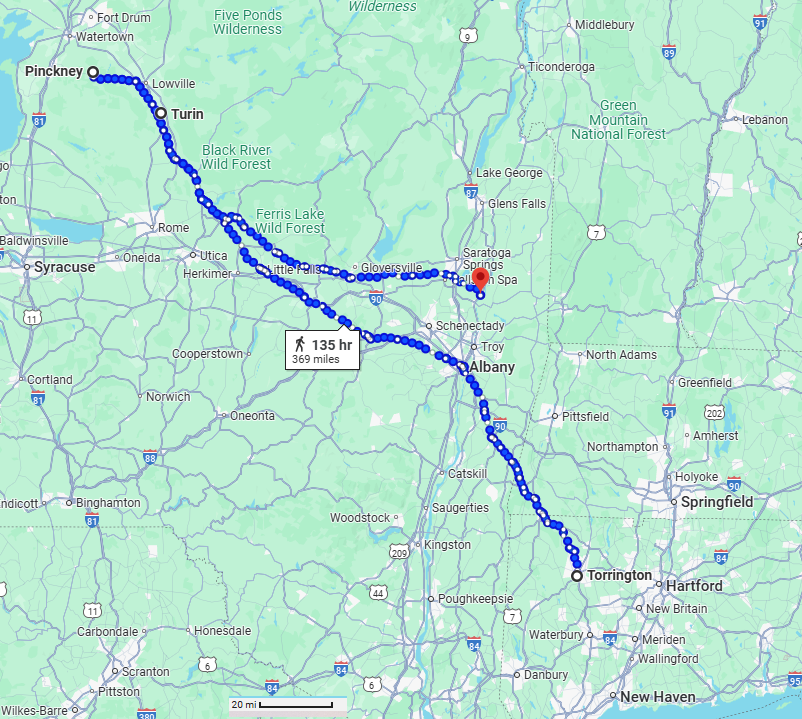
Complicating matters, the two Stephens have very similar biographies. They were born about 4 years apart (one in 1767, one in 1771) and died about 4 years apart (1857 and 1861). They moved from their respective homes to Lewis County about 7 years apart (older Stephen in 1799, younger in 1806) – one from Torrington, CT, and the other from Stillwater in Saratoga County, NY:
The elder Stephen came from Torrington to Turin; the younger came from Saratoga County to Pinckney
To keep them straight and to illustrate which Stephen is the “correct” Stephen, I added a Table of Evidence to his WikiTree profile page. Then, I added the “Easily confused” template to differentiate the two WikiTree profiles and ensured the Table of Evidence was on both pages.
Whew.
Seeing Double
Stephen Hart is not the only person in this family who has a doppelganger to watch out for. Eunice Seymourcame from a prominent and prolific family, too, and there are marriage records for more than one “Eunice Seymour” in Connecticut from around the same time. As I go hunting for Eunice’s ancestry, I need to keep a sharp eye out to make sure that I have the correct person before adding information to my tree.
(One of these days, I might put together enough reliable information to post about Eunice. If I’m lucky.)
Hi- I’m Sadie of Tales & Trees Family History Services, and I have a confession. I had a line in my tree wrong for ~years~ because I fell victim to a classic Ancestry user error. I even told people I was distantly related to a Salem Witch Trial victim and president because of it. (Now I know I’m not…
Read more
2 months ago · 15 likes · 2 comments · Sadie Nelson
2 months ago · 4 likes · 2 comments · Sadie Nelson
And when we say “don’t trust anybody,” we mean “don’t blindly accept facts without testing them.” We are all fallible, and we can all make mistakes. Telling you not to “trust” means that you should always be questioning the facts. Examine the original sources, and if somebody isn’t citing sources, don’t accept their work until you can verify it yourself.
Because you see how easy it is for any of us, even if we are trying our best, to make a mistake, miss a clue, or perpetuate a mistaken assumption. Sometimes you can get away with that, but eventually, you will find yourself with two Harts, wondering how you got into this mess.
And having two hearts is only good if you’re this guy. (IYKYK.)
Sarah Montgomery was born in Milton Township, Richland County, Ohio, on 27 December 1824 and married Henry Davidson (1818–1894) in Fulton County, Indiana, on 22 Apr 1841. They took their family—including their adopted niece, Sarah Ferrell—on the Oregon Trail in 1853. In my last post about this family, I told you, “…but we will have to talk about that adventure another time.”
Now is another time!
Born In Ohio
Sarah Montgomery was about 10 years old when her mother, Elizabeth (Callen) Montgomery, died. She would have been about 14 when her father moved the family to Fulton County, Indiana, in 1838, and she was 17 when she married Henry Davidson there on 22 Apr 1841.
It’s hard to say whether Sarah or her siblings were able to keep in touch with their cousins in Milton Township after they left. Many of those families left Milton Township soon after the Montgomerys did. Her grandmother, Mary Callen, moved with Sarah’s uncles, Alec and Hugh, to Iowa, and we know the Callins who stayed in Ohio lost touch with the Iowa relatives after 1845. Sarah’s uncle, Thomas Callin, died in 1843, leaving his widow, Nancy (Burget) Callin, to care for their ten children.
By 1846, Sarah had two small children, Lucretia and William. When her sister, Mary Ferrell, died, Sarah and Henry took in Mary’s orphaned daughter, Sarah Ferrell, and raised her with their own. They had two more children soon after: a son in 1848, Theodore Bruce Davidson, named after Sarah’s adventurous brother, who had gone off to join the U.S. Army in Mexico, and a daughter, Frances Mary, in 1850.
Setting Out for Oregon
In 1852, the Davidsons set out for Oregon as part of the Murphy Train. Captained by John Ecles Murphy, the group consisted of family and friends, all members of the Christian Church known as Campbellites or Disciples of Christ.
In the early 1830s, the followers of Alexander Campbell, founder of the Disciples of Christ, moved from their homes in Warren County, Kentucky, to Warren County, Illinois, and established the town of Monmouth, named after their home in Monmouth, Wales. As the word of the virtues of the Oregon Territory reached Illinois, the group began planning another move. An advanced migration of church members went west in 1850, which included Elijah and Margaret Davidson (of unknown relation to William Henry Davidson).
In April 1852, the second migration of church members began the journey. This second group was made up of the families of Burford, Butler, Davidson, Lucas, Mason, Murphy, Roundtree, and included Henry and Sarah Davidson and their children, as well as their adopted niece, Sarah Ferrell.
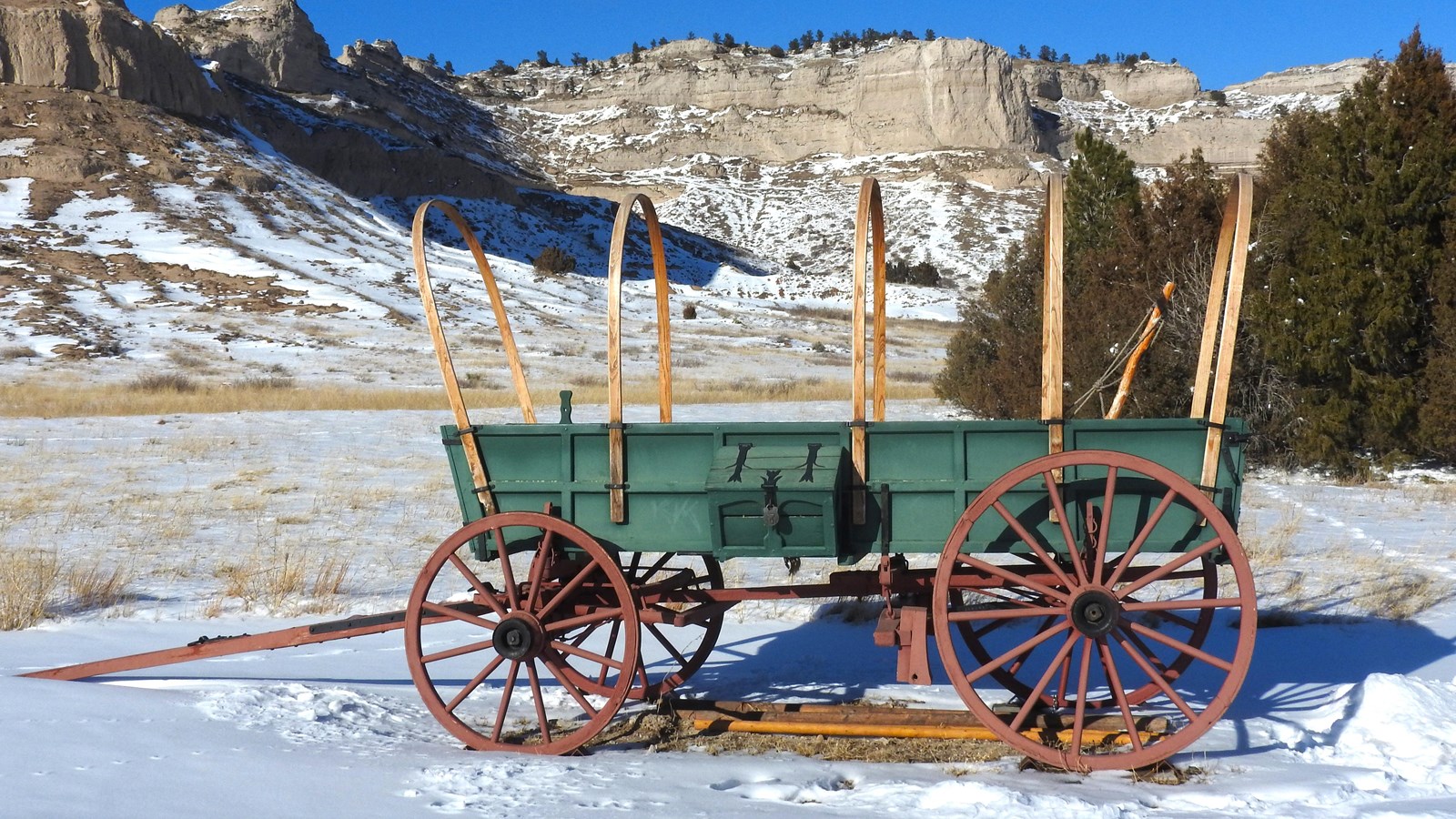
Coincidentally, they probably traveled in a Murphy Wagon—no relation to Captain Murphy—like this replica at Scotts Bluff National Monument.
NPS.gov: Murphy Wagon Replica
The Journey of Sarah Ferrell
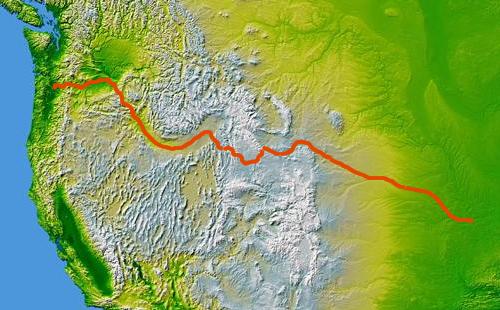
Sarah Ferrell would have been 6 years old in 1852, when her family joined Captain Murphy’s wagon train. Before they could begin the journey, they had to travel more than 500 miles from Fulton County, Indiana, to join the group on the Missouri River, probably near Omaha, Nebraska. From the Missouri River, the group had to travel more than 1,500 miles to the Willamette Valley in the Oregon Territory.
Sarah, along with her two older and two younger cousins (Lucretia was 10, baby Frances was 2), would have probably ridden in the wagon, pulled by oxen traveling an estimated 12 to 15 miles per day. The National Park Service website has a pretty good description of A Typical Day on this trip, which could last from 4 to 6 months.
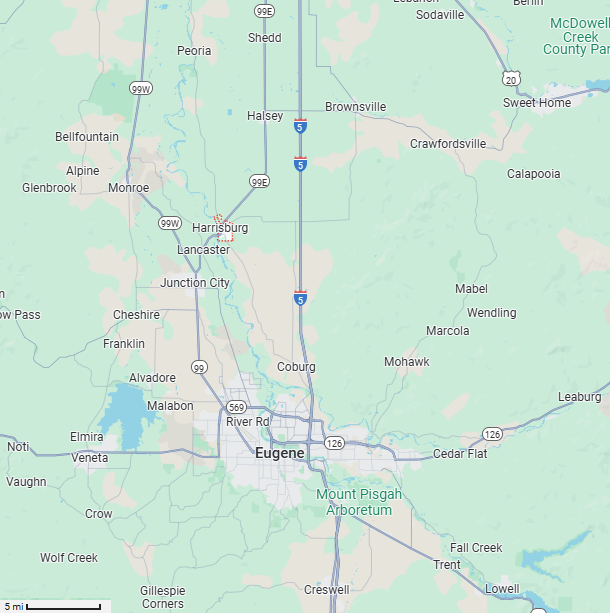
As far as I can tell, the Davidson family arrived safely in Oregon and settled in Linn County, in what is now Harrisburg.
Modern Harrisburg, in relation to Eugene, OR
At 18, Sarah was married to Josiah S Powell (1839–1865), son of Noah Powell (1808–1875) and Mary E. “Polly” Smith (1812–1893). He was born on 19 Nov 1839 in Menard County, Illinois. The Powell family wagon train, led by Noah and his two brothers, was one of the largest groups to migrate along the Oregon Trail, departing Illinois in 1851. Josiah and Sarah probably married in 1864, and their son, Glenn O Farrell Powell, was born in Mar 1865. Josiah died at 26 years of age on 21 Nov 1865. He was buried in Hunsaker Cemetery in Marion, Marion County, Oregon.
A widow at 21, Sarah married E J S Page on 4 Aug 1867 in Marion County, Oregon. We know nothing about Mr. Page beyond his name; we do not even know what his initials stood for. A child and a marriage record are all he left behind. Their daughter wasSarah Olive Page, born on 14 May 1868.
Now 24 years old, widowed twice, and caring for two small children, Sarah married for a third time.
A Final Match
James Addison Bushnell was a 44 year old widower, originally from Cattaraugus County, New York. According to his Wikipedia article (because he would go on to be notable enough for this!):
“He crossed the plains in the spring of 1852 to Oregon and then on to California. He departed for home in July 1853 via ship from San Francisco and across Nicaragua to New York to Missouri to get his family, only to discover they had already left for Oregon. He then returned to Oregon via ship from New York across Panama, back to Portland where he joined them in Springfield in Oct 1853. Thus, he covered over 10,000 miles in less than 120 days. His first wife, Elizabeth C. Adkins, whom he married in Sep 1849 in Missouri and who died in Jan 1868 in Junction City, was part of the ‘Lost Wagon Train of 1853’ that came over the Cascades via the Elliott Cutoff. He married his second wife, Sarah E. Page in Apr 1870.”
There is a lot of adventure packed into that paragraph—not only for James, but also for poor Elizabeth. She would have had their son, Charles, with her when she crossed the plains in 1853, and Charles would have been about 2 years old. I can’t imagine the fortitude it took to care for a 2 year old during the “Lost Wagon Train of 1853;” the Elliott Cutoff was not a picnic.
James and Elizabeth had seven children, including Charles. When James married Sarah (Ferrell) Powell Page in 1870, four of his seven children were still alive. James was a successful farmer, and he and Sarah had another five children, three of whom were lost to a diphtheria epidemic in the winter of 1881-82, along with one of James’s older sons, George Addison “Addie” Bushnell.
Despite these hardships, James operated a grain warehouse near Junction City for 35 years. He and C.W. Washburne established the Farmers & Merchants Bank in 1893, and served as its president until his death in 1912 at age 85.
The first library at Eugene Divinity School was named the Bushnell Library, as James and his wife Sarah provided $1,000 for the purchase of rare bibles. The Sarah E. Bushnell Bible and Rare Book Collection, established in 1913, is now housed in the Kellenberger Library at Northwest Christian University, successor to Eugene Divinity School.
Sarah died on 29 Jan 1916 at age 70 in Junction City, Lane County, Oregon. She and James are buried in the Luper Cemetery. Her obituary appeared in The Oregon Daily Journal in Portland, Oregon, on 2 Feb 1916.
“Pioneer of Lane Dies. “Junction City, Or., Feb. 2–Mrs. Sarah Elizabeth Bushnell, aged 70 years, died here at the home of her daughter, January 29, after a brief illness. The funeral was held from the Christian church Tuesday. Mrs. Bushnell had lived in Lane county since 1869. Her husband, Addison Bushnell, died about three years ago. She leaves four children: Mrs. Ollie Beebe, Ashland, Oregon; Glen O. Powell of Portland, Or.; H.C. Bushnell and Mrs. Gertrude Movius of Junction City, Oregon.”
And we haven’t even discussed the Davidson family, yet!
Mightier Acorns is reader-supported. To receive new posts and support my work, consider becoming a free or paid subscriber.
John Witter might be the name of my 5th-great-grandfather, on my paternal grandmother’s side. If so, his son was Abraham Witter (1786-1882), but I haven’t been able to prove that connection.
I was reminded to take another look at the available research after I saw a comment from Theresa:
I believe this Abraham Witter 1786-1820 was the son of John Michael Weider or Witter (1746-1787). John was the son of Christofel (Christoph Widder/Witter and wife Christina Royer/Roeser. John was born in Cocalico, Twp., Lancaster Co. and his wife was Catherine Volkman.
I think the evidence below compels me to disagree with that conclusion. The facts given by Theresa appear to come from two records:
Since it is unlikely John Michael Widder was married at age 11, I have to conclude that these records are talking about two different people. I have no other information to suggest that either of those people is the John Witter, born before 1755, whom I am seeking.
I had some theories about Abraham’s parentage based on research notes published by Elizabeth Shown Mills, but I needed to devote some time (about 12 hours last weekend) to reviewing those notes before I could be sure.
I’m still not “sure,” but I have a working theory.
Genealogists Know…
Elizabeth Shown Mills is a big deal in the field of genealogy. One of the first books recommended in any beginner course on the subject is her Evidence Explained — the Gold Standard for understanding how evidence works and how to make an argument based on the facts.
I was thrilled to discover in the winter of 2023 that Ms. Mills had published a case study of my (possible) 4th-great-uncle, Samuel Witter, on her website at HistoricPathways.com.1 The document is 52 pages and includes abstracts of most of the records cited; there is a lot to dig into, and much of the research was intended to determine whether the titular Samuel Witter was the brother of my 5th-great-grandfather, Abraham.
On pages 5 through 7 of her document, Mills sets out the reasoning and evidence assessing four men, each of whom could be the father of Samuel and/or Abraham.
Jacob Weider (Weidener)—has land records in Franklin County, PA, 1790-1794
Peter Witter (Wither)—possible son of John Witter, thus brother of Samuel & Abraham
Christoffel “Stophel” Widder (aka “Christopher” Witter, Wither)—possible brother of John Witter
Johannis Widder (aka John Witter, Witer, Wither)—this is the John Witter we are talking about
She used a variety of spellings for the name in her research, and she looked for candidates to be Samuel’s father in Franklin County, Pennsylvania. Since I am looking for Abraham’s father, our research overlaps quite a bit, though I am coming to the problem with a different set of expectations and goals.
I don’t have the skills and experience of Ms. Mills, and I don’t have access to some of the land records she references, but this is a rare opportunity for me to compare my outcomes with someone who knows what she is doing!
Different Starting Points
I started with Abraham’s obituary and worked “backward” to see if I could find records to support or refute what it says. I haven’t found an original copy or scan, but Mills cites the “McConnellsburg, Penn., Fulton Republican, 2 March 1882” as the source of the text (which can be seen on Abraham’s WikiTree profile).
We don’t know who wrote the obituary, so we don’t know how reliable the facts it gives are. For example, it claims “the deceased was with the militia at Baltimore in war of 1812,” but neither Mills nor I found Abraham’s military records. It also claims “He married a daughter of Daniel Pipers, of Amberson’s Valley…” which can’t be true based on the other facts we have about Abraham’s likely sister, Mary (Witter) Piper, and Daniel Piper’s family. (Mills discusses these discrepancies on page 9 of her notes.)
Abraham’s obituary and headstone appear to agree on the date of his death and give the same “age at death,” which allows us to calculate a birthday of 11 June 1786. The obituary says he was born in Frederick County, Maryland, and came to Franklin County about 1797. So, we should expect that his father’s records would fit with that timeline.
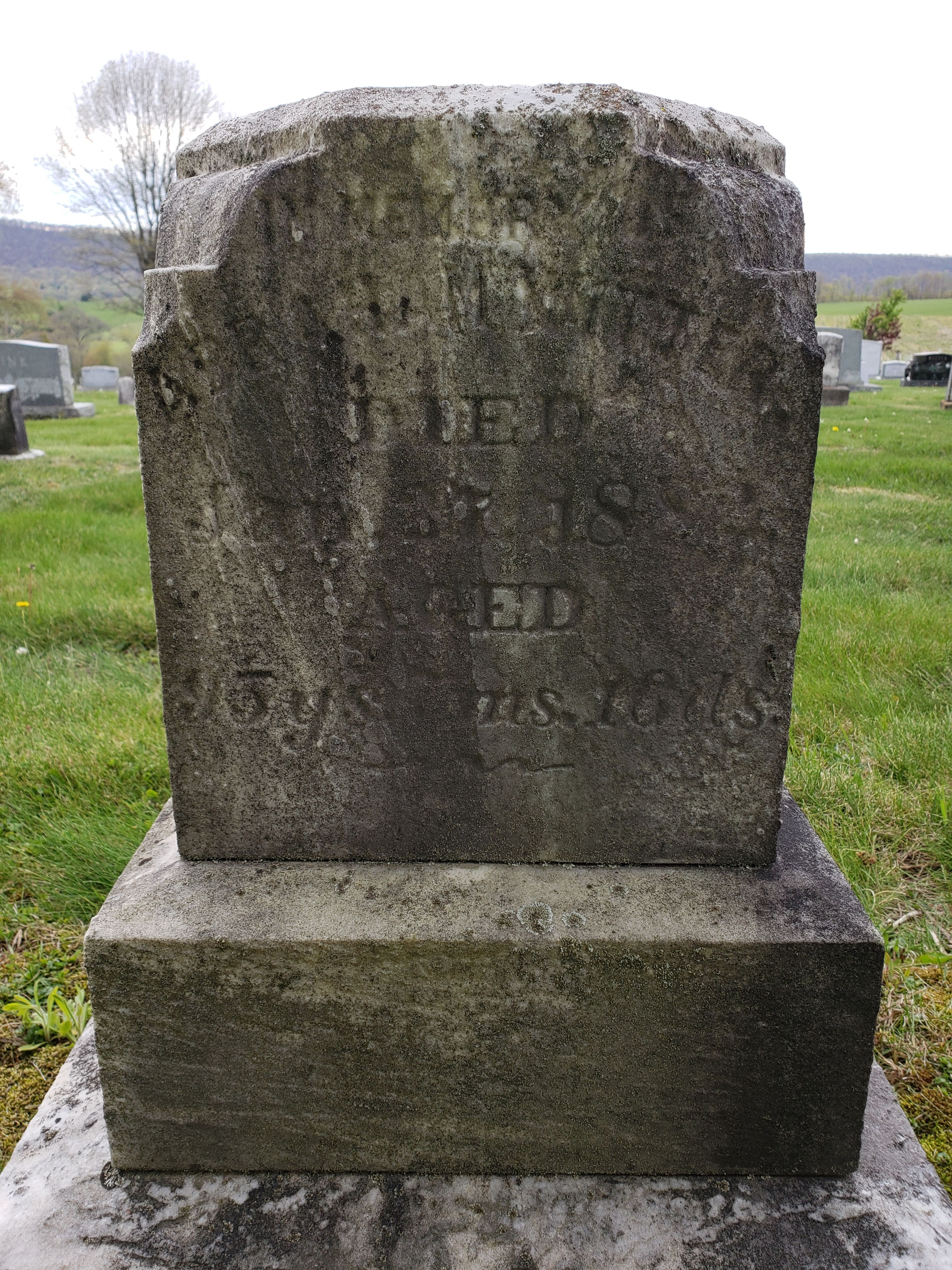
Abraham Witter’s FindAGrave memorial
(Not) Jumping to Conclusions
I don’t want to simply repeat Mills’s research here, point by point, but I was pleased to find that I had already found several of the documents she identified, and reached the same conclusions that she did about them.
Among the records I was not able to find, Mills found evidence showing John Witter living in Tom’s Creek Hundred,2 Frederick County, Maryland, as far back as 1783. Abraham’s obituary gave Frederick County as his place of birth in 1786, I was very excited to see her land records supporting that theory.
I was less confident in my discovery of “John Withers” (could also be “Withero”) in Frederick County in the 1790 U.S. Census3. A Witherow family also lived near the Witters in Franklin County, and the information about the household doesn’t say anything that would help determine which family this is.
Abraham’s obit says, “came with his father to Franklin county when eleven years of age [1797], his father settled at Carrick Furnace, and when a young man learned the millwright trade.” Carrick Furnace was located in Metal Township.
I found two records in Ancestry’s “Pennsylvania, U.S., Septennial Census, 1779-1863” database, 18004 and 1807. These showed John Witter and several other Witters. Mills found land records for Franklin County, Pennsylvania, that name John’s wife and help explain some of the census records.
I also found this gem on Newspapers.com, from The Franklin Repository (Chambersburg, PA) dated 16 October 1804 (note that the original text used “f” to represent “s” sounds in some-but not all-cases):
Fulling & Dying
THE Subfcribers refpectfully inform their friends and the public in general, that they have commenced the above bufiness at the Fulling Mill of John Witter, in the Path Valley, three miles below Fannettfburg; where they will thankfully receive and punctually execute, all orders in the line of their profeffion. For the convenience of cuftomers living at a diftance, they have appointed fix ftages to take raw cloth and return it dreffed, once in every three weeks–viz. At Mr. M’Clelland’s ftore in Strafburg, Mr. Brufler’s ftore in Fannettfburg, Mr. Cridler’s tavern at the Burnt Cabbins, Mr. Dixon’s tavern in M’Conneilfburg, Meffrs. Adair & M’Mullan’s ftore near Beam’s mill, and Mr. Foreman’s tavern in the Path Valley. Thofe Ladies & Gentlemen who may pleafe to leave cloth at any of the above places, will pleafe alfo to leave, ”particular written directions on the cloth”, to prevent miftakes. The fubfcribers flatter themfelves from their fuperior conveniencies & experience in profeffion, as well as puractuality to orders received, both to give general fatisfaction and merit the encouragement of the public.
The terms will be made as easy as poffible ; and favors in their line thankfully acknowledged by the
Public’s humble fervents.
THOMAS SHANNON,
JOHN & JOSEPH WITTER.
Metal township, Franklin county, October 18, 1804.
Some Conclusions
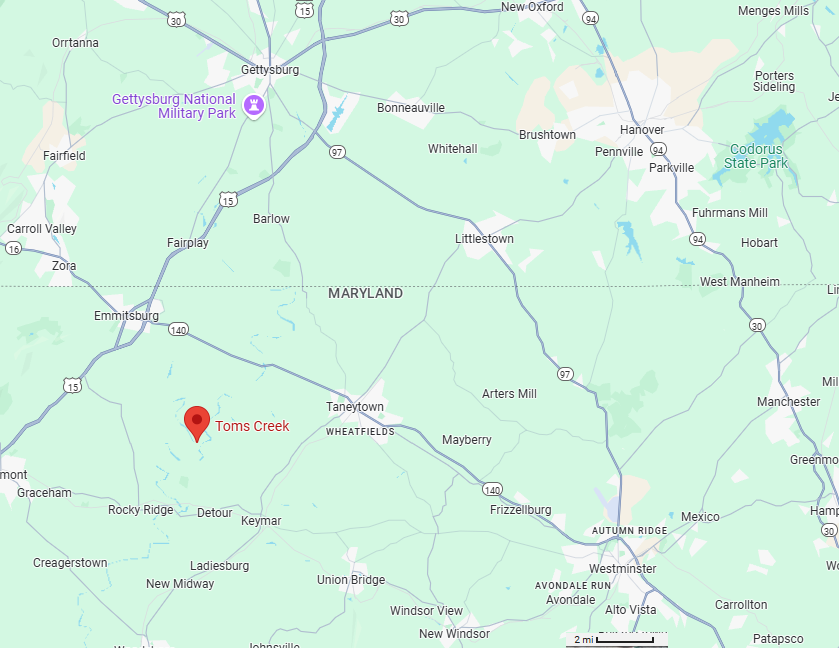
With all the evidence laid out, I am reasonably comfortable accepting the premise that John Witter and his wife, Catherine, lived in Tom’s Creek Hundred, about 16 miles south of Gettysburg, Pennsylvania. John was born about 1755 and lived in the Toms Creek area from as early as 1783 until 1797.
The evidence we found points to John Witter being the father of Samuel and Abraham. In addition, John Witter is likely the brother of Christophel and the father of Peter (both mentioned above); not to mention that Mary (Witter) Piper is probably the sister of Samuel, Abraham, and Peter.
Toms Creek, in Frederick County, Maryland
John moved his family to Franklin County, where he lived in Metal Township near other men named “Witter” who might or might not be related to him. In 1804, he went into business with Thomas Shannon and Joseph Witter. He last appears in the 1820 census in Metal Township. If that’s him (Ancestry transcribed the name as “Wilton” but it looks like “Witter” to me), he was probably widowed, and the other people counted in his household are likely to be relatives.
While I will probably never be qualified to be president of the American Genealogical Society, it is gratifying to see that the work I do at least somewhat harmonizes with the work of someone who did!
”1790 United States Federal Census”, Place: Frederick, Maryland; Series: M637; Roll: 3; Page: 213; Family History Library Film: 0568143; Provo, UT, Ancestry.com Operations, Inc., 2010.
A somewhat short post today, but it covers a lot of ground.
I have known for some time now that James Livingston (1754-1829) was a Quaker, and last time I talked about this family, I gave you a sample of the kinds of records I was able to assemble from the Society of Friends: More Quaker Clues.
At the time, I was focused on my wife’s paternal grandmother’s Quaker roots, and I finally decided to take some time to put a WikiTree profile together for James. After spending about five hours combing through the records and drafting a new profile page, I discovered that he and his wife already had WikiTree pages!
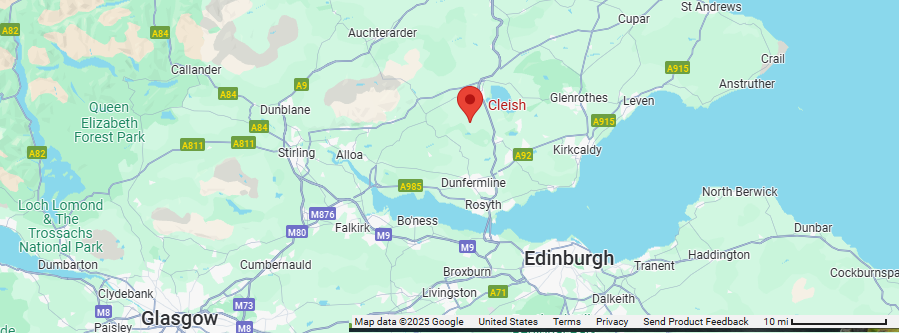
This was great because I was able to add my work to an existing page that (now) adds several generations to the Wavetops for my Livingston ancestors. I also learned that James Livingston’s origins were in Cleish, Kinross-shire, Scotland, which I did not know before!
Cleish, Kinross – on Google Maps
The Scotland Project
Coincidentally (if you believe in coincidence), I was looking at this family after I decided to respond to one of the notifications that WikiTree promotes in their weekly email digest. As of this week, I have signed up to take the Tartan Trail – part of WikiTree’s Scotland Project.
The Scotland Project – on WikiTree
I hope to learn some hitherto unknown magic that will help me find the origins of James Livingston’s son-in-law, Thomas Henderson Murray. But even if I don’t, I’ve already taken a few cool tips from the training materials and started using them. My favorite is a template for sharing links to Ancestry sources.
If you’re familiar enough with the code used on a wiki page, anyone can use the Template:Ancestry Sharing to create a link that will let people see the record you cited in your profile. Click through to James Livingston’s page and go down to the “Sources” section, and you can see all of the Quaker records and Census pages I added.
(Now for the real challenge: will I be able to go back and convert all of the links I made manually, or will somebody beat me to it?)
The Nixon Connection
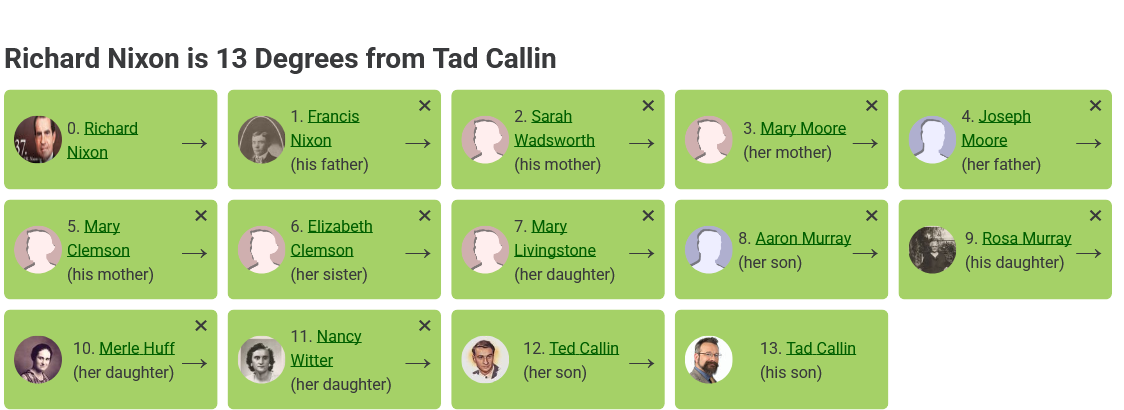
Another wrinkle in researching this family that I had somehow forgotten about: The Nixon Connection. In 2015, I wrote up what I knew about my family’s connection to U.S. President Richard Nixon and realized that I had a lot of work to do before I could claim that I had verified those connections.
I figured at the time that I would get around to it “someday”—and just noticed that by finding the evidence I needed to connect Mary Magdalene (Livingston) Murray to her parents’ profiles, I appear to have done it!
My connection to my cousin Dick – 5th cousins, 2x removed
And now for the hardest part of the job—walking away and doing some gardening!
If you enjoy these Mightier Acorns, consider becoming a free or paid subscriber.
The most important question in any research is: “How do you know that?” If you’re lucky, the answer prompts you to say, “Huh, that’s interesting…” and you learn something new.
If you saw last week’s post about William and Oscar Martin or the original “Family Reunion: Martin” post from last year, you already know we’re looking for what we can learn about William’s father, Charles Robert Martin (1847-1916). We know a lot, but so far, his parents have eluded us.
Let’s begin at the end, with Charles Martin’s obituary – from the 23 January 1916 edition of The Daily Nonpareil, Council Bluffs, Iowa. Page 7:
Charles Robert Martin, aged 65 years. died at 9:30 Friday evening at St. Bernard’s hospital, where he was taken three years ago for treatment for mental trouble. He is survived by his wife, residing on East Pierce street, and two sons. W. F. Martin, 2204 Second avenue, and and O. J. Martin of Superior. Wis.
Mr. Martin was born in Virginia and had been a resident of this city for forty years. He had been retired from active years. for a number of years. He was a member of the old volunteer fire department of early days and was prominent in other local enterprises. He was a member of Hazel camp No. 171, Modern Woodmen of America.
The body was removed to Cutler’s undertaking rooms and the funeral will he held in their chapel Monday morning at 10:30 o’clock. The service will be private. Interment will be made at Walnut Hill cemetery.
In addition to the easily verified facts here, we have some vague statements that will be harder to pin down. (Like not naming “his wife”—about whom we will have a lot to say at a later date.) Despite its flaws, this obituary helps us establish who we are looking for, and the evidence supporting its facts will build on that foundation.
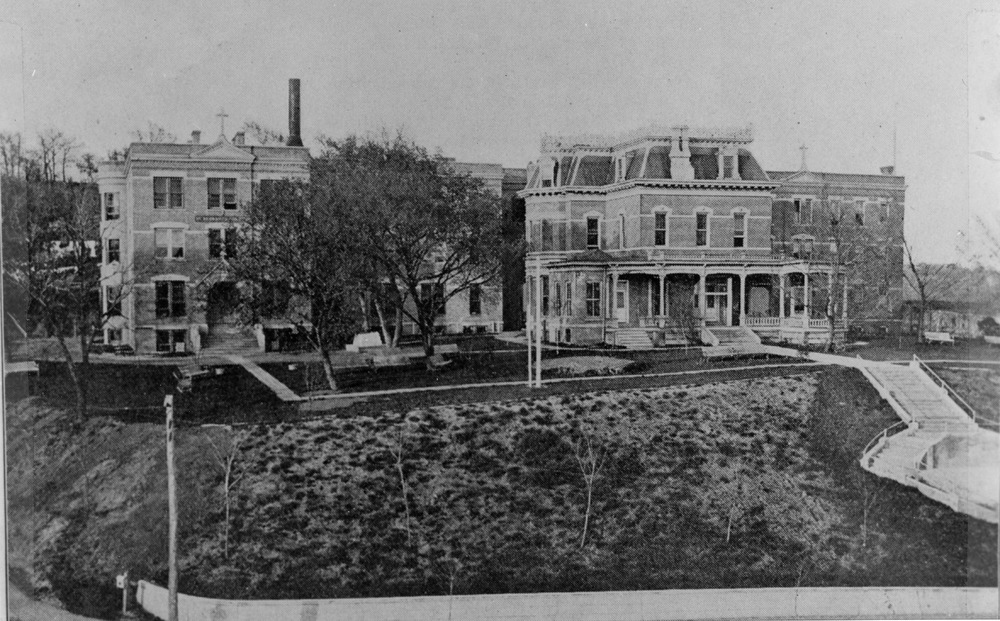
St. Bernard’s Hospital, 1890 (from Council Bluffs Public Library archives)
Building a Life
Until his commitment to St. Bernard’s in 1913, the City Directories in Council Bluffs show Charles residing at 121 East Broadway, where he ran a “confectioners”—more likely referring to a corner store that sold candy—from 1907 to 1913. The 1910 Census also gives his occupation as “Laborer/Packing house,” suggesting that he was engaged in more than one business at a time.
Before 1907, Charles worked as a watchman for the Union Pacific Railroad and resided at 918 E. Pierce (still in Council Bluffs) with city directories showing him at that address from 1889 through 1900. The Iowa state census shows the family at 417 E. Broadway in 1885, and the U.S. Census for 1880 places them in Atlantic, Cass County, Iowa.
All of these records show details that are consistent with the life of the family we’re looking for: the children (William and Oscar) and wife (Elizabeth) are recorded, and the addresses match over the years. The records that give Charles’s middle initial, “R,” are consistent—this is useful for distinguishing him from other men named Charles Martin living in Council Bluffs over the years.
Now we hit the limits of what Ancestry has to tell us. There is an 1870 Census record showing Charles and Lizzie living in Merrick County, Nebraska (two months before Oscar’s birth in Nebraska), and marriage records for Charles Martin and Elizabeth Caughey in Henry County, Iowa.
We are left with precious few clues to Charles’s origins after all of that. His grave marker gives a birth date of 2 Apr 1847, and the census records that give a birth date are consistent with that. Most sources say he was born in Virginia; one says West Virginia, which did not exist before 1863, so I’m inclined to think his birthplace was in the western counties that became West Virginia.
But, if we go over to FamilySearch.org, we find one tiny clue: his Iowa death record provides a father’s name for Charles: Robert Martin.1
Huh. That’s interesting…
What Do We Know About Robert?
Charles’s census records that ask for this information give Robert’s place of birth as “Virginia”—the 1880 and 1910 censuses. It is reasonable to guess that Robert resided in Virginia in 1847, and the best place to look for evidence is in the 1850 Census; we should find a Robert Martin (born in VA) with a 3-year-old son named Charles.
That isn’t a lot to go on, and the searches I’ve been able to try haven’t turned up anything useful. It is possible that Robert died when Charles was a baby, or that the informant on Charles’s death record was wrong about his name.
Whatever the case may be, we appear to be at the end of our search for the present. Unless we can uncover more clues, Charles Robert Martin is our “Wavetop” for this family.
Once upon a time, several families founded a town in Ohio.
Benjamin Montgomery (1766-1841) brought his wife, Nancy, and their six children from Virginia to settle in Weller Township, Richland County, Ohio, where they laid out a town in 1816. Benjamin called the town “Olivesburg” after his daughter, Olive, who was then 21 years old. Surviving accounts say that Olive had received a polished education in Virginia, and she naturally fell into the task of teaching the children of new settlers. In 1833, Benjamin and Nancy filed a deed to give land to the village of Olivesburg for a schoolhouse, cemetery, and a lot for a church.
Members of the Montgomery family were industrious, and Benjamin’s sons were attached to several local businesses. According to A. A. Graham’s History of Richland County (pg. 623), Abel (his eldest son, born in 1792) kept the blacksmith shop, Jonathan (his youngest, born 1801), and Benjamin ran the tavern. Abel’s name also appears on the list of founding members of the Hopewell Presbyterian Church, along with the name of Mary Callin.
The Callin family farm lay a few miles west of Olivesburg. Two brothers, Mary’s husband, James, and John Callin had come from western Pennsylvania in 1810 and 1816, respectively. The details are lost to history, but according to the 1911 Callin Family History, James Callin “was killed in an altercation with a man named Fowler who struck him over the head with a rifle” in 1820.1 While this left Mary widowed and caring for their six children, she was not alone. Her brother-in-law and his wife, Elizabeth, had nine children, and between the two families, eight of those children were teenagers capable of maintaining a farm.
During the decade after James Callin was killed, his children came of age and married. Three of James and Mary’s four oldest children married children of Benjamin and Nancy Montgomery:
Elizabeth Callin (1798–1834) m. Caleb Montgomery (1799-1872) on 13 Aug 1822
Thomas Callin (1801–1843) m. Nancy (Ann) Burgett (1804–1871) on 20 Nov 1823
Hugh Callin (b. 1803) m. Lucinda Montgomery (b. 1810) about 1825
Sarah Callin (1807–1830) m. Jonathan Montgomery (1801-1898) in 1824
All of them had children with interesting stories, but for today, we’re just going to trace the trajectory of one of these families.
Elizabeth and Caleb Montgomery
Between their wedding in 1822 and her death in 1834, Elizabeth gave Caleb five children. Her sister, Sarah, who had married Caleb’s brother, Jonathan, had also died young in 1830, leaving three young daughters. There is no evidence to say why they died, though disease is the most likely culprit. I suspect they may have had tuberculosis. Their uncle, John Callin, died of the disease in 1835, and since they grew up on the same farm, they could have been exposed.
Caleb soon remarried and he and his second wife, Sarah Mercer (1812-1877) had a son, Levi (1835), and a daughter, Elizabeth (1836) in Ohio before Caleb decided to move his family to Fulton County, Indiana, in 1838. Once settled in their new home in Newcastle Township, they had eight more children between 1838 and 1851.
The first child of Elizabeth and Caleb was Mary Montgomery, born in 1823. She married James Ferrell in Rochester, Fulton County, Indiana, on 23 Mar 1843. He may have been one of the Ferrell family from Milton Township, but we know nothing about him outside of his marriage to Mary. They had a daughter, Sarah Elizabeth Ferrell (1846-1916) in January 1846. We know that Mary died in April 1846 and that little Sarah was taken in and raised by Mary’s sister, but we do not know what happened to James Ferrell.
Mary’s sister was named Sarah Montgomery. She was born in Milton Township on 27 December 1824 and married Henry Davidson (1818–1894) in Fulton County on 22 Apr 1841. They would take their family—including their adopted niece, Sarah Ferrell—on the Oregon Trail in 1853, but we will have to talk about that adventure another time.
Theodore Montgomery was the third child and oldest of three sons born to Elizabeth and Caleb in 1826. At 20, he enlisted in Indiana’s First Regiment and served one year in the Mexican War of 1847. He married Margaret Wilson (1831-1916) in 1849, and they embarked on a two-year adventure to try their hand at gold mining in California. Unlike most of those who made the trip, Theodore returned to Rochester with $5,000 (about $203,635.26 today) and bought a farm. He and Margaret raised four sons and a daughter there.
The two youngest sons were Porter and Callin “Cal” Montgomery. Porter Montgomerywas born about 1828, and is said to have died “at Vicksburg, Miss.”—though there aren’t any records that tell us when he died or whether he was killed in the Civil War. Callin Montgomery was born in 1830, so he would have been about eight years old when his father moved the family to Indiana.
Their father, Caleb, died in Newcastle Township on 23 Feb 1872.
Callin Montgomery: the Old Prospector
We do not know much about Cal’s early life. Cal was not named in the secondary sources as a member of his brother’s group when Theodore traveled to the gold country around 1849, but Cal would have been 20 at the time. Since there is no 20-year-old Callin Montgomery listed in Rochester on the 1850 Census, it seems likely that he either accompanied his brother’s party or set out on his own soon after.
The earliest record we have for Cal is a “C Montgomery” listed in Coloma, El Dorado County, California, on the 1860 Census. If he did follow the Gold Rush with his brother, he may not have been successful—or he may have decided that success did not include buying an Indiana farm.
Military records suggest that Cal enlisted in the Union Army, serving in Company F of the 4th Regiment, California Infantry on 16 October 1861. He was stationed at Benicia Barracks in 1863, and he mustered out on 26 August 1864 at Drum Barracks.
After the war, he returned to Coloma, appearing in the 1870 Census as a saloon keeper with a wife, Laura S, age 18. 1870 is the only time we see Cal married. Laura, who was recorded as being “3/4 white” and born in California, does not appear in any other records. By 1880, Cal was listed as single again, living in Gold Hill, El Dorado County, and working as a placer miner.
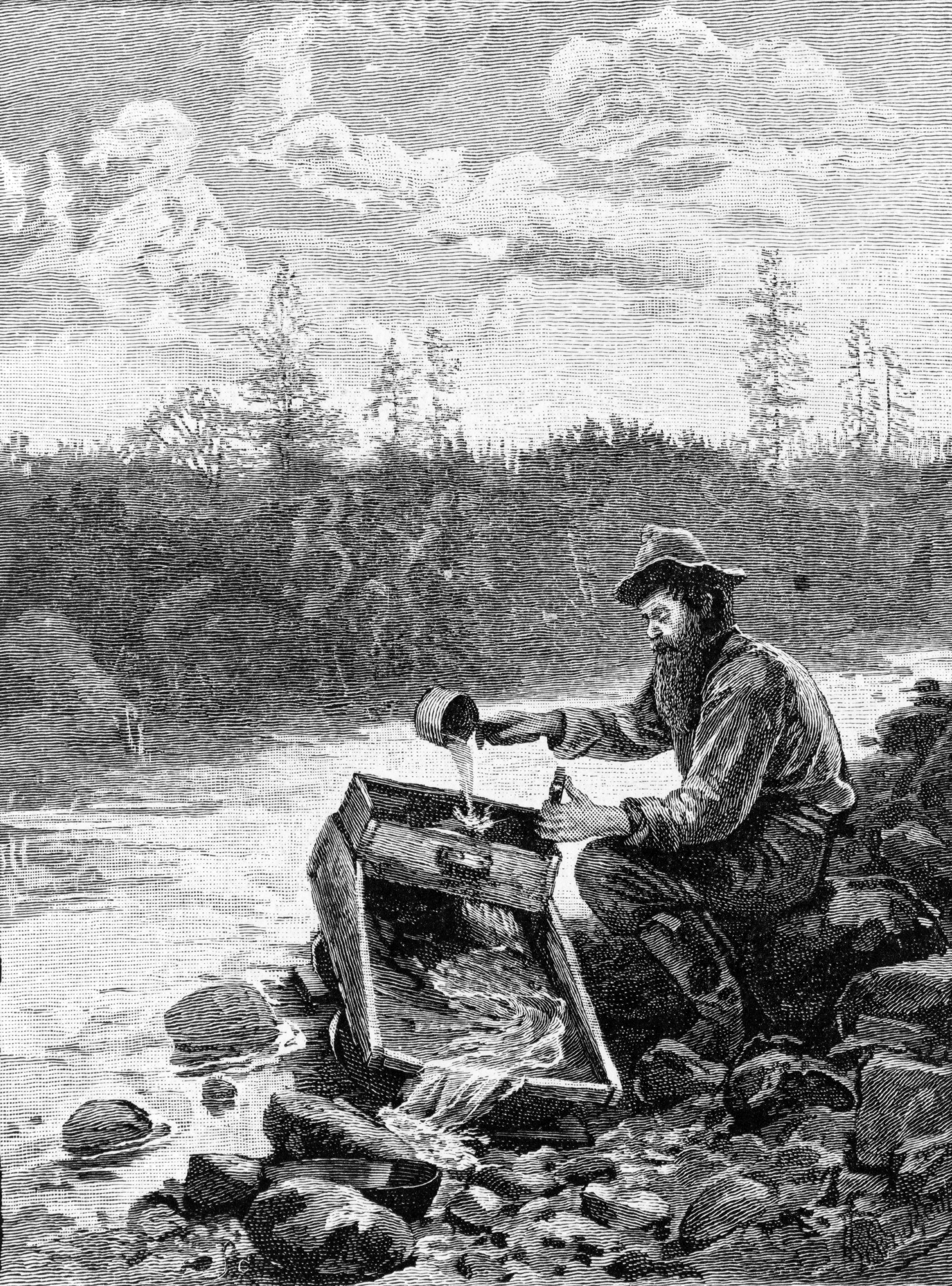
19th century placer miner (Wikipedia)
Numerous voter registration records and occasional mentions in The Record-Union of Sacramento over the years establish Cal as the kind of colorful side character you might see in an old western. He was the ol’ prospector who passed word of a generous stranger in Coloma to a Wells Fargo official in Placerville, thus helping authorities solve a stagecoach robbery. He was the grubby old timer who dealt with the remains of a Chinese man who was suffering from leprosy and committed suicide, leaving a corpse no one wanted to go near hanging in a remote cabin. (Fair warning: that story was written to sell papers, not to pay respects to the dead.)
Cal lived in El Dorado county until he was in his eighties, appearing on the 1910 census at a Pilot Hill address in Greenwood. The California, Death Index, 1905-1939 records his death on 3 October 1912 in Napa County, California. When he died, someone had him buried in Veterans Memorial Grove Cemetery in Yountville, Napa County.
The 1820 U.S. Census shows “Sutton Fowler” listed just below “James Calan”—also below Fowler, there are Thomas and Boston Burget, candidates for Nancy Burgett’s family.
Two brothers, both railroad men, led different lives
In case you don’t recall from last year’s “Family Reunions” series, William F. Martin was the paternal grandfather of my wife’s maternal grandmother – he was one of Her Sixteen:
That post did a quick overview of William and Hattie’s only son, Howard W. Martin, a successful Omaha businessman and early radio personality.
William Findley Martin was born on 29 March 1874, in Iowa — most likely in Atlantic in Cass County. His parents were Charles R Martin (1847–1916) and Elizabeth L Caughey (1844–1926), and he had one older brother, Oscar Josiah Martin (1870-1934). When William was about 11 years old, the family moved to Council Bluffs, Iowa, which is just across the state line from Omaha, Nebraska.
William was a weighmaster and yard clerk for the railroad. He remained in Council Bluffs, likely working until he died in 1943. His brother, Oscar, was also a railroad clerk, but his career took him from Iowa to Colorado, Minnesota, and later to Wisconsin.
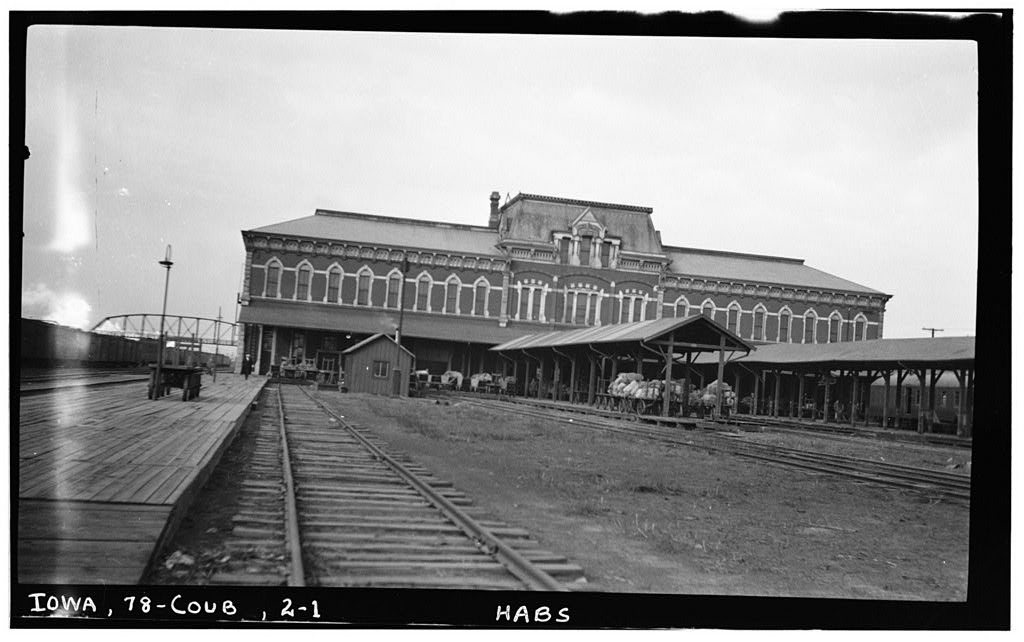
Library of Congress: Union Pacific Station (Transfer Depot & Hotel), Twenty-first Street, Council Bluffs, Pottawattamie County, IA (photo compiled in 1933)
Oscar Martin
Oscar married his first wife, Jessie L. Walters (1874-1904), on 4 September 1895 in Council Bluffs. Their son, Wayne Walters Martin (1896-1916), was born on 16 Nov 1896 in Iowa, and by 1900, Oscar had moved his young family to Denver, Colorado. Sadly, Jessie died there in 1904 and was buried in Fairmount Cemetery.
Oscar’s second marriage was to Elizabeth Sieley (1883-1974), on 22 July 1905 in Omaha. By 1910, Oscar was working as a railway clerk in Glenwood, Minnesota, and he and Elizabeth had another son and daughter there: Charles William Martin (1909-1966) and Helen Elizabeth Martin (b. 1913).
Oscar decided to move the family again around 1915. When his father, Charles Robert Martin, died in January 1916, the obituary named his surviving sons as “W.F. Martin…and O.J. Martin of Superior, Wis.” Oscar and William’s widowed mother moved to Superior to live with Oscar’s family, and she appeared on the census there in 1920. Tragedy struck Oscar’s family again in 1916 when 19-year-old Wayne drowned in Lake Minnewaska in August 1916.1 It isn’t clear whether Wayne had moved to Superior with his family or stayed behind in Glenwood, but he is buried in Glenwood City Cemetery in Minnesota.
Willaim Martin
William and Hattie raised Howard in their Council Bluffs home at 117 East Broadway and saw their son get married in 1919. A short four years later, Hattie died at Mercy Hospital from typhoid fever on 17 January 1923. William remained a widower after that and never remarried. According to census records, he took lodging in the home of his aunt Martha at 1002 E. Pierce, where he lived in 1930 and 1940.
Oscar and Elizabeth had one more child, Dorothy Lorraine Martin (1924-2014), who was born in Superior. In 1926, Oscar’s mother died at his home in Superior and was buried in Council Bluffs. Dorothy was ten years old when Oscar died, and soon after that, Elizabeth moved to Council Bluffs, too. Oscar, however, was buried in Glenwood, Minnesota.2 Elizabeth lived a long life, marrying at least twice more, and died as “Elizabeth Martin Ponder” in Omaha on 1 October 1974 at the age of 92.
As for William, he lived quietly on his own until he died from gastroenteritis on 20 September 1943 in Council Bluffs. He was buried in Walnut Hill Cemetery with his wife, Hattie.
Next time: Finding Charles R. Martin
Next up, I need to examine the evidence I have to see if I can break through the next generation and find more of the Martin family further back in time. Several online trees claim to have Charles Robert Martin’s parentage and birth information, but with no available evidence to support the claims. What evidence can I find?
On the precipice of a nine generation breakthrough
If you’ve been following along the past few weeks, you know that I’ve been climbing the Hart branch of my family tree. Last week, I showed the documentary evidence connecting Alexander C Hart (1817-1871) to his father, Martin:
Martin Hart was the second son of Stephen Hart and Eunice Seymour. He was born in Torrington, Litchfield County, Connecticut, on 30 Oct 1792. Not counting twin boys who died in infancy in 1796, Martin had six siblings, including his next youngest brother, Seymour.
The Hart family moved to Stillwater, New York, and from there to a newly settled town called Pinckney in Lewis County, New York, around 1805. Stephen Hart figured in the early history of Pinckney. The first town meeting was held at his house, and he served as town supervisor in 1815. He served additional terms in 1817, 1821, 1827-28, and 1830-31.1
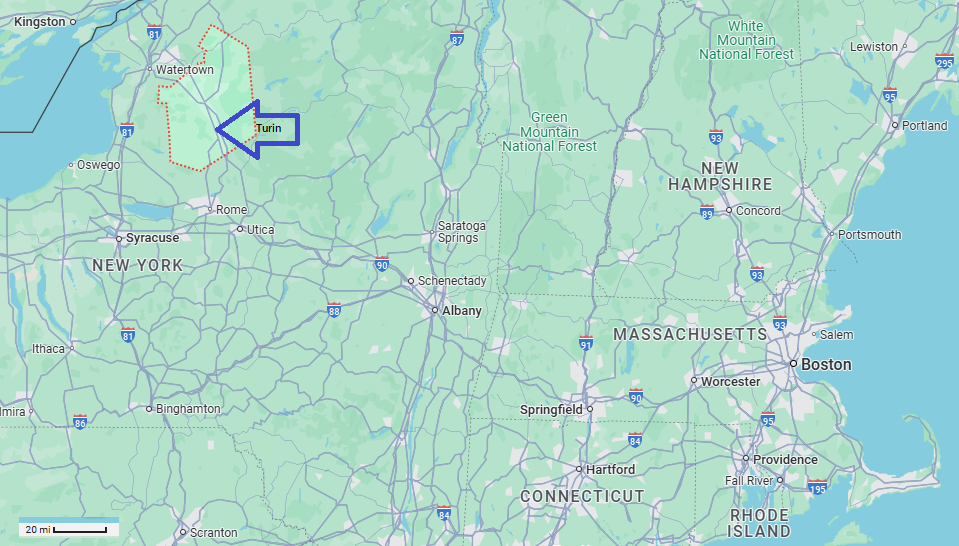
Location of Turin, Lewis County, NY
Martin was involved in business and the local community, too. He was a clerk for the Town of Leyden (about 25 miles southeast of Pinckney) in the 1818-19 term and was named a Lewis County Clerk in 1822. When the Town of West Turin was formed from Turin on 25 Mar 1830, Martin was the first of the new town’s Supervisors.
Martin’s wife was Sarah (Sally) Collins (1795-1873), the daughter of Jonathan Collins, a notable early settler of Lewis County. According to Hough’s History of Lewis County:2
Jonathan Collins was a descendant of Lewis Collins, who emigrated to America in 1630, and was born at Wallingford, Ct., May 3, 1755. He enlisted December 10, 1775, in Captain John Crouch’s company. Colonel Wadsworth’s regiment, and went to Dorchester, where he helped to build the fort there. He was discharged in 1776, went to New York, in Captain John Hough’s company. Colonel Baldwin’s regiment, and enlisted again to go on the lines at Horse Neck, April 1, 1778. He married Sarah Crouch [sic: should be “Couch”], January 10, 1775, and emigrated from Meriden to this town [Turin] in 1797. …He was early selected as a magistrate and Judge, and from 1809 to 1815 he served as the First Judge of the county court. In 1820 he was chosen a Presidential Elector.
The U.S. Census shows the family of Martin Hart in Turin and West Turin in 1820 and 1830. Young Alexander, born in 1817, appears in the first as “Male, Under 10;” and both he and his sister, Sarah Elizabeth, born in 1822, appear in the 1830. That was the year that Martin Hart partnered with Alfred Munson in his manufacturing firm in Utica.
The Harts of Utica
By 1840, the Hart family was living in Utica. In addition to Alexander and Sarah, the household included two more girls. One is listed in the same age range as Sarah (15 thru 19) which would put her birthdate between 1821 and 1825; the other was age 5 thru 9 (thus, born between 1831 and 1835). The most likely explanation is that these two girls were domestic servants.3 The Harts were well-off, and in all of the census records that list the relationships of household members, they almost always have a teenage domestic servant —never the same person in two successive census years. (In 1850, the family employed Augusta J Waters, age 16, born in Alabama, and Cathrine Hinkins, 20, born in Ireland.)
Sarah Elizabeth Hart married John P Bush in 1843, but in 1850, she lived with her parents again. In 1853, she married Andrew A Chapin (1829-1854), and after his death, she and her five-year-old son, Alexander Hart Chapin (1855-1825), moved in with her parents again. Young Alexander was born on 27 May 1855, 9 months 26 days after his father’s death on 1 Nov 1854. There must be a story there, though I’m sure it is a sad one.
As we saw last week, the 1870 Census shows Sarah’s brother, Alexander, living in his parent’s household, along with Sarah and his namesake nephew. Uncle Alexander died on 25 Jul 1871. A FindAGrave contributor gives his cause of death as “disease of the brain,” but in 1871 that phrase could have meant any number of unrelated mental or physical illnesses.
Riding the Wavetop
As I hinted in my subtitle, establishing the connection between Alexander and Martin means that I have connected my research to nearly nine additional generations documented in the Genealogical and family history of northern New York, compiled by William Richard Cutter, A.M. and published in 1910.
My job now is to confirm the information documented there as best I can and make sure the profiles in WikiTree that appear to come from this source have been adequately cited and fleshed out. If you don’t want to wait for me to work my way through all of that, you should be able to see the Ancestry digitization here: (VI) Stephen, son of Captain Nathaniel Hart… begins at the bottom of the page.
Hough, Franklin Benjamin, (1822-1885), History of Lewis County, New York; with…biographical sketches of some of its prominent men and pioneers; page 497-499.
When our identity is taboo, it is too easy to be erased from history
Note: much of this post is adapted from “You Just Can’t Matcham,” posted on my old Mightier Acorns blog on November 11, 2016. If you are interested in this family, I included a lot more information about George and Emma’s children in that original post.
George Delorain Matcham (1844–1923) was born in Pittsfield, Lorain County, Ohio, to Edward and Abigail (Tinker) Matcham, both of whom had come to Ohio from Massachusetts. Edward was born in Pittsfield, Berkshire County, Massachusetts, in 1812, and he arrived in what would be called Pittsfield, Ohio, in 1830. He and Abigail were school teachers in neighboring townships.
According to a 1951 article in Elyria’s “The Chronicle-Telegram” on the history of schools in Lorain County:
“Pittsfield’s first school was taught by Miss Minerva Loveland in a small cabin erected for educational purposes. In 1831 or 1832 Edward Matcham began his period of teaching which lasted 10 years. Miss Abagail Tinker was the first teacher in Rochester Township. She conducted her school in a log cabin during the Winter of 1833-1834.”
Edward and Abigail were married on 8 April 1835. They had a daughter, Mary, in 1841; their only son, George, followed in 1844. George was never a very healthy boy, and he had to drop out of his studies at the college at Oberlin because of his health problems. Still, he was a bright young man, and after he managed to complete a course at the business school at Oberlin, he took out patents on improvements he made in farm equipment, which helped establish him as a businessman.
In 1871, George married his first wife, Marion Worcester (1840–1906). George served on the school board for a time and kept up his patents for income. The couple continued to live in Pittsfield until 1895 when they moved to Oberlin. Soon after coming to Oberlin Mr. Matcham invested in land at Linwood Park on Lake Erie and helped to develop the resort. He built several cottages there and had spent his summers there for several years. Marion helped run the 19-room inn they built there until she died in 1906.
George and Emma; 1907
Emma Beatrice Callin (1885–1951) married George the following year. Emma was the fourth child of John H and Amanda (Walker) Callin. She grew up in a house with a Civil War hero father, a pioneer mother, five brothers, and her grandmother, who died in 1903. She married when she was 22 years old and George was 63 – just two years younger than Emma’s father. I suspect the two men were at least friends if not business partners.
In the decade and a half they were married, George and Emma had five children. They continued to live off of their inn, and Emma hosted social life in the resort on Lake Erie. Sadly, George died in 1923, when their youngest daughter was only four years old. Emma’s mother, Amanda, had been living with the family for several years by then and probably helped with the children.
Five years after George died, Emma married Gustav Heimsath (1888–1963) on 10 December 1928. Gus was an engineer whose family hailed from Germantown, Pennsylvania, near Philadelphia. After Amanda died in 1933, and the children began to leave home, Gus and Emma moved to the Cleveland area, where Emma died in 1951.
Ruth Ellen Matcham Heimsath (1919–2009) was the youngest of George and Emma’s five children. She was so small when her father died, that she only really knew her step-father, Gus Heimsath. She grew up and married Richard R. “Zimmy” Zimmerman (1924–2009) in February 1946, and they had two children, both of whom are still living. Ruth began using her stepfather’s surname and was known as Ruth Heimsath until she died in 2009.
The Truth About Zimmy
Richard Roland Zimmerman was the son of Roland H Zimmerman (1899–1980) and Helen J Smith (1899–1980), born on 11 Feb 1924 in Salem, Columbiana County, Ohio. He grew up in Perry, Columbiana County, and enlisted in the U.S. Navy on 12 Jan 1942. He served aboard submarines during 1942 and early 1943, when he was discharged on 3 Mar 1943 under the Navy’s policy against homosexuality. He returned to Salem, and after a run-in with the law, he was able to find work.
Richard married Ruth Ellen Heimsath in Feb 1946 in Salem, Columbiana County, Ohio. Ruth and Richard had a son and a daughter together, but soon after Ruth’s mother died, Richard left her and she found she was pregnant with a third baby. She gave her two children to the family across the street to raise because she could not work and care for them at the same time. When her third child was born, Ruth put her up for adoption. (I don’t have records for these events; a surviving relative gave me this information.)
Ruth and Richard, abt 1946
After his divorce from Ruth in the 1950s, Richard does not appear in available records until 1968. He married Nancye Bernice (Easely) Spicher (1940–2011) on 18 Jul 1969 in Clark County, Nevada, and they lived in Downey, Los Angeles County, California. They also had a daughter, Tracye G. (Zimmerman) Smith (1968-2018), whom they raised in Salem, Columbiana County, Ohio. Richard and Nancye divorced in 1997.
Things We Know
Records can tell us a lot while also leaving a lot out. I’ve got a pretty good timeline of Richard Zimmerman’s World War II service thanks to the U.S., World War II Navy Muster Rolls, 1938-1949 records on Ancestry.
He enlisted in the U.S. Navy on 12 Jan 1942 at Cleveland, Ohio. His service number (283-68-76) helped distinguish his records from those of other men with similar names. His rating was “A.S.” for Aviation Support Equipment Technician.
After he finished training, Richard traveled aboard the USS President Adams (AP-38) in Feb 1942 from Tampa, Florida, to the Panama Canal Zone. He transferred on 19 Feb to the Submarine Base at Coco Solo. A month later, on 19 Mar 1942, he boarded the USS Bonita (SS-165). From 5 Apr 1942, he was temporarily transferred to USS Antaeus (AS-21), returning to the Bonita on24 May 1942, having advanced in rating to F3c (Fireman 3rd class).
On 28 Nov 1942, F3c Zimmerman was transferred to the submarine base at New London, Connecticut. He shipped out on 1 Dec 1942 aboard the USS R-9for a brief trip down to the U.S. Naval Station at Key West, Florida, then transferred to the USS R-14 on 16 Dec 1942.
Finally, on 3 Mar 1943, his record shows that he was discharged “from U.S. Navy with undesirable disch. in accordance with SecNav. conf. ltr. 83443 dated 1/1/43.”1
If you read SecNav letter 83443, it appears evident that Richard was investigated by his commander, and confronted with a choice. The language “with undesirable discharge” suggests that as an enlisted man, Richard was asked to accept the discharge with no further charges being pressed.
Things We Don’t Know
Given the gaps in Richard’s biography and the sensitivities of discussing homosexuality in the 1940s, we could read a lot into his story. That incident leading to his discharge may have been an isolated event, or it could indicate that he led a life in which he hid part of himself from those closest to him. I imagine he was embarrassed and angry—angry enough to attempt a crime.
One night in January 1944, while working as a cab driver, Richard broke into the Ohio Restaurant on E. State St. in Salem. Police making their rounds at 2 a.m. startled him, and he ran through the glass front door, cutting his wrist. He got away, but when he found his way back to where he had left his car, it was gone. He was captured when he phoned the police to report it stolen. They had taken the car to the station after Richard fled the scene of the burglary. To add insult to injury, Richard had initially only found $30 and two cartons of cigarettes, which he had stashed in the car before the police arrived. He had gone back into the restaurant to look for more when the patrol showed up.
This incident seems to have discouraged future malfeasance, at least while he was married to Ruth. Considering the abruptness of his divorce from Ruth, and the fact that we don’t know where he was for nearly twenty years afterward leaves a lot of open questions.2 That he married again and had another child tells us something about his journey—but what it tells us depends on other unknowns.
From this point, all we can do is keep an open mind and respect who Richard was—whether we ever find out the facts or not. What we cannot do is erase him, or those like him, from our history.
Perhaps one day—hopefully sooner than later—it will be safe for everyone to be who they truly are. Until then, all we can do is use the strength that empathy gives us to take care of each other.
According to his obituary, “He had resided in California for 23 years before returning to Salem. Before his retirement he had worked as a tool and die maker at Warren Molded Plastics for eight years and had previously worked at Paxson Machine.”
Another gap in 1850 and another tenuous connection
Last time I talked about this family, I told you the life story of Seymour C Hart (1851-1934), my 3rd-great grandfather.
Seymour was the youngest of four children born to Alexander C Hart (1817–1871) and Frances Pond (1822–1866).1 We know a bit about the family from records dating as far back as 1855. The little details in those records give us enough evidence to make the connection between Alexander and his parents – but only barely.
Bedeviling Details
Seymour was born in 1851, so we wouldn’t have seen him in 1850, but for some unknown reason, the rest of Alexander and Frances’s family was also missing from the U.S. Census that year. Fortunately, the New York State Census takes us back to 1855:
New York, U.S., State Census, 1855: Alexander C Hart and family
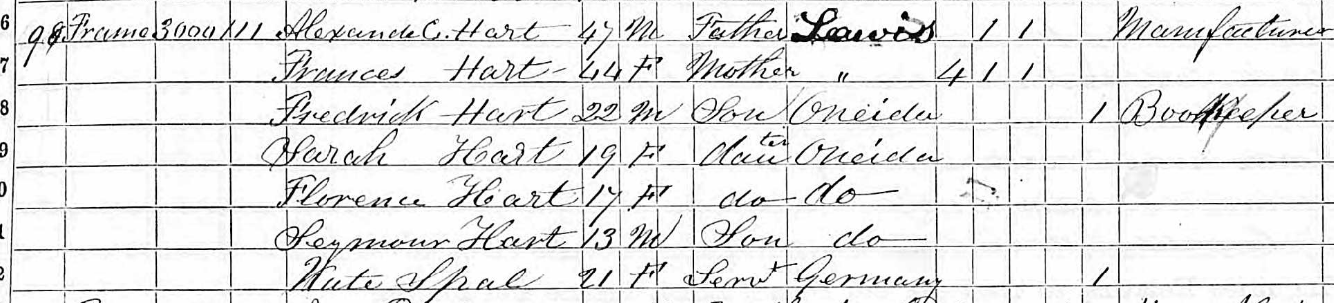
Key clues we’ll need later: this census records the county where each person was born. In Alexander’s case, that would be Lewis County; Frances and the children list Oneida. Also, notice Alexander’s occupation is given as “Burr Stone Manufacturer.”
We get similar information in 1865:
New York, U.S., State Census, 1865: Alexander C Hart and family
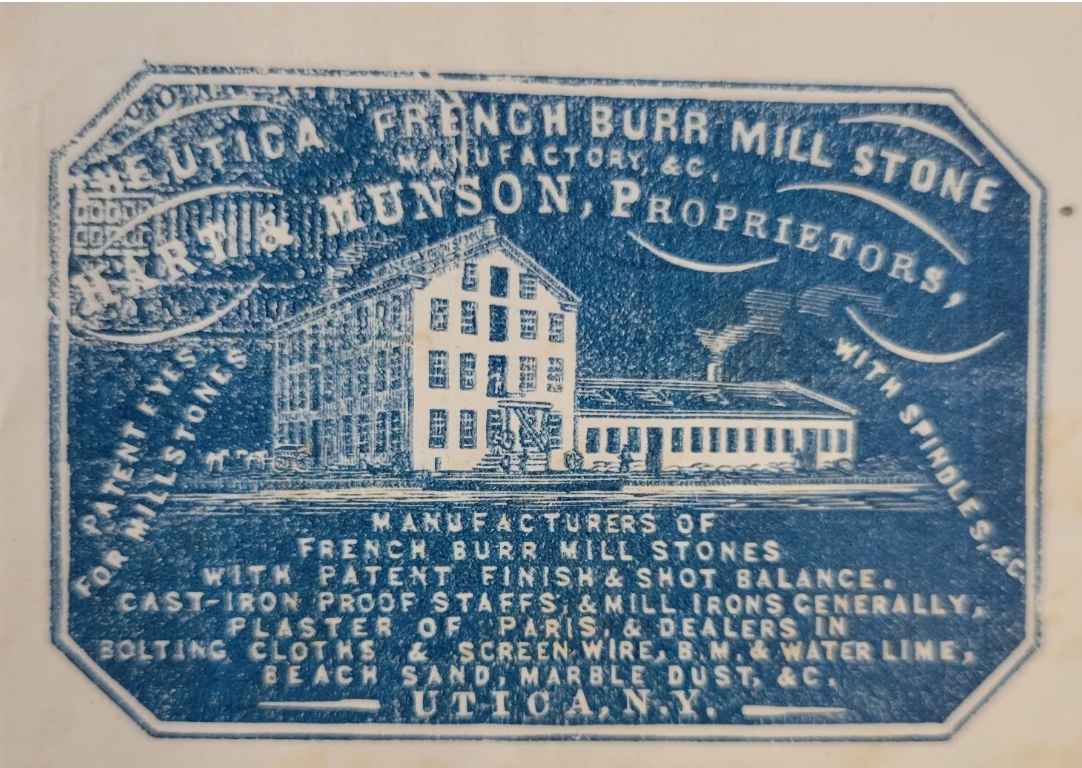
In addition to the state census, there are some Utica City Directories that tell us Alexander is associated with “Hart & Munson” – which manufactured burr stones and milling equipment.
Armed with that knowledge, let’s look at what we can learn from the History of Oneida County, New York (emphases mine):2
“About 1823 Alfred Munson commenced the manufacturing of lubricators, Martin Hart became associated with him in 1830, and the firm name was Munson & Hart. This partnership continued for several years, when the firm dissolved, and Alexander B. Hart, a son of Martin, and Edmund Munson, a nephew of Alfred, became associated under the name of Hart & Munson. This firm did an extensive business, but it was dissolved in 1868, and a new one formed under the title of Munson Brothers.”
There is a similar passage in another source, the History of Oneida County, New York, 1667-1878 (again, emphases mine):3
“The manufacture of buhr-millstones was commenced by Alfred Munson about 1823-25, on the corner of Hotel and Liberty Streets. … Alfred Munson continued the business in his own name until about 1830, when Martin Hart became associated with him, under the firm-name of Munson & Hart. This continued for a number of years, when the firm dissolved, and Mr. Alexander B. Hart (a son of Martin) and Mr. Edmund Munson (a brother of Alfred) became associated under the firm-name of Hart & Munson, and carried on the business until about 1868, when the firm dissolved…”
Alone, I wouldn’t accept these secondary sources as proof that Martin is Alexander’s father, but when you factor in the tiny corroborating details we see in Alexander’s other records, the theory becomes more compelling.
Still, to make a more solid claim, I need at least one more piece of evidence to tie Alexander to Martin. It’s too bad there are no records earlier than 1855 naming Alexander…
One More Record
Frances died in 1866, and Alexander’s children were grown and independent. But Alexander survived until 1871, so there should be one more U.S. Census record that includes him. Sure enough:
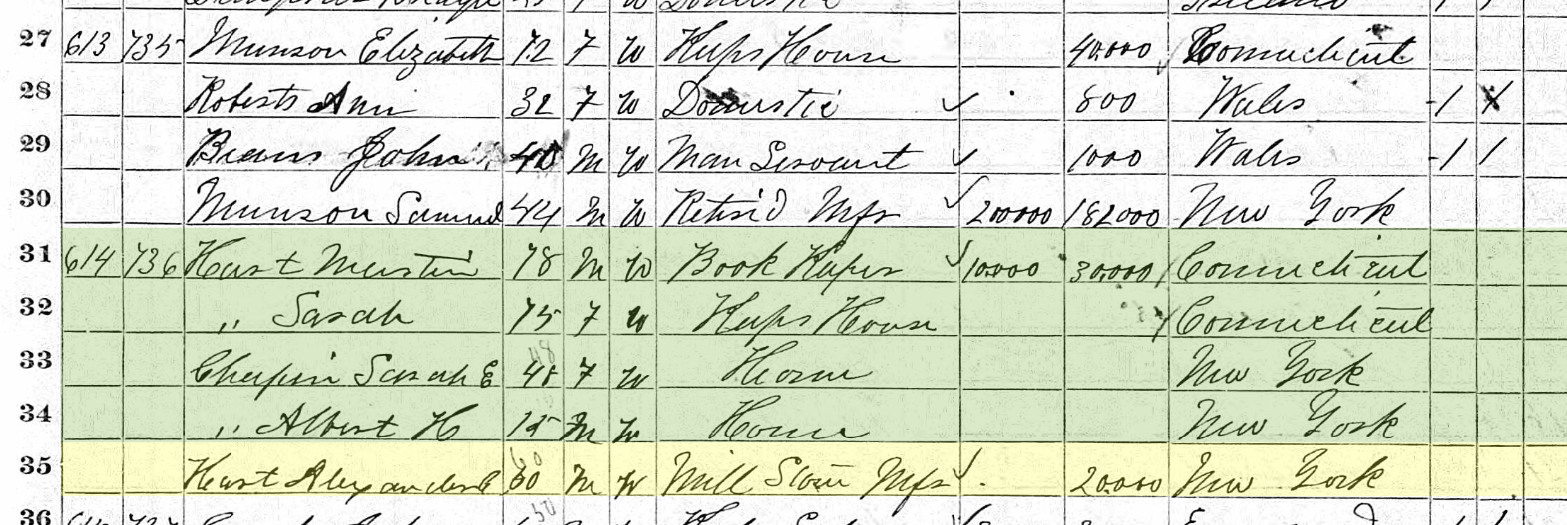
1870 United States Federal Census: Munson and Hart families in Utica
Here we see not only that Alexander Hart, Mill Stone Mfs., was living in the home of Martin and Sarah Hart, but the family immediately above them in the enumeration were the Munsons—notably Edmund, “Retir’d Mfs.” (Remember, the books said the business was dissolved in 1868.)
There’s no substitute for vital records, but since I don’t have Alexander’s birth or marriage records, this is about as conclusive as I’m likely to get. Perhaps when I dig more into Martin’s records, I may learn more.






 Mightier Acorns