
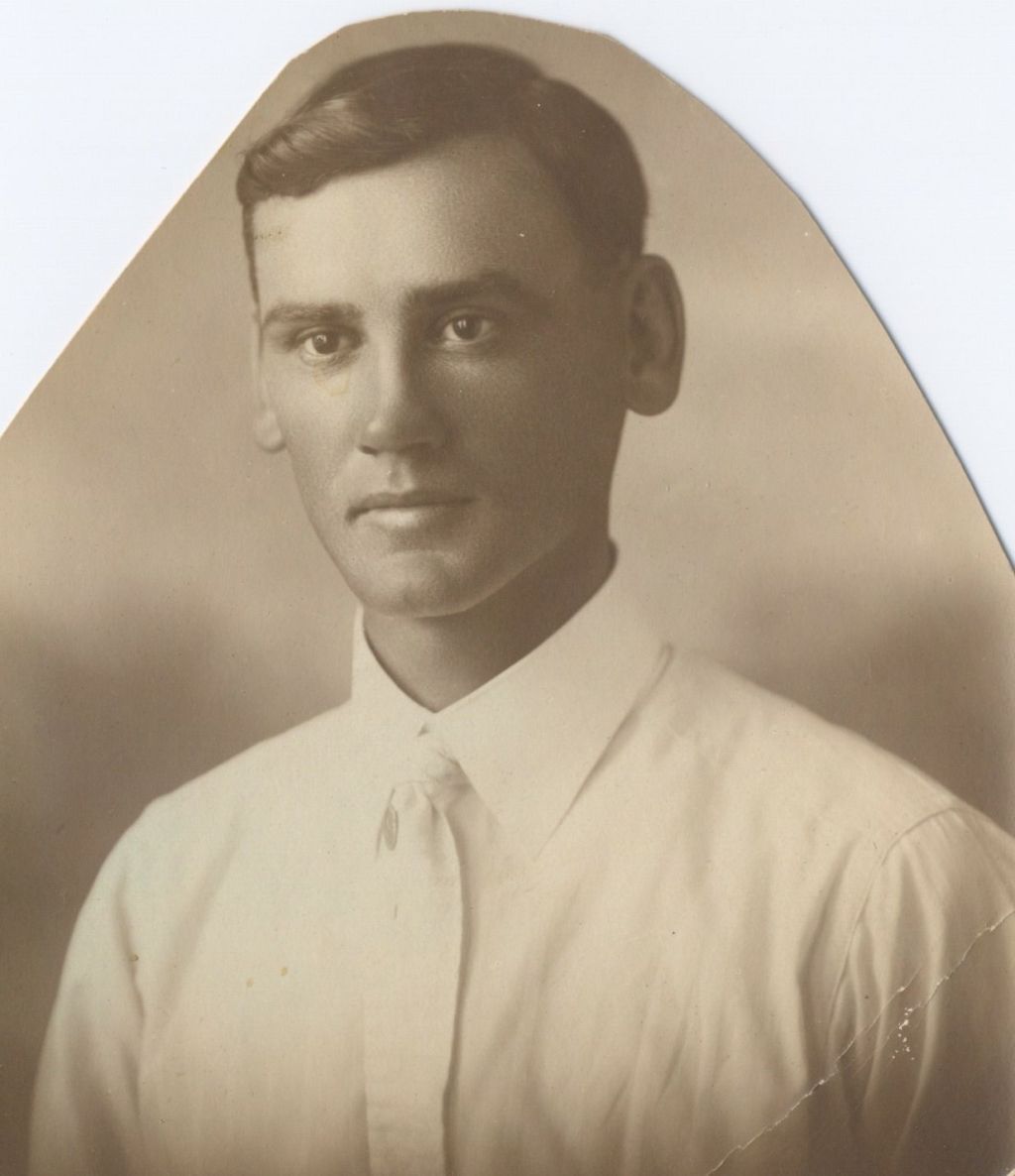
By the time he died in 1963, Dick Witter was considered by his neighbors to be a pioneer, having settled in Arizona just as it attained statehood. But the Arizona Territory had existed for nearly 50 years before he arrived, and people had been living there for thousands of years before that.
A more honest framing would be to say that young Dick Witter arrived only a couple of years before Arizona became a state, and he was one of those rare individuals who didn’t mind the heat and toil required to build a life in the Valley of the Sun. The arrival in Arizona of both Statehood and Howard Ray Witter happened at the midpoint of a century that started with the creation of the Arizona Territory (1863) and ended with his death in 1963.
And it’s no exaggeration to point out that the world of 50 years before that midpoint and the world 50 years after were profoundly different from each other.
Mystery: Where Did “Dick” Come From?
The name “Dick” is generally understood to be a diminutive nickname for “Richard,” but no one in the family seems to know how “Howard Ray” became “Dick.” And, of course, the word has taken on an unfortunate meaning since his day. The simplest explanation for this is that his parents only knew the nickname. Born in 1890, it’s possible that the impolite usage hadn’t made its way to their quiet, polite Kansas town, yet, as Wikipedia cites A Dictionary of Slang and Unconventional English (1984), p. 305, to claim “The term came to be associated with the penis through usage by men in the military around the 1880s.”1
The rest of his family had logical diminutive names: his father, Abraham Howard, was “Abe”; his mother, Nancy Ellen, was “Ella”; and his older brother, Edgar Leroy, was “Roy”. I suspect that Ella just thought it was a cute way to refer to her little “Dickie-boy,” and it stuck. Considering the widespread usage of the phrase “Tom, Dick and Harry” as a generic way to refer to anyone, it would have seemed like a harmless enough name.
I guess that changed; just one of the less profound differences between 1863 and 1963.
Where Dick Came From
The more literal answer to the question “Where did Dick come from?” is that he and his siblings were born in Wamego, Kansas. His parents’ families were from Ohio and Pennsylvania, and they moved west near the end of the Civil War. Abe Witter was about the same age as the state of Kansas, less than 5 years old, when his family moved to Pottawatomie County around 1864. Ella Shriver‘s family moved from Ohio to Missouri when Ella was about two years old, and moved to Kansas, not far from the Witter family, between 1880 and 1885. Abe and Ella were married on 11 February 1885.
Here is the Witter family in 1908:
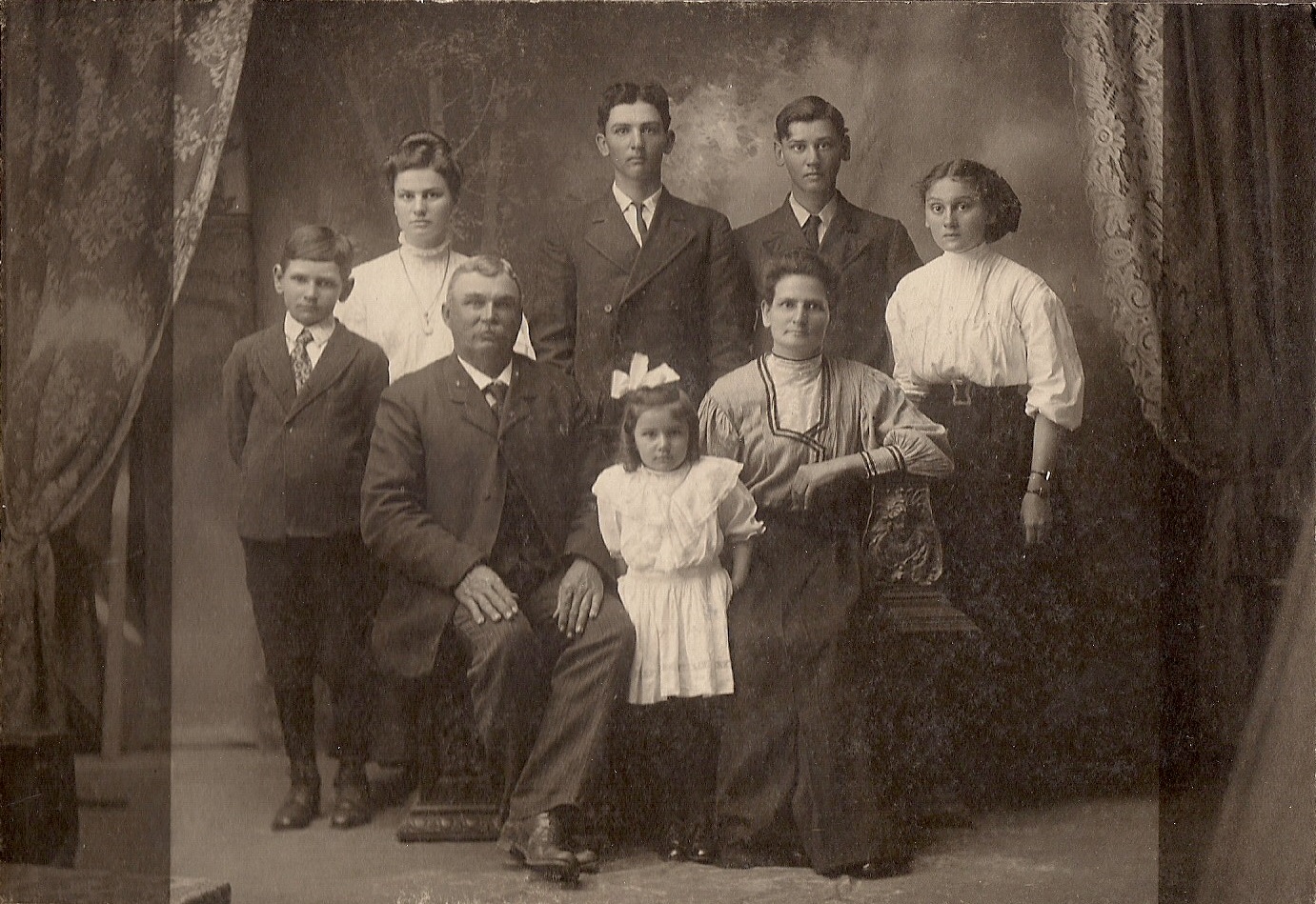
“A. Witter family – St. Mary’s Kansas
taken – 1908 at Wamego, Ks.
left to right standing – Clarence – Nell – Roy – Dick – Mary
seated – Father – Coral – Mother”
(Nell Witter signed the upper right corner)
Not Afraid of a Little Hard Work
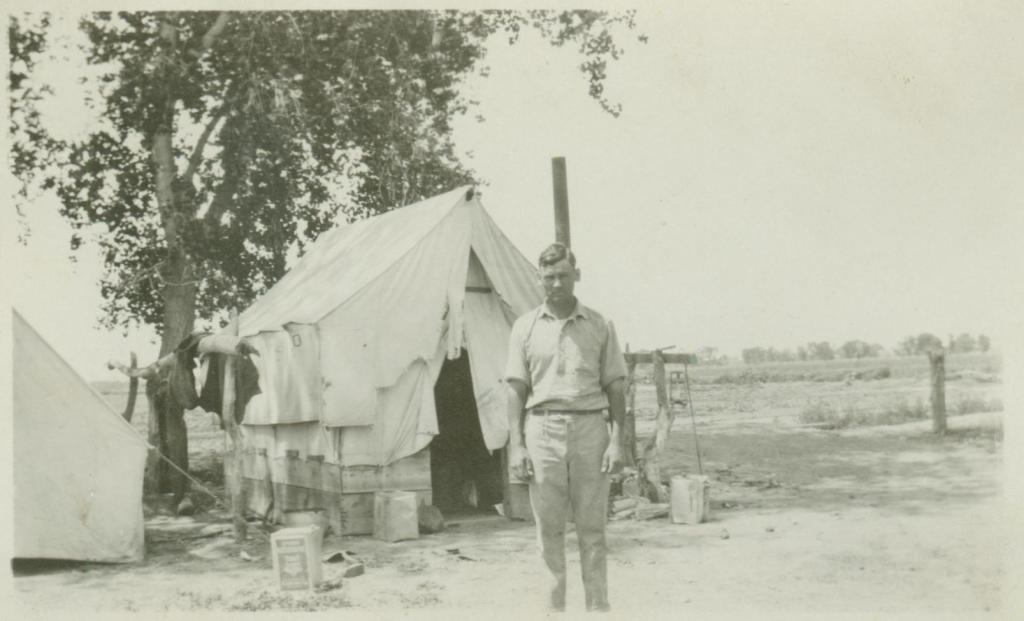
According to Grandma Merle’s Travelogue, Dick went to Arizona a couple of years after this family portrait was taken, in 1910 or 1911. He worked the beet farms and stayed with his Uncle Charlie Gilbert and Aunt Eunice. Eunice was Ella’s sister. Merle described how he stayed in a tent camp in the fields and eventually bought himself a few acres to farm.
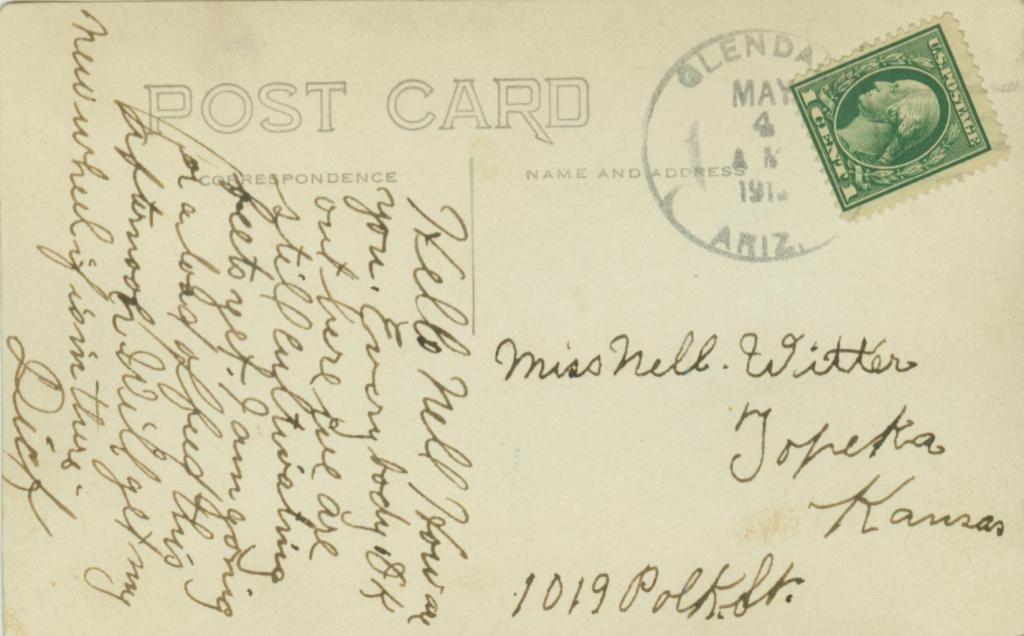
Here is a picture postcard he sent to his sister Nell, dated 4 May 1916 or 1917, showing off his home and telling her his latest news:
And, of course, he met and married Merle not long after this was taken, on 14 May 1917. A few months later, Dick enlisted in the U.S. Army on 19 Sep 1917 and served as a private first class in the 330th Auxiliary Remount Depot of the Quartermaster Corps at Camp Kearney, California, until 26 Dec 1918.
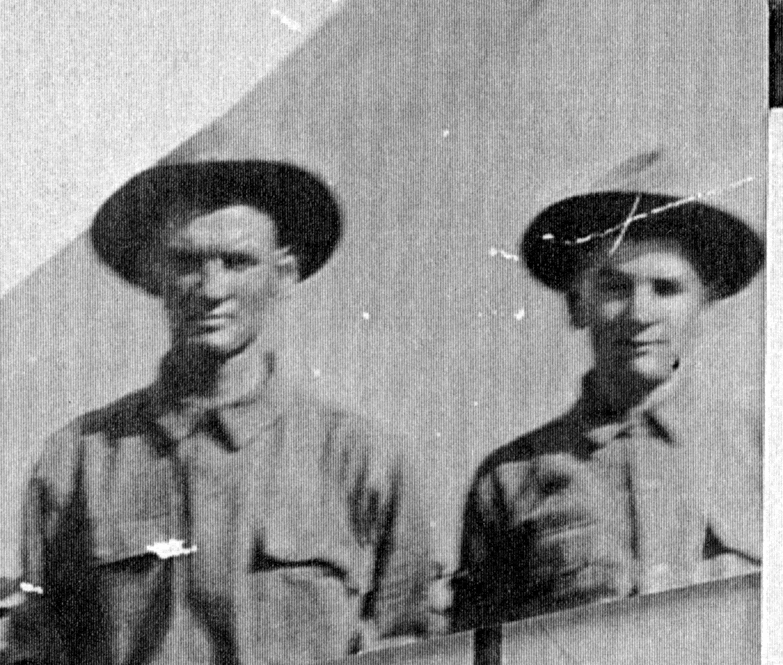
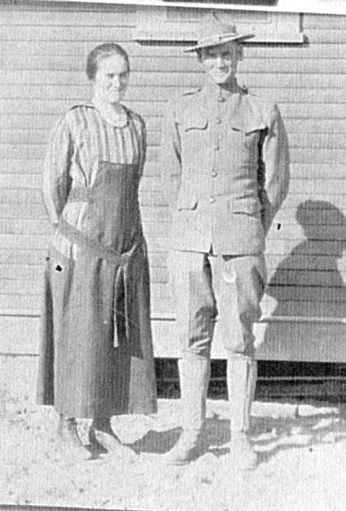
An Arizona Family
I grew up in Arizona, about 20 miles north of where Dick and Merle maintained their farm near what is now 59th Avenue and Bethany Home Road. When I look at these photos of Dick – squinting, his skin tanned a dark brown, his clothes full of dust and sweat – I can feel the dry heat in the air around him and the gritty give of the dirt under his boots.
In my childhood, twenty years after Dick’s passing, air conditioning was finally becoming common, but it wasn’t yet everywhere. My dad kept an evaporative (aka “swamp”) cooler running in our house until the late 1980s. I doubt Dick spent much time in air conditioning. But I’ll bet he considered himself lucky that by the time he came to build his farms, the Arizona Canal had been bringing water to the Valley for a couple of decades. The railroads that brought most of the necessities he needed had been operating since 1895.
The family he and Merle raised, my grandma Nancy and her brother, known as Dick, Jr., knew the meaning of hard work in the heat, but they also experienced a growth of suburban comforts in a town that they would call home all their lives. After surviving the Great Depression and World War II, Dick Jr. became a police officer and, later, a judge. Nancy became an art teacher.
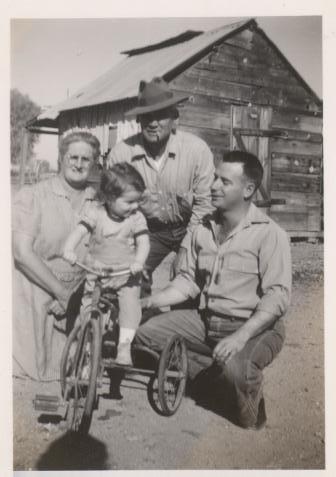
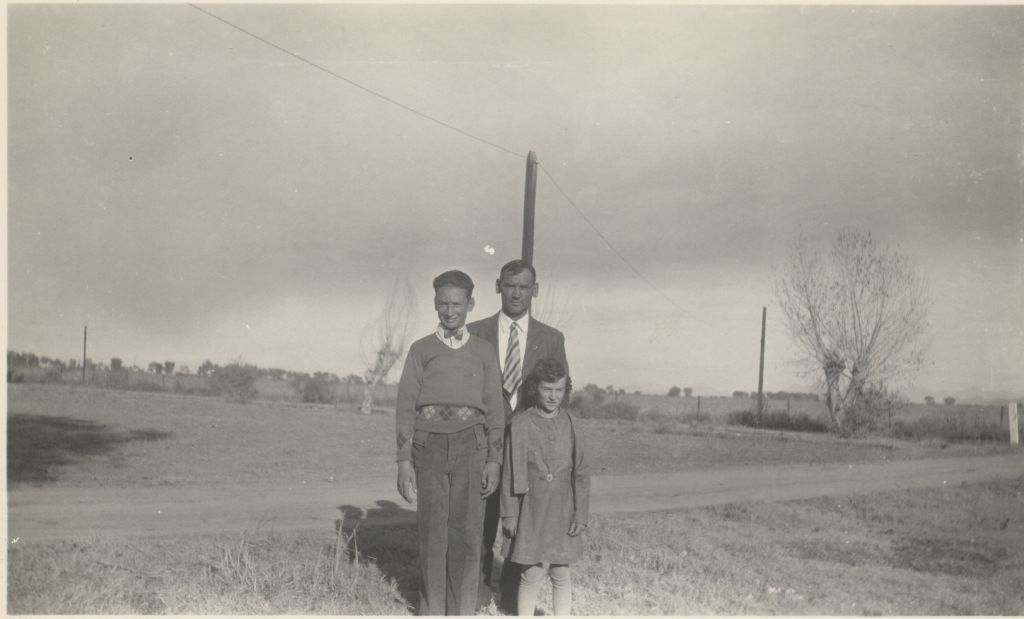
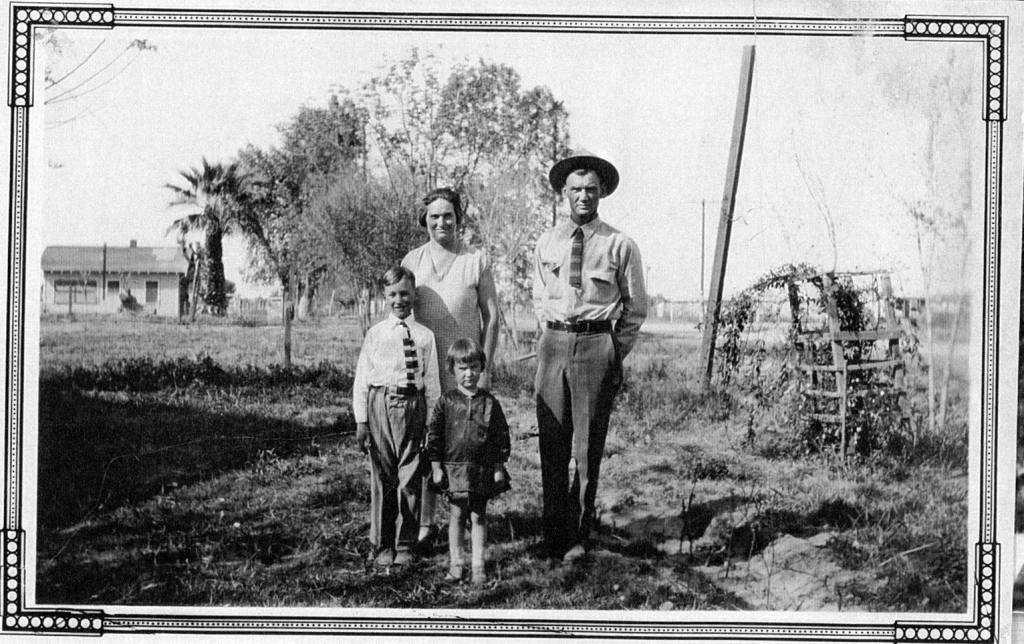
You can see the tug of war of history in these photos, between the days when dirt and irrigation meant life and when electricity and modern conveniences began to arrive. Dick Witter saw those things arrive in Arizona, one by one. Of course, I doubt he would have romanticized any of his experiences.
Water is necessary; everything else is a convenience. Everything else becomes a tool to pull your money out of your wallet. But if you want to stay ahead of the thrist and the dust, you keep showing up to grow the beets, or, later, milk the cows. Keep the kids fed, keep Merle happy.
Postscripts You May Have Read First
One of the first family history posts I wrote was “Twice Honored,” which described two certificates I inherited commemorating Dick’s service in World War I. If you also read “Grandma Merle’s Travelogue” entry I linked above, you know the story about his service, as Merle recalled it.
When I found those two envelopes, they didn’t look like they had been opened in years. There was no evidence they had been displayed. But they had been kept.
I think that mute statement about humility and perspective says a lot about the life Dick Witter led.
 Mightier Acorns
Say hello, cousin!