Tad Callin has been working on family history and genealogy since the late 1990s. He does most of his research on Ancestry and posts what he learns to WikiTree.
As revise my paternal grandmother’s WikiTree profile, I find that I don’t have as many records to cite that tell us about her life. I have scans of her husband’s diplomas, but not hers. I have records of his military service, but only a handful of letters capturing her wartime experience.
I can’t help thinking about the million tiny ways women are erased from our history. It’s not a thing we do consciously, so it’s hard to correct for it. Correcting for erasure doesn’t mean that we should re-tell Nancy’s story in a way that isn’t true. We can’t tell Nancy’s story without talking about the people who were most important to her, like Bob and her father, and her brother, Richard.
We can, and should, make sure her story is centered on her when we tell it. But also keep in mind that her story, the way she told it, works overtime to center everyone else.
Best Friends and Equals
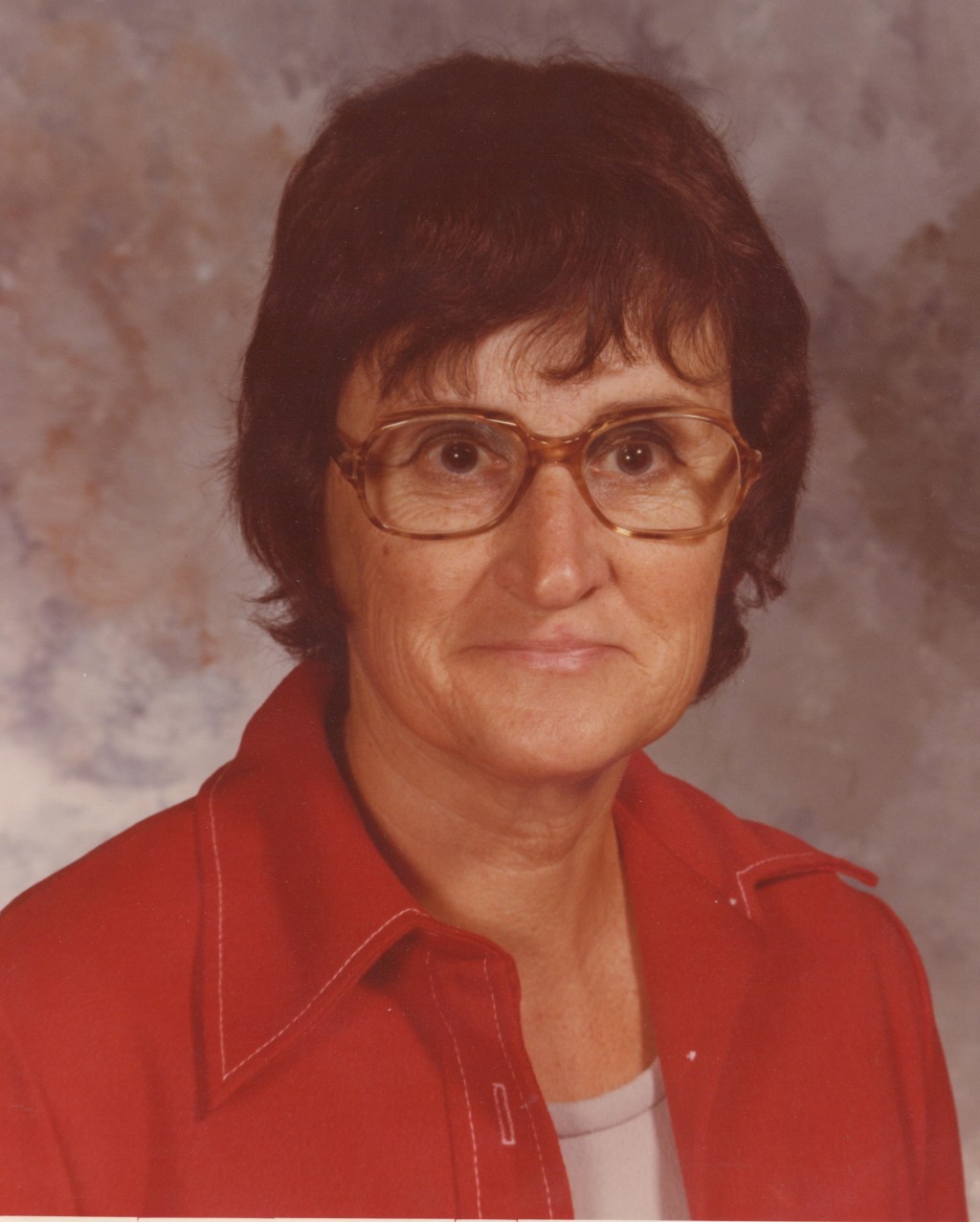
The woman I knew as Grandma Nancy is the woman in the photo above: the dark orange 1980s top with wide lapels, the horn-rimmed glasses, the smile-that-isn’t-quite-a-smile, and a face that I sometimes see looking back at me from my children, my dad and sister, and from my mirror. These annual yearbook photos from her career as an art teacher are a small part of the record we have left, and the only photos that don’t show her with someone she loved.
Most photos she is in show her with Grandpa Bob. Bob and Nancy were best friends and equals. They did almost everything together for more than half a century, from when they met in Glendale, Arizona, in 1941, until Nancy died in 2004. Their whirlwind courtship, raising their children after the war, their parallel careers as teachers, touring the country with their friends and family in their camper; all of it they did together. This is how I knew them, but their lives were so much more than I could have understood as a kid. And all of it often gets reduced to a tangible but empty statement about how long they were married:
Sixty-tree years.
Calling Bob and Nancy equals does not mean they were the same, of course. She was as intense as he was easy-going. He was the pastor, but she was often the organizer and enforcer. Most of the time, their differences complemented each other and made them a better team, but now and then, as in any marriage, conflict could spill out.
When my cousins were little, they took to calling him “Grandpa No-Bob” because Nancy would scold him so often for everything from absent-minded mistakes to intentional pranks. His sense of humor1 was just twisted enough that he would intentionally wind her up, and when she realized he was teasing her, she would roll her eyes, and give him one last scolding before letting him be.
But ultimately, they found a balance and a center, and no matter where they went or what they did there, you knew they were happiest when they were together.
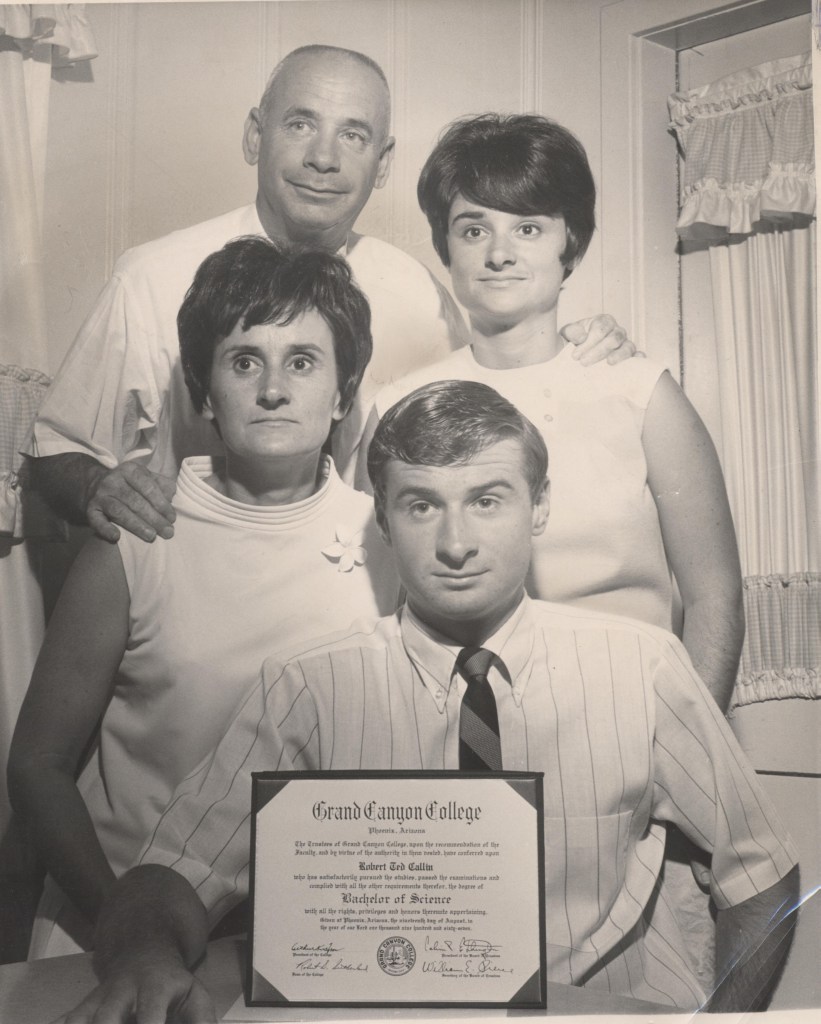
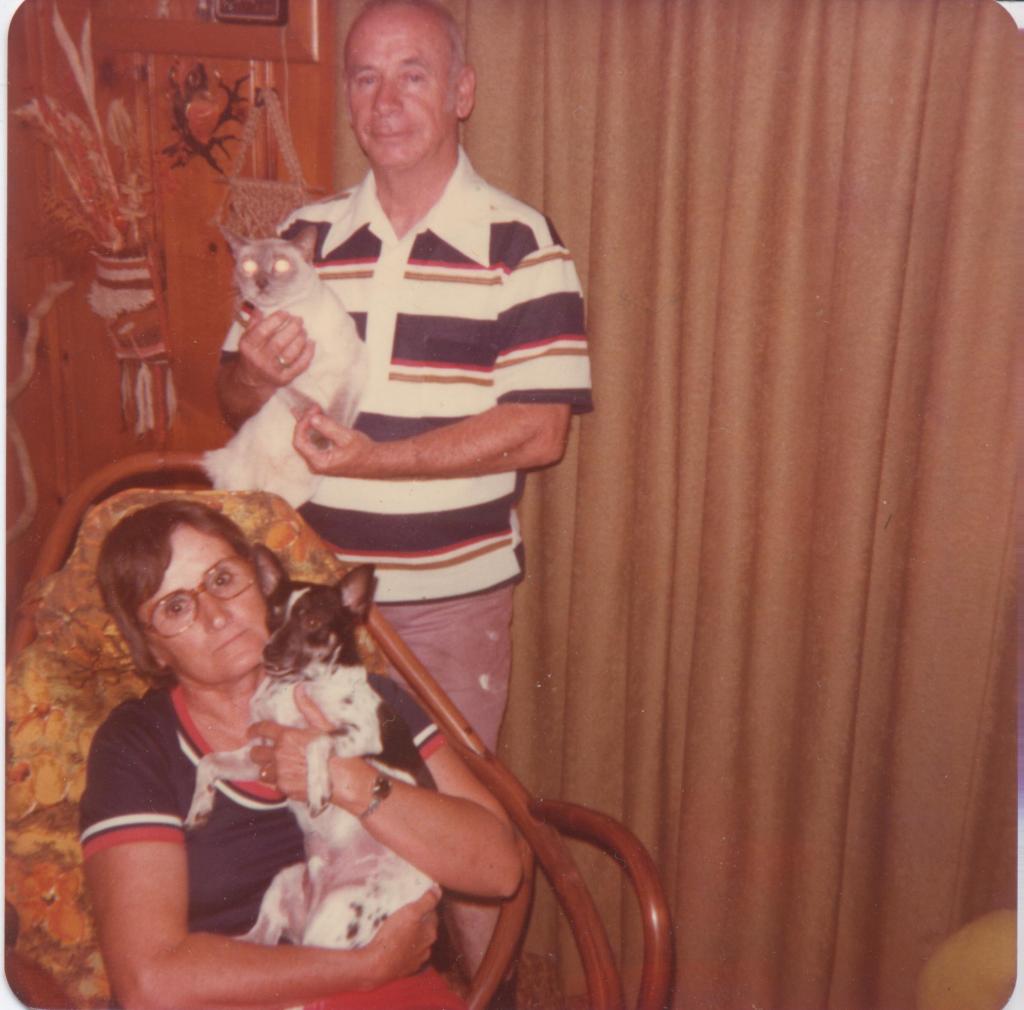
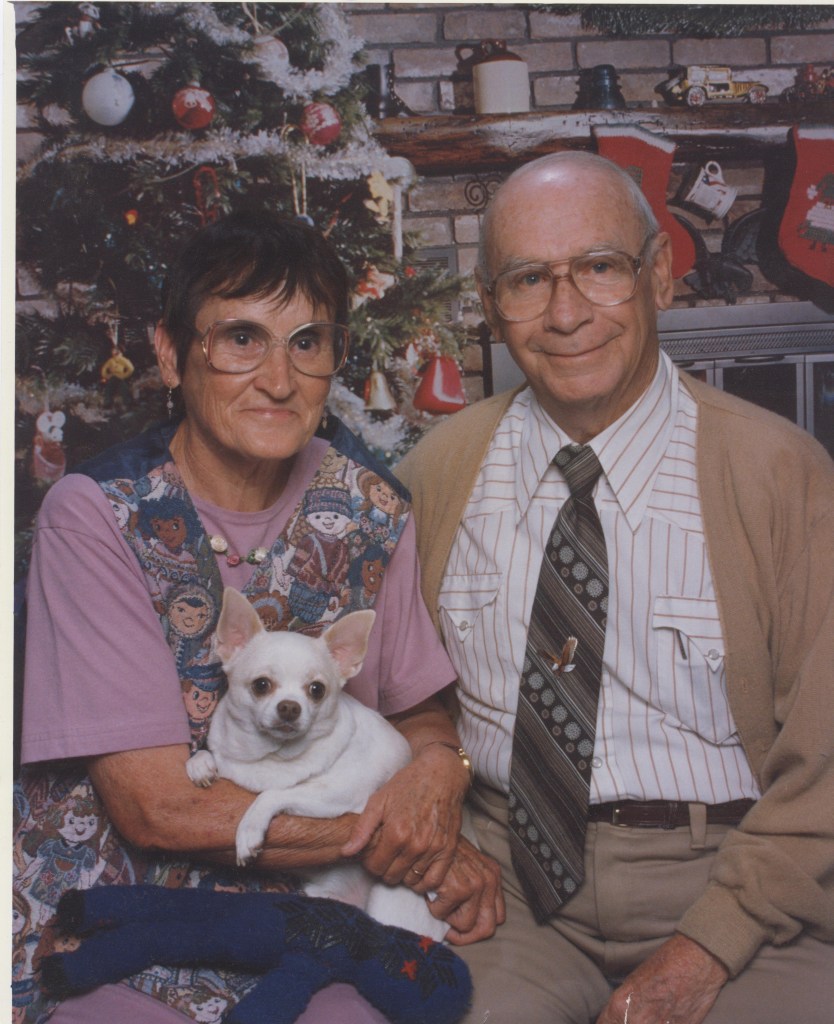
Four Grand Canyon grads, 1968At home in the ’80’s with Sam (cat) and Charlie (dog)Retired in the ’90’s, with Cricket
Depression and the Dairy Farm
When we were kids, we laughed at their playful dynamic, but now, as a man the same age Nancy was when I was first really getting to know Grandma, I know things that change the way I understand her. Having raised a son on the autism spectrum, I know more now about inherited traits and how we humans develop coping mechanisms for them. And I’m no psychology expert, but I have learned about the effects of childhood traumas and how those traumas can manifest in adulthood.
I think Grandma would scoff at the idea that she suffered “trauma” of any kind, because those kids who grew up during the Great Depression framed that time as an obstacle to overcome – which they did. Hardship was not a thing that was done to them, and they would have a hard time viewing themselves as victims because from their point of view, that was just how the world was.
You can go back and review the stories Nancy’s mother, Merle (Huff) Witter, told about settling in Glendale, AZ, in the 1920s, you can see how close their family was to abject poverty.2 Nancy’s dad, Dick Witter, worked hard, first at farming beets, and when that market dried up, cotton, which failed. They managed two dairies (first, the Witters Jersey Dairy, and later, the Okay Dairy). So, they got by, and fed, clothed, and educated their two children, which was no small thing.
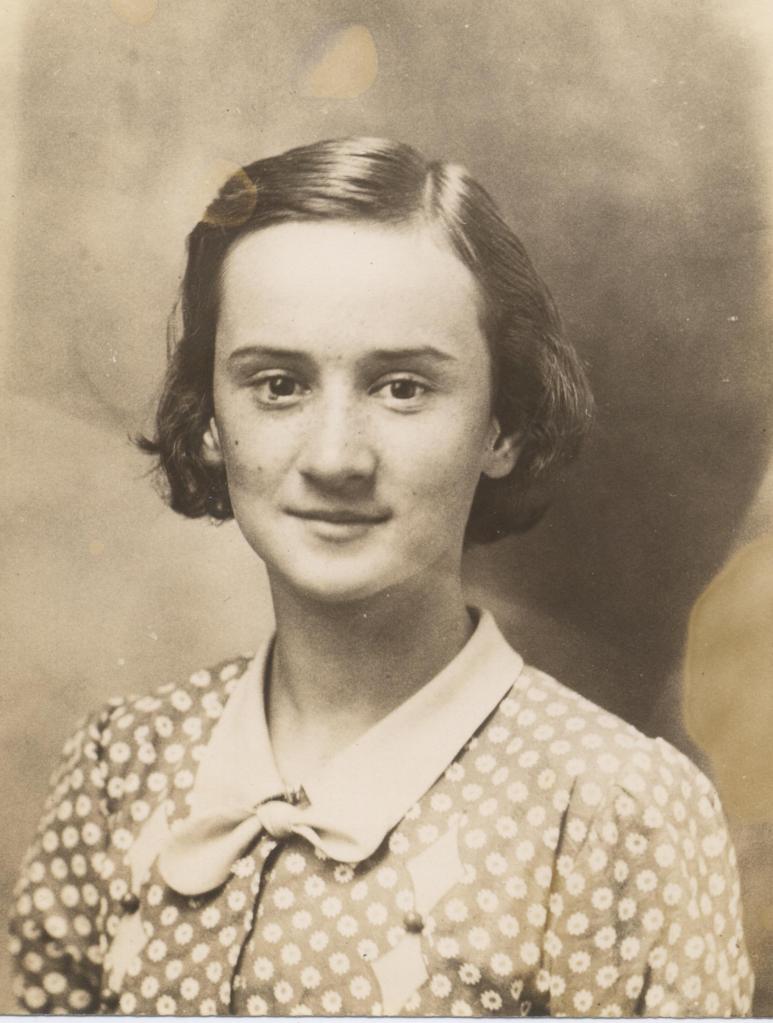
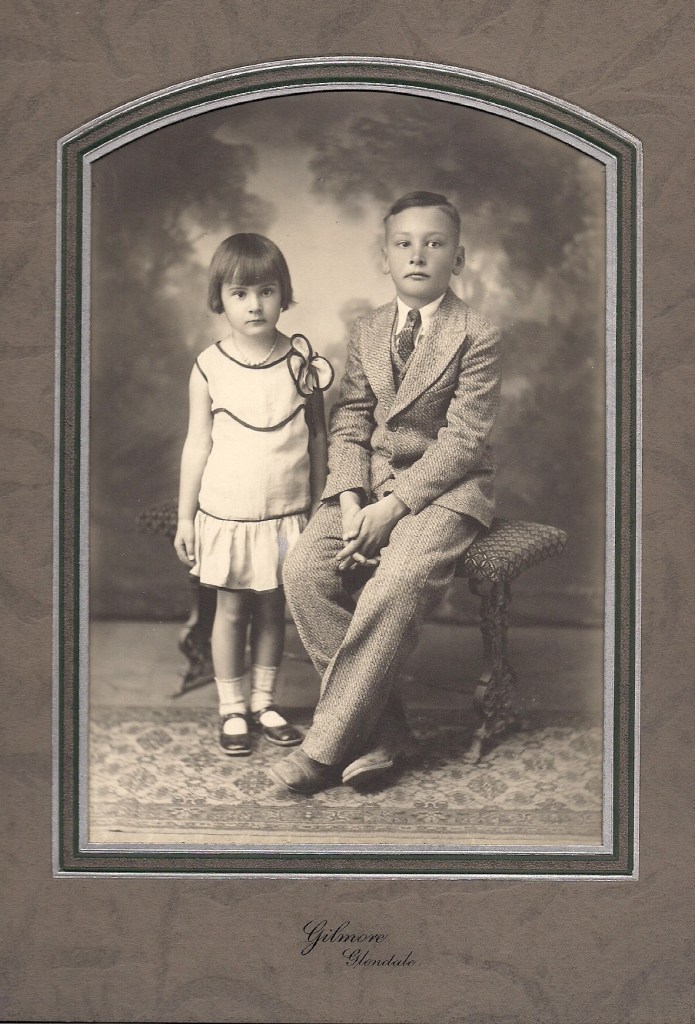
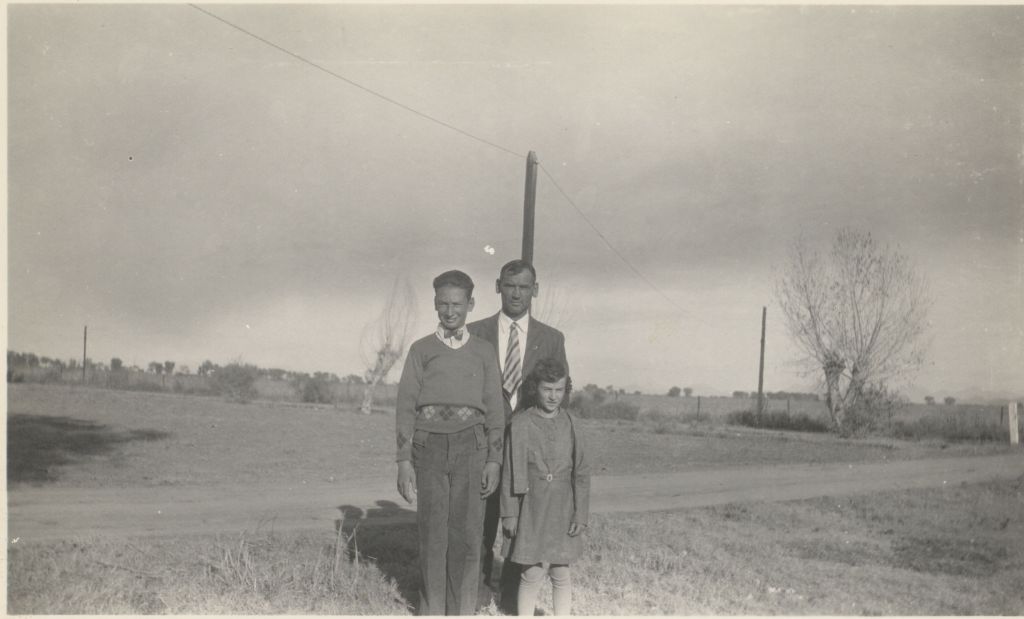
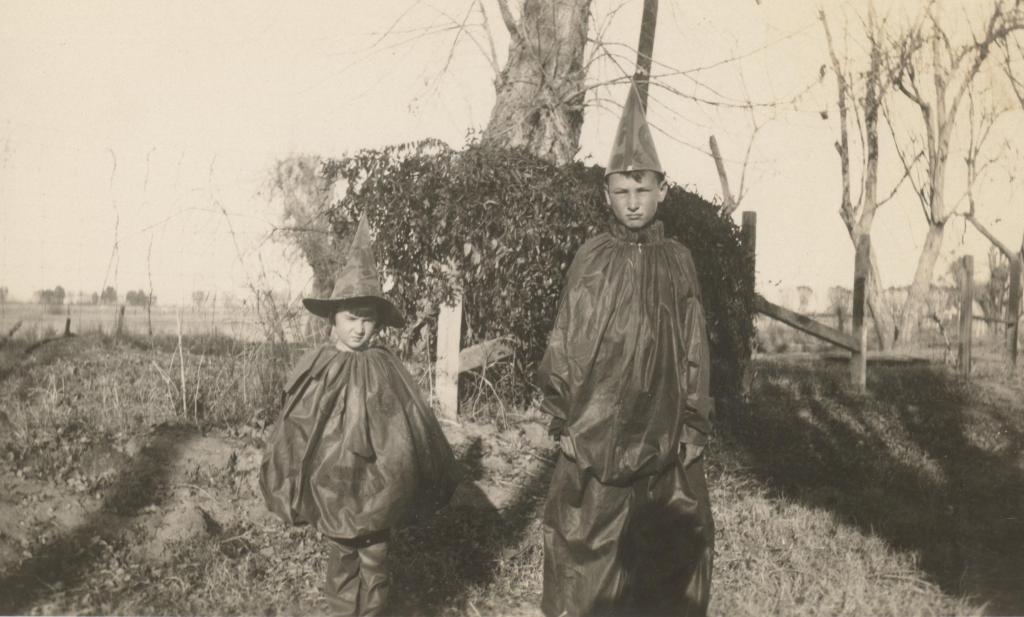
Nancy, late 1930sNancy and Richard, about 1930Richard, Dick, and Nancy, abt. 1935Nancy and Richard, Halloween
And this is an important point: they did not see themselves as “poor” because they had neighbors who were worse off. For example, Nancy is named in a book about country singer Marty Robbins3, based on the memories of his twin sister, Mamie Robinson. Mamie captured a sense of the way children perceived themselves on the scale of “rich” and “poor”:
These were depression years for everyone, although at the time it seemed as if some were far richer than others in this farming community. It wasn’t until years later that we found out that other families were just as doubtful about making it financially as we were. “Besides, riches are all a matter of how you see things. I thought my friend Nancy was really rich when I visited her and saw that she lived in a house that wasn’t falling down, and that she had her own bedroom with pretty blankets and bedspreads. “Years later she told me she liked to visit me as a child because I had so much more to play with than she did. By that she meant spaces to roam, trees to climb, and the endless thickets that served us as imaginary rooms and houses in which to play.”
I also learned, long after Grandma was gone, that her father, Great-grandpa Dick Witter, may have had a drinking problem. My dad remembers being very young (around five years old, maybe, so about 1950) and Grandpa Dick taking him to get a soda. Young Ted didn’t think anything of it, beyond enjoying a root beer, until Nancy came storming into the bar, excoriating her father for taking her son into such a place.
By itself, that story may not mean much, but one other fact that turned up in The Arizona Republic on page 11 of the paper published on 25 July 1946, in a section listing Divorce cases:
WITTER, Merle H. vs. Howard R. (dismissed, request of plaintiff).
The timing of this dismissed divorce case, four years after Bob and Nancy were married, suggests that this could have been part of what we might call a mid-life crisis, for either Merle or Dick; it could also suggest that if Dick had a drinking problem, this was Merle’s ultimatum to him to kick the habit. We simply don’t know whether Nancy’s reaction to her dad taking her son into a bar was related to the dismissed divorce case, or what it all means.
At this point, we may never know, and it would be irresponsible to guess. But if we don’t record the facts we have, all of it will be lost in history.
Friends, Family and Fierce Loyalty
Whenever I find a letter to or from Nancy, or run across another photo of her, I find evidence of just how deeply she valued those around her. But this, too, is nearly impossible to document and cite along with hard facts.
Sometimes, our family will share stories that joke about how silly and innocent she and Bob sounded in their love letters before and after the attack on Pearl Harbor.4 Many jokes were aimed at her tendency to keep every scrap and sentimental artifact. After her mother, Merle, died in 1985, Nancy’s house grew more crowded with boxes of photos, letters, her childrens’ homework assignments and art projects, unused art supplies from her teaching career, and old newspapers. The family usually chalked that hoarding behavior up to her growing up in the Depression, but it was also evidence of how hard she tried to hold onto those those she loved.
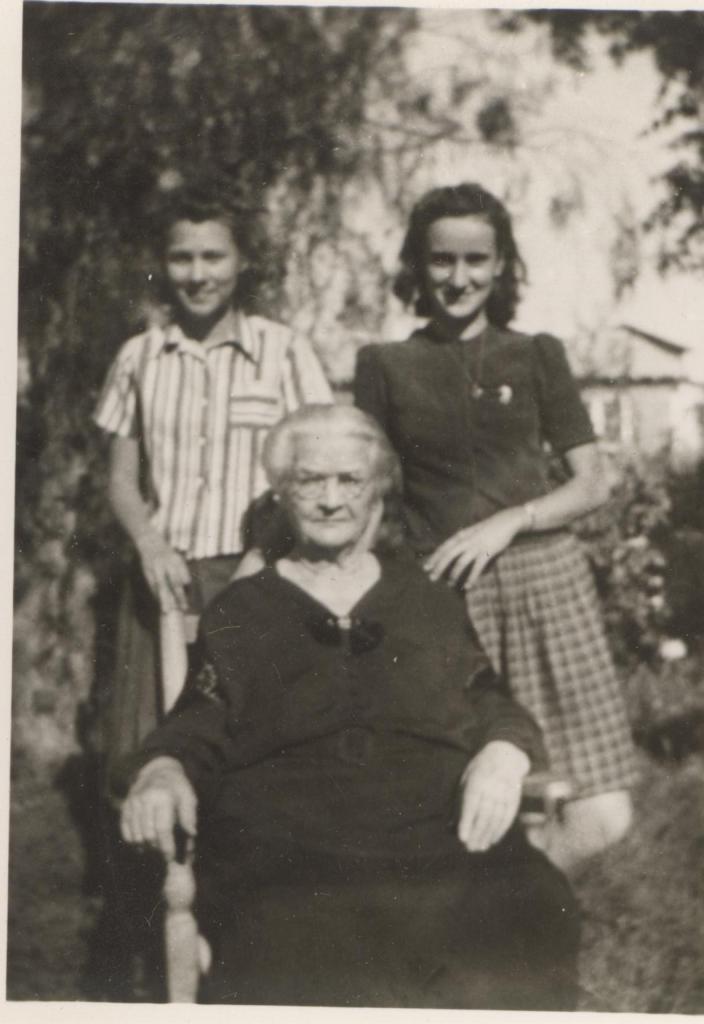
I see evidence of that loyalty in photos like this one, in which Nancy and her best friend from high school, Bobbe Harris, posed with Nancy’s only surviving grandparent, Rosa (Murray) Huff, Merle’s mother.
Rosa was Nancy’s last surviving grandparent from 1936 to 1943. Nancy was eleven years old when Rosa’s husband, Nancy’s Grandpa Albert, died in Arizona. And Nancy’s namesake, Nancy (Shriver) Witter, Dick’s mother, also died in Kansas in 1936. If you revisit “Granda Merle’s Travelogues,” you can see her referring to Albert and Rosa as “momma and daddy” throughout her stories.
I was only twelve when Granda Merle died in 1984, but even I picked up on her tendency to casually refer to parents and grandparents as if everyone knew them, as if they were only a few miles away at their own homes instead of long passed away. Nancy did the same thing. She spoke often of “momma” or “daddy” as if they were just in the next room, or as if the anecdote she was sharing had just happened earlier that week. It was one way she honored them, by keeping them close in her heart and keeping their memories alive.
Nancy and Bob kept up their friendship with Bobbe Harris and her husband throughout their respective liftetimes. They would go camping together in the 1980s and 1990s, until disability, age, or illness prevented them from maintaining their RVs or safely traveling. When Nancy spoke about Bobbe, she referred to her with that same level of cherished reverance, to the point where an observer might assume Bobbe was a relative.
All of this – the sense of deep emotion, the inter-family affection, the common stories about everyday things – are all but impossible for a family history to record. And so, over time, as the people who remember the feeling of knowing “momma and daddy” in each generation disappear and take their memories with them, we lose the “soft tissue” of their stories and are left with only the “bones” of records that tell us the hard facts.
Those records with their facts inexorably favor the men, recording their military service, preserving their tangible accomplishments (completing school, acquiring degrees and businesses). We have some of those same sorts of records for Nancy, but records don’t capture love, loyalty, strife, or everyday character.
Those are all things we should strive to keep alive in our family histories, so we understand the men better, and so we don’t lose the women altogether.



Say hello, cousin!