
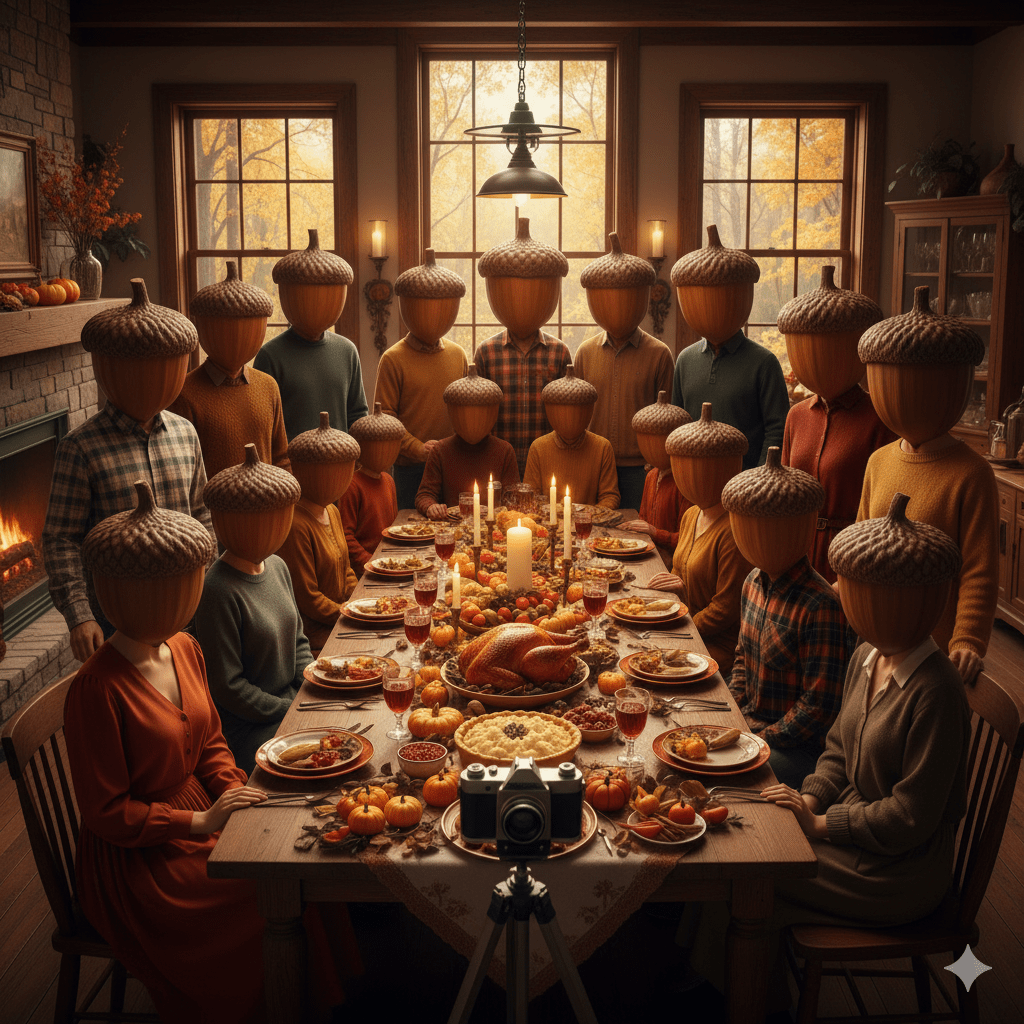
Family history research often serves as a metaphor for life – there is so much to learn, so much to do, and so little time to do it all. If you’re familiar with “spoon theory,” this is the season when you are most likely to run out of spoons. And that’s okay.
During the holiday season, we’re all going to experience that stretching sensation of having too much to do all at once. We will try to set healthy priorities, and ideally, that will mean putting our focus on the living. If you’re lucky, you may get to spend some of your time with family talking about your research. Hopefully, you’ve got a few entertaining stories about your common ancestors to share, and you might learn a few in return!1
But after the visitors have all returned to their homes and the decorations have been packed away, and your time becomes your own again, you may find yourself overwhelmed when you turn back to your research. Where do you begin? What are your goals?
What will your focus be in the coming year?
Making Choices
It is not lost on me when I write one of these “genealogy advice” posts that the advice I’m offering is advice that I’m struggling with myself. And one of my greatest recurring struggles is deciding which part of my tree needs the most immediate attention.

If you’ve been following my journey from Blogger, through Substack, and onto WordPress, you’ve seen the results of the choices I made during previous holiday seasons play out in weekly posts.
For the first eleven weeks of 2024, I was “Climbing the Ladder to Providence,” taking the time to scrutinize the chain of evidence connecting me back to John Greene of Providence, Rhode Island. That choice led me to discover that I was probably not related to the John Greene who helped found the First Baptist Church of Providence along with Roger Williams and 10 others. That wasn’t the outcome I wanted, but that choice was a good one, because I learned a lot on the journey.
In between those posts, I spent time each week looking at the families belonging to the 32 surnames of my 2nd-great-grandparents and those of my wife – My Sixteen and Her Sixteen – and then looking for the “Wavetop” ancestors: the most distant ancestors I could find along those lines.
The lesson I have taken from doing things this way is this: Choosing where to put your focus is not a Zero-sum game. You aren’t choosing which research you’re going to do – you’re just choosing which research you’re going to do next.
Personally, I forget that sometimes, and I need to remind myself that if I tried to do everything all at once, I wouldn’t get anything done! But breaking the task down into reasonable weekly goals means that eventually, I can devote some attention to everybody.
Selection Bias: Telling You Where to Look
If, like me, you are limited to doing the bulk of your research online, you may find that your choices are limited by what is available via the internet. (The missing 1890 U.S. Federal Census comes to mind as a big gap for many people.) When that happens, you may find it necessary to skip a branch or three until you can plan a trip to do local research, or until the records you need are digitized.
Letting the gaps in available data guide your resource decisions is a form of selection bias – and it is something you need to factor in when you’re deciding where to spend your precious time. One way I have tried to overcome my own selection bias is to use this blog platform to document where my gaps are. While you aren’t wrong to move on and do the research that is available to you right now, you need to remember to circle back to those ancestors who seem out of reach. For me, that exercise in pursuing topics based on where the gaps are is an ongoing thing.
This year, whenever I wrote about my most distant Callin ancestor, James Callin, I emphasized how much of what I know about him is theoretical. In James’s case, we haven’t found the records we would expect to find where earlier researchers suggested we should find them. And so, when I come back around to the Callin line, I need to think about filling in what we might not know about his wife’s family, or look for patterns, like the Milton Township diaspora, which might open up a new line of evidence.
While James Callin might be a “brick wall” ancestor, there are avenues of inquiry that might get me around that wall someday. Sometimes, this can feel futile – like the old joke about the guy who dropped his keys in the road, but is looking for them on the sidewalk where the streetlight is, because he can see better there.

The Callan Name Study is one of those avenues; researching the surname as it appears in places like Ireland or Kentucky may be a longshot, but even if I never find what I’m looking for, I can at least leave a map of where I have searched for those who come after me. Maybe I can build a path to get someone else to the goal.
If you’ve been tracking my posts on the Milton Township diaspora, they are an example of what can happen when someone follows up on your research later on. George Callin didn’t actually know who all of his cousins and second-cousins were when he published the 1911 Callin Family History. But he included the names of those he did know about, and told us where they were last seen. When I came along in 2015 and started hunting for James Callin’s descendants, I was able to add the Montgomery families and the descendants of Sarah (Callin) Scott and to my 2020 Callin Family History.
All of which is a long way of saying, “It’s okay to search where the light is, but also do what you can to move the light.”
Taking My Own Advice
As we muddle through December, I may need to prioritize the living over my twice-a-week blog schedule. I’m okay with that if you are.
And as we head into 2026, and whatever awaits us there, I intend to keep working on the family history because it brings me joy.
I feel fortunate to be spoiled for choice when it comes to the directions I could follow. No matter what direction I choose, I will have interesting things to tell you, and since I’ve done as much as I can with the “Sixteens” for now, I’ve decided on a new approach to coming up with topics on a weekly basis. (More on that later in December!)
Hopefully, working through my choices will help you clarify yours. If so, I’d love to hear about it! Don’t be shy – drop a note in the comment section.
- I hope you’re taking good notes and/or recording these stories for your archives! ↩︎
 Mightier Acorns
Say hello, cousin!