Mightier Acorns

Journeys through Genealogy and Family History

A parody of a family coat of arms designed with acorns as elements, with the motto "ex gladnis potentioribus" Latin for "from Mighty Acorns"
From Mighty Acorns

Dr. Carolyn Elizabeth Putnam (1857-1917)

Carolyn Elizabeth “Carrie” Putnam was the daughter of George C Putnam (1835-1873) and Elizabeth Ann Force (1836-1918), born in Jan 1857. She grew up in Rochester, Monroe County, New York, until her father moved the family to Brownstown, Wayne County, Michigan, to start a new business around 1870. George died in 1873, and by 1875, Elizabeth had returned with Carrie and her brother, Charles, to Rochester.1

If this family sounds familiar at all, it might be because I wrote about George and Elizabeth’s families not long ago:

There seems to be an endless supply of these Mightier Acorns, but that’s up to our free and paid subscribers.

A Biography

Carrie was the sister of my wife’s 2nd-great-grandfather, Charles W. Putnam. (I guess that makes her “Sixteen-adjacent”?) She received her early education at Rochester Free Academy, where she was admitted in 1878, at 21 years of age. She most likely attended classes in the Academy Building, which was built in 1872-73 and is still used as office space today.
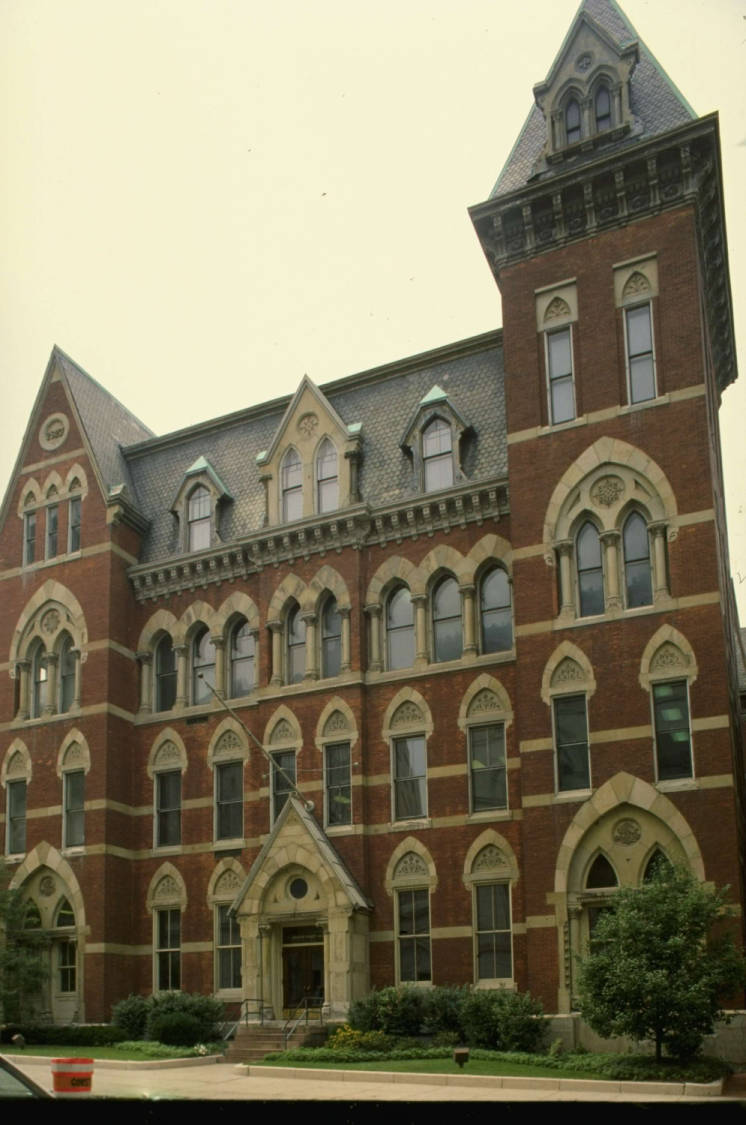
photograph of the Academy Building in Rochester, N.Y.
Academy Building, Rochester, N.Y.

Carrie and her mother lived in the home of her uncle, I.F. Force, in Rochester. She taught school in Rochester in 1880 and 1882. In 1887, she was hired to teach at the Karnes school (which was located at Fourth and Troost) in Kansas City, Missouri.

After working as a teacher for several years, Carolyn returned to school to become a doctor practicing homeopathic medicine. She graduated from the New York Homoeopathic Medical College and Hospital in 1886, before moving to Kansas City to teach. She later graduated from the Kansas City Homeopathic Medical College in 1897. The Kansas City Homeopathic Medical College merged with Hahnemann Medical College of the Kansas City University to form Kansas City Hahnemann Medical College in 1902. Dr. Putnam was on the Kansas City Hahnemann Medical College faculty in 1904-1905, listed as one of five lecturers on materia medica. The school became the Southwest School of Medicine and Hospital in 1915 and closed in 1916.

Carolyn died on 2 Apr 1917 in Kansas City, Jackson County, Missouri, due to complications from an inner ear infection. She was buried in Mount Hope Cemetery in Rochester, Monroe County, New York. In her will, she left $10 to her mother and the rest of her estate to her brother, requesting that Charles attend to their mother’s needs. Her obituary appeared in The Kansas City Times on 10 Apr 1917.

A Career and a Conundrum

The field of homeopathic medicine was established in 1796 by a German physician, Samuel Hahnemann. If you click through to that Wikipedia article, you should be able to learn some of the history of the field. If no one has altered the text, it should tell you that the founding beliefs behind homeopathy have been discredited since the mid-19th century. The practice of evidence-based medicine—called “Allopathic medicine” by Dr. Hahnemann—was relatively new in the 1800s, and there was a fierce competition between homeopaths (like Carolyn Putnam) and allopaths.

Throughout her career, Carolyn was involved with the International Hahnemannian Association. She was active in organizing committees and submitted at least one paper discussing the group’s opposition to President Taft’s intent to create a national board of health at the annual conference in Kansas City in 1910.2 In 1911, she attended the conference held in London, traveling with several of her colleagues aboard the White Star ship, Megantic.3

The conundrum lies in finding the best way to celebrate this ancestor. I find it admirable that she broke with the norms of the times, never settled for a husband, and spent two decades as a professional trying to help people. There is no evidence she was an activist or a suffragette, but the life she chose was an act of defiance in her society. Remember, the 19th Amendment, giving Carolyn the right to vote, did not pass until two years after her death.

But at the same time, her field and her professional efforts put her at odds with reality. Evidence-based medicine would prove to be a better, more effective way of approaching the treatment of disease. Carolyn’s part in opposing that progress was harmful, whether she knew it or not.

Telling the Stories

In the end, our job is to tell the story of a person’s life. What they believed was important to them, and if we have evidence that tells us what they believed, we have to honor their memory by engaging with that belief.

I don’t know what the correct approach would be in every case. In drafting Carolyn’s biography, you’ll notice that I left out any commentary about the validity of homeopathic medicine. I did link to the Wikipedia page, though, knowing that people I respect and trust have had a hand in keeping that page fact- and evidence-based over the years. I have to trust my audience to understand that we can honor her life and her accomplishments without lending credence to ideas she held in error.

This is a common problem in genealogy. Sometimes, a researcher can ignore things, like discovering ancestors who believed in a drastically different religion from their own. Sometimes, it can be hard to process that an ancestor may have owned slaves, committed some horrific crime, or was a fervent supporter of a cause we find appalling today.

But we aren’t here to judge. We are here to document. We are here to tell their story as best we can.

What the audience thinks of that story is up to them.

1

If you’re looking for my sources, I cited them on Carrie’s WikiTree profile.

2

Newspapers.com, The Kansas City Times, Kansas City, Missouri; Tuesday, June 28, 1910, “They Oppose Health Board”.

3

Mastin, James William, M.D.. The Critique, Volume XVIII, January to December 1911; Denver Journal Publishing Company, Denver, Colorado, “A LETTER FROM DR. C. E. FISHER, MAILED IN MID-OCEAN” page 279 and “Americans Present” page 346.

Posted in , ,

8 responses to “The Progressive Doctor Putnam”

  1. Lisa Maguire Avatar
    Lisa Maguire

    You raise an important point. I have an ancestor who may or may not have trafficked human beings. By the standards of the 18th century, he was just a businessman, but I don’t know what to say about him.

    Like

    1. Mightier Acorns Avatar
      Mightier Acorns

      It’s a tough problem with a lot of edge cases.

      One of my predecessors, Rosemary Callin, wrote a short memoir about her grandmother, Elizabeth (Berlin) Callin (my 3rd-great-grandmother) in 1973, and described the family this way: “William was a powerful man, six feet tall. The boys had to be in the fields around sunup. He had a big, black whip. I don’t know whether it was Elizabeth or her mother-in-law who would say pleadingly, “Now, William, don’t whup ’em.” It was a brutal age.”
      (from https://mightieracorns.substack.com/p/silk-or-satin)

      I think it’s important for readers to understand the context of “spare the rod/spoil the child” and just how much more violent people were, if they’re going to understand that family. In this case, I think Rosemary’s comment was concise, and her anecdote served the purpose of painting a picture.

      But I’m on the fence about how and when to include that kind of comment in my own writing. “It depends.”

      Like

      1. Lori Olson White Avatar
        Lori Olson White

        For me, the answer is nearly always context. If I can place an action or behavior into a viable historical or cultural context, that’s my go to move.

        Like

  2. Anne’s Family History Avatar
    Anne’s Family History

    Allopathic is a new word for me 🙂. I do indeed find it a challenge to tell some stories.

    I found a useful quote: “The historicist wants to understand the world, the presentist to change it. There are different goals: the historicist wants knowledge, the presentist justice. The historicist wants to be a scientist, the presentist a politician.”

    Presentism is the practice of judging historical figures by the moral and ethical standards of the present day.

    I aim to be a historicist but might not always succeed.

    Like

    1. Steve Stockdale Avatar
      Steve Stockdale

      I’m not familiar with the presentism and historicist terms but I am aware of the practice of presentism under the label “reparative semantics.” I’m not a general proponent of it.

      Like

  3. Anne Wendel Avatar
    Anne Wendel

    We need to judge people by the context of the day. It sounds to me like Dr. Putnam was an amazing woman dedicated to helping people. No doubt she helped many. Medical knowledge was so limited at the time that treating disease with tiny amounts of the same disease surely sounded just as reasonable as living disease-causing organisms too small to see. That was the principle behind the smallpox vaccine, which clearly worked.

    I mean, people believed that tuberculosis was caused by dead relatives coming to claim their kin, pus was a sign of healing, blood-letting would re-balance the humours, hand-washing was ridiculous, and other ideas we think are crazy today. And these techniques were practiced by trained doctors.

    Even if a doctor believed in germ theory, he couldn’t cure any disease — the first disease with a cure was diphtheria in 1900. I read the Wikipedia article — the medical history and lifestyle questions the homeopathic doctors asked were probably quite helpful.

    I learned about the pitiful state of medical knowledge for my post on my great-grandmother’s dead babies. If you are interested, you can read it here: https://grandmasgrannysfamilyalbum.blogspot.com/2025/03/dead-babies-in-city.html

    Thanks for introducing me to your ancestor.

    Like

    1. Steve Stockdale Avatar
      Steve Stockdale

      I should’ve read through all the comments before I posted mine … apologies for not mentioning yours, we were on the same track. :)

      Like

  4. Steve Stockdale Avatar
    Steve Stockdale

    “The present is no more exempt from the sneer of the future than the past has been.” Cassius J. Keyser, Columbia University Professor of Mathematics. (b. 1862 d. 1947)

    I’ve used that quote before here, but it immediately comes to mind whenever there’s an issue like this that hinges on a well-after-the-fact accusation that applies the “they shoulda known betta (SKB)” standard of contemporary knowledge and attitudes.

    I queried ChatGPT with a series of prompts to determine a realistic SKB date. After providing some detailed timeline milestones from 1860 on, it mentioned the release of “The Flexner Report,” commissioned by the Carnegie Foundation, in 1910 as “pivotal” for American medical education. The report “assessed and condemned most American medical schools as unscientific and substandard” (quote marks to denote the quote is from ChatGPT; ChatGPT did not used quote marks to indicate it was quoting from the report).

    Also, “The report called for rigorous training based on biology, chemistry, anatomy, and laboratory science … ”

    ChatGPT concluded: “After this, homeopathy’s presence in accredited medical institutions collapsed rapidly.”

    p.s. The Karnes School in St. Louis has some pretty interesting history, especially for European and Jewish immigrants in the early 20th century. https://theclio.com/entry/178473

    Thanks for the story and noting the concern.

    Like

Leave a reply to Mightier Acorns Cancel reply