
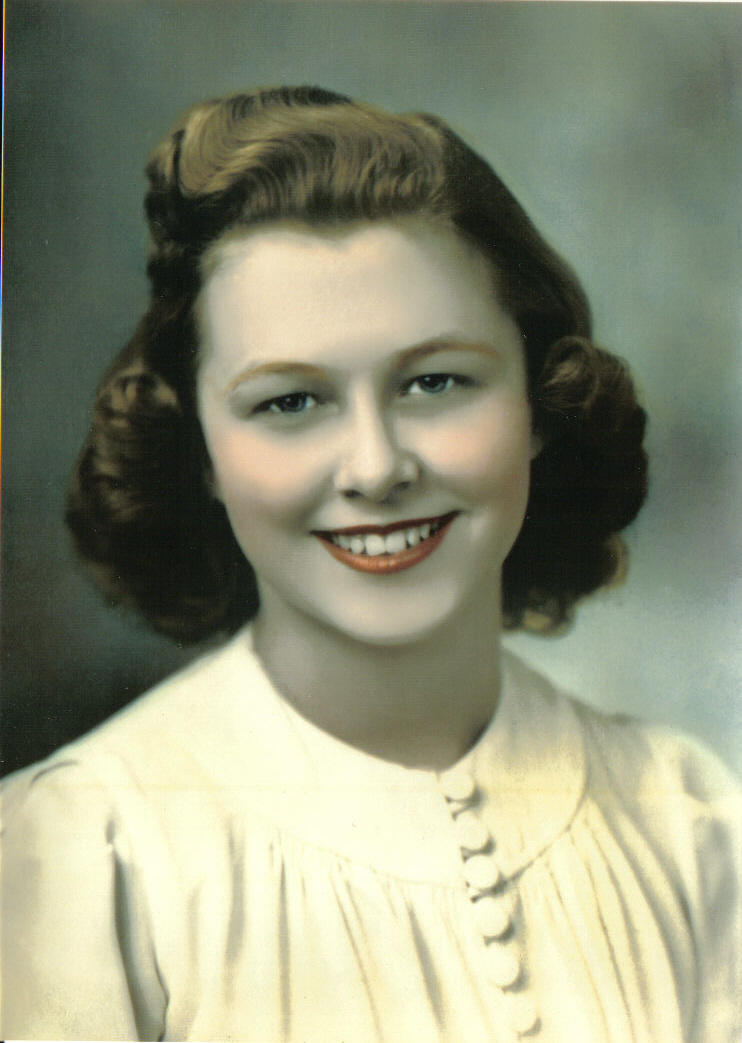
My wife’s maternal grandmother was someone I met, but not someone I could say I knew. The few times we visited felt very formal, and I could tell that whenever we left, unspoken tensions would slowly drain out of my wife, along with stories of the ways she disappointed or offended Grandmother Martin when she was a child.
When you don’t know someone, but you learn about them from those who did, the impressions you form become that person for you. And in the case of Merilyn Martin, everything I have been told came with a caveat not to repeat what I had learned, because it would displease her. Naturally, I learned that Displeasing Merilyn was a Very Bad Thing – but I’ll never know whether that is because of how she was or whether that was how those around her treated her.
All I have are some facts, some memories, and a vague sense that she wouldn’t be happy to be the subject of an essay like this one. So be it.
Growing Up In Between
Merilyn Martin was born on 17 August 1923, the only daughter of Howard and Aletha, and a middle child between Douglas (1920-1997) and Charles (1928-2016). Doug passed on a 28-page memoir when he died, in which he described his childhood in some detail. But as he was three years older than Merilyn, who was five years older than Charles, he didn’t recall having much to do with them as children.
According to Doug’s memoir:
“My father was raised in the Methodist Chruch next door to where they lived and my mother was raised a Christian Scientist in New Albany, IN. before moving to Council Bluffs. I can’t remember either of them ever going inside a church of any kind after I was born. After I was able to drive a car, Dad would let me drive his car only to the Christian Science Sunday School if I would drive Merilyn and Charles. He finally found out that I only left Merilyn and Charles at Sunday School and then I drove all over town till it was time to pick them up. After that any driving of his car ended rather abruptly. That was the end of my church-going days too. Merilyn later was married in a joined the Lutheran Church in the Maplewood section of Omaha and Charles joined the Episcopal Church, I guess.”
The three Martin children seemed to be insulated from the Great Depression, as they were young enough not to be aware of most of the hardship, and their father’s oil business was successful enough to keep them fed and warm. He ran several filling stations, as well as the KOIL radio station, established in 1925, where Howard was an on-air personality and program director.
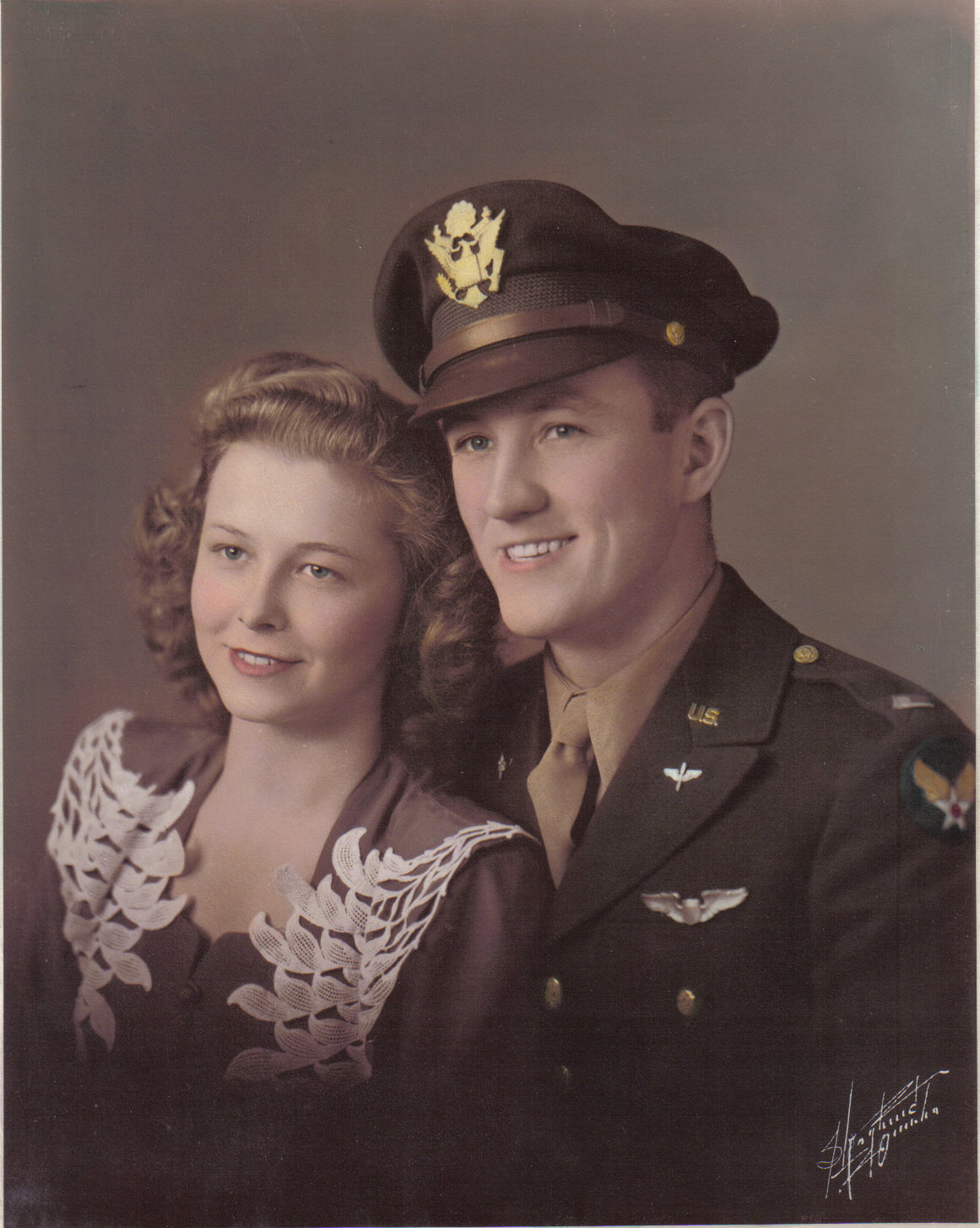
And thus, Merilyn grew up between the Depression and the War, mostly shielded from both by the privilege of her well-to-do family. Then, as mentioned last week, Merilyn married Arvid Wesley “Bud” Holmquist in February 1943, and by 1950, they were living the dream of every post-war couple.
Three Sides to Every Story
From Merilyn’s point of view, she did nothing wrong, and I don’t intend to suggest that she did.
She had what seems to have been a happy childhood, and when she got married, her husband seemed capable and willing to provide the same kind of lifestyle she’d always had. She was almost certainly part of the upper layer of the society she moved within. She was a classic Midwestern Lutheran mother, doting on two daughters during America’s post-war economic boom.
And then he ruined everything.
At least, as I first heard the story, that was how it felt.
Just imagine being in your thirties, having never felt the touch of real hardship, and then, suddenly, seeing your husband’s name in all of the newspapers. The shame of having the end of your relationship published on the front pages instead of buried at the bottom of page 62 of the Omaha World Herald under the “Divorce Court” section1. The panic of realizing that your house, your clothes, your food, the health of your children, things that you’ve never really had to worry about before, are either gone or at risk.
I certainly don’t blame Merilyn for Bud’s choices. She earned a lifetime of anger from what he did, and he earned a ticket out of her life. But… that divorce was in court in May 1960, half a year after his crime spree started, and a full year before he was caught and convicted.
So, maybe there is something unresolved there that nobody ever required her to think about. Maybe their lifestyle was unsustainable, and maybe there were choices made and demands not met long before Bud Holmquist decided to start robbing people.
There are almost certainly three sides to that story: hers, his, and the path that no one chose to take.
The Happy Ending
Obviously, as painful as the experience was, Merilyn and her daughters survived it. They grew up in Omaha, married, and have families of their own. By any fair measure, that’s a success.
I don’t know when Merilyn remarried, but when I entered the story, I was introduced to her and her second husband, Todd Rossiter. Based on the photo I have, I would guess they were married by the 1970s.
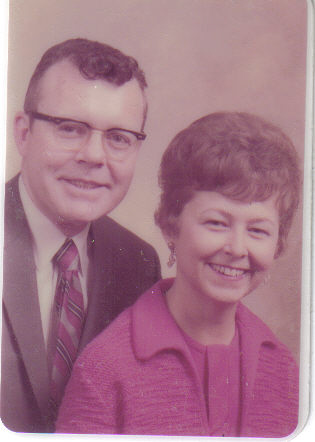
As I said when I began, I have the impression that Merilyn would not be happy for Bud’s crimes to be the center of her story. If I were in her place, I wouldn’t be happy about that, either. But the choices she made – the life she chose to live, and the way she chose to share it or not share it – left me with no other stories to put in its place. And so, while that’s the last thing she probably wanted to be remembered for, that’s the only thing I have to remember.
Looking in from the outside, the best I can do is tell you that Merilyn (Martin) Holmquist Rossiter lived her life on her terms, she seemed to enjoy it, despite her hard times, and we are not owed more than that.
- Omaha World-Herald, Omaha, Nebraska, Fri, May 6, 1960, Page 62. ↩︎
 Mightier Acorns
Say hello, cousin!